ServiceNow CMDB Discovery Gaps: Why Teams Look Elsewhere

ServiceNow CMDB Discovery is the native way to populate a ServiceNow CMDB with scheduled, credential-based scans via MID Servers. It fits best when you already run deep ServiceNow ITSM/ITOM and can fund Discovery, often Service Mapping, implementation, and admin time. Year-one all-in cost for mid-size estates is commonly estimated in the mid-six figures once bundles and services are included. Teams look at Virima when they need richer CI attributes, multi-source reconciliation, ViVID™ maps in one subscription, or discovery that feeds ServiceNow without the full ITOM Visibility stack.
This guide is for IT Directors, Infrastructure Architects, and IT Operations Managers who own CMDB accuracy. You’ll see what ServiceNow CMDB discovery does, what it costs in practice, where gaps show up, and when Virima is a stronger fit for depth, cost, or multi-ITSM reality.
Modern IT estates change constantly. Assets move, appear, and retire. ServiceNow CMDB discovery helps you keep up by finding and recording your IT assets through scheduled, credential-based scans. It detects everything from servers and databases to cloud resources and custom applications, then writes the results into the ServiceNow CMDB.
That gives your team a current inventory of configuration items (CIs) and how they connect. With that view, IT operations run more smoothly. You can scope incidents faster and plan changes with better data.
Without a reliable discovery process, CMDB records lag the estate. Incident scope, change risk, and audit answers all degrade when CIs are missing, stale, or thin on attributes. That is the operational cost teams feel before they ever open a Discovery license quote. When you can’t see your assets clearly, you can’t protect or manage them well.
Up next, we’ll cover the core features and benefits of ServiceNow CMDB discovery, why some teams start evaluating alternatives, and how Virima’s discovery platform compares on data depth, ease of use, cost, and workflow fit.
What is ServiceNow CMDB discovery?
ServiceNow CMDB discovery is a tool within the ServiceNow IT Operations Management suite. It scans your network on a schedule to detect hardware, software, cloud resources, and application dependencies, then writes the results into the ServiceNow CMDB. It uses credential-based probes to populate configuration item records with attributes, versions, and relationships. IT operations teams get a regularly refreshed infrastructure inventory without manual data entry.
In plain terms, it discovers hardware and software across your network, whether on-premises or in the cloud, and records each item with its details and connections.
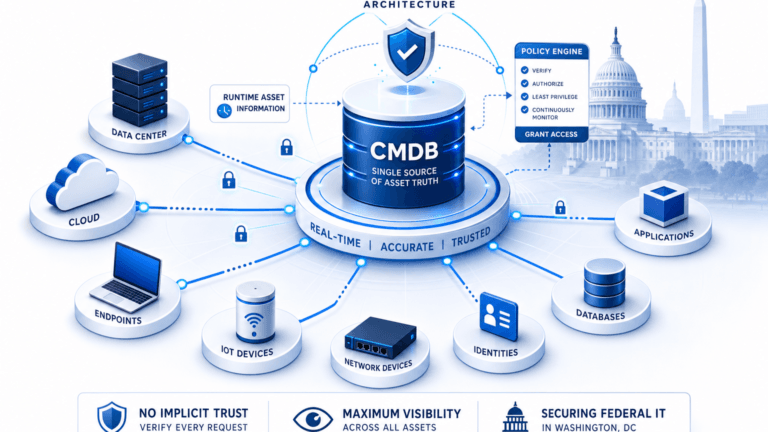
By keeping everything in one place, often called a “single source of truth,” ServiceNow Discovery helps your IT team work from better data. You can identify impacted systems faster when incidents occur, and plan changes with a clearer view of how systems depend on each other.
ServiceNow Discovery works by using “patterns” and login credentials to scan your environment. You can run it on a schedule or start it on demand. It uses a MID Server, which you install in your network, to carry out scans securely.
Discovery works in two passes. Horizontal discovery finds reachable devices across your network. Vertical discovery then looks deeper into each device to classify it and capture detailed attributes for the CMDB.
One coverage area to test in any POC is containers. If you run Kubernetes on EKS, AKS, or ECS-style estates, require a live pass that shows how ephemeral pods, services, and namespaces are represented as CIs and relationships. API-driven patterns differ by vendor and release. Do not accept slideware for cluster coverage. Run the same sample cluster in ServiceNow Discovery and in Virima, then compare CI completeness and churn handling after a rolling deploy.
How much does ServiceNow CMDB discovery cost?
For most IT leaders evaluating ServiceNow Discovery, pricing is the first question, so let’s deal with it before going further.
ServiceNow doesn’t publish list prices for Discovery. Every quote is custom, shaped by your CI count, contract length, and which ITOM modules you bundle. The figures below come from publicly reported analyst benchmarks, procurement discussions, and reseller data, not from ServiceNow’s price list, so treat them as a working range rather than a quote.
Use these figures only for internal budget framing. Your ServiceNow quote will differ by CI count, ITOM packaging, term, and partner scope. Ask your account team for a line-item split across Discovery or ITOM Visibility, Service Mapping, platform, and services before you compare tools.
Discovery licensing
Industry estimates place per-CI licensing at roughly $50 to $80 per CI per year. For a mid-sized environment with 5,000 CIs, that puts the discovery license alone in the $250K to $400K range annually.
Service Mapping
Sold as a separate add-on. Most teams that buy Discovery eventually want Service Mapping too, which can add another $100K or more per year depending on scope.
ITOM Visibility package
Discovery is typically licensed as part of the ITOM Visibility bundle rather than as a standalone product. The bundle includes Event Management and other operational tools you may not need on day one.
Platform license
You’ll also need the underlying ServiceNow platform license, often the largest line item on the contract.
Implementation
Partners commonly charge $50K to $250K or more to deploy Discovery, build patterns for non-standard assets, and integrate with the CMDB. A full enterprise rollout typically takes three to six months.
Ongoing administration
Most large deployments need a dedicated ServiceNow admin. US salaries for certified Discovery admins commonly run $120K to $160K or more per year.
All in
A mid-market team running Discovery, Service Mapping, and the ITOM Visibility bundle with implementation services and a dedicated admin can spend $400K to $800K in year one. Year two costs less without implementation fees, but recurring license and admin spend remains.
That fits large enterprise IT operations with the budget and ServiceNow depth to justify it. For mid-market teams, lean infrastructure groups, or organizations that already use a different ITSM platform but want better discovery, the math gets harder. That gap is where the rest of this comparison goes.
How much does ServiceNow CMDB discovery cost? ServiceNow does not publish a public Discovery price list. Buyer-reported models often combine per-CI or ITOM Visibility packaging, separate Service Mapping, platform entitlement, partner implementation, and admin time. Mid-market all-in year-one figures are frequently discussed in the mid-six figures. Treat any range as an estimate until you have a formal quote.
Key features of ServiceNow CMDB discovery
ServiceNow Discovery includes a strong set of features for building and maintaining a complete CMDB. Here are the ones worth knowing.
- Broad asset discovery: The tool finds physical and virtual systems across data centers and cloud platforms, including servers, virtual machines, network devices, databases, and containers. It works in hybrid and multi-cloud setups, connecting to AWS and Azure to inventory IaaS and PaaS resources. One area worth checking is endpoint coverage, since Mac and endpoint discovery accuracy can suffer when Apple devices are missed by tools tuned mainly for Windows and Linux.
- Application dependency mapping (ADM): ServiceNow Discovery traces how applications and services connect across networks and processes. It can identify which server processes use which TCP ports and how services communicate. That mapping supports impact analysis, so you can see which applications are affected if a server goes down.
- Multi-cloud support: ServiceNow Discovery inventories assets across public clouds and uses cloud-native services to pick up changes. Whether you run virtual machines, databases, or Kubernetes clusters, it adds them to your CMDB, giving you a view that spans on-premises and cloud systems and how they connect.
- Data integrity and reconciliation: To keep the CMDB accurate, ServiceNow Discovery uses the Identification and Reconciliation Engine (IRE). The IRE consolidates data from multiple sources and works to avoid duplicate records. During identification, it checks each CI against unique identifiers. If a match exists, it updates the record rather than creating a duplicate.
- Service Graph Connectors: ServiceNow also uses Service Graph Connectors to import data from third-party tools, such as inventory or monitoring systems, into the CMDB. Imported data runs through the same IRE and normalization rules, so you can bring in data from cloud, virtualization, or other tools while keeping it consistent.
- Scalable, secure architecture: ServiceNow Discovery is built for large, distributed environments. You can deploy multiple MID Servers across locations and balance their workload. The servers communicate with ServiceNow using encryption and transfer results through the ECC queue. The tool supports common protocols including SSH, SNMP, WMI, PowerShell, and REST APIs, so it can discover most devices with an IP address. Setup wizards and a library of ready-to-use probes and patterns help teams deploy faster, and you can extend discovery with low-code tools.
Benefits of using ServiceNow CMDB discovery
ServiceNow CMDB discovery delivers capabilities that enhance IT visibility, reliability, and operational control.
- Improved visibility and control: Discovery-driven inventory gives you a current view of the hardware and software in your environment, so important assets aren’t missed. You can see every server an application runs on, or every device in a location, without hours of manual checks.
- Better decisions from reliable data: Because the CMDB refreshes regularly, you can trust the data when planning changes or analyzing impact. When a new vulnerability surfaces, you can identify affected systems quickly and act.
- Consistent data integration: With discovery and the IRE working together, CI data stays consistent across the environment. When your incident or change management processes connect to the CMDB, they run on well-structured, current data.
- Flexibility for future needs: ServiceNow lets you customize discovery patterns and CMDB rules with low-code tools, so you can adjust as your environment grows without heavy scripting.
Even though ServiceNow Discovery is capable, it may not fit every team. Some want deeper data, simpler setup, or a more affordable option. Next, let’s look at why teams evaluate alternatives and how Virima fits.
6 Reasons why teams evaluate alternatives to ServiceNow CMDB discovery
ServiceNow Discovery is built to operate within the ServiceNow ecosystem, which shapes both its strengths and constraints. Consider these key factors:
- Discovery relies on scheduled, credential-based scans through MID Servers, effective for stable environments but challenging in fast-changing estates.
- Three structural limitations often emerge: incomplete CI attribute depth on edge devices, reconciliation that defaults to simple last-scan precedence, and licensing costs that require deep ServiceNow commitment.
- Last-write precedence can degrade CMDB data quality over time, since newer scans overwrite stronger attributes from earlier sources.
- Multi-source reconciliation with source weighting is available but requires additional investment in the Identification and Reconciliation Engine (IRE).
1. Deeper data capture
You may need detailed attributes like firmware versions, software patches, certificate details, or active services, and worry that built-in patterns don’t go deep enough. A complementary discovery tool can capture more of that detail.
2. Cost and licensing
ServiceNow is powerful, and it can be expensive. Discovery is usually an add-on to the broader CMDB or ITOM license, and Service Mapping often costs extra. For smaller teams or tighter budgets, those costs add up, and a tool with similar capabilities at lower total cost can be a better fit.
3. Complexity and ease of use
ServiceNow Discovery can be complex to run, especially in large or fast-changing environments. It often needs skilled admins to build patterns, manage credentials, and resolve issues. Teams without ServiceNow experts often prefer a tool that’s simpler to operate.
4. Agentless and agent-based needs
ServiceNow Discovery is agentless, which keeps setup light. Sometimes you also want lightweight agents on specific systems for more frequent change data. A tool that offers both can keep your CMDB closer to current.
5. Security and deployment preferences
Some teams are cloud-first; others need strict control over data handling. ServiceNow runs as a cloud SaaS platform. Other tools take different approaches, like Virima, which runs on AWS with strong tenant data isolation. If you have strict requirements around data handling, the deployment model matters.
6. Built-in value-added features
You may want features beyond core discovery, such as linking discovered assets to known vulnerabilities or tracking software license usage. ServiceNow focuses on discovery and relies on other modules for those, while some tools combine them in one place.
One limitation worth understanding is the reconciliation model. A last-scan-wins approach can degrade CMDB data quality over time, because the most recent scan overwrites attributes even when an earlier source was more reliable. Multi-source reconciliation, which weighs sources rather than letting the latest scan win, is the more durable fix.
When is ServiceNow Discovery the right choice? Choose native ServiceNow Discovery when the CMDB, workflows, and operations teams already live in ServiceNow, you need tight alignment with Service Graph and IRE practices, and budget covers ITOM Visibility, mapping, and skilled admins. If cost and multi-tool ITSM are not constraints, staying native often beats a second platform.
If ServiceNow Discovery doesn’t fully meet your needs on data depth, cost, or ease of use, Virima is a strong option for IT discovery and CMDB management. Let’s look at how.
How Virima strengthens CMDB discovery
Virima is an IT asset and service management platform with discovery and CMDB capabilities. If you’re comparing ServiceNow Discovery and Virima, here’s what Virima offers and how it can work alongside ServiceNow or replace it for discovery.
Detailed CI data for accuracy
Virima’s IT discovery captures detailed information about each configuration item, not just that a server exists, but its CPU, memory, software versions, patches, SSL certificates, and running services. That detail makes the CMDB useful for troubleshooting, audits, and security reviews. If a network device gets a firmware update, Virima records the new version on the next scan. Hard-to-reach infrastructure like firewalls, switches, and UPS units often slips through standard scans, which is exactly the kind of network device discovery gap that leaves records incomplete.
Secure, segmented architecture
Virima runs on AWS with a multi-tenant model that keeps each customer’s data separate. It uses role-based access control, so only the right people can view or change discovery data. Discovery credentials are stored encrypted and aren’t sent in plain text. The result is a SaaS option with strong data protection at each step.
Agentless discovery with easy deployment
Virima uses an agentless method that’s straightforward to set up. Like ServiceNow’s MID Server, Virima provides a Discovery Appliance you install on a server in your network to scan your systems. It includes many built-in probes and sensors to detect devices and applications, and you can build custom probes for unique systems. You can schedule scans and define IP ranges to fit your environment. Because Virima doesn’t need agents on every device, deployment stays simple, scanning your systems with standard protocols like SSH, WMI, and SNMP, much like ServiceNow does.
Optional agents for change and usage tracking
When you want more frequent tracking on certain systems, Virima offers optional Discovery Agents for Windows and Linux. These lightweight agents report daily changes and monitor software usage, which helps with software license management, so you can reclaim unused licenses or retire idle systems. The hybrid approach, agentless scans for breadth and agents for depth, gives you flexibility with less setup work.
Discovery-driven CMDB updates and change monitoring
Virima updates CI records as it detects changes through high-frequency discovery cycles, so your team spends less time reconciling data by hand. When a new virtual machine starts in your cloud, Virima records it on the next scan. When a server’s memory is upgraded, that change appears too. That keeps the CMDB closely aligned with your actual environment.
Data standardization and vulnerability context
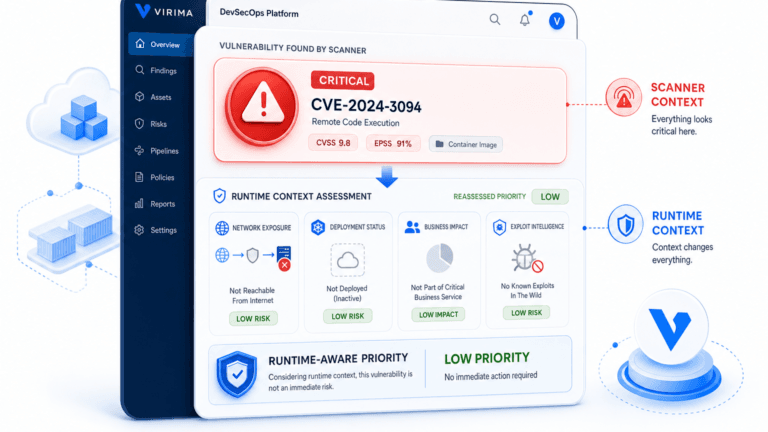
Virima gathers data from network scans, cloud APIs, and existing inventories and normalizes it into one consistent format in the CMDB, which makes reports and audits more reliable. Virima also connects applicable Windows Server findings to the NIST National Vulnerability Database (NVD). The overlay is weighted by asset and business service criticality on your maps. It is not a multi-OS vulnerability management scanner. Most teams still run a dedicated VM tool for broader OS coverage and use Virima for discovery-sourced asset truth plus Windows Server risk in service context. That links discovery and security context without a separate tool.
Multi-source reconciliation for durable data quality
When identification and reconciliation rules are thin, teams often see last-write or last-scan precedence in practice: a newer but thinner scan can overwrite stronger attributes from an earlier source. ServiceNow’s Identification and Reconciliation Engine (IRE) can enforce richer rules, but many estates still run simple precedence until someone invests in multi-source design. Virima applies multi-source reconciliation with source weighting so a cloud API response does not blindly overwrite a deeper probe result from a direct scan.
In short, Virima’s discovery does more than find assets. It captures detailed data, keeps it secure, gives you flexible discovery options, and refreshes the CMDB so your data tracks reality.
| See discovery-sourced runtime truth on a real dependency view. Start with Trusted Runtime Truth for what exists, how it connects, and what changes, then request a demo on your estate. |
Virima vs ServiceNow: key differences
Both platforms provide strong CMDB discovery. They take different approaches, and Virima stands out where teams want a simpler, faster, or more cost-effective option.
| Dimension | ServiceNow Discovery | Virima |
|---|---|---|
| Platform scope | Discovery, Service Mapping, and ITOM modules licensed separately | Discovery, CMDB, and ViVID™ service mapping under one subscription |
| Pricing model | Custom quote, multiple add-ons | Transparent, all-in subscription |
| Service mapping | Service Mapping add-on, extra license | ViVID™ service mapping included |
| Cloud discovery | AWS, Azure via cloud APIs and MID Server | AWS, Azure via API-based discovery and agentless scanning |
| Implementation | Often three to six months, partner-led | Guided setup, faster time to value |
| ITSM model | Native within the ServiceNow ecosystem | Bidirectional integration with ServiceNow and other ITSM platforms |
| CI attribute depth | Standard attributes; custom patterns needed for firmware, SSL, patch detail | Firmware, SSL certificates, running services, and patch level captured natively |
| Reconciliation model | IRE available; many estates still operate with simple last-write / last-scan precedence until multi-source rules are tuned | Multi-source reconciliation with source weighting |
| Vulnerability context | Requires separate Vulnerability Response module | NIST NVD overlay on applicable Windows Server findings, tied to CI and service context. Not a full multi-OS VM scanner. |
All-in-one platform and transparent pricing
Virima combines discovery, service mapping, and dependency visualization under one subscription. Pricing is per device, not per user. The SMB plan is $10,000 per year for up to 100 servers and 900 devices. Enterprise is custom-quoted for larger estates. You are not buying separate modules for service mapping or analytics to get a usable operational picture. For smaller and mid-sized teams, that usually means lower total cost.
Easier to implement and run
Setting up ServiceNow Discovery takes time and skilled admins to build patterns, configure MID Servers, and resolve issues. Virima is built to deploy quickly with guided setup and a straightforward interface, so teams without ServiceNow specialists can get value sooner.
Advanced visualization with ViVID™
Virima includes Virima Visual Impact Display (ViVID™), which builds live visual maps of your IT environment. As Virima Discovery gathers data, ViVID™ shows how infrastructure, applications, and services connect. You can filter, sort, zoom, and save views. ViVID™ also overlays ITSM records like open incidents and pending changes onto the map, so you can see the impact of a planned change before you make it. ServiceNow Service Mapping offers similar maps but usually takes more setup and costs extra.
Built-in ITSM integration and context
Virima connects directly with ITSM processes through bidirectional integration, so incidents, changes, or problems tied to a CI appear inside its CMDB record. Virima integrates with popular ITSM platforms including ServiceNow, Ivanti, HaloITSM, Xurrent, and Jira Service Management. That keeps discovery, CMDB, and ITSM context together in one place.
Weighing these differences, Virima stands out for affordability, simplicity, and an all-in-one design. ServiceNow remains a strong, feature-rich platform. If your team doesn’t need every advanced feature, or if cost and complexity are concerns, Virima is a capable alternative for IT asset discovery and CMDB management.
Besides Virima, teams also compare Device42, endpoint-heavy discovery stacks, and connector-led CMDB population without full ITOM Discovery. For a structured three-way view of discovery depth and packaging, see the Virima vs Device42 vs ServiceNow comparison.
Can Virima replace ServiceNow Discovery or work alongside it?
Both paths are common. Some teams replace ServiceNow Discovery for richer CI data, including mapping visualization, and lower bundled cost. Others keep ServiceNow ITSM for tickets and run Virima for discovery and CMDB quality with bidirectional integration. Proof of concept on a slice of the estate is the fastest way to choose.
Replace ServiceNow Discovery or feed the ServiceNow CMDB
Most serious evaluations end in one of two designs. Pick the design before you argue feature checklists.
Replace Discovery. Virima becomes the primary discovery and mapping system. CI inventory, relationships, and service views are maintained in Virima. ServiceNow remains the ITSM system of record for incidents, changes, and problems if you already run it, or you use another ITSM fully. You integrate so ticket workflows still see authoritative CI context without paying for the full ITOM Visibility discovery stack.
Feed ServiceNow CMDB. You keep ServiceNow as CMDB and workflow hub. Virima runs agentless discovery (and optional agents where you want bigger change and usage signal), normalizes multi-source data, and syncs into ServiceNow, so IRE and processes consume better inputs. This path fits teams that will not leave ServiceNow ITSM but cannot staff pattern-heavy Discovery and Service Mapping the way a full ITOM program expects.
POC checklist (same for both paths). Define IP ranges and cloud accounts (AWS and Azure). Confirm credential strategy and least-privilege access. Pick 1-2 business services with known owners. Require sample CI attribute depth (firmware, SSL where relevant, running services, patch signals). Review a dependency view with incident or change context overlaid. Compare admin hours for the first 30 days, not only license line items.
Ready to test feed vs replace on your network? Request a demo and bring your must-have CI classes and ITSM system of record.
Matching the right discovery tool to your team
If you own IT infrastructure visibility, a reliable CMDB discovery tool is essential. The right one keeps your CMDB accurate, which supports incident response, change management, security, and planning.
ServiceNow Discovery is a proven option that works best if you already run the ServiceNow ecosystem and have the budget and skills to support it. Virima is a strong choice for teams that want discovery, mapping, and analytics in one package, with detailed data and easier operation, plus extras like NVD vulnerability checks and software license tracking out of the box.
The best choice depends on your environment size, the tools you already use, and your team’s skills. A short proof of concept on part of your estate is the fastest way to see which tool fits your workflows before you commit.
To compare on your own infrastructure, start by listing your must-haves: Do you need cloud asset discovery? Change management integration? A more cost-effective license model? Writing these down makes the comparison clearer. You may find ServiceNow fits, or that a platform like Virima matches your priorities better. Either way, a demo or trial is the best way to be sure.
| Compare Discovery TCO and CI depth on your own subnet. Request a demo with your CI count, cloud accounts, and ITSM system of record. Schedule a demo with us. |
Frequently Asked Questions
How much does ServiceNow CMDB discovery cost?
ServiceNow does not publish list pricing for Discovery. Quotes depend on CI count and which ITOM modules you bundle. Industry estimates often discuss per-CI packaging plus Service Mapping, implementation, and administration. Full mid-market year-one totals are frequently framed in the mid-six figures. Treat published ranges as planning aids until you have a line-item quote.
What is the difference between ServiceNow Discovery and Service Mapping?
Discovery finds assets and populates the CMDB with configuration items. Service Mapping builds business service dependency views on those CIs. They are usually separate licenses and projects. Teams that need full operational visibility often buy and implement both.
Is ServiceNow Discovery worth it for mid-sized IT teams?
It depends on whether you already run ServiceNow ITSM and can fund the broader ITOM platform plus skilled admins. If you are not deep in that ecosystem, you may pay for modules you will not operationalize. Many mid-sized teams get more value from a bundled discovery, CMDB, and mapping subscription and integrate ITSM rather than buying native Discovery by default.
Can Virima replace ServiceNow Discovery, or work alongside it?
Both. Some teams use Virima as a full replacement for ServiceNow Discovery for CI depth, included ViVID™ maps, and lower bundled cost. Others run Virima alongside ServiceNow ITSM: Virima for discovery and CMDB quality, ServiceNow for ticket workflows, with out-of-the-box integration.
Does ServiceNow Discovery support hybrid and multi-cloud environments?
Yes. ServiceNow Discovery supports major public clouds through cloud APIs, plus on-premises assets via MID Servers. Coverage gaps tend to show up in containerized workloads (Kubernetes, EKS, ECS, AKS) and serverless architecture, where API-driven discovery patterns are still maturing across most vendors, including ServiceNow.