The real CMDB benefits for ITSM and why most teams aren’t seeing them yet

ITSM teams with accurate CMDB data resolve incidents faster, approve changes more confidently, and spend significantly less time in post-incident review trying to reconstruct what was connected to what broke.
That’s what CMDB benefits look like in practice — not in a feature checklist, but in how quickly and safely IT service operations actually run day to day.
If you’re new to CMDBs, start with our Complete CMDB Guide → before diving into ITSM-specific benefits.
This post covers the 10 most impactful CMDB benefits for ITSM teams, focused on operational outcomes — from incident resolution time and change failure rates to compliance readiness and cost visibility.
Top 10 CMDB benefits for ITSM success
A CMDB plays a key role in ITSM, offering a central hub that stores information about IT assets and services. Below are the top ten benefits of using a CMDB to improve ITSM outcomes:
1. CMDB as a centralized IT reference
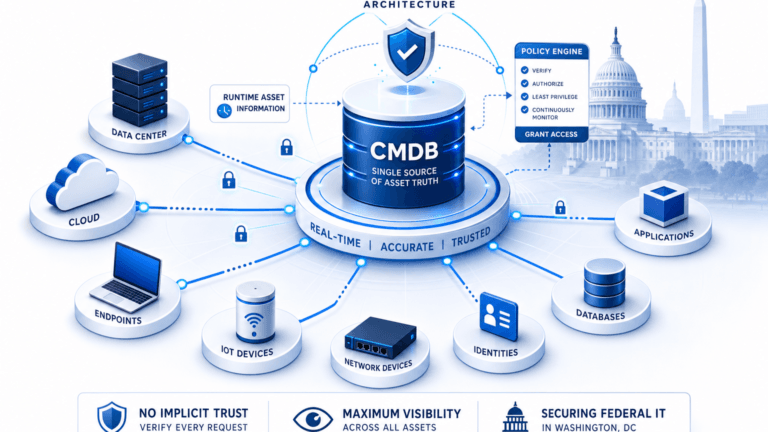
A CMDB serves as a single source of truth for managing IT assets and infrastructure. Previously, IT teams relied on separate databases for hardware, software, and license management processes. This lack of integration later created inefficiencies. Now, with a CMDB, you can answer key questions like:
- How many specific hardware devices are in use?
- What software versions exist across devices?
- How many users face an email outage?
- Which licenses do you need to meet usage?
- What IT assets need reallocation for departing or new employees?
This centralized system ensures IT teams have accurate and accessible data for better decision-making.
2. Enhanced asset visibility and management
Managing IT asset data becomes tougher as organizations grow. Without proper IT asset tracking, outdated hardware and unlicensed software can often expose businesses to risks. A CMDB provides clear visibility into asset locations, owners, and relationships. Authorized users can also easily access and manage this data throughout an asset’s lifecycle, ensuring compliance and security.
3. Improved risk assessment for IT changes
Deploying IT changes often carries risks, including unexpected outages. With CMDB, change managers can identify relationships between configuration items, predict affected areas, and minimize disruptions. These CMDB benefits enable smoother deployments and allow IT teams to focus on strategic initiatives.
4. Centralized data integration
IT data often resides in multiple disconnected files and reports. A CMDB consolidates data from sources like CSV, XML, and log files, making it easier to manage and utilize. One of the key CMDB benefits is its ability to integrate incident and event reports with configuration items (CIs). Consequently, it creates a comprehensive view of IT assets.
5. Support for knowledge management
The CMDB feeds data into the Service Knowledge Management System (SKMS), helping IT teams optimize CMDB management. An updated CMDB is essential for effective knowledge management, as it provides insights into asset attributes and relationships.
6. Efficient incident and problem management
An updated CMDB streamlines incident and problem management. When an issue arises, IT teams can access detailed CI records, and CMDB including purchase dates, vendor details, and incidents. Altogether, these CMDB benefits help identify patterns, reduce costs, and improve resolution times.
7. Identifying problematic assets
Proper CMDB management helps pinpoint troublesome asset classes that cause frequent issues. By analyzing incidents linked to specific CIs, IT teams can later decide on upgrades or replacements. These CMDB benefits help reduce IT downtime and improve service reliability.
8. Tracking CI changes over time
IT assets evolve throughout their lifecycle. For instance, different employees can receive a laptop and repurpose it with new software. A CMDB tracks these changes, providing insights like repair times, uptime ratios, and total cost of ownership. These CMDB benefits help support IT investment- informed decisions and ensure alignment with ITIL principles.
9. Automated maintenance and updates
Keeping a CMDB updated can be challenging, especially in large organizations with frequent changes. In contrast, IT automation simplifies this process by ensuring CI records are accurate and reliable. This also builds user confidence and promotes effective CMDB usage.
10. Adaptability for continuous improvement
As organizations grow, the CMDB management evolves to meet new needs and industry standards. Updates can also include new CI types, relationships, and documentation. By capturing lessons from past issues, IT teams can further improve processes and prevent recurring problems.
Achieve operational excellence with Virima’s robust CMDB technology
A reliable CMDB is vital for IT success. It also helps teams plan, operate, and improve IT services efficiently. Achieving excellence requires an accurate, fully functional CMDB that serves as a trusted source for all IT staff.
Virima understands the importance of robust CMDB management. Its platform offers much more than basic data storage, providing tools that enhance ITSM processes. Here’s how:
1. Transform your CMDB with ViVID
Virima Visual Impact Display feature enhances your CMDB benefits more than a centralized repository. It further adds near real-time insights on system health, performance, and ownership. With ViVID, you can spot issues early, optimize resources, and make better decisions using visualized IT infrastructure data.
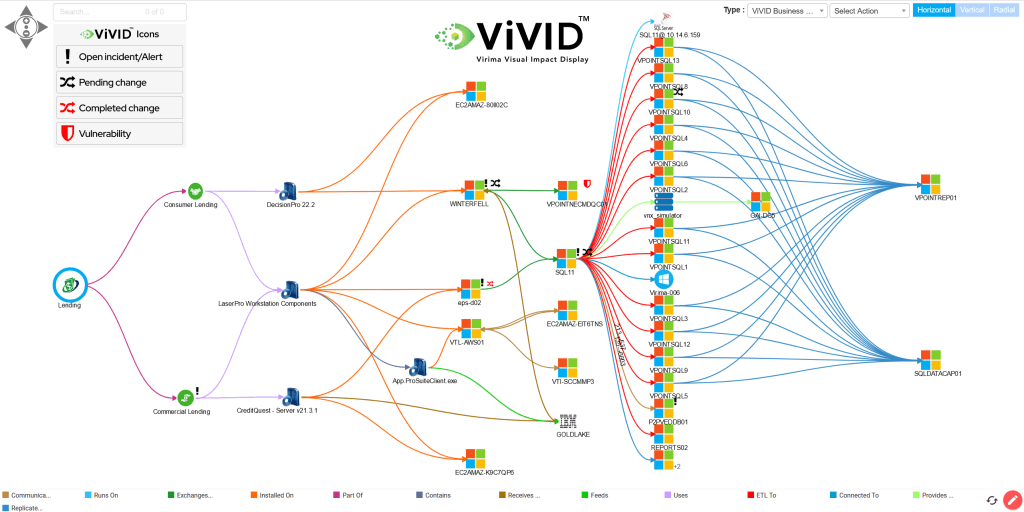
Virima’s ViVID highlights ITSM incidents, changes, and NVD vulnerabilities, aiding issue analysis, risk reduction, and remediation
2. Automated discovery and service mapping
Virima automates the IT discovery of IT assets as well as their relationships. It also identifies hardware, software asset, and connections with minimal manual work. Moreover, the service mapping tool also updates CI relationships almost in real-time.
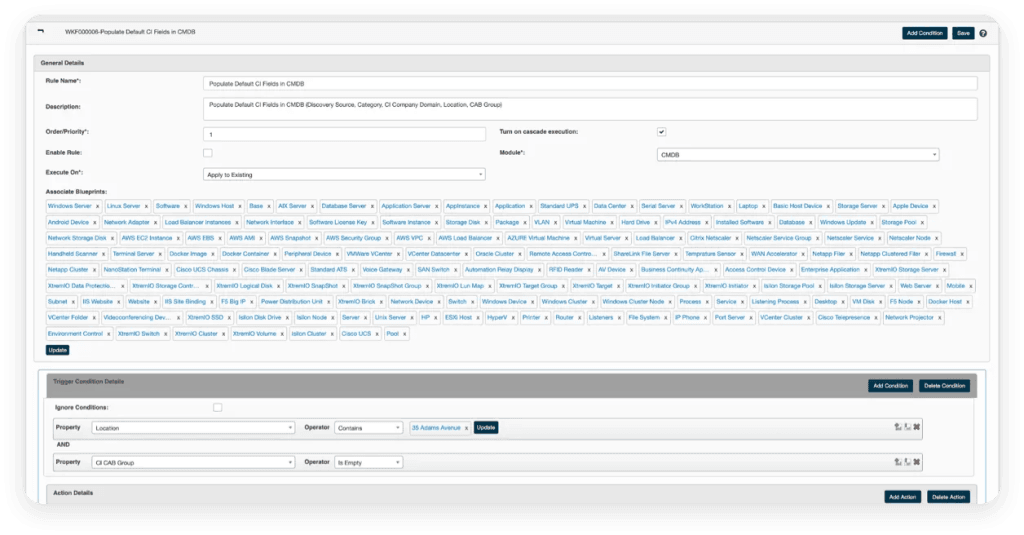
With Virima CMDB, you can define detailed rules to automate CI updates and maintain the CMDB.
3. Near real-time updates
Whenever your IT environment changes, Virima automatically refreshes the CMDB data. This ensures the data reflects the latest configurations, which is crucial for managing updates, deployments, or asset changes.
4. Granular business rules
Virima lets you set specific rules for managing CMDB updates. You can also customize these rules to fit your operational needs, ensuring that only relevant changes trigger updates.
5. Seamless ITSM integration
Virima integrates with platforms like ServiceNow, Jira Service Management, HaloITSM, Ivanti, etc. This ensures organizations can fully realize CMDB benefits in ServiceNow while maintaining synchronized, accurate data across ITSM platforms. Moreover, this two-way integration syncs data in near real-time, thus, reducing errors and keeping both systems consistent.
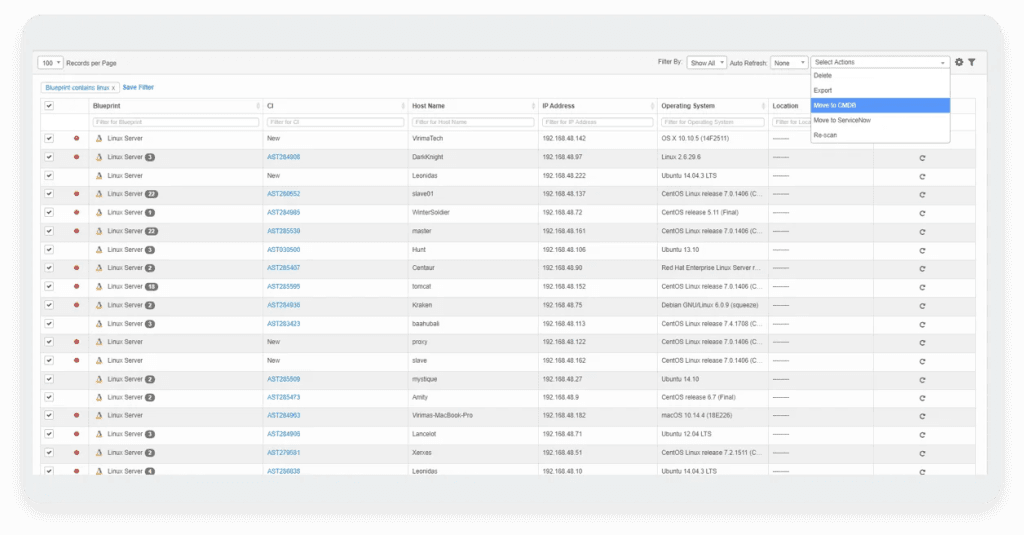
Virima offers detailed syncing options for CMDB assets with external systems like ServiceNow, Ivanti, Cherwell, and Jira Service Management.
Choose Virima to reap complete CMDB benefits
Most ITSM teams aren’t seeing full CMDB benefits because their CI data is outdated before they can act on it. Virima keeps your CMDB current with automated discovery — so the benefits in this list become operational, not theoretical. → See how Virima keeps your CMDB accurate