ViVID™ Service Mapping

Visualize every dependency and understand every impact. Virima’s ViVID™ Service Mapping brings meaningful context to complex CMDB data and relationships.

check blue

Dynamic AI/ML Relationships

check blue

ITSM and Vulnerability Overlays

check blue

Change Impact Analysis

check blue

Root Cause Analysis

The ViVID™ Difference

Operational intelligence, not just maps

ViVID™ transforms static service maps into a real-time heads-up display — overlaying incidents, changes, alerts, and
vulnerabilities so your teams can act faster.

82%

Faster mean time to
resolution (MTTR)

360°

Blast radius visibility
before every change

AI/ML

Always accurate,
never manual

Clarity when it matters most

When an outage hits, the first question is always: “What changed?” ViVID™ answers that instantly by correlating service dependencies with live operational data, helping teams pinpoint root causes and slash MTTR.

Change without the guesswork

Every change carries risk. ViVID™ visually highlights blast radius, stakeholders, and downstream dependencies, giving IT managers the confidence to plan changes without blind spots.

ML-driven accuracy

ViVID™ is built on Virima’s ML-powered discovery and service mapping engine, ensuring that visualizations are accurate, continuously updated, and reflective of real infrastructure behavior — not manually maintained diagrams.

A collaboration hub for IT, SecOps & DevOps

ViVID™ centralizes incidents, changes, vulnerabilities, and asset context into a single shared view, enabling cross-team alignment during outages, change planning, and security investigations.

A CMDB that works for everyone

Instead of a spreadsheet-like CMDB buried in forms, ViVID™ turns configuration data into a visual, navigable, and actionable asset that drives better decisions across the organization.

Complements, not replaces, your ITSM

ViVID™ fills the visibility gaps that ITSM tools alone can’t solve — bringing context, dependency awareness, and real-time impact analysis to platforms like ServiceNow, Jira, and Ivanti.

See your environment like never before

Act faster, reduce risk, and operate with confidence.

What Makes ViVID™ Unique?

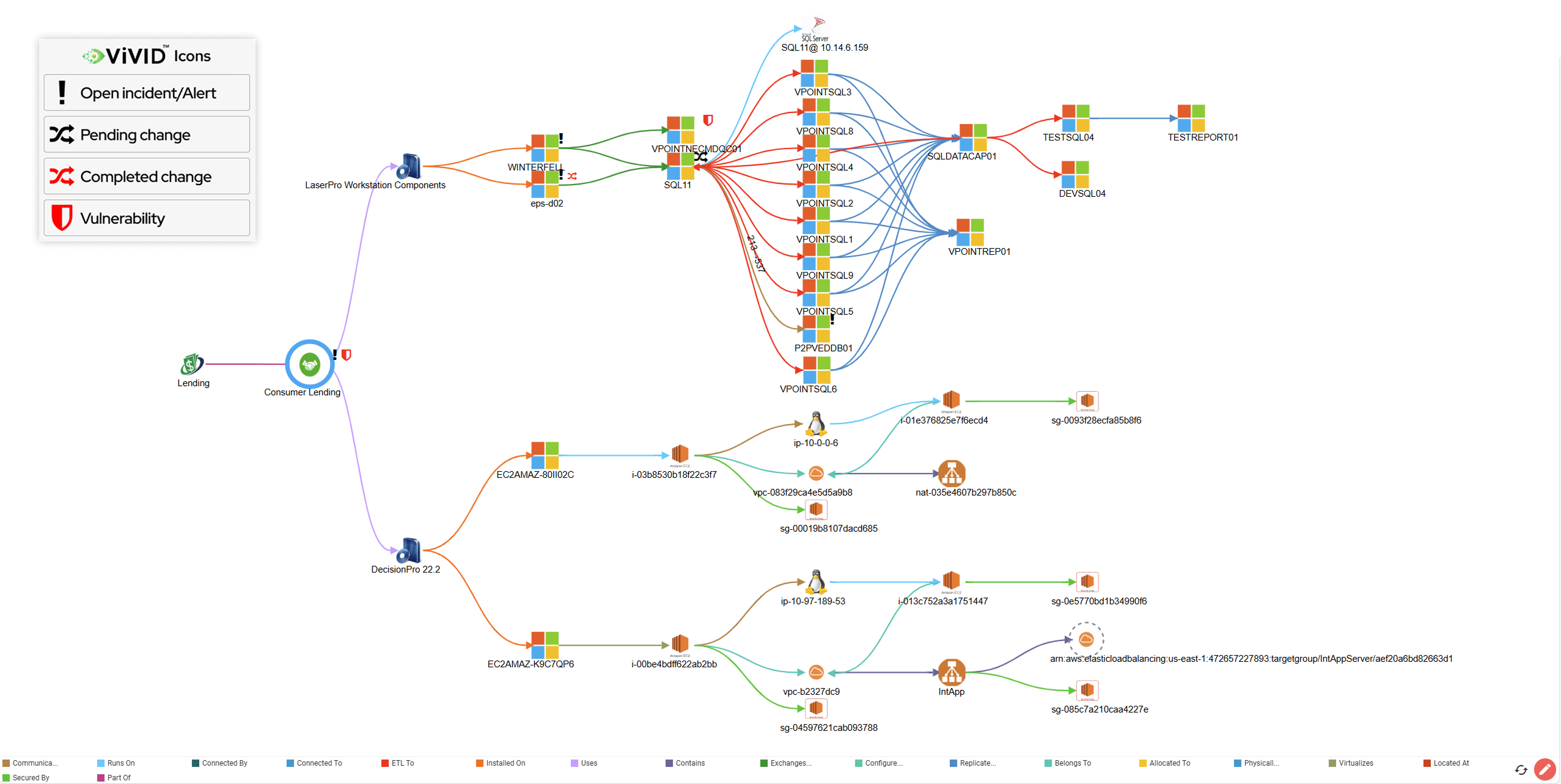
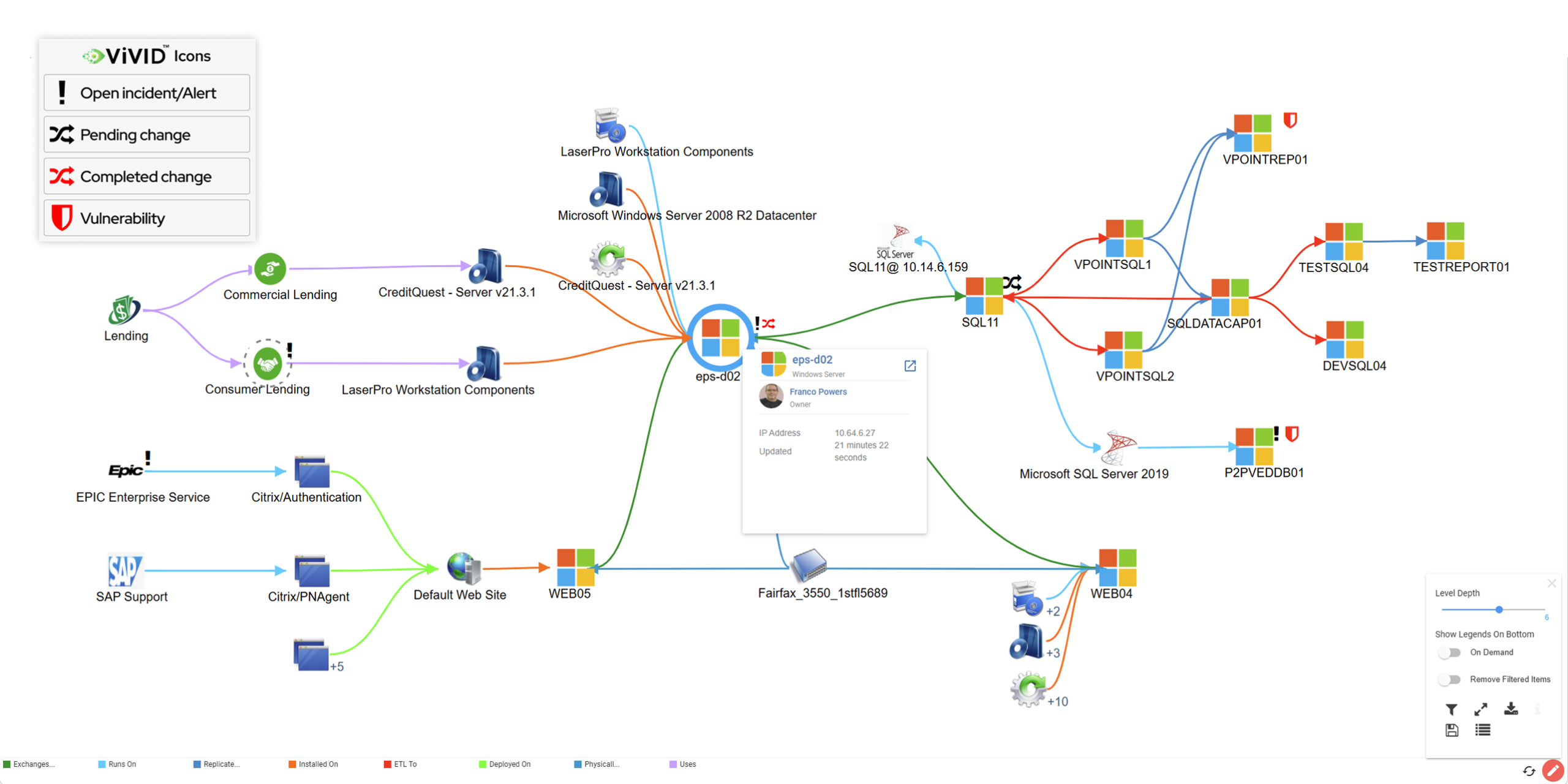
ViVID overlays important CI status information directly onto your
machine-learned service maps.

icon 1

ITSM Records

Through bi-directional integrations with many popular ITSM platforms, incidents, recent changes, and pending changes are shown within every map view to reduce the guesswork in both change planning and incident response.

Vulnerability Insights

NIST NVD vulnerabilities are displayed on ViVID's maps so remediation priorities are based not only on the severity of the vulnerability, but also on the criticality of the affected asset and the business services it supports.

icon 3

Visual Dependency Intelligence

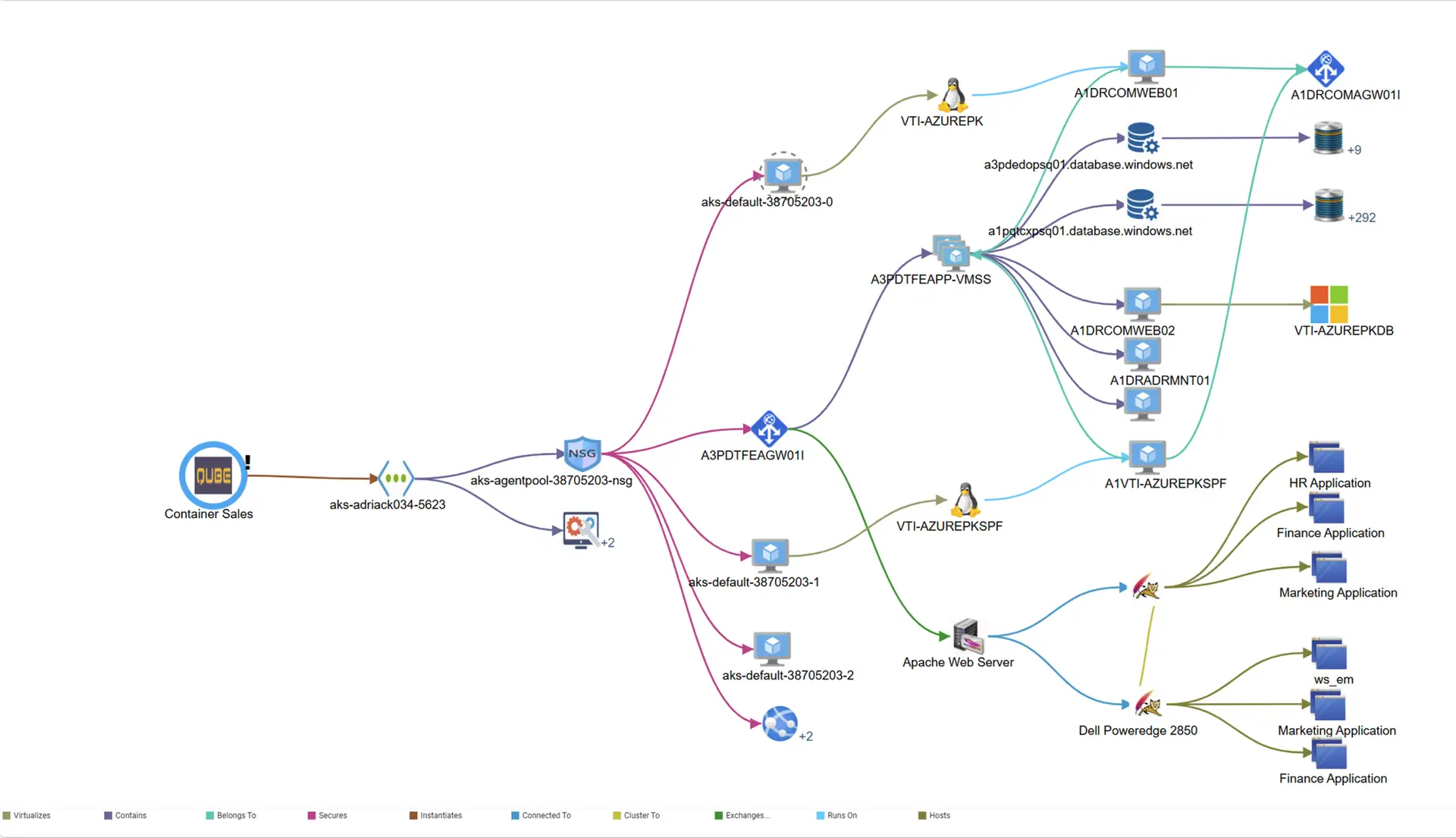
ViVID™ assigns distinct colors to each dependency type, giving teams an immediate, intuitive understanding of service relationships — and how a single change or failure could ripple across the environment.

Dynamic Visualizations

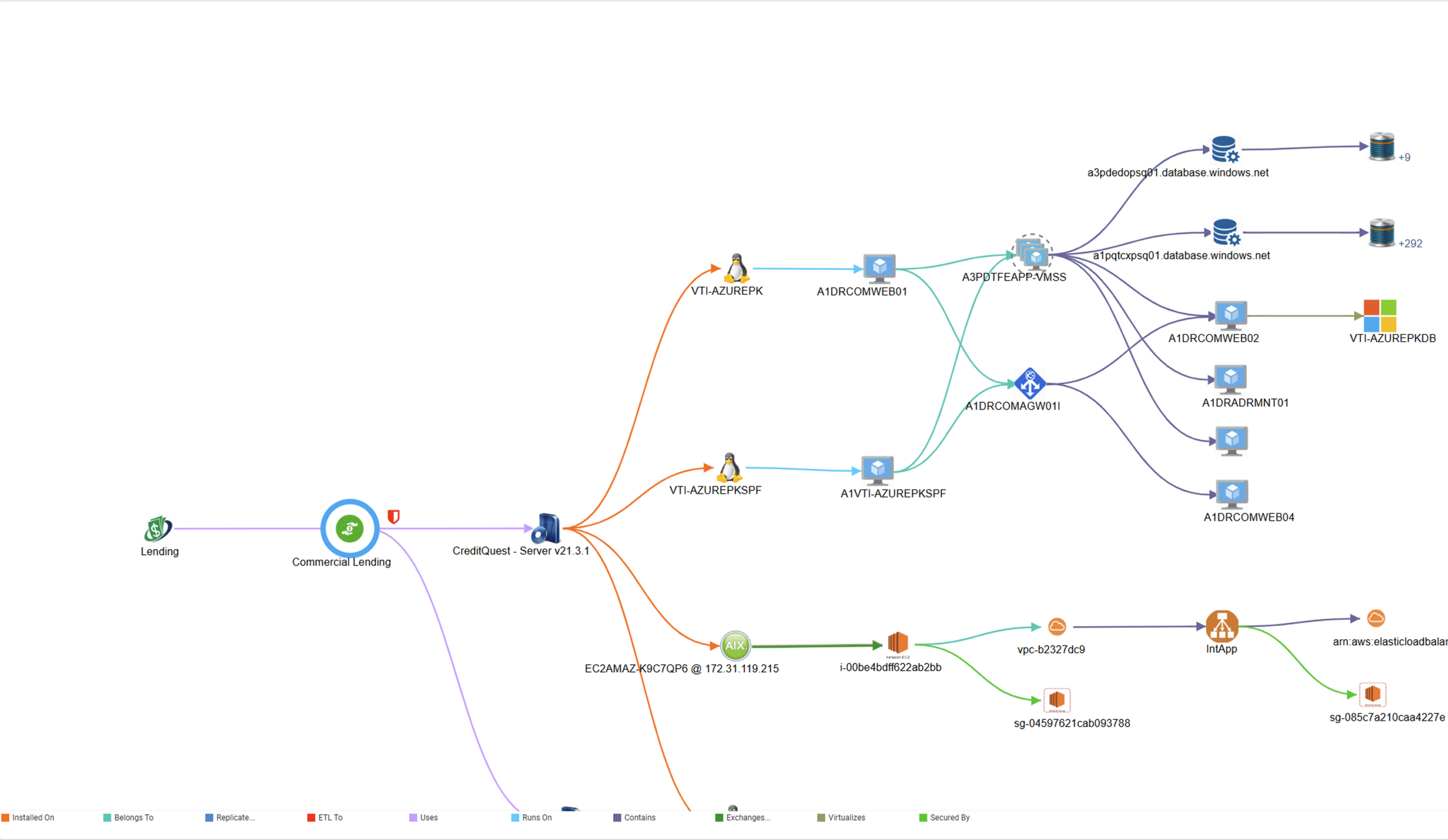
Business Service Map

This is generally considered the most useful view because it provides detailed visibility into how your business services and major applications are supported across the entire IT estate. Add in ITSM overlays and you have a heads-up display for root cause and impact analysis.

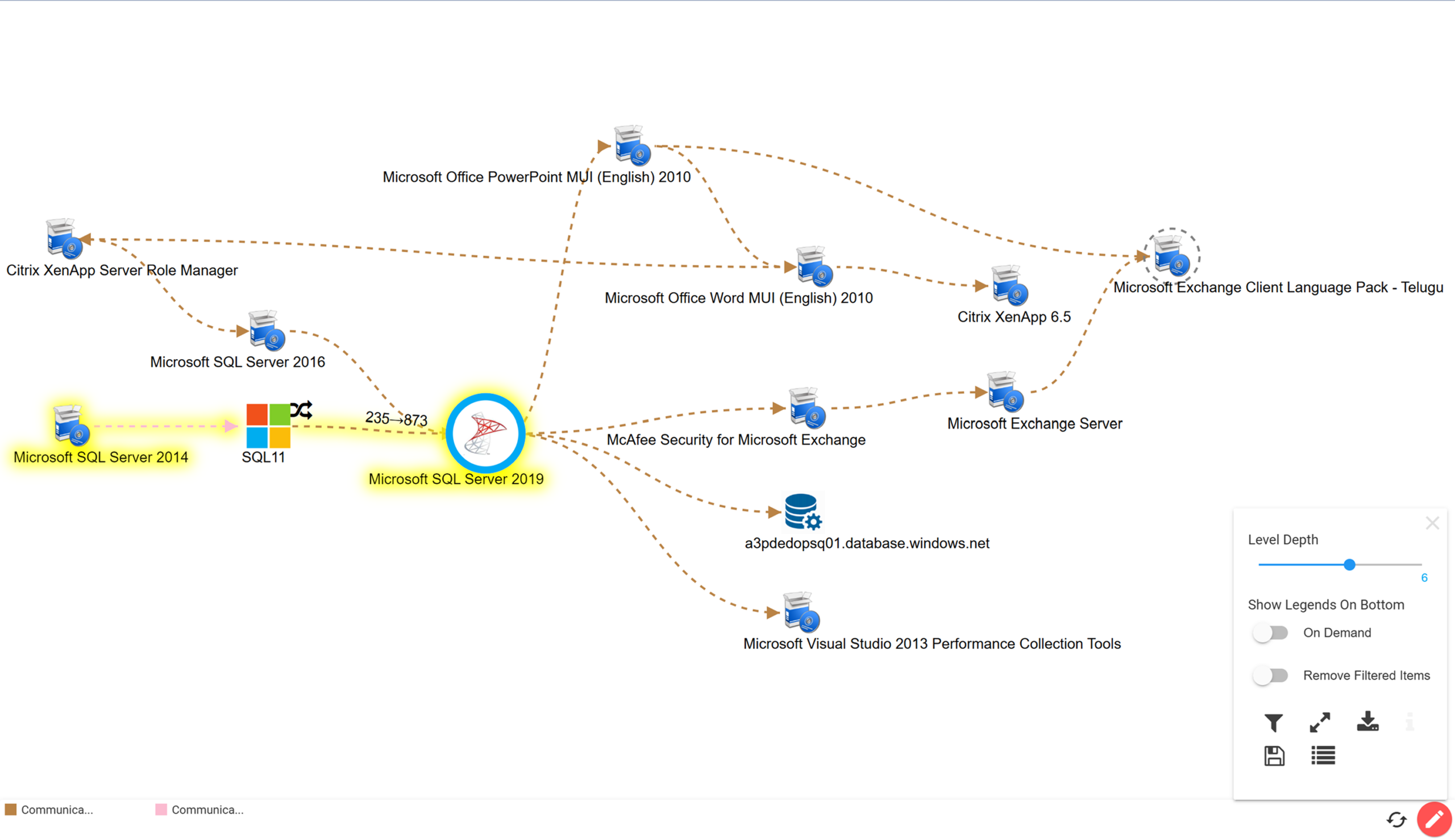
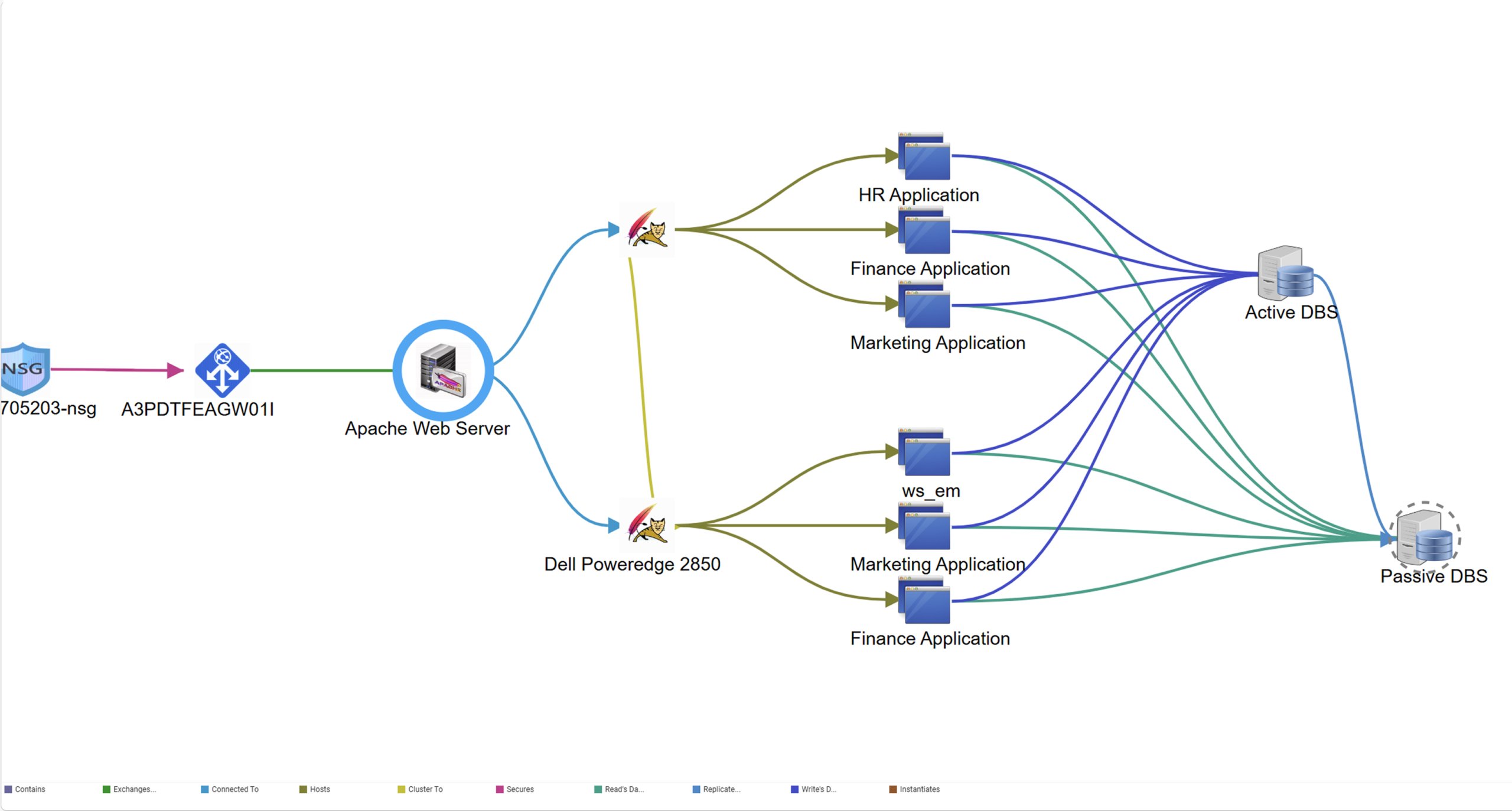
Application Dependency Mapping

Visualize how applications and software connect to each other without all the noise of infrastructure components getting in the way.

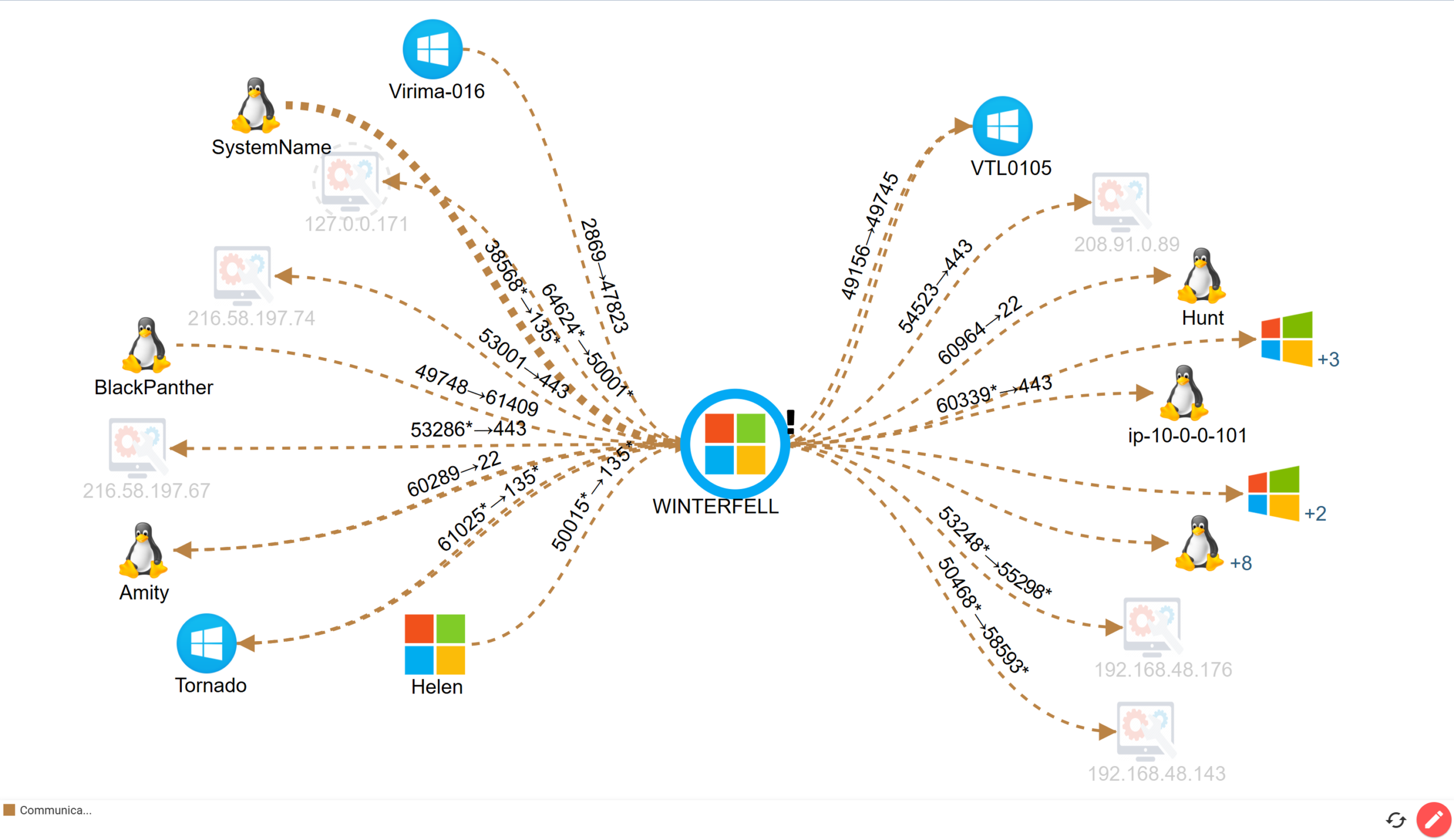
Communication Flows

View server-to-server and server-to-host communications with port numbers and protocol details, including “ghost machines” not yet in the CMDB. Useful for identifying undocumented connections and understanding how traffic moves across your environment.

Cloud Relationships

Map cloud resources across AWS and Azure alongside your on-prem infrastructure. See how EC2 instances, VPCs, Virtual Machines, App Gateways, and other cloud assets relate to the services they support.

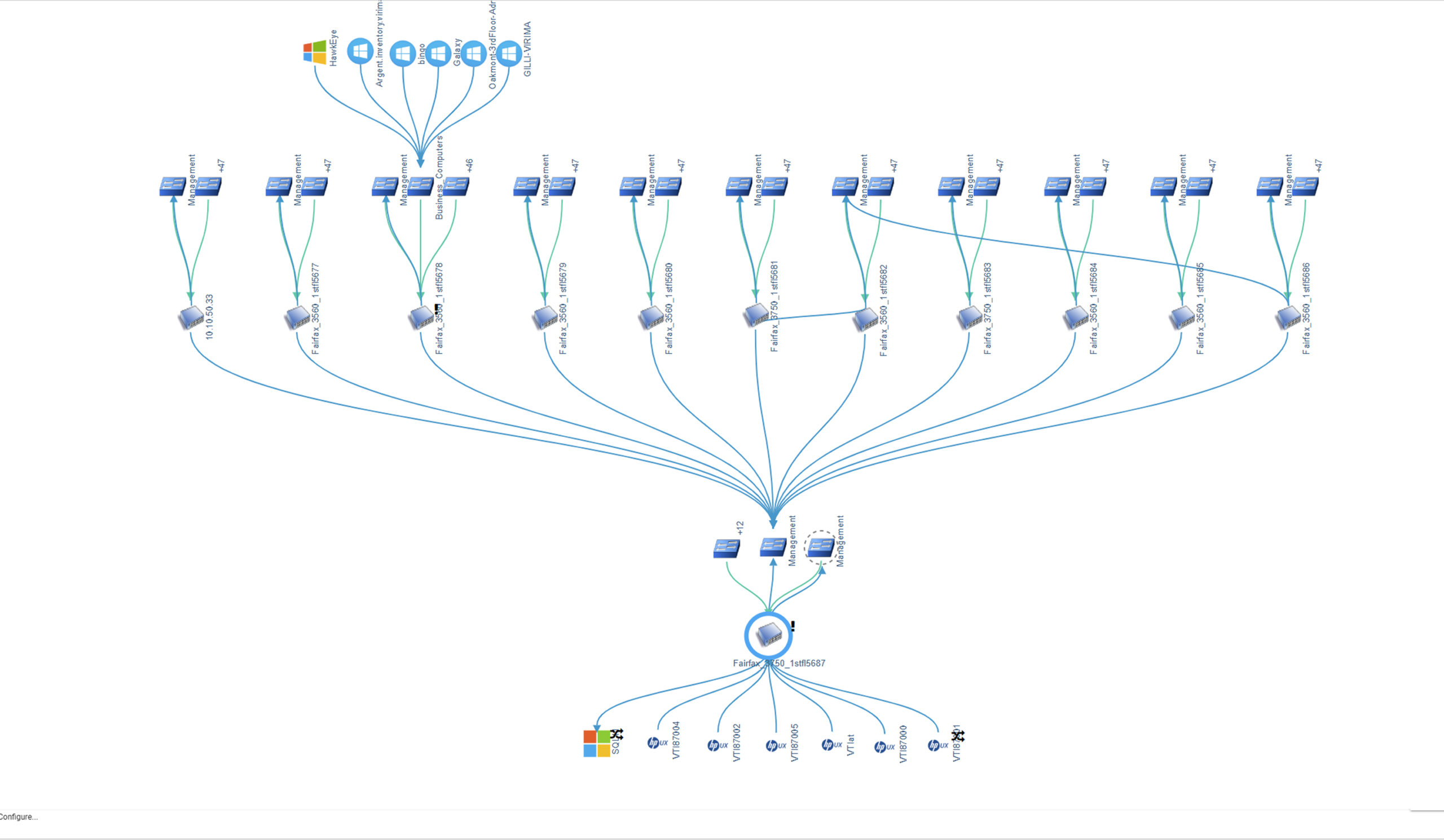
Network Device Dependencies

Map VLANs and device connectivity across your network infrastructure. Understand how routers, switches, firewalls, and load balancers connect and which services depend on them.

Service Topology

View hierarchical relationships such as website and database dependencies. Understand how services are layered and which components sit upstream or downstream of each other.

Frequently Asked Questions around
ViVID™ Service Mapping

What is Service Mapping?

Service Mapping is the process of identifying and visually representing the relationships between IT assets, applications, and the business services they support. It shows how servers, network devices, databases, software, and cloud resources connect to deliver a specific service, giving IT teams a clear picture of dependencies across the entire infrastructure.

Name a service, point it to a logical starting point such as an application or web server, and all of its dependencies become part of the map. Any change to the underlying configuration data is automatically reflected, so teams always have an accurate picture of which servers, applications, network infrastructure, and cloud resources support each business-critical service. From there, ViVID™ overlays ITSM records and vulnerability data onto these maps, enabling use cases like change impact analysis, root cause analysis, and vulnerability prioritization.

Service Mapping helps you gain control over your IT operations and make informed decisions by quickly diagnosing problem areas and prioritizing actions based on business impact. It eliminates the errors that come with manual mapping and ensures your teams always work with accurate, current data. ViVID Service Mapping takes this further by overlaying ITSM records and vulnerability data directly onto the maps, turning static dependency views into actionable operational intelligence.
You can have discovery without service mapping but you cannot have service mapping without discovery. A typical discovery tool provides an inventory of assets and some high-level relationships. A true service mapping solution goes further with discovery of in-depth relationships between assets, including hardware, applications and websites. These relationships are then represented in dynamic maps that automatically adjust based on changes to the environment.
Application dependency mapping (ADM) identifies the connections between individual applications — which app talks to which server, which database feeds which front-end. Service mapping goes a level higher. It groups those application dependencies into a complete picture of a business service, including the hardware, network infrastructure, and cloud resources that support it. Think of ADM as mapping individual roads. Service mapping is the city plan that shows how those roads connect neighbourhoods, hospitals, and power grids into a functioning city. You need ADM data to build accurate service maps, but ADM alone won’t tell you which business services go down when a single database server fails. Virima’s approach starts with automated discovery to collect dependency data, then layers that into business service maps that reflect how your actual services are delivered — not just how your apps are wired together.
Service mapping cuts MTTR by giving incident responders an instant visual of every component that supports a failing service — servers, applications, databases, network devices, and their interdependencies. Instead of the usual war-room guessing game, the team can immediately see what changed, what’s affected, and where the likely root cause sits. When a service disruption hits, the first question is always “what changed?” A current service map with ITSM overlay answers that in seconds. You can see which assets have open incidents, which had recent changes, and trace the blast radius without opening a dozen monitoring tools. That’s the difference between a 4-hour outage and a 20-minute fix.
Yes — and it has to. Most IT environments today aren’t purely on-premises or purely cloud. They’re a mix of physical servers, private cloud, AWS, Azure, and SaaS applications all stitched together to deliver a single business service. The challenge is that cloud resources spin up and down constantly. A service map that only captures your on-prem footprint misses half the picture. Effective service mapping software needs to discover assets across all environments — data centers, AWS EC2 instances, Azure VMs, Kubernetes clusters — and map the dependencies between them automatically. Virima Service Mapping handles on-premises, cloud-based, and hybrid services, pulling discovery data from across your entire environment to build maps that reflect reality, not just the part you can physically touch.
Service mapping relies on discovery data to build accurate maps. At minimum, it needs a complete inventory of your IT assets (servers, network devices, applications, databases) and the relationships between them — which server hosts which application, which application communicates with which database, what ports and protocols are in use. The richer the discovery data, the better the service maps. IP addresses and hostnames are table stakes. What really makes maps useful is communication data (host-to-host connections, traffic flows), installed software details, configuration attributes, and cloud resource metadata. Without automated discovery feeding this data continuously, service maps go stale within weeks. Manual entry can’t keep pace with infrastructure changes — especially in environments where cloud resources spin up and down daily.
Three challenges trip up most service mapping efforts. Incomplete discovery data: If your discovery tool doesn’t reach every subnet, cloud account, or network segment, your maps will have blind spots. The fix: consolidate discovery into a single platform that covers your full environment — on-prem, cloud, and everything between. Stale maps: Manual mapping efforts are outdated the moment they’re finished. Infrastructure changes daily. The only sustainable approach is automated discovery feeding directly into your service maps so they reflect the current state, not last quarter’s state. Lack of institutional knowledge: Automated discovery captures technical relationships, but it can’t tell you that a particular service is business-critical or that a specific server is only used during quarter-end processing. You need input from service owners and application teams to refine automated maps into something truly useful. Start small — map one or two high-priority services, get feedback, iterate, then expand.
Service mapping gives change advisory boards (CABs) and change managers something they rarely have: a clear, visual answer to “what will this change affect?” Before approving a change, the team can pull up the service map for the affected asset and immediately see every upstream and downstream dependency. A firewall rule change that looks low-risk in isolation might sit directly in the communication path of a revenue-critical application. Without a service map, that connection stays hidden until something breaks in production. With ITSM integration, service maps also show pending changes on related assets — so you can spot change collisions before they happen. After a change goes wrong, the map helps pinpoint what was recently modified across the affected service, speeding up rollback decisions.
ViVID is built for any IT stakeholder who needs to understand how infrastructure, applications, and services are connected. Change managers use it to assess blast radius before approving changes. Incident responders use it to trace root cause during outages. Security analysts use it to prioritize vulnerability remediation based on business service impact. Compliance teams use it to demonstrate audit readiness with clear evidence of asset relationships. And IT leadership uses it to gain a single visual layer of how their services are delivered and where the risks sit.

Move faster. Act safely.

Get live, explainable runtime truth across your entire estate — without platform lock-in.