Manufacturing IT Asset Management: Managing OT and IT Infrastructure Convergence

Manufacturing IT asset management is facing a problem that most ITSM vendors were never built to solve. Your environment is not a standard enterprise network. It is a hybrid of corporate IT systems, cloud workloads, and operational technology (PLCs, SCADA systems, industrial controllers, and edge devices) that were never designed to be managed alongside each other. And the convergence is already mainstream: Gartner has forecast that 75% of G2000 manufacturers will implement IT-OT integration strategies to accelerate product cycles and strengthen resilience.
When those environments converge, your asset management approach has to keep up. If it does not, you end up with stale records, invisible dependencies, compliance gaps, and change approvals that carry far more risk than anyone realizes.
This guide is for IT Directors, IT Ops Managers, IT Asset Managers, and compliance leaders in manufacturing organizations trying to get real control over a converged IT/OT environment. It covers why standard asset management falls short, what a better approach looks like, and how to build the accurate, discovery-driven asset record your operations actually need.
Why IT/OT Convergence Creates a New Asset Management Problem
For most of IT’s history, operational technology lived in its own world. OT networks were air-gapped or at least isolated. The engineers who managed PLCs and SCADA systems did not interact much with the IT team running servers, endpoints, and software licenses. Asset tracking happened in separate spreadsheets or purpose-built OT tools that never talked to the IT CMDB.
That separation is gone in most manufacturing environments. Smart manufacturing initiatives, Industry 4.0 investments, and cloud-connected production systems have pushed IT and OT onto shared networks. Remote monitoring, predictive maintenance platforms, and MES integrations all require connectivity that crosses what used to be a hard boundary.
The result is an environment where a patch to a Windows Server running a manufacturing execution system can affect a production line, where a network change touches both corporate endpoints and industrial controllers, and where a vulnerability in an IT system can have physical consequences on the shop floor.
Your asset management approach has to reflect that reality. Most do not.
What Makes Manufacturing IT Asset Management Different
The OT Asset Inventory Problem
OT assets are harder to discover than standard IT assets. Many industrial devices use proprietary protocols (Modbus, DNP3, EtherNet/IP, PROFINET) that standard IT discovery tools do not speak. Others run embedded operating systems with no agent support. Some are so sensitive that active scanning can disrupt operations.
This means your CMDB is almost certainly missing a meaningful portion of your actual asset footprint. You may have solid coverage of your corporate IT environment and cloud workloads, but the OT side is often tracked manually, kept in a separate system, or not tracked at all.
When those OT assets connect to IT systems and cloud services, those gaps become operational risk. You cannot manage what you cannot see.
Network Segmentation vs. Operational Reality
Manufacturing organizations typically maintain network segmentation between IT and OT zones, following the Purdue model or something similar. In theory, this limits exposure. In practice, the connections that enable smart manufacturing often punch through that segmentation in ways that are not always well documented.
Historian servers sit in the DMZ between IT and OT. Jump servers are used for remote OT access. MES platforms that pull data from both production systems and enterprise ERP. These are real assets with real dependencies that live in the gray zone between your IT and OT networks.
If your CMDB only reflects the IT side, you are missing the full picture of what connects to what. And without that picture, you cannot assess impact before a change or trace the root cause during an incident.
Compliance Pressure Across Both Domains
Manufacturing organizations face compliance requirements that span both IT and OT. IEC 62443 covers industrial cybersecurity. NIST SP 800-82 addresses industrial control system security. If you are in food and beverage, pharmaceutical, or automotive manufacturing, you may also face FDA 21 CFR Part 11, IATF 16949, or sector-specific requirements that demand documented asset inventories and change histories.
Meeting those requirements manually is slow, expensive, and unreliable. Discovery-driven asset tracking is what keeps you audit-ready without dedicating significant staff time to preparation every time an audit comes around.
The Risks of Managing OT and IT Assets Separately
Stale Records in a Dynamic Environment
Manufacturing environments change constantly. New equipment gets commissioned. Firmware updates roll out across production systems. Cloud-connected monitoring agents get deployed on edge devices. Network configurations shift to accommodate new production lines.
If your CMDB relies on manual updates or infrequent discovery scans, it falls behind almost immediately. The records you use to make change decisions, resolve incidents, and report on compliance reflect a past state, not the current one.
Stale records are not just an inconvenience. In a converged IT/OT environment, acting on outdated asset information can mean approving a change without knowing it affects production systems, or spending hours on an incident because the dependency map does not show what actually connects to what.
Blind Spots During Change Approvals
Change management in manufacturing carries real operational risk. A network change that looks routine from an IT perspective might affect a SCADA system that controls a production line. A software update to a server might break an integration with a manufacturing execution system.
Without accurate, live dependency data, your change advisory board is making decisions with incomplete information. You cannot assess impact if you do not know what depends on what. And in a manufacturing environment, the impact of a poorly understood change can extend from the server room to the shop floor.
Audit Exposure Without Unified Visibility
When an auditor asks for your asset inventory, they want to see everything, not just your corporate endpoints and servers. In a converged environment, that means OT assets, edge devices, and the connections between them.
If your IT CMDB and your OT asset records live in separate systems with no shared view, pulling together a complete picture for an audit is a manual, time-consuming process. And the picture you produce is only as accurate as the last time someone updated both systems.
What Trusted Runtime Truth Means for Converged Manufacturing Environments
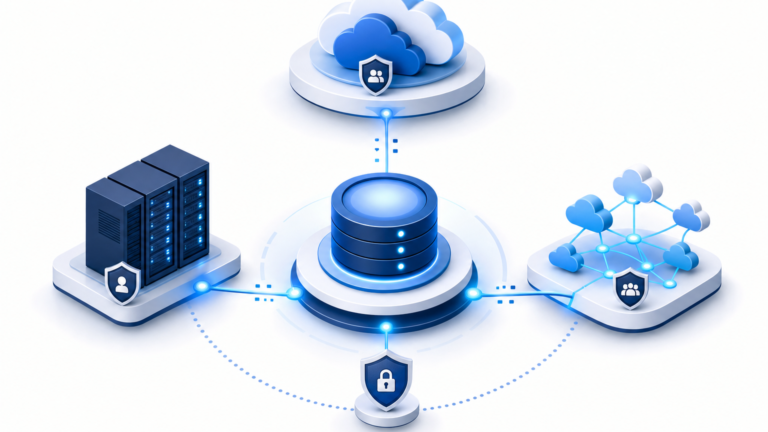
Trusted runtime truth describes a live, discovery-driven view of your assets, their relationships, their ownership, their change history, and their current status. It is not a snapshot, and it is not a manually maintained record. It is an asset foundation you can trust to be accurate at the moment you act on it.
That does not mean scanning everything every hour. It means knowing when your data is getting stale and refreshing it before it leads to a bad decision. For manufacturing IT teams, trusted runtime truth means:
- Your CMDB reflects both IT and OT assets, populated by discovery rather than manual entry
- Dependencies across the IT/OT boundary are visible, so you can see how a corporate IT system connects to a production system before you touch it
- Change history is tracked over time, so you can trace what changed, when, and what it affected
- Compliance data stays current, so audit preparation becomes a reporting exercise rather than a research project
- Impact is visible before you act, so change approvals are based on actual dependency data, not assumptions
This is the foundation manufacturing IT asset management needs in a converged environment. Without it, you are managing risk you cannot see.
How to Build a Unified IT/OT Asset Management Foundation
Step 1: Discover with Authority Across Both Domains
The first problem to solve is discovery. You need a discovery approach that covers your entire environment (corporate IT, cloud workloads, and OT-adjacent assets) without relying on manual input to fill the gaps.
That means using multiple discovery methods. Agentless discovery works well for IT assets and many OT devices that support standard network protocols. Agent-based discovery gives you deeper visibility into managed endpoints. API-based discovery pulls in cloud asset data from AWS and Azure. For sensitive OT environments, passive network monitoring can identify devices by their traffic patterns without actively scanning them.
No single method covers everything in a converged manufacturing environment. The goal is broad coverage through a combination of methods, all feeding into a single unified asset record.
Virima IT discovery supports agentless, agent-based, and API-based methods, giving manufacturing IT teams multiple ways to populate and maintain accurate asset records across hybrid environments.
Step 2: Maintain a Single CMDB That Reflects Both Environments
Discovery data is only useful if it feeds into a CMDB that stays accurate. The challenge in manufacturing is that OT assets often live elsewhere: purpose-built OT asset tools, spreadsheets, or the institutional knowledge of the OT engineering team.
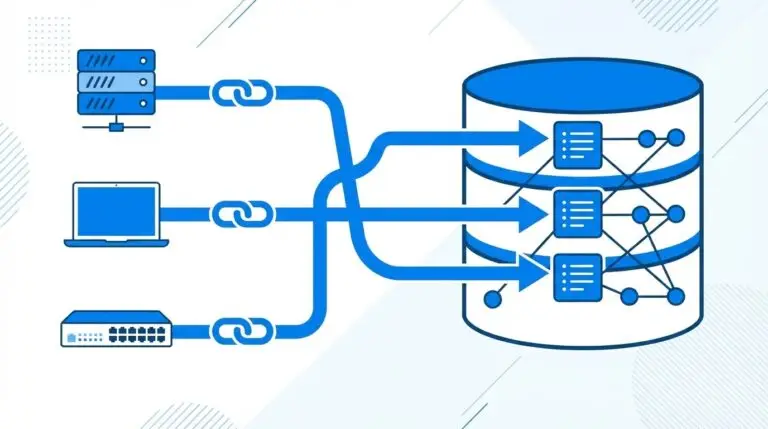
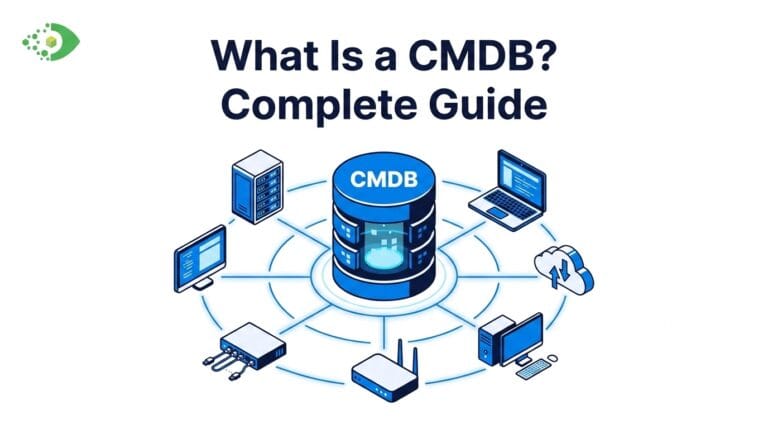
A unified CMDB does not mean forcing OT assets into an IT-centric model that does not fit them. It means having a single source of record that tracks all assets, their attributes, their relationships, and their ownership, and that updates as your environment changes.
High-frequency discovery cycles remove the manual update problem that causes records to go stale. When a new device appears on your network, it gets discovered and added. When an asset’s configuration changes, the record updates. When a device goes offline, the CMDB reflects that. You are not waiting for someone to remember to update a ticket.
Step 3: Map Dependencies Across the IT/OT Boundary
Asset records alone are not enough. You need to know how assets relate to each other: which IT systems a production system depends on, which network infrastructure an OT device routes through, which cloud services a manufacturing execution system calls.
Dependency mapping turns a list of assets into an operational context. When you can see that a particular server sits in the dependency chain of a production line, you make different decisions about when and how to change it.
Virima ViVID™ Service Mapping builds dynamic dependency maps that show relationships between assets, services, incidents, changes, and vulnerabilities in a single view. For manufacturing environments, that means you can see the impact before approving a change, not after something breaks.
Step 4: Connect Asset Context to ITSM Workflows
Asset data that lives in isolation from your ITSM workflows does not help your team respond faster. The value of accurate asset and dependency information comes from having it available the moment you need it: during an incident, during a change approval, during a compliance review.
If your team uses ServiceNow, Jira Service Management, Ivanti, or another ITSM platform, your asset context needs to flow into those tools directly. When an incident ticket opens, the relevant configuration item (CI) record and its dependencies should be visible without requiring the analyst to switch systems and search manually.
Virima integrates with leading ITSM platforms including ServiceNow, Ivanti, HaloITSM, Jira Service Management, and Xurrent. That means the discovery-driven asset record in your CMDB is available inside the ITSM workflows your team already uses, without a platform migration.
Step 5: Stay Audit-Ready Without Manual Preparation
Compliance in manufacturing is not a one-time event. Audits happen on cycles, and the requirements span hardware lifecycles, software licenses, configuration change histories, and security controls. Preparing for each audit manually is expensive and risky. If your records are not current, you find out during the audit.
Discovery-driven asset tracking turns audit preparation into a matter of running reports rather than researching records. Your inventory stays current. Your change history stays documented. Your license compliance data reflects what is actually deployed.
Virima ITAM tracks hardware lifecycles, software licenses, contracts, and compliance details on a continuous basis, so manufacturing IT teams can produce audit-ready reports without scrambling to reconcile data from multiple sources.
Manufacturing Compliance and Industrial Asset Management in 2026
Compliance requirements for manufacturing IT and OT environments have grown more specific in 2026. IEC 62443 has become a baseline expectation for organizations with industrial control systems, particularly in critical infrastructure sectors. NIST SP 800-82 guidance continues to inform how organizations approach ICS security documentation and asset inventory requirements.
For organizations subject to these frameworks, the asset inventory is not just an operational tool. It is a compliance artifact. Auditors want documented evidence of what assets exist, how they are configured, what changes have been made, and how vulnerabilities are tracked and remediated.
Meeting those requirements with manual processes gets harder as environments grow more complex. The convergence of IT and OT adds assets and relationships that manual tracking cannot keep up with. Discovery-driven asset management is no longer just operationally useful. It is becoming a practical requirement for demonstrating compliance.
Industrial asset management in this context means tracking OT assets with the same rigor you apply to IT assets: documented ownership, configuration baselines, change history, and lifecycle status. That level of documentation requires automation, because manual updates cannot scale to the complexity of a converged manufacturing environment.
How Virima Supports Manufacturing IT Asset Management
Virima is built around the principle of trusted runtime truth for IT operations: live, explainable asset context that teams can act on with confidence. For manufacturing organizations managing converged IT/OT environments, that means:
- Discovery that covers your full environment. Agentless, agent-based, and API-based methods give you broad coverage across corporate IT, cloud workloads, and OT-adjacent assets without relying on manual input to fill gaps.
- A CMDB that stays accurate. High-frequency discovery cycles keep configuration item records current as your environment changes, so you are not making decisions on stale data when accuracy matters most.
- Dependency maps that show impact before you act. ViVID™ Service Mapping builds dynamic views of how assets, services, and systems relate, so change approvals are based on actual dependency data rather than assumptions.
- Audit-ready asset tracking without manual preparation. Continuous tracking of hardware lifecycles, software licenses, contracts, and configuration history means compliance reporting is a reporting exercise, not a research project.
- Integration with the ITSM tools you already use. Native integrations with ServiceNow, Ivanti, Halo, Jira Service Management, and Xurrent mean asset context flows into your existing workflows without forcing a platform change.
Virima does not require you to rip out your existing ITSM platform. It works as a vendor-neutral CMDB and discovery foundation that feeds accurate, live context into the tools your team already uses.
Trusted Runtime Truth Is How Manufacturing IT Gets Ahead of Risk
IT/OT convergence in manufacturing is not a future concern. It is the environment most manufacturing IT teams are managing right now. The asset management approaches built for traditional enterprise IT do not cover the full scope of a converged environment, and the gaps they leave create real operational and compliance risk.
The answer is not a more complex tool. It is a trusted runtime truth: a discovery-driven asset context that covers your entire environment, maps dependencies across the IT/OT boundary, and feeds accurate information into the workflows where your team makes decisions.
If your CMDB is stale, your dependency maps are incomplete, or your audit preparation still involves manual reconciliation across multiple systems, it is worth seeing what a unified approach can do for your manufacturing environment.
See your full IT/OT environment in one place. Request a Virima demo.
FAQs
What is manufacturing IT asset management?
It is the practice of tracking, managing, and maintaining all IT assets (hardware, software, licenses, and configurations) across a manufacturing organization’s environment. In converged environments, this extends to OT-adjacent assets and the dependencies between IT and operational technology systems.
Why is IT/OT convergence a challenge for asset management?
OT assets often use proprietary protocols and embedded systems that standard IT discovery tools cannot reach. When IT and OT networks connect, the dependencies between them create operational risk that is invisible if your CMDB only covers the IT side. Managing both domains requires discovery methods that can reach OT assets and a CMDB that tracks relationships across the IT/OT boundary.
What discovery methods work for OT environments?
Passive network monitoring is often the safest approach for sensitive OT environments because it identifies devices by traffic patterns without active scanning. Agentless discovery works for OT devices that support standard network protocols. API-based discovery can pull asset data from industrial platforms that expose APIs. A combination of methods typically provides the most complete coverage.
How does impact visibility help manufacturing change management?
It shows which assets and services depend on the system you are about to change. In a manufacturing environment, that means knowing whether a change to a corporate IT system will affect a production system before you approve it. Without that dependency context, change approvals carry risk the CAB cannot see.
What compliance frameworks apply to manufacturing IT/OT asset management?
IEC 62443 covers industrial cybersecurity and includes asset inventory requirements for industrial control systems. NIST SP 800-82 provides guidance on ICS security documentation. Sector-specific requirements such as FDA 21 CFR Part 11 for pharmaceutical manufacturing or IATF 16949 for automotive may add further asset tracking and change documentation requirements.
How does a unified CMDB support manufacturing compliance audits?
A unified CMDB with discovery-driven updates keeps your asset inventory, configuration history, and change records current. When an audit requires documentation of what assets exist, how they are configured, and what changes have been made, you can produce that evidence from live records rather than reconstructing it from multiple sources.
Can Virima integrate with existing ITSM platforms used in manufacturing?
Yes. Virima integrates with ServiceNow, Ivanti, Halo, Jira Service Management, and Xurrent. Manufacturing IT teams can use Virima as a discovery and CMDB foundation that feeds accurate asset context into their existing ITSM workflows without a platform migration.