Virima CMDB for Change Management Excellence in IT Organizations

What Is a CMDB?
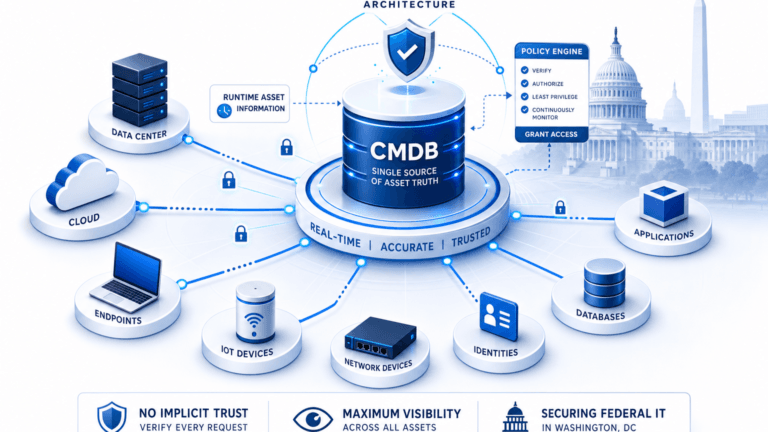
A CMDB is a data repository that stores information about IT assets, their relationships, and configurations. You can use it to track changes across your environment. It typically sits at the center of a broader change management process in organizations with large-scale IT estates.
In practice, a CMDB helps you map dependencies between applications and services. For example, it shows that App A depends on Database B, so you can avoid disrupting other parts of your infrastructure when making changes or updates. That visibility makes it easier to plan upgrades that require taking certain services offline while others stay live.
Shorter, better-scoped change windows mean less downtime and more productivity for both end users and IT teams.
How Virima CMDB for Change Management Elevates Your Process
Change management is a structured process for moving individuals, teams, or organizations from their current state to a target state. Its goal is to reduce the risk that comes with organizational changes.
Virima CMDB for change management supports that goal by enabling informed decisions, reducing exposure, and providing clear visualizations of IT infrastructure dependencies. Here is how it transforms your approach.
Impact Analysis
A CMDB maps relationships between configuration items (CIs), so your team can predict the likely outcome of a planned change before it goes live. For a detailed look at how Virima aligns these capabilities with the ITIL framework, see our walkthrough of CMDB impact analysis and ViVID for ITIL change management.
Dependency Visualization
Virima CMDB for change management highlights asset dependencies so teams can identify potential conflicts throughout the change process. Those dependencies are surfaced visually through ViVID™ service maps, making complex relationships readable at a glance.
Risk Mitigation
Accurate dependency data reduces the risk tied to changes. When you can see the full chain of connected CIs, you can prevent service disruptions before they happen.
Informed Decision-Making
Virima CMDB gives your team the configuration detail needed to plan changes with confidence, backed by data rather than assumptions.
Historical Data Context
The CMDB holds a record of past changes. Teams can apply lessons from previous modifications when planning future work, reducing the chance of repeating costly mistakes.
Audit Trail
Every change leaves a traceable record, making it straightforward to review decisions and roll back modifications when issues occur.
Leveraging Virima CMDB for Change Management in Your IT Organization
Virima CMDB takes a visual, discovery-driven approach to configuration and change management. By deploying Virima CMDB for change management, IT organizations gain several capabilities that improve how changes are planned, approved, and tracked. You can also explore specific change workflows on the Virima change management use case page.
1. Increase CMDB Accuracy Through High-Frequency Discovery Cycles
With Virima, stale or inaccurate data no longer derails change plans. Virima CMDB uses high-frequency discovery cycles and intelligent, granular business rules to eliminate manual CMDB maintenance and keep data accurate. That same discovery engine also powers IPAM in CMDB workflows, keeping IP address assignments, subnets, and network dependencies current so change teams always know which addresses are affected before a modification goes live.
2. Make Factual Decisions with Reliable Insights
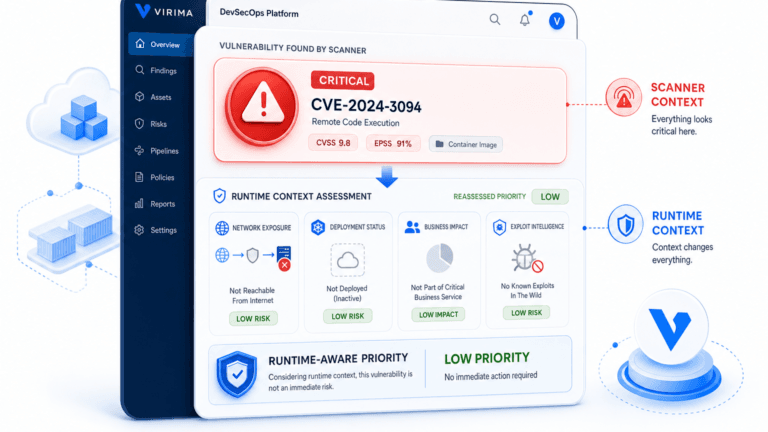
Virima CMDB for change management goes beyond data storage. It turns raw configuration records into actionable intelligence, so IT teams can make informed decisions quickly. To see how discovery-driven data keeps change decisions grounded as your environment scales, read our guide on ITIL change management and CMDB accuracy.
3. Enhance IT Asset Management and Service Management
Virima CMDB connects configuration management with IT Asset Management (ITAM), IT Service Management (ITSM), and IT Operations Management (ITOM), strengthening many areas of modern IT operations. That linkage extends the value of discovery-sourced data across DevOps, security, finance, and compliance workflows.
4. Classify and Understand Complex CI Relationships
ViVID™ and Service Mapping bring dynamic, filterable visualizations to complex CMDB relationships. Those interactive views give your team a clear picture of infrastructure topology, communication flows, and host-to-host connections. The same CMDB service maps also simplify change approval routing by surfacing CI ownership, so you can identify the right stakeholders and route changes through the correct approval paths.
5. Reduce Manual Effort with Discovery-Driven CMDB Maintenance
Virima CMDB for change management integrates with leading ITSM platforms, including ServiceNow, Ivanti, Halo, Jira Service Management, and Xurrent, and synchronizes CI updates as your infrastructure evolves. Virima IT Discovery populates and maintains the database with current data, cutting the manual effort involved in keeping configuration records accurate.
6. Achieve Data-Driven Outcomes
ViVID™ provides a visual representation of each asset’s relationships. Paired with Virima ITSM capabilities, it helps your team plan changes, manage incidents, and prioritize vulnerability remediations using data your team can trust.
Virima CMDB for change management gives IT organizations a visual, discovery-driven tool for reducing change risk, making informed decisions, and improving IT operations.
| Want to see how Virima handles change impact in your environment? Request a demo and get a live walkthrough tailored to your IT estate. |
Build Change Confidence with Discovery-Sourced CMDB Data
A discovery-driven CMDB gives IT teams the configuration context to manage changes and assets with confidence. Use it to track changes, map dependencies, and prevent problems before they surface in production.
Virima CMDB for change management provides a single source of truth across your IT environment, giving you better decisions when scoping new projects and initiatives. Ready to take your change management process further?
Frequently Asked Questions
Why do so many IT change management processes fail?
Most change failures trace back to stale or incomplete configuration data. When the CMDB does not reflect the current state of the IT environment, impact assessments miss hidden dependencies and changes break services they were never supposed to touch. Keeping CI data accurate through high-frequency discovery cycles is the most direct way to reduce that failure rate.
How does a CMDB reduce the risk of unplanned outages during change windows?
A CMDB maps the full chain of dependencies between configuration items before a change is approved. That means your team can see, in advance, which services a planned change will touch. If a dependency is flagged as high-risk, the change can be rescheduled or scoped down before any maintenance window opens. The result is fewer surprises and shorter recovery times when issues do occur.
What causes CMDB data to become inaccurate over time?
CMDB data degrades when discovery is infrequent, manual, or siloed. New assets get added outside the normal process, configurations drift after deployments, and relationships change without any update to the database. Organizations that rely on manual data entry are most exposed — a single busy week can leave dozens of CIs in an outdated state. Scheduled, high-frequency discovery cycles are the primary defense against this drift.
How does Virima CMDB support change management approvals?
Virima CMDB for change management surfaces CI ownership and dependency relationships through ViVID™ service maps. Before a change request is approved, change managers can see exactly which CIs are affected, who owns them, and which approval paths apply. That visibility speeds up the CAB process and reduces the back-and-forth that delays low-risk changes. You can explore the full approval workflow on the Virima change management use case page.
Which ITSM platforms does Virima CMDB integrate with for change management?
Virima CMDB integrates with ServiceNow, Ivanti, Halo, Jira Service Management, and Xurrent. CI updates discovered by Virima are synchronized bidirectionally with these platforms, so change teams always work from a consistent, discovery-sourced data set regardless of which ITSM tool they use to manage the change lifecycle.