Reduce IT Downtime: Your Essential Guide with Virima

Uptime Institute’s 2024 Annual Outage Analysis found that the majority of significant IT outages trace back to configuration errors and change management failures rather than hardware issues. That finding points directly to a gap that accurate asset data and dependency awareness can close.
What causes most IT downtime?
Most unplanned IT outages stem from configuration errors, undocumented dependencies, and change collisions. When IT teams lack a complete and current view of their infrastructure, a routine update can silently break services elsewhere. Poor asset data and stale configuration records cause far more outages than hardware failures do.
Strategies to Reduce IT Downtime
IT teams use several approaches to cut unplanned outages. Some of the most effective include:
- Regular system maintenance: Updating and maintaining systems on a consistent schedule catches small problems before they cause major failures. Scheduled maintenance gives IT teams a predictable window to address known risks.
- Redundant systems: When one component fails, a redundant system takes over. This approach limits the impact of hardware failures and keeps critical services available.
- Reliable infrastructure investment: Quality hardware and software fail less often. While the upfront cost is higher, the total cost of ownership typically drops when unplanned failures decrease.
- Proactive system monitoring: Monitoring tools give IT teams visibility into performance trends. When metrics shift from normal patterns, teams can act before a full outage occurs.
- Refined deployment processes: Poorly planned software deployments cause a significant share of IT downtime. Tightening your deployment workflow, including change approval and rollback plans, directly reduces that risk.
To reduce IT downtime consistently, you need more than a checklist. You need a proactive mindset backed by accurate, current data about your environment. When your team knows what exists, what has changed, and what depends on what, they can spot risks before those risks become outages.
See how Virima builds trusted runtime truth across your IT environment. Explore Virima’s Trusted Runtime Truth
Virima’s IT Downtime Solutions
Virima helps IT teams reduce IT downtime through three core capabilities: discovery-driven asset visibility, incident management with service dependency context, and configuration management. Together, these capabilities give your team the information they need to act before problems escalate.
Discovery-Driven Asset Maintenance
Virima runs high-frequency discovery cycles to keep your asset records current. Rather than relying on manually updated spreadsheets or point-in-time audits, Virima refreshes its picture of your IT environment through recurring scheduled scans. When a system shows early signs of stress, such as unusual resource consumption or aging configurations, your team sees it while there is still time to act.
This approach extends the useful life of IT assets by helping your team address wear and risk before failure. It also reduces the surprise element in change-related outages, because you are working from current data rather than stale records.
How does high-frequency discovery reduce IT downtime?
High-frequency discovery cycles keep your asset inventory current through recurring scheduled scans. When configuration data stays fresh, your IT team can spot deteriorating conditions and dependency conflicts before they trigger outages, rather than diagnosing them after the fact.
Incident Management with Service Mapping and ViVID
When an outage occurs, the speed of resolution depends on how quickly your team understands what is affected and why. Two Virima capabilities directly support that: Service Mapping and the Virima Visual Impact Display (ViVID).
Service Mapping
Virima’s Service Mapping builds a live view of your IT services, showing the relationships and dependencies between applications, infrastructure components, and business processes. When an incident occurs, this map shows which services are affected and what failure points exist upstream and downstream.
That context changes how fast your team can work. Instead of tracing dependencies manually, your engineers see the blast radius immediately. Root cause investigation becomes faster when you can see the dependency chain rather than rebuild it during the incident.
ViVID Service Maps
ViVID builds on Service Mapping by displaying service health and asset status in a visual interface. During an active incident, ViVID highlights the affected areas so the scope is immediately clear, without requiring your team to interpret raw log data or query multiple systems.
This shared visual context also helps communication across teams. Support, infrastructure, and management can all look at the same display and reach the same conclusions faster. That alignment shortens resolution times and helps reduce IT downtime from recurring incidents.
Integrated Ticketing and Notifications
Virima integrates with ITSM platforms, including ServiceNow, Ivanti, Halo, Xurrent, and Jira Service Management. When an incident is detected, your team gets automated ticket creation and status notifications that include Service Mapping and ViVID context. Decision-makers get the full picture without pulling from multiple sources.
What role does service dependency mapping play in incident response?
Service dependency mapping shows IT teams exactly which components connect to an affected system. During an incident, that visibility means faster diagnosis and faster resolution. Teams see the blast radius of a failure immediately, rather than spending the first hour of an outage manually tracing dependencies across siloed systems.
Configuration Management
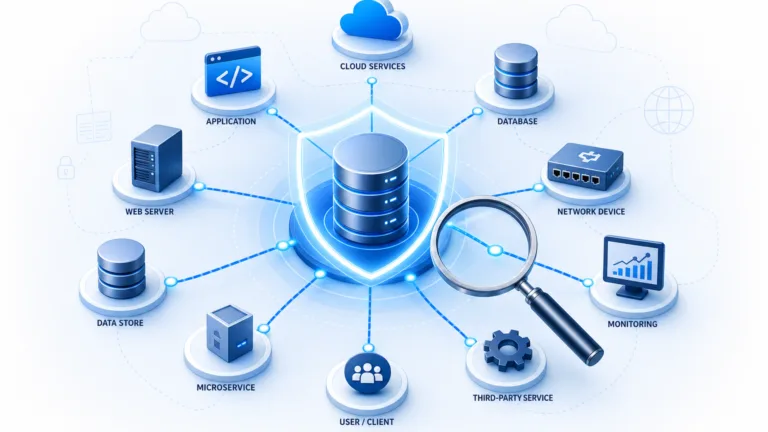
Configuration management ties together asset visibility, change control, and incident prevention. Virima maintains a detailed record of all assets, their configurations, and how each relates to others in your environment.
That record becomes essential when your team plans a change. Before any modification, you can assess how it might affect connected systems. Teams working from accurate configuration data make better change decisions. Better decisions mean fewer unexpected outages, and fewer outages help you reduce IT downtime over the long term.
How does CMDB reduce change-related IT downtime?
A CMDB stores detailed records of all IT assets and their relationships. When a team plans a change, an accurate CMDB shows which connected systems could be affected. This visibility allows teams to plan safer change windows, avoid conflicts with dependent services, and roll back quickly if something goes wrong.
Keeping Your IT Environment Agile
Beyond those three core capabilities, Virima helps IT teams operate with greater speed and confidence across four additional areas.
Timely Alerts and Dashboards
Virima surfaces alerts and visual dashboards that give IT teams a current view of system health. When conditions shift, your team sees it early, before an issue becomes an outage. That early visibility is the difference between a proactive fix and an emergency response.
Workflow Automation
Routine tasks, such as ticket creation, asset status updates, and configuration record syncing, can run without manual input. Workflow automation frees your team to focus on work that requires judgment. It also removes human error from repetitive processes.
Root Cause Analysis
Understanding why an outage happened matters as much as fixing it. Virima’s Service Mapping and ViVID tools give your team a dependency-aware starting point for root cause analysis. You can trace failures back to their source with the full context of how your services connect, which makes future prevention far more targeted.
Capacity Planning
IT systems under sustained load behave unpredictably. Virima surfaces usage patterns that help you plan for capacity before limits are reached. Good capacity planning prevents the gradual degradation that precedes sudden failure.
How does Virima help reduce IT downtime?
Virima helps reduce IT downtime by delivering high-frequency discovery cycles, service dependency mapping, and configuration management in a single platform. Teams get current asset data, clear visibility into dependency relationships, and the configuration context to plan safe changes. The result is faster incident resolution and fewer outages from configuration drift.
Frequently Asked Questions
How can IT teams proactively prevent system outages?
The most effective approach combines accurate, current asset data with service dependency maps. When your team knows what exists in the environment, how components relate, and what has changed recently, they can spot risks before those risks become failures.
What is the biggest contributor to unplanned IT downtime?
Configuration errors and change-related failures account for the largest share of unplanned outages in most enterprise environments. Pure hardware failure is a smaller proportion than most teams expect.
How does service dependency mapping speed up incident resolution?
Service dependency maps show the relationships between IT components. During an incident, that context lets teams identify the failure source and assess which other services are at risk, without manually tracing connections across multiple systems.
What does Virima discover to help reduce IT downtime?
Virima runs high-frequency discovery cycles to build and maintain an accurate picture of your IT assets, their configurations, and their relationships. This covers on-premises infrastructure and cloud resources in AWS and Azure.
How does configuration management reduce change-related outages?
Configuration management tracks the current state of every IT asset and how changes to one asset affect others. Before making a change, teams can review dependency data and plan accordingly, so updates do not create unexpected failures in connected systems.
Reduce IT Downtime with Discovery-Driven Asset Intelligence
Reducing IT downtime takes accurate asset data, a clear service dependency context, and workflows that help your team act before problems escalate. Virima gives IT teams the discovery-driven foundation they need to operate confidently, resolve incidents faster, and prevent the configuration drift that causes most unplanned outages.
When your asset records are current and your service dependencies are mapped, every change decision and every incident response becomes faster and more precise. That is how you reduce IT downtime in a sustainable, repeatable way.
Ready to prevent outages before they happen? Schedule a demo today to see how Virima delivers discovery-driven asset intelligence for your IT environment.