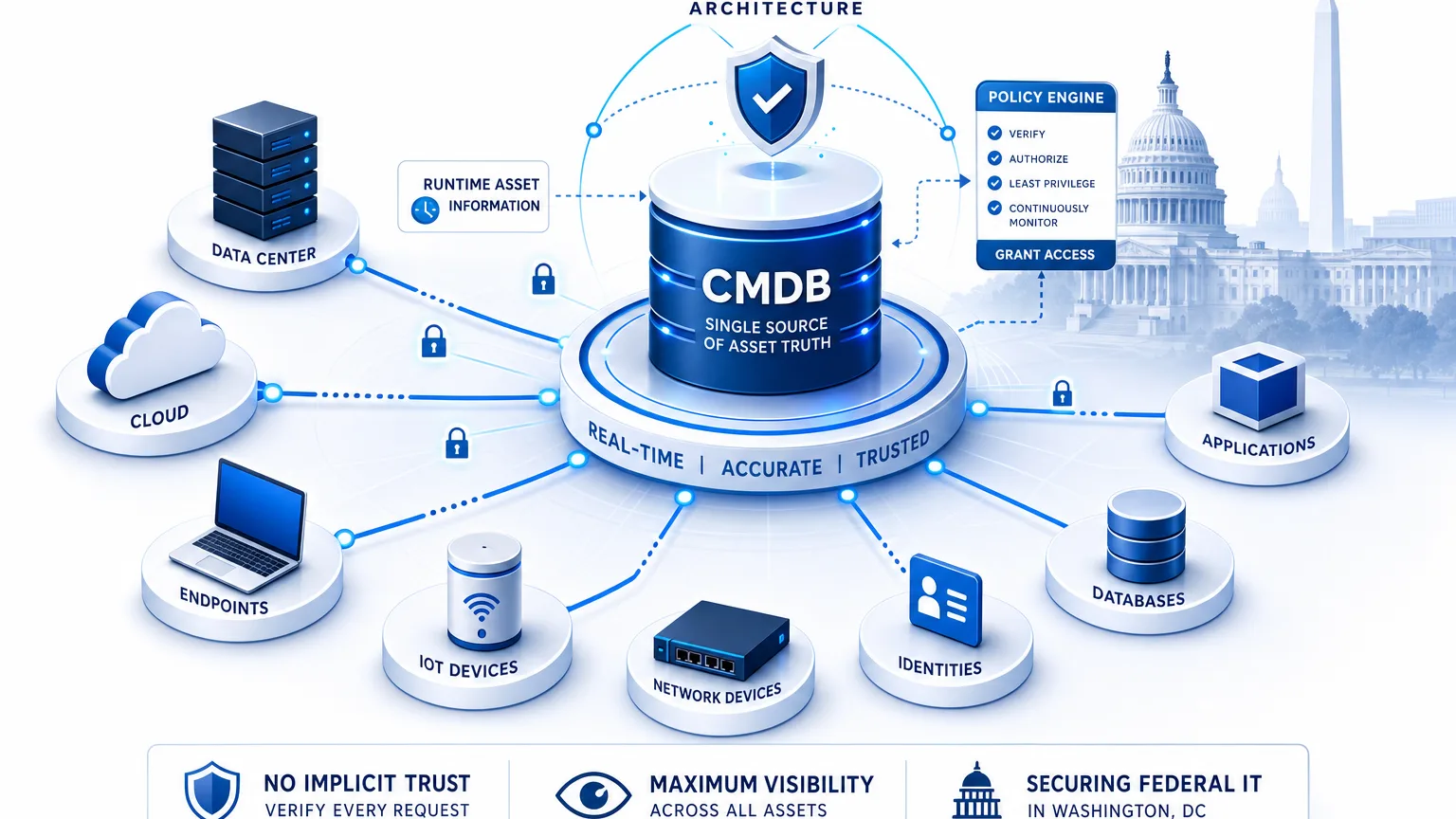
Zero Trust Architecture and CMDB: Runtime Asset Truth for Washington DC’s Federal IT

A Zero Trust Program Manager at a civilian agency in the National Capital Region does not need another definition of zero trust. They need a defensible answer to a harder question: when the policy engine checks an asset before granting access, is the record it queries current enough to trust? In Washington, that question is no longer informal. It sits inside dated OMB memoranda, CISA directives, GAO reviews, and Inspector General findings, many of them written or graded a few blocks from the agencies they bind.
Zero trust architecture and CMDB work for federal IT stands or falls on that query. Identity checks, least-privilege decisions, and micro-segmentation all assume someone can name what exists, who owns it, and what it connects to before access is granted. When the inventory still rests on periodic scans and manual reconciliation, the policy engine does not fail with a loud alarm. It either grants access against a stale record or leaves assets that never entered the configuration management database (CMDB) outside the enrollment path entirely.
This article stays on the civilian executive-branch track under OMB and CISA. The Department of Defense and Intelligence Community run a separate zero trust program under DoD strategy and guidance, already flagged as its own lane in Virima’s broader asset-visibility work.
Washington Is Where Zero Trust Became a Mandate, Not a Recommendation
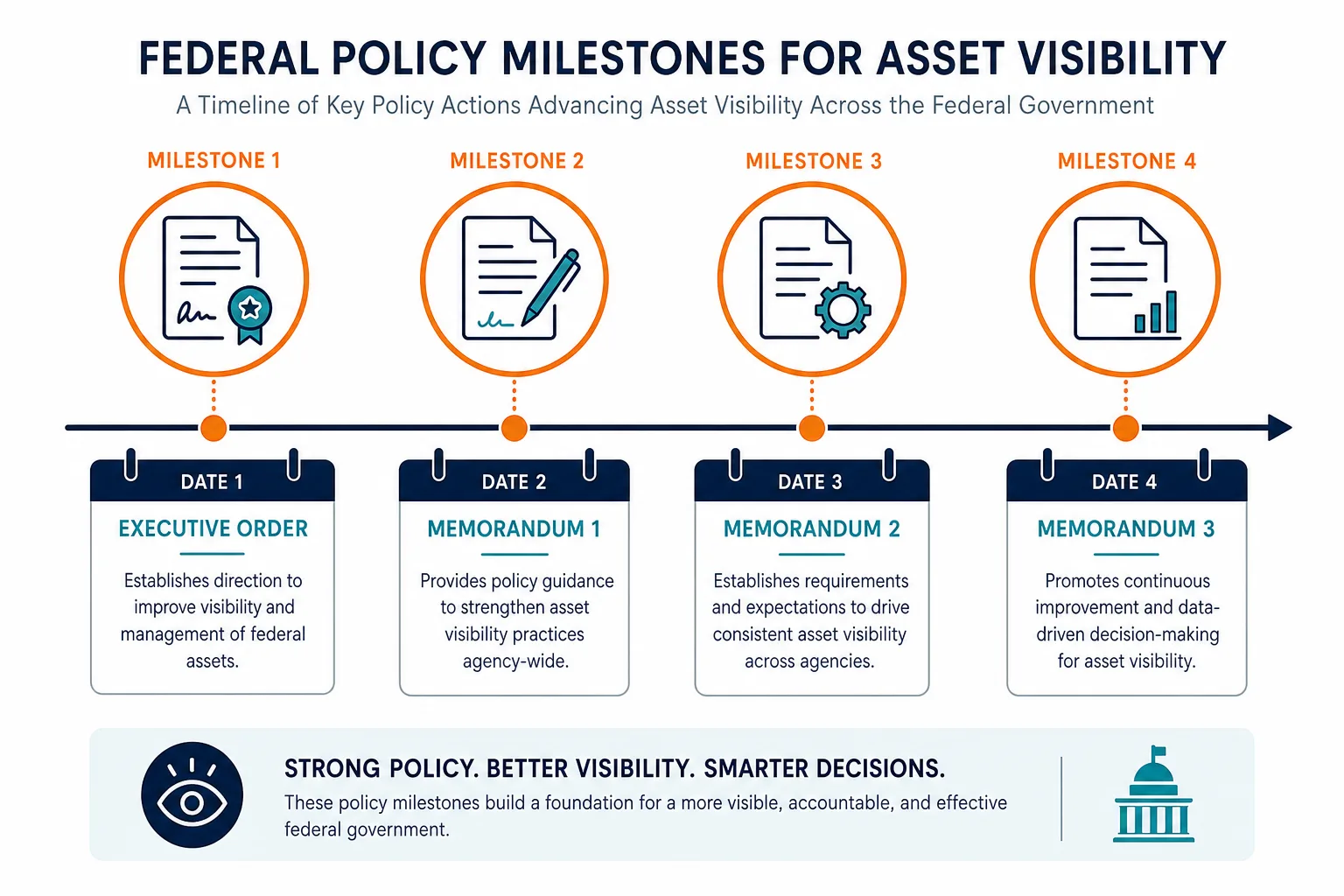
Federal zero trust for civilian agencies did not arrive as a vendor talking point. Executive Order 14028 (May 2021) directed the U.S. government to move toward zero trust architecture. OMB followed with M-22-09, “Moving the U.S. Government Toward Zero Trust Cybersecurity Principles” (January 26, 2022), issued from the Eisenhower Executive Office Building next to the White House. That memo set specific goals through FY2024 and called for ongoing, reliable, and complete asset inventories, including by leveraging Continuous Diagnostics and Mitigation (CDM).
CISA turned policy into operating language. The Zero Trust Maturity Model 2.0 treats visibility and analytics as a cross-cutting capability across its pillars. Binding Operational Directive 23-01 (October 3, 2022) required FCEB agencies to run automated asset discovery and vulnerability enumeration on a defined cadence and report into CDM.
The mandate kept moving. In May 2026, OMB issued M-26-14 on logging and network visibility, rescinding the prior logging memo and converting asset capture into a graded maturity model. Civilian agencies now face numeric inventory thresholds, not only narrative commitments. DoD zero trust remains a parallel track with its own portfolio office. This piece stays with the OMB and CISA chain that GAO and the House Oversight FITARA process score for civilian CIOs.
Where did civilian federal zero trust requirements originate?
Civilian federal zero trust requirements stem from Executive Order 14028 (May 2021), OMB M-22-09 (January 2022), CISA’s Zero Trust Maturity Model and BOD 23-01, and OMB M-26-14 (May 2026). Those instruments were issued and operated from Washington, D.C. institutions, separate from the DoD Zero Trust Strategy track.
The Agencies Living Under These Rules Are Headquartered a Few Blocks Apart
The civilian zero trust stack is concentrated in place, not only in policy language. The U.S. Government Accountability Office sits at 441 G Street NW and keeps auditing whether network monitoring programs deliver what Congress funded. GSA, headquartered at 1800 F Street NW, runs the acquisition vehicles many agencies use to buy that tooling. The House Committee on Oversight and Accountability grades federal CIOs twice a year on the FITARA scorecard from Capitol Hill, including IT portfolio and asset-management dimensions. That structure also means a single service can have its underlying IT records split across agencies and contractors, a reconciliation problem Virima’s analysis of centralizing government IT records across fragmented ownership covers in more depth.
DHS has operated its headquarters on the St. Elizabeths campus in Southeast Washington since 2013. CISA, still spread across leased Arlington buildings, is consolidating onto the same campus under a GSA-awarded construction effort, with completion expected in 2027. The agency that owns the Zero Trust Maturity Model, BOD 23-01, and CDM is building its permanent footprint in the same city as OMB, GAO, and a dense cluster of regulated civilian departments.
Named agencies show why the stakes are local as well as legal. The Small Business Administration, headquartered at 409 3rd Street SW, drew an FY2025 OIG FISMA review that found hardware and software inventories not always kept up to date and performance below the federal baseline in nine of ten security domains, as reported publicly. The Securities and Exchange Commission at 100 F Street NE faced its own OIG readiness review of early M-22-09 tasks, with mixed completion against first-year deadlines. Those findings illustrate documented gaps. They are not a claim that every civilian agency shares the same score, and they are not customer stories.
Where the Asset Record Actually Breaks Down
Zero trust enforcement needs a current asset record before it can enroll a device, apply least privilege, or limit lateral movement. An asset missing from the CMDB is an asset the policy path cannot fully govern. Virima’s published framing on cybersecurity and IT asset visibility via CMDB covers that dependency in detail: unrecorded assets sit outside the enrollment and policy path rather than failing in a clean, obvious way.
What GAO Found in the Federal Asset Visibility Program
GAO’s June 2025 review of CISA’s network monitoring program (GAO-25-107470) is the clearest government-wide signal. CDM helped with insecure configurations and incident response in places, yet 21 of 23 civilian agencies reported incomplete network security and data protection implementation and cited a lack of guidance. Cloud asset management work remained unfinished for many, and all four GAO recommendations to DHS remained open as of May 2026 reporting.
The pattern is not new. GAO’s December 2023 review found 20 of 23 agencies had missed the original August 2023 event-logging maturity deadline under the predecessor logging memo. Missed visibility and logging thresholds show up as a recurring civilian-government outcome, not a one-off shortfall at a single bureau. Point-in-time scans and spreadsheet inventories describe the footprint at collection time. A zero trust decision made later queries a different reality if contractors, cloud projects, or facility changes moved faster than the last reconciliation cycle.
The Operational Cost of a Stale Asset Record
Operational cost shows up as stalled enrollment when newly found assets cannot keep pace with change, longer incident and blast-radius work when dependency data is incomplete, and reportable findings when OMB maturity thresholds or FISMA and OIG reviews put a name on a stale inventory.
What did GAO find about civilian agencies and CDM asset visibility?
In GAO-25-107470 (June 2025), GAO reported that Continuous Diagnostics and Mitigation (CDM) met some goals, yet 21 of 23 civilian agencies cited incomplete network security and data protection implementation and unfinished cloud asset management work. All four GAO recommendations to DHS remained open as of May 2026 reporting.
OMB Made Asset Visibility a Numeric, Graded Requirement
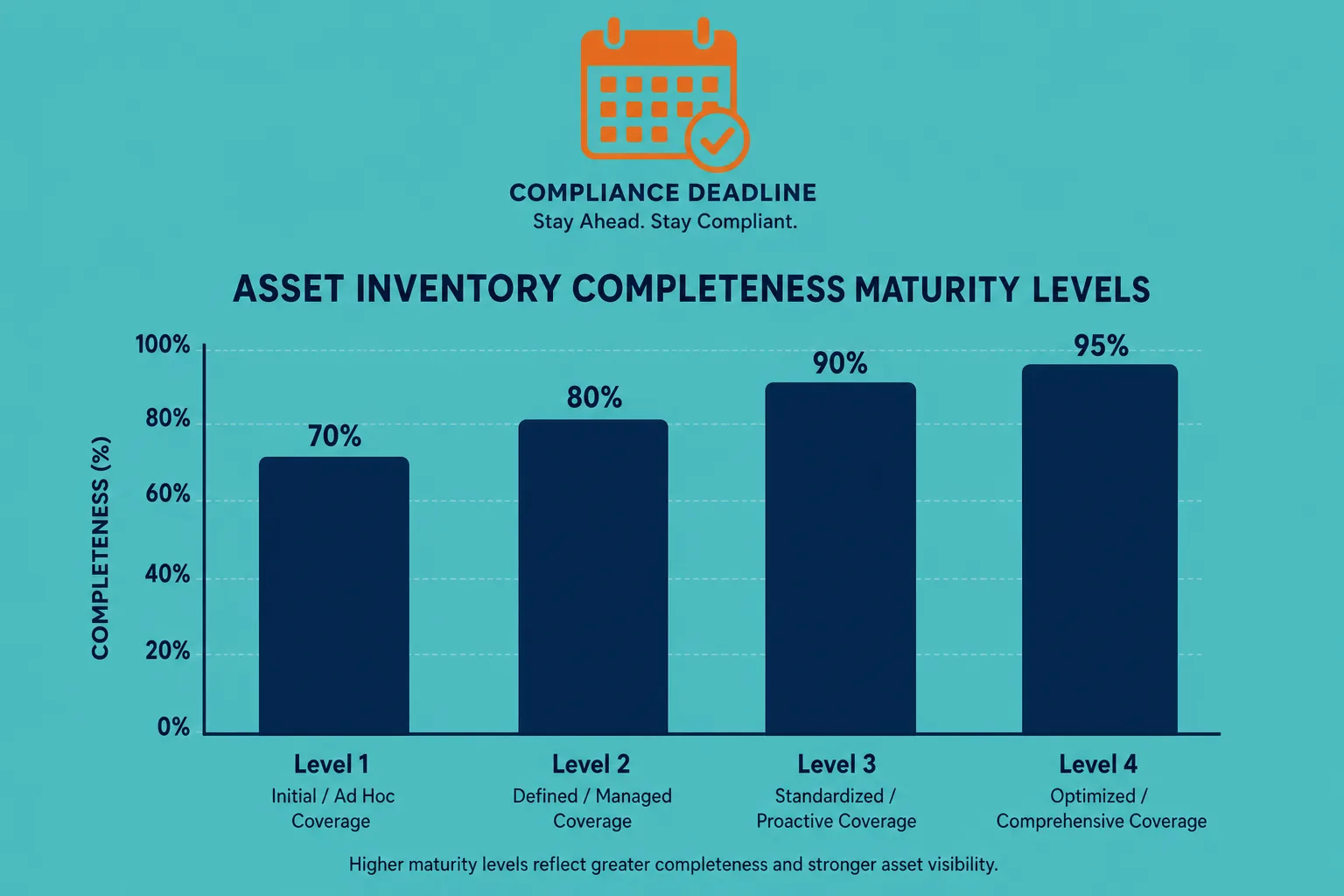
M-26-14 reframes the inventory problem as a scored, five-level maturity path (Level 0 through Level 4). Level 1 requires about 70 percent of an agency’s IT, OT, and IoT assets in a centralized inventory, rising to 80 percent at Level 2, 90 percent at Level 3, and 95 percent at Level 4. Agencies must use hardware and software asset management (HWAM/SWAM) data to validate log coverage. Appendix material ties the model to CISA’s Zero Trust Maturity Model, where visibility and analytics cut across pillars.
The Maturity Thresholds and the Compliance Clock
The clock is already running. After CISA published its Logging Reference Architecture in August 2026, agencies face logging plans due to OMB and CISA by November 18, 2026, with the first Level 1 asset-capture threshold following on a short additional runway. Spreadsheet sprints timed to the last audit cycle do not match a graded capture rate that must hold while the estate keeps changing.
What High-Frequency Discovery Requires
Meeting that bar needs high-frequency discovery cycles that refresh the CMDB from what is reachable and protocol-compatible, not from the last quarterly export. Agentless methods (SNMP, WMI, SSH, ICMP, and a large set of extendable probes), agent-based collection on Windows, macOS, and Linux, and API-based collection for AWS, Azure, and virtualization platforms can feed one configuration store. Authority-based conflict resolution decides which source wins when reports disagree, instead of silently keeping whichever scan finished last, a model Virima’s CMDB authoritative source analysis documents in more depth. Full CI history supports the audit trail FISMA and OIG reviews expect.
This layer — discovery-fed CMDB and ITOM practice — combines multi-method IT discovery, ITIL-aligned service asset and configuration management, duplicate prevention, and rule-based reconciliation. OT and IoT coverage applies to network-accessible, protocol-compatible devices. That qualifier matters because M-26-14’s thresholds explicitly include OT and IoT. This article does not claim FedRAMP authorization or any federal ATO outcome for Virima.
Teams evaluating how discovery-sourced records support zero trust decisions can review Virima’s Trusted Runtime Truth overview for the operational model behind a queryable current-state CMDB.
What asset capture rates does OMB M-26-14 set for federal agencies?
OMB Memorandum M-26-14 sets a five-level inventory maturity model (Level 0 through Level 4) for IT, OT, and IoT assets in a centralized inventory: roughly 70 percent at Level 1, then 80 percent, 90 percent, and 95 percent at Levels 2 through 4. Agencies also use HWAM and SWAM data to validate log coverage, with logging plans due to OMB and CISA by November 18, 2026 after CISA’s August 2026 Logging Reference Architecture.
What This Looks Like Inside an Agency Racing an OMB Deadline
Picture a civilian department working toward its M-26-14 Level 1 capture rate without adding a linear headcount spike before the logging-plan date. High-frequency discovery cycles raise the share of known, network-reachable assets in the centralized inventory on a repeatable cadence. Program leads measure progress against the graded threshold instead of treating inventory as a one-time project that expires the week after submission.
Faster Incident Response and Cleaner Audit Evidence
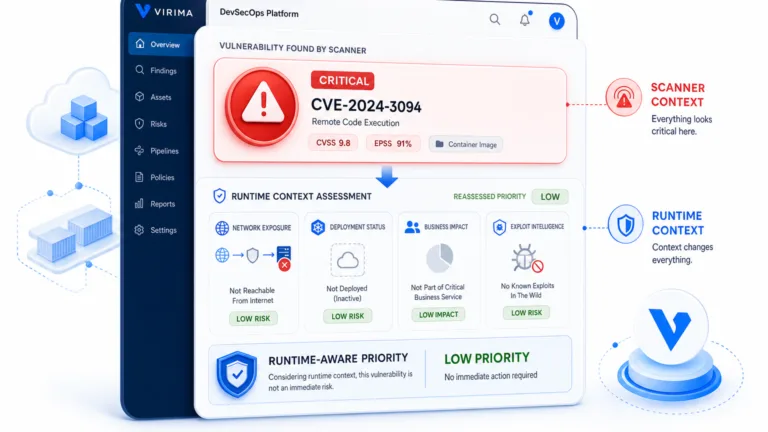
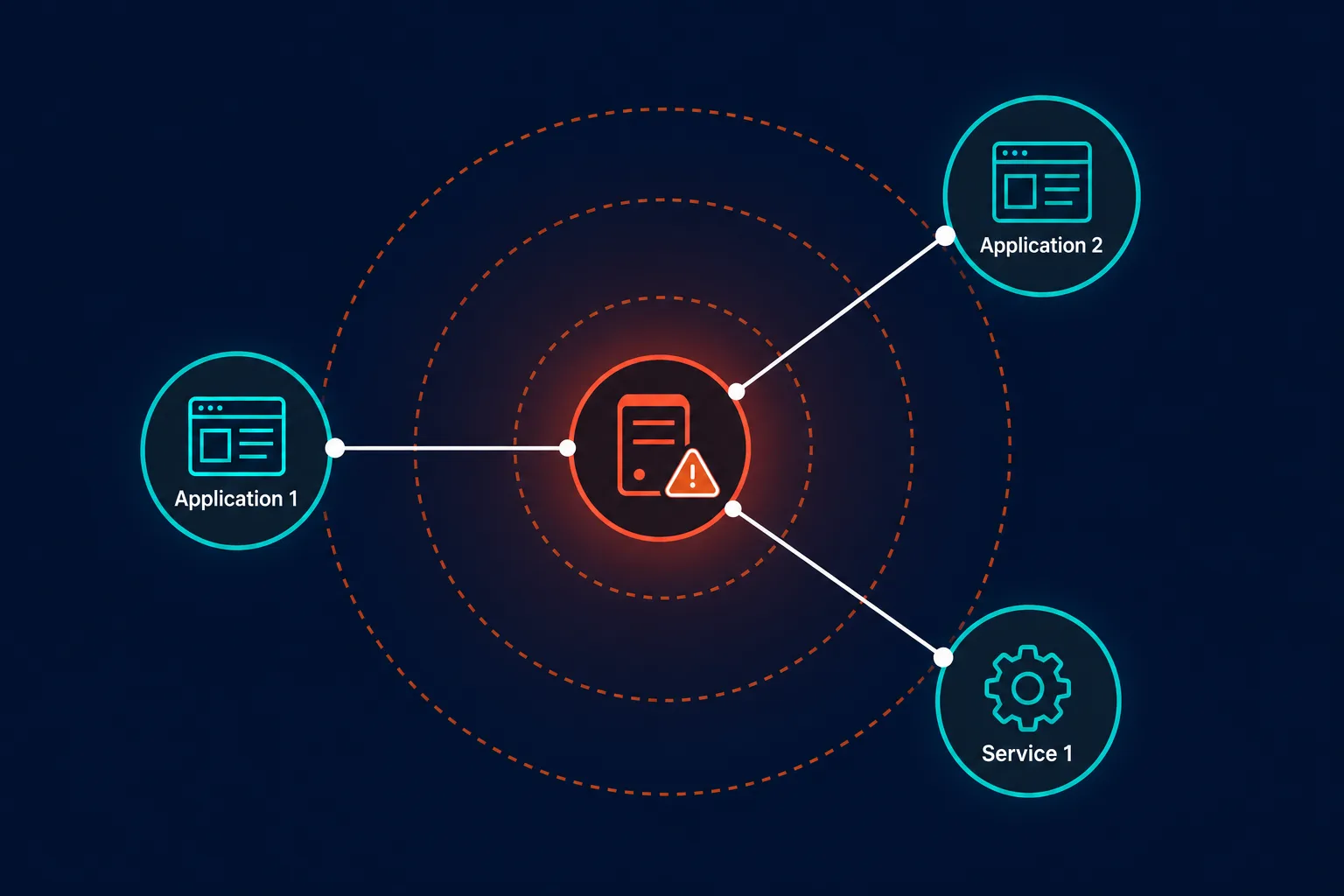
When an asset goes offline or shows compromise signals, dependency maps shorten the path from that CI to affected applications and services. After service definitions are provided, ViVID™ builds and refreshes service dependency maps so responders see installed-on, runs-on, and data-exchange relationships instead of reconstructing them from tribal knowledge. Virima’s own reporting cites an 82 percent faster mean time to repair figure for that mapping-led workflow. Attribute that figure to Virima reporting, not to an independent federal study. Virima’s service mapping for government and public sector analysis walks through a comparable blast-radius scenario outside the zero trust context.
Audit cycles change shape when the CMDB already holds reconciled records and change history. Teams spend less time rebuilding HWAM and SWAM evidence for each FISMA or OIG sample and more time explaining exceptions. Lifecycle context from IT asset management supports the hardware side of log-coverage validation without a separate manual ledger for every serial number, the same audit-evidence problem Virima’s public sector IT asset tracking piece walks through for FISMA and NIST reporting.
Working Alongside CDM and the ITSM Platform Already in Place
None of this requires ripping out the ITSM platform the agency already runs. Discovery and CMDB feeds can sit beside CDM sensors and integrate with platforms such as ServiceNow, Jira Service Management, Ivanti, HaloITSM, Xurrent, Hornbill, and TeamDynamix. The design goal is a stronger runtime inventory layer feeding tools already in the stack, not a claim that Virima replaces CDM or federates separate agencies’ CMDBs across authorization boundaries.
For service mapping detail on blast-radius and dependency views, or to walk a Level 1 inventory scenario against your current sources, request a Virima demo with your zero trust and CDM leads at the table.
Closing the Gap Before the Next Graded Threshold
Washington writes, scores, and audits civilian zero trust from a tight institutional map: OMB memoranda, CISA models and directives, GAO products, FITARA scorecards, and agencies headquartered in the same city. M-26-14 turned asset visibility into percentages on a clock that already includes a November 18, 2026 logging-plan date. GAO and OIG evidence shows why point-in-time inventories keep falling short of what a zero trust policy engine and a graded capture model both need.
Discovery-fed CMDB practice, authority-based reconciliation, and service dependency maps address that layer honestly: high-frequency cycles, multi-method collection, network-reachable OT and IoT only where protocols allow, and coexistence with CDM and existing ITSM.
Frequently Asked Questions
What does OMB Memorandum M-26-14 require federal agencies to do about asset visibility?
M-26-14 sets a five-level maturity model (Level 0 through Level 4) for capturing IT, OT, and IoT assets in a centralized inventory, starting near 70 percent at Level 1 and rising toward 95 percent at Level 4. It also ties log-coverage validation to HWAM and SWAM data and aligns with CISA’s Zero Trust Maturity Model. Agency logging plans are due to OMB and CISA by November 18, 2026 after CISA’s August 2026 Logging Reference Architecture release.
How does Virima’s CMDB automation differ from the CDM program?
CDM is the government program and sensor-and-dashboard path civilian agencies use for continuous diagnostics and mitigation reporting. Virima’s discovery-driven CMDB is the configuration system of record that stores CIs, relationships, ownership, and history an agency can query for zero trust, change, and audit work. The two can operate together; Virima’s CMDB automation does not replace CDM.
Why does zero trust architecture depend on an accurate, current asset inventory?
Zero trust policy engines verify identity and context before access. Without a current inventory, devices and workloads may never enroll in the identity and policy path, or decisions may run against stale attributes. Incomplete records also slow blast-radius analysis when something fails or is compromised.
What is the difference between OMB’s civilian zero trust track and the DoD Zero Trust Strategy?
Civilian executive-branch agencies follow EO 14028, OMB M-22-09 and M-26-14, CISA’s Zero Trust Maturity Model, BOD 23-01, and CDM oversight from GAO and related processes. The Department of Defense and Intelligence Community follow DoD zero trust strategy and implementation guidance under a separate portfolio structure. This article addresses the civilian OMB and CISA track only.
Does Virima’s discovery-driven CMDB replace CDM or an agency’s existing ITSM platform?
No. Virima’s discovery and CMDB automation are designed to feed richer CI and relationship data into the ITSM platforms agencies already run and to sit alongside CDM sensors already deployed. Virima integrates with common ITSM suites rather than requiring rip-and-replace of CDM or the service desk stack.