The power of IT automation: How the Virima-Ivanti partnership transforms IT operations

IT automation is a genuine challenge for large organizations, especially inside complex environments with legacy systems and diverse platforms. Even when the rollout goes smoothly, security and compliance risks still need careful attention.
The benefits still outweigh the effort. Teams that adopt IT automation streamline daily work and stay competitive in a fast-moving digital landscape.
| What is IT automation in IT operations? IT automation applies discovery-driven tools and workflows to tasks IT teams once handled by hand, such as asset discovery, CMDB updates, and dependency mapping. In practice, it means fewer manual entries, faster incident response, and a configuration record that stays closer to what is actually running across your on-premises, cloud, and hybrid environments. |
In this article, we look at how the Virima and Ivanti partnership builds the foundation for infusing IT operations with automation. First, let’s explore why the need for IT automation keeps growing.
The growing need for IT automation
Cloud computing, remote asset deployment, the Internet of Things (IoT), and AI have all made the IT landscape more intricate. IT teams are struggling to keep pace with the growing number of tasks tied to managing this complexity.
Gartner has forecast that by 2026, 30% of enterprises will automate more than half of their network activities, up from under 10% in mid-2023. That trajectory tracks closely with what IT leaders describe in their own environments: manual processes cannot scale with today’s asset volume.
As your business evolves, so does the IT estate behind it, which adds even more complexity to managing and securing it.
Challenges necessitating IT automation
Discovery of IT assets
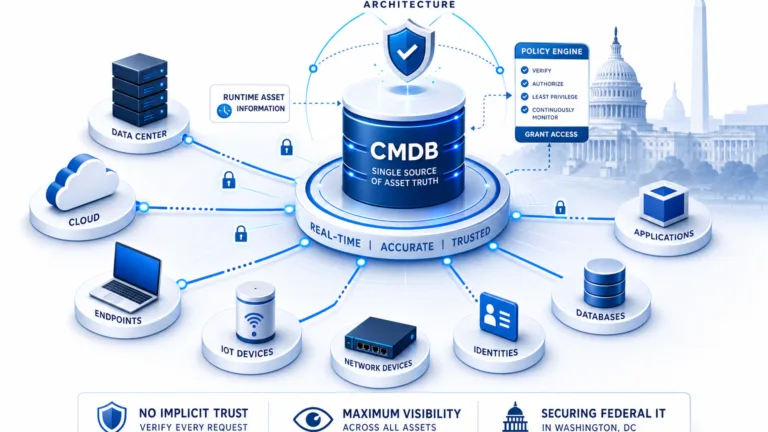
Many large organizations run a mix of on-premises servers and cloud services from different providers. Managing this hybrid infrastructure calls for large-scale IT automation so every asset across data centers, on-premises, and clouds shows up in a central repository with minimal manual work.
Keeping track of constant changes
Hardware, applications, and network devices are added, removed, updated, or modified all the time. Employees accessing work applications on personal (BYOD) devices adds even more complexity. Organizations need to detect changes to asset configurations across thousands of assets to maintain a reliable IT inventory.
Compliance management
With large volumes of assets and licenses, tracking compliance and policy adherence is a big task. Watching software usage, device registration, and license validity across thousands of assets takes real effort. IT automation, discovery-driven automation tools specifically, cuts the time spent micromanaging these details, freeing your team for bigger priorities.
IT maintenance
Consider a company with roughly 500 employees. Without automation, managing assets could take at least two people dedicated full-time, with costs reaching about $200,000 a year before licensing fees. With automation, that work runs on a recurring schedule with far less manual input, cutting both time and expense.
Request fulfillment
As operations grow more complex, so does the volume of user requests, access to new software, hardware, accounts, passwords, and other resources. IT automation helps you handle user support at scale without adding pressure to your support teams.
Evolving cybersecurity threats
Cybersecurity and vulnerability management are areas where manual processes fall short of growing needs. Unauthorized or “rogue” devices can slip into a network and act as hidden entry points for attackers. Open ports can expose data to anyone looking for it. Add insiders and malware into the mix, and the risk to personal information and corporate data grows fast.
3 ways the Virima and Ivanti partnership streamlines IT automation
1. Virima’s discovery complements Ivanti’s edge discovery
An automated IT discovery tool is a core piece of solving IT automation challenges. Complementing Ivanti’s edge discovery, Virima Discovery’s integration with Ivanti detects hardware, software, applications, and their configurations across on-premises, cloud, and data centers, giving you broad visibility across your environment. It goes beyond basic asset discovery to surface ownership, usage details, and relationships, strengthening asset management and accountability.
Virima’s extensive library of agentless probes and agent-based discovery (Windows agent) handle the heavy lifting of discovering your assets, and Virima keeps adding new probes to meet enterprise needs. This flexible architecture supports repeatable scanning of large subnet ranges at a desired frequency, so you can identify known and unknown assets and track changes to asset configurations through high-frequency discovery cycles that keep your inventory current.
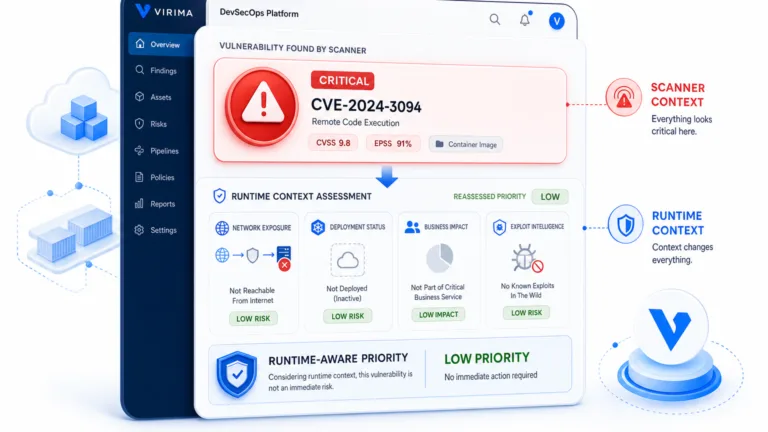
This IT automation approach to maintaining an accurate asset inventory becomes important when identifying vulnerabilities and risks in your infrastructure. It helps IT teams spot previously unnoticed devices, dependencies, or inactive configuration items, so you can address vulnerabilities before they become incidents.
2. Automating the upkeep of the Ivanti CMDB
Automating IT processes depends on building a single source of truth. That’s where a well-maintained Configuration Management Database (CMDB) comes in. Virima Discovery, the technology behind Ivanti Neurons for Service Mapping, identifies, categorizes, and maps relationships across data center and cloud assets through high-frequency discovery cycles, while Virima’s intelligent CMDB automation keeps the Ivanti CMDB updated with every change.
This covers new assets as well as modifications to existing assets and their connections. By automating these updates, Virima cuts down on manual data entry and the errors that come with it. This same CMDB automation logic extends naturally into CMDB integration for ITSM processes, giving IT and asset teams one consistent record to work from.
For teams using Ivanti Neurons for ITSM, this means access to a consistently accurate and complete inventory of IT assets. Automated CMDB updates free IT teams from manual record-keeping, so they can spend more time on strategic work.
With a reliable, current CMDB, organizations put IT automation to better use across service delivery, incident response, and day-to-day IT operations. The same discipline applies whether you’re comparing CMDB and ITAM processes or managing compliance obligations tied to licensed assets.
3. Automating relationship and dependency mapping with the ViVID advantage
Understanding how assets relate to and depend on each other matters for incident response, change impact, configuration management, and vulnerability management. Ivanti Neurons for Service Mapping, powered by Virima, builds dynamic dependency maps between assets using discovery data and cloud sources.
The Virima Visual Impact Display (ViVID) feature overlays key information directly onto service maps. This includes data from Ivanti Neurons for ITSM, such as incidents and changes, enriched with vulnerability information sourced from the NIST National Vulnerability Database (NVD).
These overlays give teams an up-to-date view, refreshed through high-frequency discovery cycles, of how elements across the IT infrastructure connect and where risk might be building.
Put IT automation to work with Virima and Ivanti
The benefits of IT automation are hard to argue with. It helps organizations streamline processes and stay competitive in a fast-changing digital world.
The Virima and Ivanti partnership addresses growing complexity in IT systems, driven by new technologies, cloud, IoT, and AI. Together, they deliver thorough asset discovery, high-frequency configuration change monitoring, and consistent upkeep of the Ivanti CMDB. The result is a reliable asset database that simplifies IT processes and strengthens service delivery, from faster incident response to streamlined change assessment, vulnerability management, and compliance work.
ViVID technology also changes how configuration item relationships and dependencies get mapped, overlaying incidents, changes, and vulnerabilities onto service maps. That gives IT teams the context to make faster decisions, resolve service issues, plan for disaster recovery, and manage vulnerabilities.
| Join our Partners Program today for resources, joint marketing, and technical enablement that support automation-led growth. |
| Schedule a demo to see the Virima-Ivanti partnership in action. |
Frequently asked questions
What is IT automation?
IT automation replaces manual, repetitive IT tasks, such as asset discovery, CMDB updates, and dependency mapping, with discovery-driven tools that run on a defined schedule instead of relying on someone to do it by hand.
Why do enterprises need IT automation for CMDB management?
A CMDB updated by hand falls out of date quickly across large, hybrid environments. IT automation keeps configuration records aligned with what’s actually deployed, which reduces errors and supports faster incident response.Servicenow, Ivanti, Jira service management, Halo, Xurrent.
How does the Virima-Ivanti partnership support IT automation?
Virima Discovery complements Ivanti’s edge discovery, automatically keeps the Ivanti CMDB current, and powers dependency mapping through ViVID, giving Ivanti Neurons for ITSM customers a more complete, accurate asset inventory.
Does IT automation replace the need for an IT team?
No. IT automation removes repetitive manual work so your team can focus on strategic priorities like incident response, planning, and vulnerability management, rather than replacing the team itself.