Your CMDB Layer Is a Board-Level Control. Evaluate It Like One.

Picture a renewal review where the board asks a fair question: “We already pay for the platform, so why fund another CMDB layer beneath it?” The CIO has two honest answers, and both are uncomfortable. AI agents may act on configuration data, and nobody in the room can show where that data came from. The NIST AI Agent Standards Initiative identifies secure agent interactions and interoperability as areas for standards and research. A bundled context layer may answer part of the board’s question. It may leave open who can prove the data is right. CIOs and VPs of IT can evaluate their CMDB layer options before renewal.
What You Are Comparing
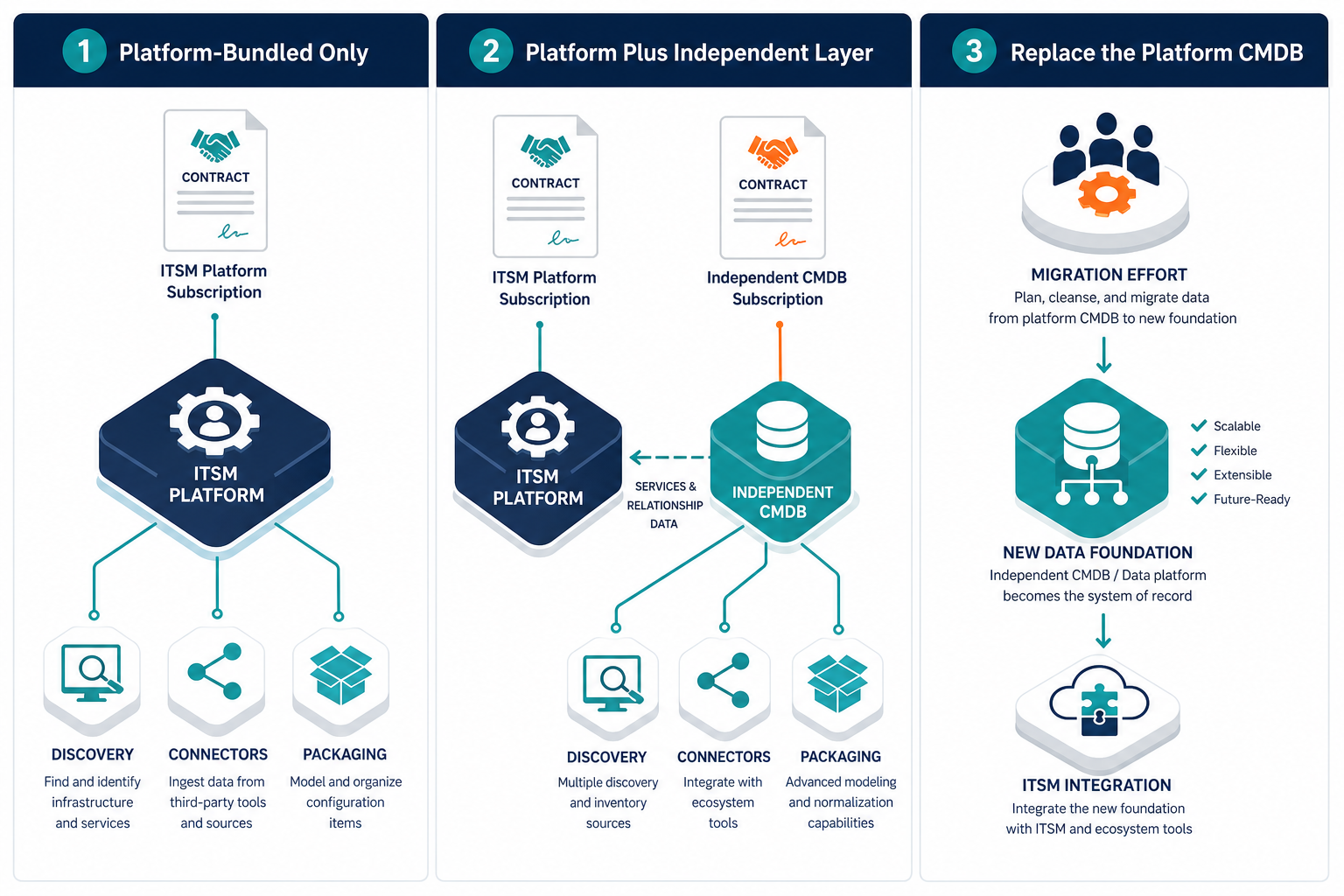
Three options sit on the table in many renewal reviews. Each has different costs, dependencies, and exit considerations.
A platform-bundled CMDB and context layer is delivered inside your ITSM platform. A ServiceNow Community article describes the Context Engine as built on the Service Graph, Knowledge Graph, and data inventory. It describes relationships, policies, and decision history as enterprise context for agents.
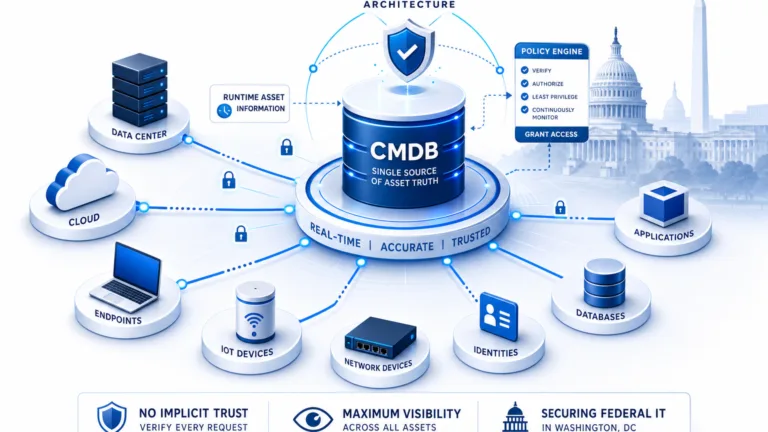
An independent runtime layer is a discovery-fed CMDB that sits outside the platform and feeds it. Explore how Trusted Runtime Truth supports decisions about your IT estate.
| Option | What you buy | What you depend on |
|---|---|---|
| Platform-bundled only | One contract, one vendor, native workflow | The platform’s discovery, connectors, and packaging |
| Platform plus independent layer | A second source feeding the platform CMDB | An integration and a second subscription |
| Replace the platform CMDB | A different data foundation | Migration effort and ITSM integration |
Virima supports the second option by augmenting ServiceNow with discovery and CMDB data. Confirm the supported Context Engine integration and data flow with each vendor during evaluation.
Why This Decision Lands on the CIO’s Desk
Timing puts pressure on the renewal decision. Ask ServiceNow when each capability will be available for your organisation and deployment. Record the answer against the renewal and implementation dates.
Packaging creates a second pressure for the CIO. Ask your account team for SKU-level terms, including any preview restrictions, in writing. Confirm which capabilities are included in the quote and which require separate purchases.
Programme risk also belongs in the decision. The NIST initiative highlights secure agent interactions and interoperability as subjects for research. Ask the security and architecture teams how the proposed layer supports your controls.
Virima’s published account of an entertainment company’s evaluation is vendor-authored and anonymous. Use it as an example of a structured comparison, then request references relevant to your own estate.
What the Board Hears and What It Needs
| What the CIO hears from vendors | What the board needs |
|---|---|
| “The platform already includes it” | Evidence of which capabilities are in scope and from when |
| “Agents will act on trusted data” | A record of who decided and what data supported the decision |
| “One vendor reduces risk” | A view of concentration risk and exit cost |
Six Questions for Any CMDB Layer Before Agents Act
Use these six questions as a scorecard in a steering committee. Send the same questions to every option, Virima included. Operators seeking technical criteria can use the AI-ready CMDB checklist.
- Where did each fact come from? For any configuration item an agent acts on, ask for the discovery source, scan time, and reconciliation rule. Request a sample record with provenance.
- How far does coverage reach across your estate? Compare the layer’s coverage against on-premises, cloud, network, storage, and unmanaged devices. Request evidence against your own estate and identify any exclusions.
- How current is the data in each environment? Ask for the discovery schedule and what the record shows between scans. Compare the scan interval with the pace of change in each environment.
- Who is accountable for each service relationship? Ask whether named people confirm and review ownership. Ask how the action approval record connects to the data an agent used.
- What does it cost across three years? Count licence tiers, discovery and service-mapping add-ons, implementation, and administrative time. Request a written SKU list and the assumptions behind it.
- How hard is it to change course? Ask about data export, API access, and integration changes if you change ITSM platforms later.
What should a CIO ask before approving a CMDB layer for AI agents?
Ask about provenance, coverage, freshness, ownership, three-year cost, and exit terms. Request written answers and sample records from every vendor. Compare the evidence for one business service, and identify which questions require further validation before renewal.
A scorecard helps when vendors answer the same questions in the same format.
Cost Control Starts With the Contract
Discovery and mapping costs depend on the contract and estate. Virima’s analysis of ServiceNow discovery costs describes several cost components. Obtain a written quote and examine its assumptions with procurement.
Bring these questions to any renewal:
- Which discovery and service-mapping capabilities sit in the base licence, and which are add-ons?
- How is discovery priced as the estate grows?
- Which AI and context features are included today, and which are in preview?
- What are the data export and API terms if you leave?
An independent layer adds a subscription and integration work. Include those costs when comparing concentration risk and exit options. The goal is a defensible three-year comparison rather than an assumed discount.
What the Audit Committee Will Ask
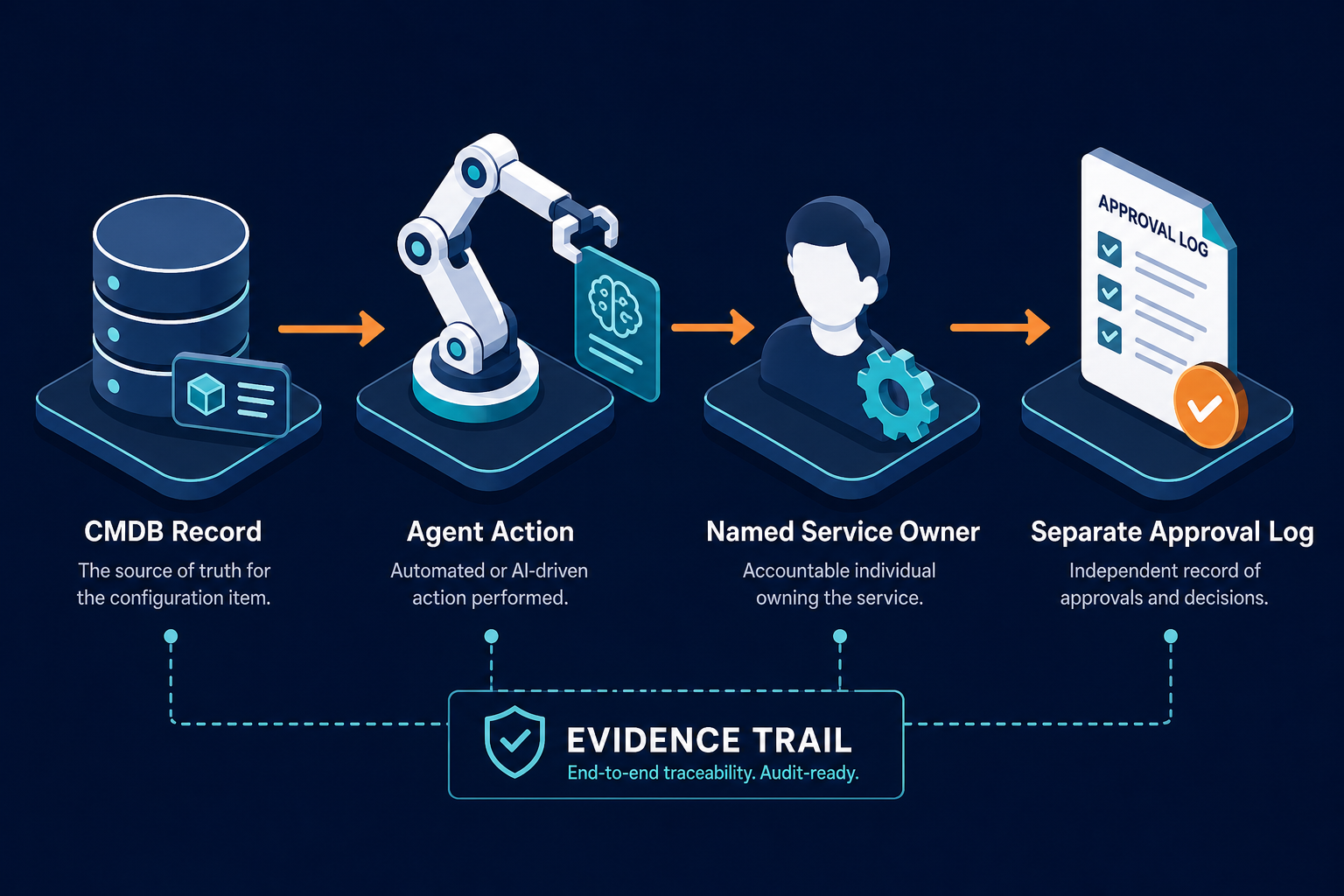
Imagine an illustrative case involving a firewall rule. An AI agent changes the rule based on a CMDB record, and an incident follows. The audit committee asks for the evidence trail.
What data did the agent use when it acted? When was that data last verified by the team? Who owns the service, and who approved the action?
Scorecard questions 1 and 4 help establish the evidence to request. Provenance can show a record’s source and scan time when available. Named owners can confirm service relationships and explain their review process. The CMDB audit essentials guide covers data accuracy in more depth.
A CMDB records infrastructure and relationships between configuration items. Other controls handle policy enforcement, including change approval and access management. Test whether the organisation can connect the CMDB evidence to action and approval logs.
What evidence does an audit committee need when an AI agent acts on CMDB data?
The committee can request the data the agent used, the time it was last verified, the named service owner, and the action approval. Teams should test whether configuration records can be linked to separate agent, change, and approval logs.
Virima Gives the Platform an Independent Evidence Trail
Virima runs discovery and can feed discovered configuration items and relationships into ServiceNow. The platform remains in place for established workflows. Teams can compare available discovery evidence with the platform record for a selected service.
Immediate Operational Impact
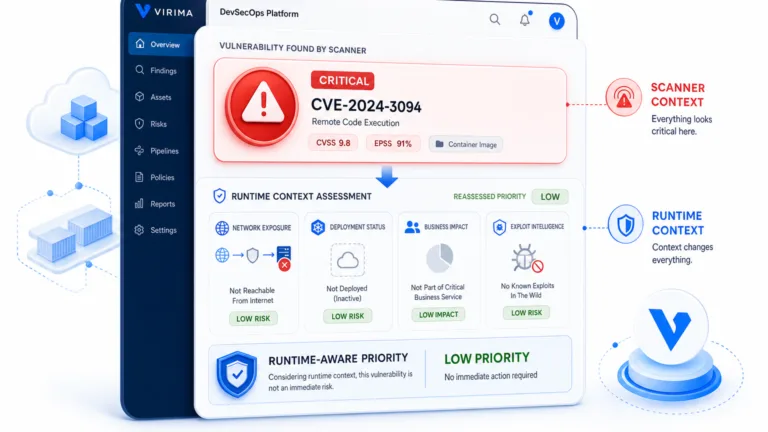
A scoped discovery run can identify infrastructure associated with a selected service. Teams can compare the available results with the platform CMDB record. Define the service and its applications first, then agree on the scope of the comparison. Virima’s IT discovery capability supports discovery across infrastructure environments.
Long-Term Accuracy
Scheduled discovery and multi-source reconciliation help teams refresh records between reviews. The schedule, credentials, coverage, and reconciliation rules determine what each cycle can find. Agree on those limits before interpreting differences between records.
Integration with Existing Workflows
Virima supports ServiceNow CMDB synchronization and other ITSM integrations listed on the integrations page. Teams should validate field mappings, provenance, and refresh timing during a proof of concept. The related discussion of Virima and the Context Engine describes the intended pairing.
Running the Evaluation in Four Steps
A bounded proof of concept keeps the comparison focused on a defined service. Agree on the scope and evidence before discovery begins.
- Pick one business-critical service and record what the platform CMDB says about it today.
- Provide the service definition, run scoped discovery, and compare the available records.
- Score both options against the six questions with owners from IT operations, security, and procurement.
- Take the comparison to the steering committee with contract questions answered in writing.
The result may show that the platform record is already strong. That finding gives the committee evidence for its renewal decision.
Compare One Service Across Two Sources Before Renewal
Compare one business service across two sources before your next renewal. Request a demo to discuss a bounded evaluation with the Virima team. Agree on the selected service, discovery scope, and comparison criteria before work begins. Use the resulting evidence to identify the questions that need written answers from each vendor.
Frequently Asked Questions
What is a platform-bundled CMDB?
A platform-bundled CMDB is a configuration database delivered with an ITSM platform. It may use platform discovery and external connectors to populate records. Confirm which discovery capabilities and connectors are included in your agreement.
What is the ServiceNow Context Engine?
ServiceNow describes the Context Engine as built on the Service Graph, Knowledge Graph, and data inventory. It connects enterprise relationships, policies, and decision history to provide context for AI agents. Ask ServiceNow to confirm availability for your organisation.
Can an independent CMDB layer work alongside a platform CMDB?
An independent layer can run discovery and feed records into a platform CMDB. Teams can retain their existing workflow platform and compare available evidence from both sources. Validate integration scope and field mappings for your environment.
How should a CIO evaluate a CMDB layer?
Ask every option the same six questions: provenance, coverage, freshness, ownership, three-year cost, and exit terms. Request written answers and sample records, then compare the evidence for one business service before committing to a renewal.
Does Virima replace the ServiceNow CMDB?
Virima can augment the ServiceNow CMDB with independently discovered configuration items and relationships. It also provides CMDB and ViVID™ service-mapping capabilities. Customers provide service definitions before Virima builds service dependency maps.