ITOM and ITSM: How Virima Enhances IT Service Management

| What is the relationship between ITOM and ITSM? ITOM and ITSM cover different but interdependent layers of enterprise IT. ITOM manages the physical and virtual infrastructure by discovering assets, monitoring events, and tracking configuration changes. ITSM uses that infrastructure data to deliver and support IT services. Without accurate ITOM data flowing into ITSM workflows, change management, incident resolution, and CMDB maintenance all degrade over time. |
With advanced IT discovery, ViVID™ service mapping, and a discovery-sourced CMDB, Virima provides a cost-effective ITOM and ITSM integration path that strengthens any ITSM investment.
Understanding ITOM and Its Core Functions
IT Operations Management (ITOM) covers the processes and tools that manage IT infrastructure to ensure reliability and performance. Core ITOM functions include:
IT asset management: Tracks and manages hardware, software, and cloud resources to optimize usage and costs.
By building ITOM into IT operations, you can manage infrastructure proactively rather than waiting for failures to surface through service desk tickets. For a deeper look at how ITOM and ITSM roles divide, see our ITOM vs. ITSM guide.
Understanding ITSM and Its Key Areas
IT Service Management (ITSM) designs, delivers, and improves business services to meet organizational needs. It follows structured methods, often based on ITIL best practices. Key ITSM areas include:
Incident management: Resolves IT issues quickly to minimize service disruptions.
Problem management: Identifies recurring issues and implements long-term solutions.
Configuration management: Maintains a central repository of IT assets for accurate decision-making.
EMA’s ServiceOps 2025 research found that CMDB maturity directly correlates with an organization’s ability to prevent outages and support AI-driven IT operations. Organizations with accurate, discovery-backed CMDBs resolve incidents faster and approve changes with lower risk. A well-implemented ITSM framework aligns IT services with business goals, improving user satisfaction and operational efficiency.
The Relationship Between ITOM and ITSM
ITOM and ITSM serve different roles but depend on each other. IT operations management processes maintain infrastructure stability, while ITSM ensures efficient service delivery. Their integration strengthens IT operations in several key areas:
- Proactive vs. reactive management: ITOM reduces incident volume through high-frequency monitoring, while ITSM resolves issues when they occur.
- Incident and event correlation: ITOM event data helps ITSM teams identify the root cause of disruptions faster and more accurately.
- Change and configuration management: ITOM provides infrastructure visibility that helps ITSM evaluate the impact of proposed changes before they are approved.
- Automation and efficiency: Discovery-driven ITOM data reduces the manual work required to keep ITSM records current.
- Service delivery: A combined ITOM and ITSM approach supports reliable services, optimized resource usage, and a better experience for end users.
| Why does ITSM fail without ITOM integration? ITSM platforms depend on an accurate CMDB to correlate incidents, evaluate change risk, and resolve problems at their source. Without ITOM feeding discovery-sourced data into that CMDB, records go stale, dependencies go unmapped, and change approvals proceed without visibility into what will break. The result is reactive IT, higher change failure rates, and longer mean time to resolution. |
Why ITOM and ITSM Integration Matters for Modern IT
As IT environments grow in complexity, the gap between operations and service management widens. Organizations now manage on-premises servers, cloud workloads, SaaS applications, and hybrid assets together. Traditional CMDBs cannot track changes across all of these layers through manual entry alone.
EMA’s 2024 field research on IT outage costs found that the widely cited $5,600-per-minute outage cost figure had no research basis, tracing back to a 2014 blog comment rather than actual data. That finding reflects how much of IT risk management runs on assumptions rather than verified operational insight. Accurate ITOM data changes that.
The EMA ServiceOps 2025 report reinforces this directly, finding that CMDB maturity correlates directly with an organization’s ability to prevent outages and support AI-driven IT operations. Organizations that maintain accurate, discovery-backed CMDBs resolve incidents faster and approve changes with lower risk.
Virima regularly refreshes CMDB records through high-frequency discovery cycles, ensuring that asset records and dependency maps reflect the current state of your infrastructure. This makes incident correlation, change impact analysis, and capacity planning more reliable. For a walkthrough of how the CMDB sits at the center of this, see Your CMDB: Your ITSM-ITOM Connection.
Virima integrates with ServiceNow, Ivanti, Halo, and Jira Service Management, connecting ITOM data directly into the workflows where IT teams operate.
| See how Virima delivers discovery-sourced Trusted Runtime Truth for ITSM workflows: Explore Virima Trusted Runtime Truth |
| What is discovery-sourced CMDB data? Discovery-sourced CMDB data means every configuration item (CI) record is populated and validated by active infrastructure discovery rather than manual entry or spreadsheet imports. This approach surfaces assets that IT teams did not know existed, maps relationships between CIs from live discovery data, and flags records that have gone stale since the last discovery cycle ran. |
How Virima’s ITOM Integration Enhances Major ITSM Platforms
The sections below cover how Virima’s ITOM capabilities address specific gaps in four major ITSM platforms.
| How does Virima integrate with ITSM platforms? Virima connects to ITSM platforms including ServiceNow, Halo, Ivanti, and Jira Service Management through bidirectional API integrations. Asset and dependency data from Virima’s discovery cycles sync directly into ITSM CI records. ViVID™ overlays open incidents and pending changes onto service maps within the ITSM interface. The core integration requires no custom development or agent-side scripting. |
Bridging CMDB Gaps with Virima and Halo
Halo delivers capable IT service management, streamlining workflows and improving service delivery. Like many ITSM tools, it depends on an accurate CMDB to optimize IT operations. Halo lacks built-in asset discovery and service mapping, which creates recurring challenges for IT teams:
These gaps increase the risk of failed changes and make incident resolution more time-consuming. Virima addresses them by extending ITOM capabilities directly into the Halo environment, ensuring an accurate, discovery-sourced CMDB.
How Virima ITOM Enhances Halo
- High-frequency discovery: Virima scans IT environments with discovery agents and agentless probes, ensuring CMDB records reflect the current state of your infrastructure. Manual updates are replaced by discovery-driven data.
- ViVID™ for change and incident management: Virima Visual Impact Display (ViVID™) overlays Halo records onto service maps, providing visibility into asset dependencies backed by ITSM data. IT teams can assess change impacts and resolve incidents faster.
- Broad asset coverage: Virima supports agentless and agent-based discovery across on-premises, cloud, and hybrid environments, providing full asset visibility.
- No-code integration: Pre-built connectors allow data synchronization between Virima and Halo without complex configuration work.Strengthening Service Mapping with Virima and Ivanti
Ivanti automates ITSM processes and provides AI-driven insights, but it lacks advanced service mapping. This gap affects change management, incident resolution, and IT visibility in complex environments. Without clear dependency visibility, IT teams encounter:
Virima extends Ivanti with discovery-sourced service mapping, regularly refreshed CMDB updates, and deeper visibility into IT dependencies.
How Virima ITOM Enhances Ivanti
- Multi-layered dependency mapping: Virima’s dependency mapping reveals internal and external connections, showing how applications interact with infrastructure components. This helps ITOM and ITSM teams trace issues to their root causes.
- Discovery-sourced ITSM record overlays: The bidirectional integration overlays ITSM data into CMDB CIs, giving teams reliable insight for incident, change, problem, and vulnerability management.
- Configurable data synchronization: Organizations can set discovery rules, sync only relevant data, and prevent CMDB clutter.
Optimizing Jira Service Management with Virima
Many organizations use Jira Service Management (JSM) for ITSM workflows. JSM has known gaps that Virima addresses:
How Virima ITOM Enhances JSM
- Discovery-driven CMDB accuracy: Virima runs agentless IP-based scans using a large library of extendable probes alongside multi-OS discovery agents. JSM Assets stays current without manual data entry. IT teams get reliable asset and service data for every ticket they work.
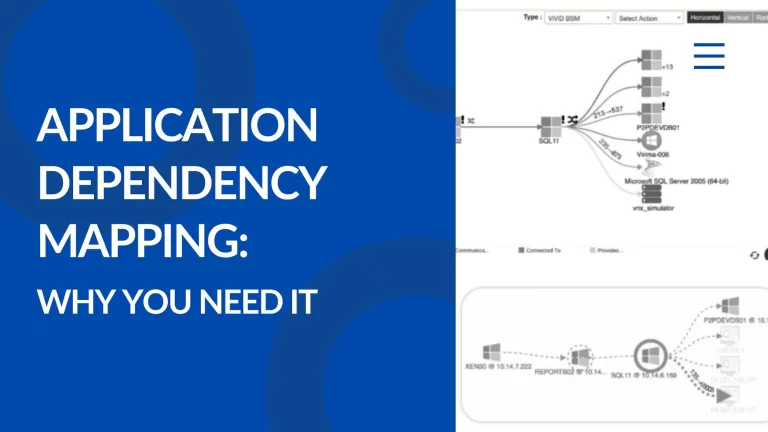
- ViVID™ service maps for JSM: ViVID™ overlays open JSM incidents and pending change tickets onto live service dependency maps, giving IT teams a visual view of which CIs are affected and what downstream services are at risk.
- Configurable discovery rules: Teams can tailor what Virima discovers and syncs into JSM Assets, keeping records relevant and reducing noise.
Virima and ServiceNow: Cost-Effective ITOM Without the Premium
ServiceNow ITSM is a widely adopted platform, but its ITOM add-ons carry significant costs and configuration complexity. Common pain points include:
Multiple add-ons are needed to access the full range of IT operations management capabilities.
For organizations seeking lower-cost ITOM capabilities alongside ServiceNow ITSM, Virima integrates directly with ServiceNow without duplicating data or adding noise.
How Virima ITOM Enhances ServiceNow ITSM
- Lower-cost ITOM: Virima provides full asset discovery and service mapping at a lower cost, without per-asset licensing fees.
- Simplified ITOM implementation: Virima’s high-frequency discovery cycles reduce the need for manual setup and specialized configuration work.
- ViVID™ for advanced visualization: ViVID™ integrates ITSM records and vulnerability data into service maps. Combining ViVID™ with service mapping gives teams the accuracy needed to improve ITSM, ITAM, and IT security decisions from a single view.
| What is ViVID™ and how does it support ITSM workflows? ViVID™ (Virima Visual Impact Display) is Virima’s service mapping visualization layer. It pulls open incidents, pending changes, and vulnerability data from connected ITSM platforms and overlays them onto live service dependency maps. IT teams can see which CIs have open tickets, what is scheduled to change, and which downstream services are at risk, from a single map view. |
ITOM Governance: The Foundation of Reliable ITSM
Connecting ITOM and ITSM tools is not enough on its own. The data flowing between them must be governed, validated, and policy-compliant to support reliable decision-making.
Establishing formal ITOM governance through high-frequency discovery ensures that infrastructure data feeding ITSM workflows reflects the actual state of your environment. This supports incident correlation (matching events to known CIs), change impact analysis (mapping what will break before the change window), and capacity planning (knowing what resources are in use across on-premises and cloud environments).
Virima delivers this governed data foundation through its CMDB, IT discovery, and ViVID™ service mapping capabilities. For a deeper look at building a CMDB you can trust, see Build a CMDB You Can Actually Trust. When IT teams can trust the data behind ITSM workflows, they resolve incidents faster, approve changes with greater confidence, and respond to compliance audits without scrambling.
| How does ITOM governance improve ITSM outcomes? ITOM governance sets policies for how infrastructure data is discovered, validated, and maintained in the CMDB. When ITSM workflows pull from a governed CMDB, incident correlation becomes more accurate, change risk assessments reflect actual dependencies, and capacity decisions are grounded in current infrastructure data rather than stale manual records. |
Connecting ITOM and ITSM to Build a Reliable IT Foundation
Optimizing ITSM requires more than ticketing and workflow automation. It requires accurate asset data, clear dependency maps, and a governed data layer that ITSM workflows can trust.
Virima’s ITOM capabilities provide the discovery, mapping, and visualization foundation that makes ITSM more effective. High-frequency discovery cycles keep your CMDB current. ViVID™ service maps surface change impact and incident context. And bidirectional integrations with ServiceNow, Ivanti, Halo, and Jira Service Management deliver that data directly into the workflows where your teams operate.
If your ITSM workflows depend on a CMDB that drifts between audits, Virima closes that gap without requiring a platform replacement. For more on how service mapping strengthens this foundation, see the 5 key benefits of IT service mapping.
Read the EMA ServiceOps 2025 report for full research on CMDB maturity and its impact on IT operations performance.
| Ready to see how Virima bridges ITOM and ITSM in your environment? Schedule a demo |
Frequently Asked Questions
Why does ITSM performance degrade without ITOM integration?
ITSM processes depend on accurate, current CI data to correlate incidents, evaluate change risk, and trace problems to their root cause. Without ITOM feeding discovery-sourced data into the CMDB, records go stale and change approvals proceed without visibility into downstream impact. The result is higher change failure rates and longer resolution times.
What ITSM platforms does Virima integrate with?
Virima integrates with ServiceNow, Ivanti, Halo, Jira Service Management, Xurrent, and TeamDynamix through bidirectional API connections. Discovery-sourced asset and dependency data syncs into each platform’s CI records, and ViVID™ overlays open incidents and pending changes onto live service maps.
How does ViVID™ support incident and change management?
ViVID™ (Virima Visual Impact Display) pulls live incident and change records from connected ITSM platforms and overlays them on service dependency maps. IT teams can see which CIs carry open tickets, what changes are pending, and which downstream services are at risk, all from a single map view. This reduces the time needed to assess impact before approving or rolling back changes.
Does Virima replace existing ITSM platforms?
Virima does not replace ITSM platforms. It extends them with discovery-sourced data, service mapping, and ViVID™ visualization that ITSM tools do not provide natively. ServiceNow, Ivanti, Halo, and Jira Service Management all continue to run their ticketing and workflow functions while drawing from Virima’s accurate, governed CMDB.
What is the difference between ITOM discovery and manual CMDB entry?
Manual CMDB entry relies on IT teams to record asset changes after they happen, which means records are always catching up to reality. ITOM discovery from Virima runs high-frequency cycles that surface new assets, map relationships between CIs, and flag records that have gone stale since the last scan. The CMDB reflects the current state of your environment, not the last time someone updated a spreadsheet.