CMDB Audit Essentials: Ensuring Data Accuracy and Compliance

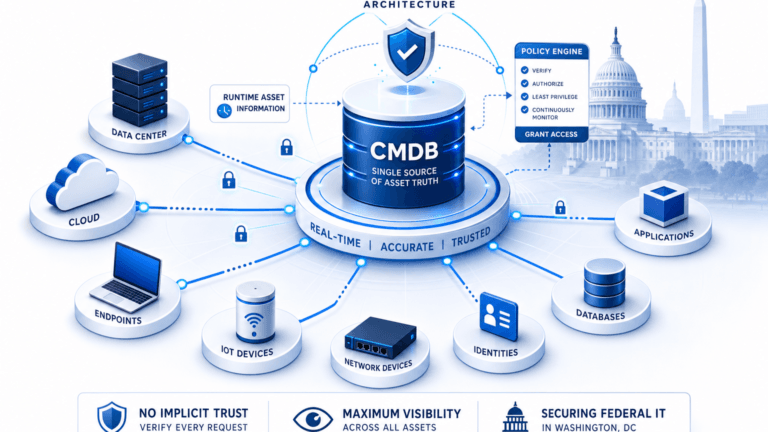
A well-maintained Configuration Management Database (CMDB) is the backbone of effective IT Asset Management. It stores data on hardware, software, and services, giving you a unified view of every asset across your organization.
Without regular CMDB audits, inaccuracies creep in. Outdated records, missing relationships, and duplicate entries erode data reliability and put regulatory compliance at risk.
Periodic audits catch these problems early. They help you check your CI data against what is actually deployed. You can quickly fix stale or incorrect entries. As a result, your CMDB audit ServiceNow process stays accurate and meets industry standards.
This guide covers the CMDB audit process, a practical checklist, and how to keep your CMDB audit-ready year-round.
To assess whether your CMDB meets this bar, the AI-ready CMDB checklist covers 20 criteria across discovery, data quality, relationship mapping, governance, and integration readiness — specifically built for teams preparing for agentic IT.
Understanding the CMDB audit process
A CMDB audit is a structured review that confirms the accuracy and completeness of your configuration data. Your CMDB holds details about every IT asset hardware, software, network devices, and how they connect to each other. The goal is straightforward: make sure that data matches reality and meets compliance requirements.
What does a CMDB audit checklist include?
A strong CMDB audit checklist covers seven steps:
- Plan and set the scope. Define your audit goals: verifying data accuracy, meeting specific compliance standards, or both. Decide which CI categories, relationships, and data quality metrics you’ll check.
- Collect data. Gather current information about hardware and software assets, their configurations, and dependencies. Automated IT discovery tools speed this up and cut manual errors. Review existing CMDB documentation too, including data entry policies and maintenance procedures.
- Analyze data. Look for inconsistencies, errors, and missing information. Common issues include unlinked records, duplicate CIs, orphaned entries, and outdated data. Cross-check CMDB records against trusted sources like vendor documentation and network scan results. Many orphaned entries trace back to hardware that was retired without being cleared from the database, so confirm your IT asset decommissioning process retires the matching CIs instead of leaving ghost records that distort audit results.
- Assess compliance. Verify that your CMDB implementation aligns with ITIL standards for effective incident and change management. Check against applicable regulatory frameworks like SOX, HIPAA, ISO 20000, and PCI-DSS.
- Report findings. Create a clear report covering strengths, risks, and improvement areas. Include actionable recommendations for data quality and governance improvements.
- Implement improvements. Build action plans to fix the issues your audit uncovered. This might mean updating records, tightening data entry processes, or setting new governance standards. Track the impact of changes over time.
- Automate ongoing checks. Use automation to streamline future audits and reduce errors. Automated scanning catches issues between formal audits, and data quality frameworks keep compliance on track.
This checklist helps your team manage IT assets accurately, make better-informed decisions, and stay ahead of regulatory requirements.
How often should you audit your CMDB?
Most organizations should run a full CMDB audit at least quarterly, with lighter automated checks running monthly or even weekly. The right frequency depends on how fast your environment changes. If you’re deploying cloud resources daily or running frequent change windows, quarterly may not be enough.
A practical approach: use automated discovery to continuously validate CI data between audits. Formal audits then confirm what automated checks have already been monitoring, rather than uncovering months of accumulated drift.
Prepare for your CMDB audit with Virima
Getting ready for an audit is often the hardest part. Virima automates data collection through discovery, validates CI accuracy with configurable business rules, and generates compliance-ready reports, so your CMDB stays audit-ready between formal reviews without last-minute scrambling.
A visual CMDB built for audit accuracy
Virima’s CMDB is PinkVERIFY ITIL 4 certified, supporting effective Service Asset and Configuration Management for precise CMDB audits. It tracks hundreds of hardware and software configuration attributes across data centers, cloud environments, and IoT devices.
Every CI update gets recorded with a complete audit history and version tracking. When an auditor asks, “What changed and when,” the answer is already there.
Near-real-time asset tracking with Virima’s ITAM
Virima’s ITAM, powered by recurring discovery scans and optional discovery agents, keeps your asset data fresh for audits. The agents enable near-real-time tracking of configuration changes, even for remote and roaming devices. ITAM also helps your team spot underused assets and repurpose them, meeting audit goals for optimized resource use.
Integrated vulnerability identification through the NIST National Vulnerability Database and lifecycle management ensures ongoing compliance. Fewer surprises during audits, smoother inspection outcomes.
Automated audit enhancements
Virima’s automation reduces the manual effort that slows audits down. Automated asset discovery paired with granular business rules improves record precision, so your team spends less time fixing data and more time on actual audit analysis.
With reliable, discovery-backed CMDB data, meeting compliance requirements becomes part of your normal workflow, not a scramble before each CMDB audit cycle.
Aligning IT purchases with audit standards
Virima’s compliance-focused reporting and auditing provide visibility into IT asset status through dashboards and metrics. This data guides purchasing decisions that align with audit standards, so new assets enter your environment already documented and compliant.
Efficient, cost-effective CMDB audit assessments
Virima’s ITAM streamlines the audit assessment process by automating data collection and validation. Its flexible framework adapts quickly to new audit requirements, keeping your organization audit-ready without excessive time or cost. Fewer operational disruptions, more predictable audit outcomes.
Prioritizing vulnerabilities for thorough CMDB audits
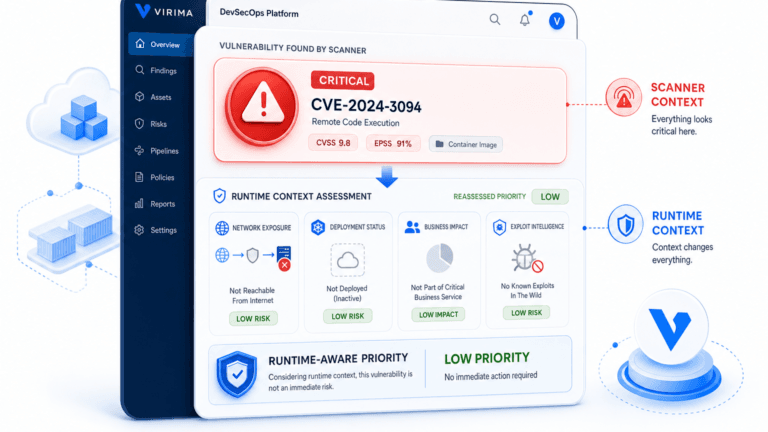
Virima’s CMDB integrates with the NIST National Vulnerability Database (NVD) at no extra cost, identifying vulnerabilities like CPEs and CVEs across your asset inventory. This enables proactive audit preparation rather than reactive scrambling.
As part of Virima’s Cybersecurity Asset Management capabilities, this NVD integration adds a security dimension to your CMDB audit workflow without requiring a separate vulnerability management tool.
Virima Visual Impact Display (ViVID™) overlays vulnerability data, ITSM incidents, and change records onto service maps built by Discovery and Service Mapping. This visualization lets your team see which vulnerabilities affect business-critical services, so remediation efforts focus where they matter most.
You can generate detailed vulnerability reports and share them with stakeholders and auditors to support security and compliance initiatives.
Keeping your CMDB in sync with ITSM
A CMDB audit only stays accurate if the data flowing between your CMDB and ITSM platform is consistent. Virima supports bi-directional CMDB sync with ServiceNow, Jira Service Management, Ivanti, Xurrent, HornBill, and Cherwell. Virima also integrates with HaloITSM for ITSM workflows and ViVID™ service map overlays. CI updates from the discovery flow into your ITSM, and changes made in your ITSM are reflected in the CMDB.
This two-way sync eliminates one of the most common CMDB audit findings: data that doesn’t match what your service desk team sees in their ticketing system.
Build a CMDB that passes every audit
CMDB audit excellence takes more than a checklist. It takes accurate data, continuous validation, and the right tooling to keep everything in sync.
Virima combines IT discovery, an ITIL-compliant CMDB with SACM certification, IT Asset Management, vulnerability tracking through NIST NVD, and ViVID™ service impact visualization to keep your CMDB audit-ready year-round. Built-in reporting and auditing capabilities generate the documentation and compliance evidence your auditors will look for.
Ready to streamline your CMDB audit process? Reach out for a demo and see how Virima keeps your CMDB accurate, compliant, and always audit-ready.
FAQ
How does automated discovery improve CMDB audit accuracy?
Stale data is the biggest CMDB audit risk. Manual updates fall behind the moment a server gets provisioned or a network change goes through. Within weeks, your CI data no longer matches what’s actually deployed, and that’s exactly what auditors find.
Virima’s IT discovery solves this with agentless and agent-based scanning that runs on recurring schedules. Discovery identifies hardware, software, and network assets, then maps their dependency relationships. Configurable business rules govern which CIs get promoted to your CMDB, keeping the database clean and focused rather than flooded with raw scan data.
Between audits, recurring scans catch configuration drift before it accumulates. Your CI data and software license records stay current without manual reviews, so you’re audit-ready when the next cycle comes around.
Autonomic Social Discovery fills the gaps that scanning can’t reach. It gathers non-discoverable CI attributes like ownership, lifecycle status, business criticality, and SLA details through automated human intelligence gathering. These are exactly the attributes auditors scrutinize, and they’re the ones technical discovery alone can’t capture.
How do you measure CMDB data quality?
Four metrics matter most for CMDB data quality:
- Accuracy — Do CI records match what’s actually deployed? Compare discovery scan results against CMDB entries.
- Completeness — Are all assets accounted for? Look for gaps between what discovery finds and what the CMDB contains.
- Currency — How fresh is the data? Track the average age of CI records and how quickly changes propagate.
- Relationship integrity — Are CI dependencies mapped correctly? Broken or missing relationships undermine change impact analysis
Set baselines for each metric before your first audit, then track improvement over time. These numbers give your team a concrete way to measure whether audit remediation is actually working.
What compliance standards require CMDB audits?
Several regulatory and industry frameworks either require or benefit from CMDB audits:
- SOX (Sarbanes-Oxley) — Requires documented IT controls and change tracking for financial systems.
- HIPAA — Healthcare organizations need accurate asset inventories for data protection compliance.
- PCI-DSS — Payment card environments require documented asset management and configuration controls.
- ISO 20000 / ISO 27001 — Service management and information security standards both reference configuration management as a control area.
- ITIL 4 — While not a regulation, ITIL’s SACM process defines CMDB audit as a core practice for service management maturity.
Even when audits aren’t legally mandated, they reduce the risk of failed compliance reviews and costly remediation after the fact. For organizations with industrial control systems, audit scope extends across both IT and OT, which is where manufacturing IT asset management faces its hardest test.