Can Virima Sync CIs and Relationships to ServiceNow CMDB? | Virima

A missing dependency can leave a change reviewer without the full picture of affected infrastructure. The configuration items may be present in ServiceNow, yet their relationships may still need separate validation. CMDB owners also need clear rules for records that appear in more than one source.
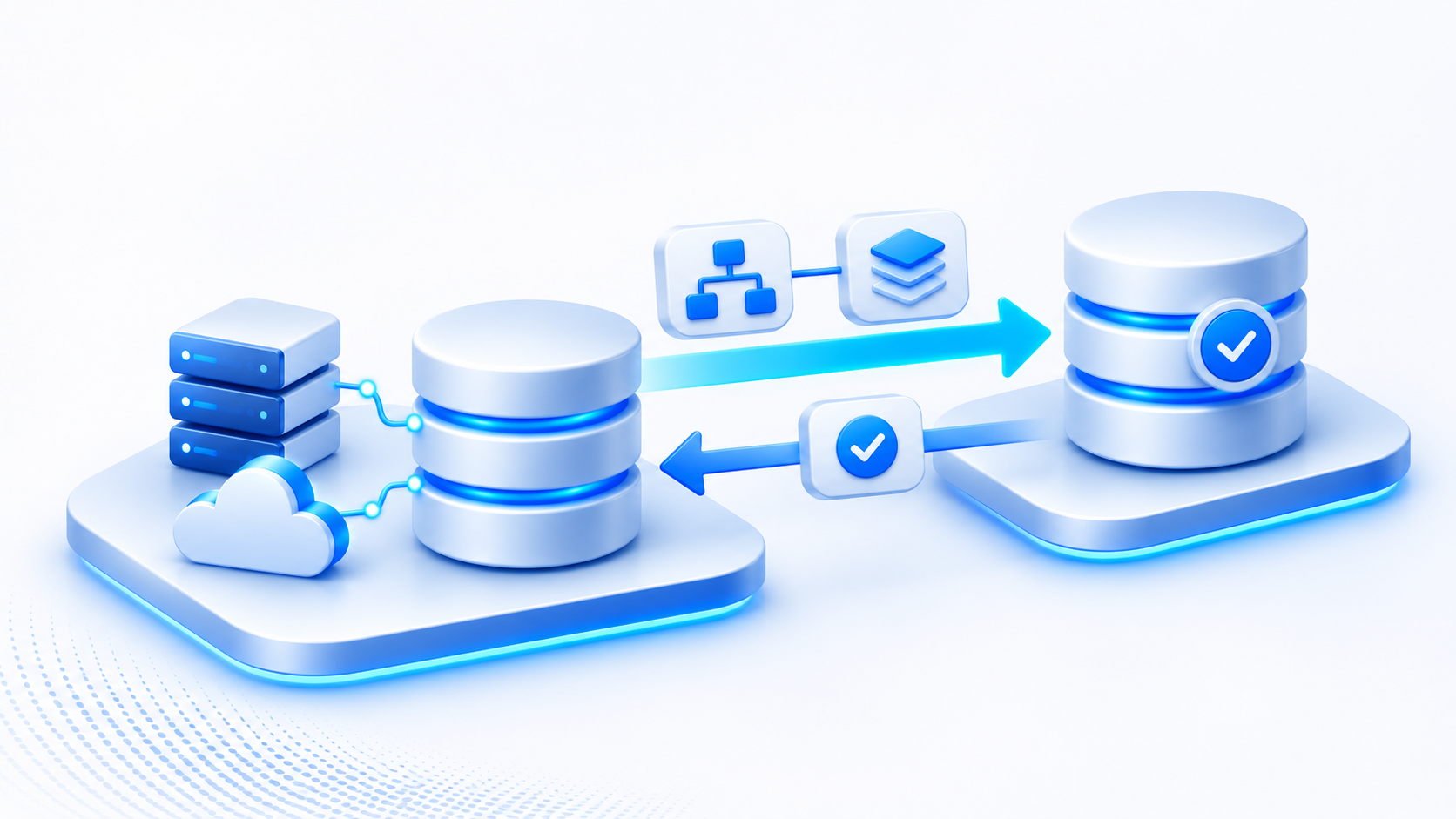
Virima supports bidirectional CMDB sync with ServiceNow. It can send discovered configuration items (CIs) and their relationships into the ServiceNow CMDB. Supported information can also flow back from ServiceNow, subject to the integration’s mappings and configuration.
What moves between Virima and ServiceNow CMDB?
Virima discovers infrastructure through scheduled discovery cycles and builds CI records in its CMDB. The ServiceNow connection can send those discovered records and their relationships to ServiceNow for use alongside existing workflows.
Confirm which ServiceNow fields can flow back to Virima and whether the relationship types you need are supported.
| Direction | What the CMDB owner should confirm |
|---|---|
| Virima to ServiceNow | Which discovered CI classes, attributes, and relationships the integration will send. |
| ServiceNow to Virima | Which supported ServiceNow updates the integration can return to Virima. |
| Both directions | Which system owns each shared field and how conflicting values are handled. |
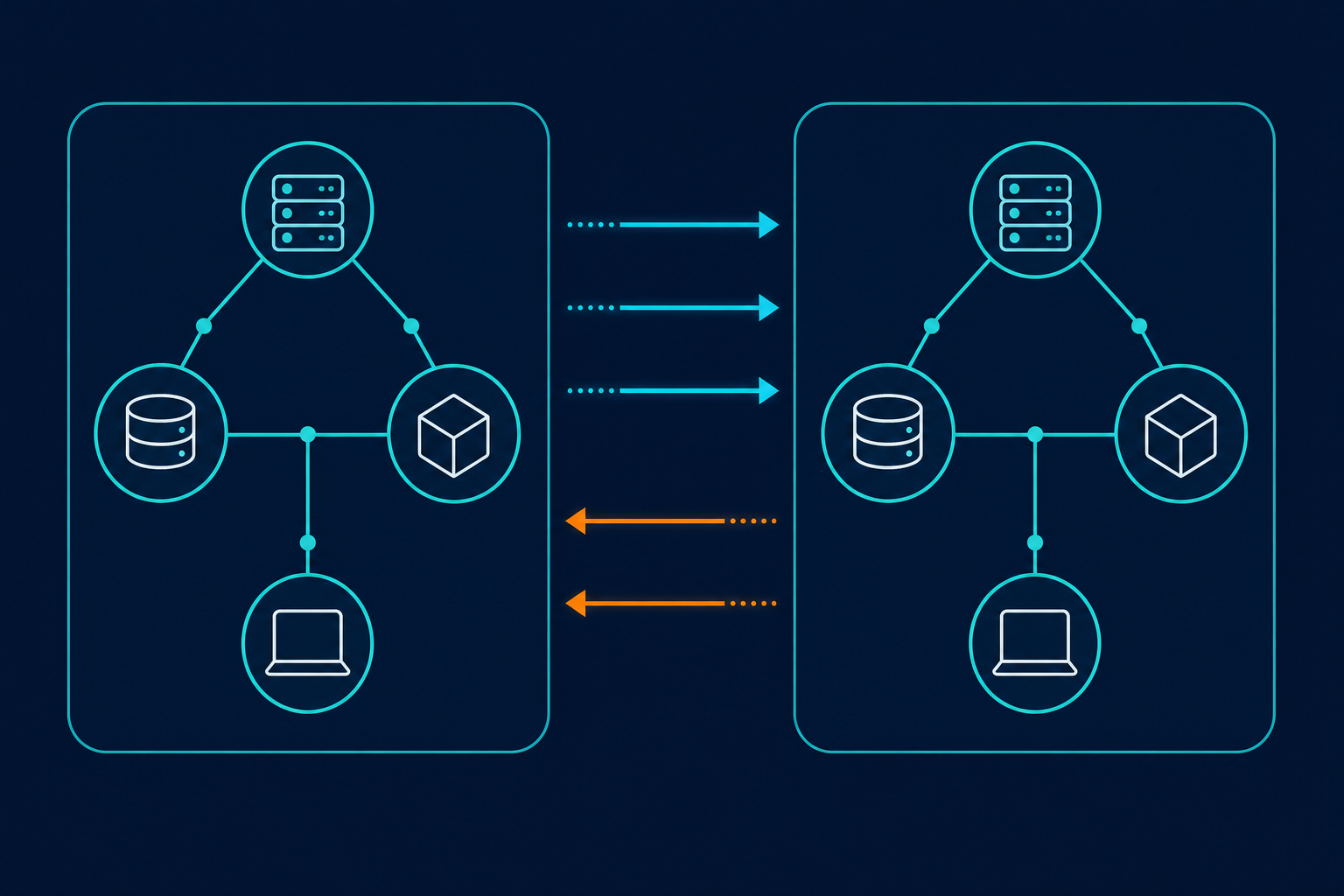
A mapping review should identify each field’s source, destination, and permitted direction, and name the team responsible for resolving a mismatch after the sync. Undefined field authority is a common cause of values oscillating back and forth after go-live. See how an attribute authority matrix stops that oscillation.
Does two-way CMDB sync mean every field moves in both directions?
A bidirectional configuration management database (CMDB) connection can support different fields in each direction. The integration’s supported mappings and the organization’s configuration determine which updates move. A field-level review helps administrators identify one-way fields and agree on the source responsible for each shared value.
How should a CMDB owner evaluate CI matching?
Before expanding a sync, review how the integration identifies a CI that already exists. Duplicate records can split ownership, incident history, and dependency information across entries for one asset.
Select identifiers that suit each CI class and the data available for it. A hardware serial number or cloud instance ID can help identify an asset when appropriate; hostnames can change or be reused, so they should not serve as the sole durable identifier.
Test the matching rules against an existing record and a new record, and check which attributes appear after the sync and whether established values remain as expected. Include records from the classes your team relies on for change and incident work.
Uptime Institute’s 2025 outage analysis reported that IT and networking issues accounted for 23% of impactful outages in 2024. The finding doesn’t measure CMDB sync directly, but it underscores why reliable, deduplicated CI records matter before a team depends on them during an incident.
Virima’s Trusted Runtime Truth describes what exists, how it connects, what changed, what may be affected, and who owns it. Explore Trusted Runtime Truth for a discovery-sourced approach to those records.
ServiceNow’s identification and reconciliation documentation describes how its Identification and Reconciliation Engine (IRE) applies rules to incoming CMDB data. Ask the implementation team how the Virima connection interacts with those rules in your environment.
Why should CI matching be tested before a larger sync?
A matching test checks whether an incoming configuration item (CI) corresponds to the intended existing record. It also gives administrators a chance to inspect the selected identifiers and resulting field values. A mismatch can leave operational history or ownership attached to separate records.
How should ServiceNow CI relationships be validated?
CI records and relationships need separate checks. A server record can appear correctly while a dependency is missing, reversed, or mapped to the wrong endpoint.
Choose two CIs with a relationship your team already knows, check the endpoints in Virima and ServiceNow, then compare the relationship type and direction. Record the expected result before the test so the team has a clear basis for review.
If the endpoint records match but the relationship differs, inspect the relationship mapping separately, and confirm what happens when one endpoint is absent from the destination. The implementation team should explain how it identifies and resolves that exception.
For service-level analysis, Virima can build ViVID™ service maps after service definitions are supplied — manually, through spreadsheet import, or through a supported integration. Confirm which underlying relationships are included in your ServiceNow mapping. Missing or reversed relationships cause real delay, not just an incomplete report — an incident responder can’t see what a CI depends on. See how relationship data gaps slow incident triage.
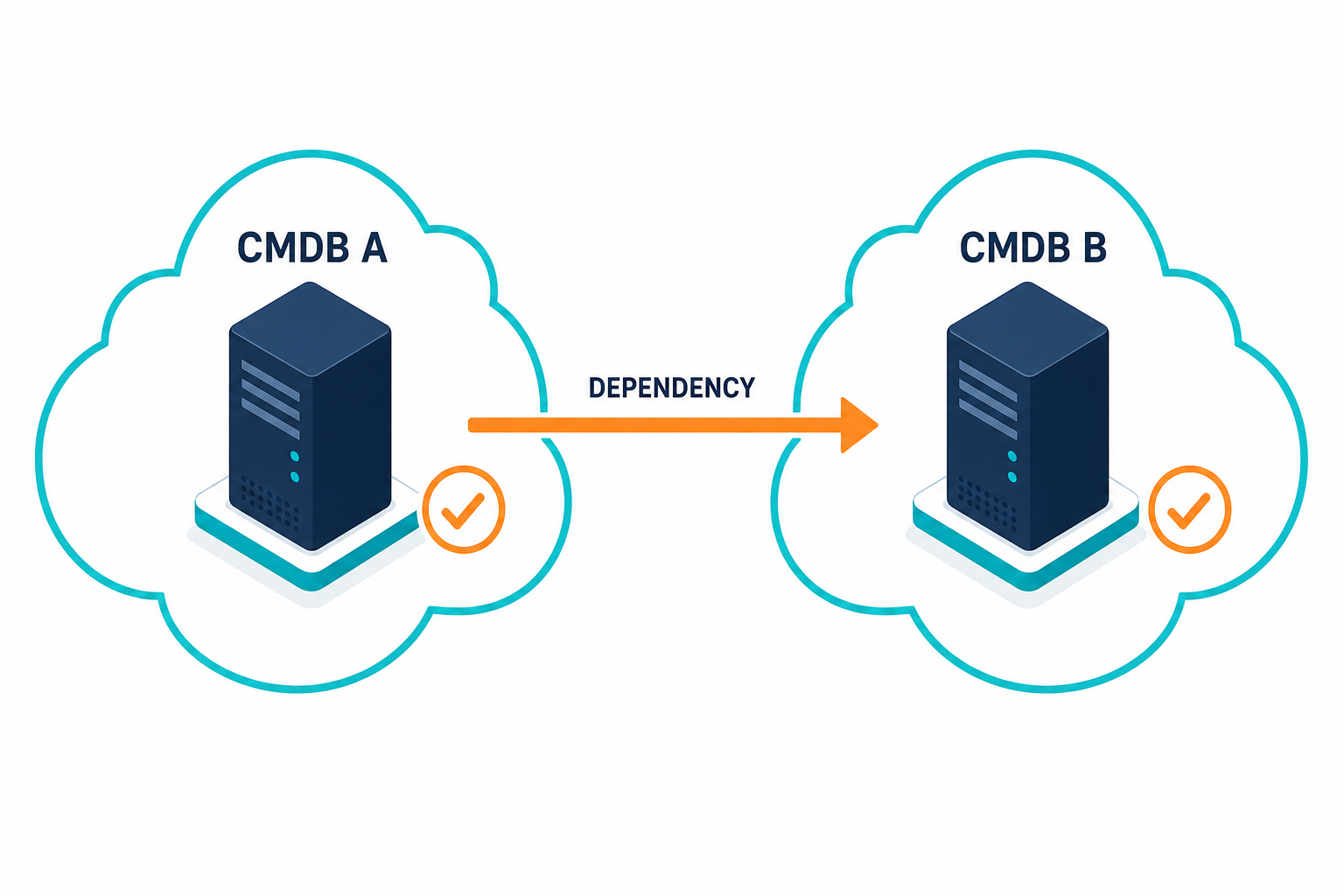
Review the available Virima integrations when planning how your existing systems exchange infrastructure data. Each integration should have an agreed owner and a documented purpose.
What should teams check when a synced relationship looks wrong?
Teams should compare the relationship’s two configuration item (CI) endpoints, its type, and its direction. They should also check whether both endpoint records exist in the destination. A correct CI record alone does not establish that its dependencies were mapped as expected.
What should the implementation team test?
A small validation set gives the CMDB owner evidence before the team expands the connection. Agree on the expected results and assign someone to review exceptions.
- Match an existing CI and confirm that the intended ServiceNow record receives the selected data.
- Sync a new CI and inspect its class, identifying attributes, and ownership.
- Review a known relationship and verify its endpoints, type, and direction.
- Change an agreed, supported field in ServiceNow and check whether it appears in Virima.
- Compare conflicting field values and confirm the outcome against the agreed ownership rules.
- Review a failed or rejected update and ask how the team should resolve it.
The team should agree on discovery and sync schedules before rollout — a CI can change between scheduled discovery cycles, and the last successful discovery and sync times help reviewers understand the age of the data.
Confirm permissions and the treatment of retired or deleted CIs with the implementation team, and keep those decisions with the field mappings so administrators can revisit them as the environment changes. Configuration issues like unmapped IRE rules, mismatched CI class hierarchies, or encrypted fields can silently block a sync long after go-live. Review common ServiceNow sync configuration gotchas before expanding the connection.
Review your mappings with Virima
Bring a small set of representative CI records and your existing data ownership rules to the evaluation. Include a relationship that matters to an upcoming change or incident workflow. Schedule a ServiceNow integration demo to review the proposed mappings and validation steps with Virima.
Frequently Asked Questions
What should a CMDB owner check before enabling two-way sync?
Review CI identifiers, field ownership, supported relationship mappings, permissions, and sync schedules. Test records that already exist before extending the connection to additional CI classes.
How can teams check whether CI relationships synced correctly?
Choose a relationship with known endpoints and compare it in both systems. Check the endpoint records, relationship type, and direction against the expected mapping.
How can a team reduce duplicate CIs during integration?
Agree on suitable identifiers and matching rules for each CI class before the sync. Test those rules against existing destination records, then investigate any exceptions.
Can Virima send discovered CI relationships to ServiceNow?
Virima can send discovered CIs and their relationships into ServiceNow CMDB. Confirm the relationship types and mappings needed for your environment during implementation.
Does Virima receive updates from ServiceNow?
Virima supports bidirectional CMDB sync with ServiceNow. Confirm which ServiceNow fields and relationship types can flow back to Virima for your configuration.