Top ITSM Software Platforms Compared [2026 Buyer’s Guide]

Last updated: July 2026
What are the top ITSM software platforms in 2026?
The leading ITSM platforms in 2026 are ServiceNow (large enterprise), Jira Service Management (Atlassian shops), Freshservice (mid-market, fast deployment), BMC Helix (enterprise legacy), Ivanti (security-first IT), ManageEngine ServiceDesk Plus (cost-conscious mid-market), SolarWinds Service Desk (SolarWinds stack), Halo, Xurrent, and Hornbill (ITIL-focused mid-market). Every platform depends on accurate CI data to function reliably. Virima provides the discovery-sourced CMDB and service mapping layer that keeps that data current, without replacing the ITSM platform already in use.
Every IT Director we talk to is asking the same question right now: “Are we on the right ITSM platform?”
It is a fair question. The market has changed. AI-assisted service management is no longer a differentiator. It is table stakes. Boards want IT to demonstrate business impact, not just uptime. And the cost of running on a misconfigured or outdated ITSM tool — from failed changes to slow incident resolution to audit findings — is no longer something teams can absorb.
This guide compares the top ITSM platforms available in 2026. It covers what each does well, who it fits best, and what you need alongside it to make it actually work. Because here is what most vendors will not say out loud: your ITSM software is only as good as the asset data behind it.
A note on this guide: Virima is not an ITSM platform. We publish this guide as the vendor of a discovery, CMDB, and service mapping layer that integrates with several platforms listed here. Inclusion is based on market consensus and ITIL relevance. Not partner status. Where a Virima integration exists, we say so. Where it does not, we say that too.
What makes great ITSM software in 2026?
The definition of great service management software has shifted. Ten years ago, you evaluated these tools on ticketing throughput, SLA tracking, and ITIL compliance. Today, those are the floor.
The business case for modern ITSM software
With global IT spending forecast to reach $6.31 trillion in 2026 (Gartner, April 2026) — up 13.5% over 2025 — CIOs are under more pressure than ever to demonstrate that every platform investment earns its place. CIOs, CTOs, CISOs, VPs, and compliance leaders are now evaluating these platforms on a different set of criteria:
- Business service continuity. When an incident hits, how fast can your team identify which business services are affected? Minutes matter.
- Change risk reduction. How many failed changes did your organization have last year? Each one carries a measurable business cost in downtime, rework, and loss of trust.
- AI readiness. Vendors are embedding AI ticketing automation solutions, routing, and resolution recommendations. But AI is only as good as the data it acts on. If your CMDB is stale, your AI recommendations will be wrong. For a breakdown of which AI in IT service management use cases produce results and which fail without a solid data layer, see our full guide
- Operational cost efficiency. Leadership wants fewer manual processes, lower MTTR, and measurable productivity gains.
- Integration depth. Service management software connects to your CMDB, monitoring tools, identity systems, and cloud platforms. Shallow integrations create data silos that hurt you at the worst possible moment.
The top ITSM platforms compared at a glance
Every platform below has a documented CMDB dependency. Where that data comes from — and how accurate it stays — determines whether your ITSM investment delivers or disappoints. The table below shows what each platform does well and where the discovery gap lives.
How we selected these platforms
Platforms are included if they appear across multiple independent ITSM shortlists for 2025. 2026, support ITIL-aligned incident, change, and request processes, and have a documented CMDB or asset dependency. Partner status with Virima is noted separately and does not determine inclusion. Evaluations draw from vendor documentation, G2 and Gartner Peer Insights review data, and analyst market coverage. Pricing notes are checked against public vendor pages as of July 2026.
| Platform | Best for | Ideal size | Deployment | AI posture | Pricing posture | CMDB posture | Discovery gap | Virima integration |
|---|---|---|---|---|---|---|---|---|
| ServiceNow | Large enterprise, multi-department workflows | Enterprise | Cloud | Now Assist; full AI suite | Quote-only | CMDB central; accuracy problems at scale | Service Graph exists; CMDB drift is documented at scale | Yes. Bi-directional CMDB sync |
| Jira Service Management | Atlassian shops; dev-led IT teams | Mid-market to enterprise | Cloud | Native AI assist | Published per-agent tiers | Jira Assets. Basic; external CMDB needed for enterprise | No native discovery; asset data requires manual import or integration | Yes. Discovery-driven CMDB surfaces in JSM tickets |
| Freshservice | Mid-market teams needing fast time-to-value | SMB to mid-market | Cloud | Freddy AI; routing and automation | Published per-agent (4 tiers) | Native asset management; CI depth limited for complex estates | No dedicated discovery engine; depends on imports | No published direct integration |
| BMC Helix ITSM | Large enterprises with BMC ecosystem history | Enterprise | Cloud / on-prem | BMC HelixGPT | Quote-only | Multi-cloud CMDB with discovery connectors; drift occurs at scale | Native discovery exists; CI accuracy requires ongoing hygiene | No published direct integration |
| Ivanti | Security-first IT teams; endpoint + ITSM consolidation | Mid-market to enterprise | Cloud / on-prem | Ivanti Neurons AI | Quote-only | CMDB included; accuracy varies by module mix | Discovery exists; CI freshness depends on module configuration | Yes. Ivanti Neurons for Service Mapping (co-branded) |
| ManageEngine ServiceDesk Plus | Cost-conscious mid-market; broad IT tooling | SMB to mid-market | Cloud / on-prem | Limited AI assist | Published per-technician; free tier to 5 technicians | Native CMDB and basic discovery included | Basic discovery; complex hybrid estates need supplementary coverage | No published direct integration |
| SolarWinds Service Desk | SolarWinds monitoring shops | SMB to mid-market | Cloud | AI-driven automation | Published 3-tier pricing | Native asset management and CI tracking | Hybrid and cloud depth requires supplementary discovery | No published direct integration |
| Halo | Mid-market ITIL-mature teams | Mid-market | Cloud / on-prem | Limited | Quote-based | Basic CMDB built in; static without external discovery | No high-frequency discovery cycles; CI accuracy requires external source | Yes. Available via Halo marketplace |
| Xurrent | Multi-provider ESM environments | Mid-market to enterprise | Cloud | AI classification | Published pricing | Requires external CMDB; no native discovery engine | No discovery engine; relies entirely on integrations for CI data | Yes. Via Xurrent App Store (Streamline Partners) |
| Hornbill | No-code ESM; IT and beyond IT | Mid-market | Cloud | Limited | Quote-based | Lightweight CMDB; no automated discovery | CI populated manually or via API feeds only | Yes. CMDB discovery and ViVID service mapping |
Pricing posture verified against public vendor pages as of July 2026. Quote-only pricing requires direct vendor engagement for scoping.
The pattern is the one every IT evaluation eventually runs into: the workflow engines are mature, but native CMDB accuracy and discovery depth vary widely. That gap is exactly where Virima sits
See discovery-sourced CMDB accuracy in your environment. Put deep, multi-source CMDB accuracy and ViVID™ service maps behind the ITSM software you already run. Explore Trusted Runtime Truth →
The top ITSM software platforms reviewed
Jump to a platform:
- ServiceNow
- Jira Service Management
- Freshservice
- BMC Helix ITSM
- Ivanti
- ManageEngine ServiceDesk Plus
- SolarWinds Service Desk
- Halo
- Xurrent
- Hornbill
Here is the breakdown of all seven platforms: what they are built for, where they excel, and what to factor in when evaluating them.
1. ServiceNow
ServiceNow is the enterprise platform of record for IT service management. It spans incident, change, problem, request, CMDB, HR service delivery, customer service, and security operations on a single platform. Best for global enterprises requiring multi-department workflow orchestration. The trade-off is high total cost of ownership and CMDB drift at scale. Both are documented, recurring realities of large ServiceNow deployments.
Best for: Large enterprises with complex workflows and multi-department service management needs.
As an enterprise-tier platform, ServiceNow is a significant investment. Implementations are typically run as dedicated projects, and total cost of ownership spans licensing, configuration, and ongoing administration — scoping that investment upfront is part of any enterprise rollout.
For ServiceNow users who want discovery-sourced CMDB data behind their workflows, Virima integrates directly via bi-directional CMDB sync. Discovered configuration items and their relationships flow into the ServiceNow CMDB. The platform’s AI and workflow engines then act on data that reflects the current environment, without duplicates or extra noise.
Ideal fit: Global enterprises, multi-tower IT organizations, and businesses with complex service catalog and workflow automation requirements.
Limitations/trade-offs
ServiceNow is a significant financial and operational investment. Licensing, implementation, and ongoing administration represent some of the highest total cost of ownership in the ITSM market. CMDB drift at enterprise scale is a documented, recurring problem. ServiceNow Discovery (Service Graph) exists but does not eliminate the need for discovery hygiene discipline. Teams with complex multi-cloud or hybrid estates often find CI accuracy requires external augmentation even with Service Graph active.
Pricing posture (as of July 2026)
Quote-only. ServiceNow does not publish list pricing. Costs depend on modules, user counts, and contract structure. Enterprise implementations are typically scoped as multi-month programs with dedicated project teams.
2. Jira Service Management (Atlassian)
Jira Service Management is Atlassian’s ITSM layer for incident, change, and request workflows, built on the Jira platform. It is particularly strong in organizations where DevOps and IT operations share one work graph. Best for engineering-led and Atlassian-standardized shops. Limitation: enterprise-grade CMDB and discovery typically require an external system beyond Jira Assets for complex hybrid environments.
Best for: Mid-market and enterprise teams running Atlassian at scale, and engineering-driven organizations where development and IT operations intersect.
Jira Service Management gives IT teams a strong ticketing and workflow platform with native capabilities in incident management, change tracking, and request fulfillment. Its Jira Assets module is a starting point for CMDB functionality, though organizations with hybrid or complex infrastructure typically add a dedicated discovery and CMDB layer to make it enterprise-grade.
Virima and Jira Service Management together give JSM users a discovery-driven CMDB behind their service workflows. Virima’s discovery engine populates asset data and CI relationships that surface directly in JSM tickets, so responders see the asset context they need without switching tools.
Limitations/trade-offs
Jira Assets provides a starting point for CMDB functionality. For organizations with complex hybrid or cloud-heavy infrastructure, agent or agentless discovery and CI relationship modeling typically require an external system to reach enterprise-grade accuracy. JSM also carries a dependency on Atlassian ecosystem familiarity; teams outside that ecosystem face a steeper onboarding ramp.
Pricing posture (as of July 2026)
Published per-agent pricing across Free, Standard, Premium, and Enterprise tiers. Verify current rates at atlassian.com/software/jira/service-management/pricing.
3. Freshservice (Freshworks)
Freshservice is Freshworks’ cloud-native ITSM platform, designed for rapid deployment and a clean agent experience across incident, problem, change, service catalog, and asset management. Best for mid-market and SMB IT teams that want fast time-to-value without a complex implementation program. AI-assisted routing and automation are built into every pricing tier, and published per-agent pricing makes budget planning straightforward.
Best for: Mid-market IT teams that want ITIL-shaped service management, a fast setup cycle, and transparent pricing. Without ServiceNow-scale configuration overhead.
- AI-assisted incident routing and auto-categorization across all tiers
- Published, per-agent pricing with a clear four-tier structure (Starter, Growth, Pro, Enterprise)
- Native service catalog, self-service portal, and asset management with low configuration overhead
Limitations/trade-offs
Freshservice is optimized for speed and usability. Organizations with complex multi-tower enterprise workflows, deep custom CMDB relationship modeling, or advanced change advisory board requirements can outgrow the platform’s configuration flexibility. At scale, some customers report needing workarounds for highly custom approval chains and CI relationship depth.
Pricing posture (as of July 2026)
Published per-agent pricing across four tiers. Verify current rates at freshservice.com/pricing.
CMDB and discovery dependency
Freshservice includes native asset management and a basic CMDB module. For hybrid environments with complex infrastructure relationships, a dedicated discovery layer is typically needed to keep CI data current without manual imports.
4. BMC Helix ITSM
BMC Helix ITSM is the enterprise-grade successor to BMC Remedy, delivering full ITIL process coverage with AI and automation across a multi-cloud architecture. Best for large enterprises already in the BMC ecosystem, managing complex service orchestration and multi-cloud operations. For organizations with an existing BMC Remedy footprint, Helix consolidates service management and IT operations on a familiar platform foundation.
Best for: Enterprises with complex multi-cloud estates and existing BMC ecosystem investments, where process depth and vendor continuity outweigh time-to-value considerations.
- AI-driven incident and problem routing (BMC HelixGPT)
- Multi-cloud CMDB with out-of-the-box discovery connectors
- Strong process depth across incident, problem, change, and configuration management
Limitations/trade-offs
Licensing and implementation cost is among the highest in the market. Organizations without existing BMC Remedy history often face significant time-to-value challenges during implementation scoping. CMDB accuracy at enterprise scale depends heavily on discovery configuration hygiene and ongoing CI maintenance discipline.
Pricing posture (as of July 2026)
Quote-only. BMC does not publish list pricing for Helix ITSM. Contact BMC or a value-added reseller for a scoped estimate.
CMDB and discovery dependency
Helix includes native multi-source discovery capabilities. At enterprise scale, CMDB drift and CI relationship accuracy remain consistent challenges, particularly in hybrid and multi-cloud estates where infrastructure changes frequently.
5. Ivanti
Ivanti Neurons ties ITSM to endpoint management, IT asset management, and security operations under one vendor platform. Best for organizations that want service management and endpoint or security posture visibility in a single vendor relationship. Licensing complexity and the breadth of the Neurons portfolio can add configuration and administration surface area.
Best for: Organizations that need unified IT asset management, endpoint security, and service management from a single vendor.
Ivanti has built a wide IT automation platform under the Ivanti Neurons brand, combining ITSM, ITAM, endpoint management, and security operations. For CIOs and CISOs managing the intersection of IT service delivery and cybersecurity posture, that breadth is attractive.
For IT teams running Ivanti Neurons for ITSM, there is a purpose-built, co-branded solution: Ivanti Neurons for Service Mapping, a Virima-powered, Ivanti-branded product offered and supported directly through Ivanti. It delivers high-frequency data center and cloud discovery, ViVID™ service mapping, and a library of discovery blueprints that map to Ivanti CMDB objects.
Limitations/trade-offs
Ivanti’s portfolio breadth. ITSM, UEM, patch management, security, and ITAM. Can produce complex licensing structures and a steep administration surface for teams that only need core ITSM. Discovery and CMDB mapping quality vary by module selection; CI freshness in the live CMDB should be validated as part of any deployment review.
Pricing posture (as of July 2026)
Quote-only. Ivanti Neurons pricing depends on module selection and seat count. Contact Ivanti or an authorized reseller for a scoped estimate.
6. ManageEngine ServiceDesk Plus
ManageEngine ServiceDesk Plus bundles incident, problem, change, and service catalog management with optional ITAM, Active Directory integration, and project management at mid-market pricing. Best for cost-conscious IT teams that need broad ITSM coverage plus adjacent IT management tooling without enterprise-suite pricing. Both cloud and on-premises deployment options are available.
Best for: Mid-market organizations that need multi-function IT management coverage. Service desk, asset management, and optional AD/endpoint tooling. At a fraction of the cost of tier-1 suites.
- Integrated ITAM and service management in one license
- Cloud and on-premises deployment options with published per-technician pricing
- Optional Active Directory and endpoint management integrations
Limitations/trade-offs
UI and visual design language can feel dated compared to tier-1 platforms. Enterprise scalability and complex multi-department workflow customization require more configuration overhead at larger deployments. Deep CI relationship modeling typically needs a dedicated external discovery layer to reach operational accuracy.
Pricing posture (as of July 2026)
Published per-technician pricing across Standard, Professional, and Enterprise editions; a free tier is available for up to five technicians. Verify current rates at manageengine.com/service-desk.
CMDB and discovery dependency
A native CMDB and basic discovery module are included. Hybrid environments with complex cloud and application dependencies typically add a dedicated discovery layer to keep CI accuracy at an operational level.
7. SolarWinds Service Desk
SolarWinds Service Desk combines ITIL-aligned service management (incident, change, problem, service catalog) with integrated CMDB and asset management, and is frequently purchased alongside the broader SolarWinds IT monitoring suite. Best for IT teams already standardized on SolarWinds network and infrastructure monitoring, who want service management tightly coupled with their operations data in one vendor relationship.
Best for: IT operations teams running SolarWinds NPM, IPAM, or monitoring products who want service management that surfaces infrastructure events in the same platform context.
- Native integration with SolarWinds monitoring products (NPM, IPAM)
- ITIL-aligned incident, change, problem, and service catalog
- Published three-tier pricing (Essentials, Advanced, Premier) with a no-code configuration approach
Limitations/trade-offs
SolarWinds Service Desk is less commonly chosen as the primary ITSM platform in multi-tower enterprise environments where broader workflow orchestration and deep CMDB customization are the primary evaluation criteria. Organizations outside the SolarWinds monitoring ecosystem gain less from the bundled integration story.
Pricing posture (as of July 2026)
Published three-tier pricing. Verify current rates at solarwinds.com/service-desk/pricing.
CMDB and discovery dependency
Native asset management and basic CI tracking are included. Hybrid and cloud estate accuracy typically requires supplementary discovery coverage beyond the native scope, particularly for complex application dependency mapping.
9. Halo
HaloITSM delivers full ITIL-aligned service management. Incident, problem, change, catalog, and asset. With lower configuration overhead than enterprise mega-suites. Best for mid-market organizations scaling toward enterprise ITIL depth without a large implementation program. Native CMDB is functional but basic; hybrid estates with complex infrastructure typically benefit from a dedicated discovery layer.
Best for: Mid-market enterprises scaling their IT operations, and organizations that value ITIL alignment without a complex implementation.
HaloITSM delivers complete ITSM functionality covering incident, problem, change, service catalog, and asset management, in a platform that is ITIL-aligned without the configuration overhead of larger enterprise tools.
Halo users who want to add CMDB automation and service mapping can purchase Virima directly through Halo. Adding Virima’s high-frequency discovery and service mapping gives Halo users a discovery-driven CMDB, ViVID™ service visualization, and rapid impact analysis inside their existing workflows.
Limitations/trade-offs
Halo’s native CMDB and discovery capabilities are not equivalent to a dedicated discovery platform. Organizations with complex hybrid or cloud-heavy environments typically need an external discovery source to maintain CI accuracy at an operational level. The platform is also less common in global multi-tower deployments compared to tier-1 suites.
Pricing posture (as of July 2026)
Contact Halo for pricing; quote-based. Verify at haloitsm.com.
9. Xurrent
Xurrent (formerly 4me) is built for multi-team, multi-provider service management with strong SLA tracking, service catalog management, and cross-domain service delivery. Best for organizations managing ESM-style or multi-provider IT environments. CI data must arrive via integrations; Xurrent does not include a native heavy discovery engine.
Best for: IT organizations managing multi-provider service environments, and businesses scaling toward enterprise service management with an emphasis on operational efficiency.
Xurrent (formerly 4me) is built around simplicity and scalability. Its architecture supports multi-team, multi-provider service management with strong SLA tracking, service catalog management, and cross-domain service delivery.
Virima integrates with Xurrent to add the discovery and CMDB accuracy layer that turns Xurrent’s service workflows into decisions backed by current discovery data. The integration is available through the Xurrent App Store via Streamline Partners.
Limitations/trade-offs
Xurrent’s architecture assumes that CI data arrives from external integrations. There is no native discovery engine; organizations must connect an external discovery and CMDB source to populate the CI graph that Xurrent workflows and SLA calculations depend on. Teams evaluating Xurrent should plan for a separate CMDB and discovery layer as part of the initial implementation scope.
Pricing posture (as of July 2026)
Published pricing available at xurrent.com/pricing. Verify current per-user rates directly.
10. Hornbill
Hornbill is a no-code service management platform built for rapid deployment and use across IT, HR, Finance, and other service functions. It delivers weekly feature upgrades without disruptive downtime. Best for organizations prioritizing ESM simplicity and multi-function service delivery. CI data is populated manually or via API feeds; automated discovery is not a native capability.
Best for: Organizations that prioritize simplicity and service management beyond IT.
Hornbill is built around simplicity. The platform is no-code, delivers weekly feature upgrades without downtime or disruptive release cycles, and serves not just IT but also HR, Finance, and other service functions.
Virima’s CMDB discovery and service mapping alongside Hornbill ITSM gives Hornbill users detailed asset insights, all visually accessible through ViVID™.
Ideal fit: Organizations that want enterprise service management spanning multiple business functions, with a preference for no-code tooling.
Limitations/trade-offs
Hornbill’s CMDB is lightweight, and automated discovery is not built in. CI data is typically populated manually or via third-party API feeds. For operations that depend on accurate blast-radius analysis, change impact mapping, or incident-to-service correlation, an external discovery source is needed to provide the CI graph Hornbill workflows can act on.
Pricing posture (as of July 2026)
Contact Hornbill for pricing; quote-based. Verify at hornbill.com.
What every ITSM platform needs: an accurate CMDB and service mapping
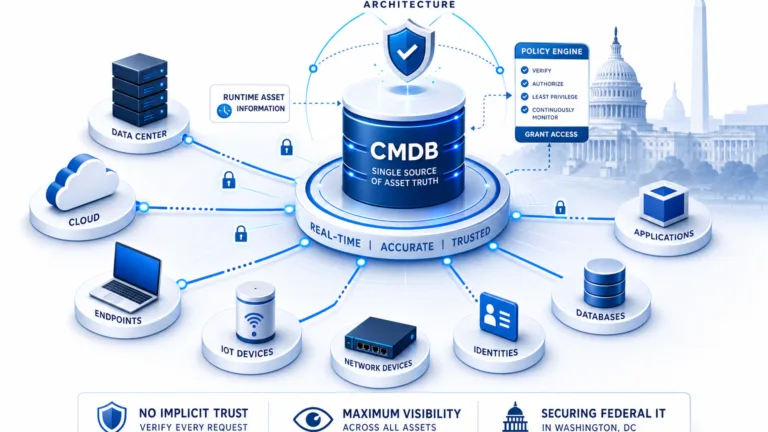
If one pattern shows up across every platform in this guide, it is this: every ITSM tool is only as effective as the CI data it operates on. Jira, ServiceNow, Xurrent — they all process tickets, automate workflows, and generate AI recommendations on top of a configuration data layer. When that layer is stale, incomplete, or manually maintained, the platform underperforms. That is not a product flaw. It is a data architecture gap — and it is fixable without replacing your existing ITSM stack.
The CMDB accuracy problem
A CMDB is only useful when it reflects reality. In most environments, that means it has to be kept current through high-frequency discovery cycles as infrastructure changes. Manual updates cannot keep pace. Stale CMDB data leads to incidents that take longer to resolve, changes that fail because dependencies were not mapped, and audit reports that do not reflect actual infrastructure.
According to the ITIC 2025 Hourly Cost of Downtime Survey, 91% of SME and large enterprises say a single hour of unplanned downtime costs more than $300,000. Inaccurate CMDB data is a direct contributor to that cost.
Virima solves this with high-frequency discovery cycles, both agent-based and agentless, across on-premises and cloud environments, with connectors for AWS and Azure. It also includes full IT asset management for hardware and software lifecycle tracking, so teams get operational and financial visibility in one platform.
See how reducing MTTR ties directly to CMDB accuracy. Request a demo to see Virima’s discovery in action →
Built for the agentic IT era: trusted runtime truth
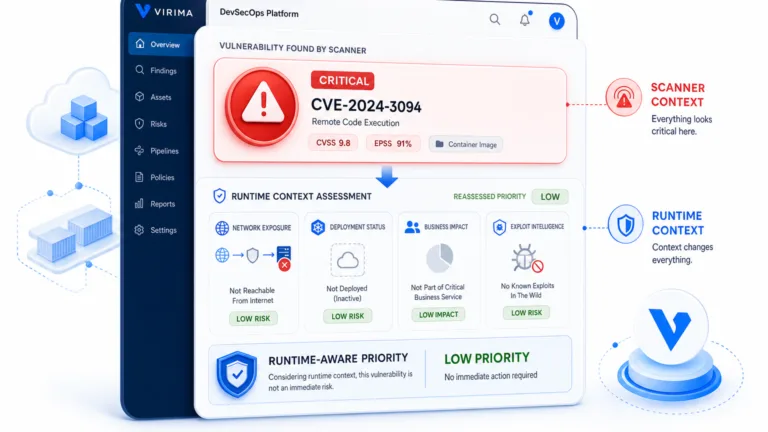
The next question every ITSM buyer is now asking is whether their data is ready for AI agents to act on. AI agents embedded in your ITSM platform are only as reliable as the asset data underneath them, and most CMDBs cannot tell an agent how fresh their data actually is.
Virima extends its discovery-driven foundation into trusted runtime truth: asset data that carries a confidence signal and a clear source. When confidence in a record degrades, Virima refreshes it before a decision depends on it. And every record can point back to where it came from — whether that is Virima discovery or a connected source. That gives both your team and any AI agents acting in your environment a defensible basis for the decisions they make.
ViVID™ service maps: from asset data to business context
Once your CMDB reflects reality, the next layer is understanding what business services those assets support. Virima’s ViVID™ service mapping turns CI relationship data into visual application-to-infrastructure dependency maps.
Your team defines which applications and infrastructure components make up each business service — manually, via spreadsheet import, or through an integration like LeanIX. Virima then maintains the service dependency map from that input through high-frequency discovery cycles. ViVID™ also overlays open incidents and planned changes from your ITSM platform, so responders see complete context for every service event.
Request a demo to see ViVID™ service maps in your environment →
Virima integrates with the ITSM platforms in this guide — ServiceNow, Jira Service Management, Ivanti, Halo, Xurrent, and Hornbill. Not as an ITSM replacement, but as the discovery and CMDB layer that lets your service management software work the way the brochure promised.
Update log: July 2026. Added Freshservice, BMC Helix ITSM, ManageEngine ServiceDesk Plus, and SolarWinds Service Desk to reflect consensus shortlist coverage. Expanded comparison table with pricing posture, ideal size, and Virima integration columns. Added per-tool limitations and pricing posture sections across all platforms. Methodology disclosure added.
How to choose the right ITSM software for your organization
Step 1: Assess your service management maturity
Where is your organization today on the service management maturity curve? If you are early in your journey, tools like Halo and Hornbill offer strong foundations with lower implementation overhead. If you are scaling toward enterprise-grade orchestration, ServiceNow and Ivanti offer the depth and the cost that comes with it.
Step 2: Map your integration ecosystem
Your platform will need to connect to monitoring tools, identity providers, cloud platforms, and your CMDB. Evaluate integration depth, not just breadth. Ask vendors how their platform handles bi-directional data sync and what happens when integration data conflicts.
Step 3: Evaluate total cost of ownership
License cost is the number discussed in procurement. Total cost of ownership is the number that matters to the board. Factor in implementation, configuration, administration, ongoing training, and the cost of integrations you will need to build. Mid-market tools like Halo, Xurrent, and Hornbill deliver faster time to value at significantly lower TCO than enterprise platforms, without sacrificing the ITIL depth your team needs.
Step 4: Validate the CMDB story
Before you finalize any selection, ask the vendor to show you how their platform handles CMDB accuracy. Ask how configuration items are discovered, how often they are refreshed, and how relationships between CIs are maintained. If the answer involves significant manual effort, that is a risk you are accepting for the life of the deployment.
Step 5: Pick a platform that fits your CMDB strategy
CMDB strategy and ITSM software selection should be made together, not sequentially. Selecting a workflow tool without a CMDB plan is how organizations end up acting on stale data. Whatever you choose, plan the CMDB layer in parallel.
Your ITSM investment is only as good as the data layer behind it
Selecting the right platform is a strategic decision. The seven reviewed in this guide — Jira Service Management, Halo, Ivanti, Xurrent, Hornbill, and ServiceNow — each serve different organizations well. The right choice depends on your size, your maturity, your stack, and your cost structure.
But whichever one you select, one requirement is constant: the asset data behind it has to be accurate. A stale CMDB turns a good ITSM platform into a liability. High-frequency discovery and ViVID™ service maps are what make the investment pay off, and what keep your data ready for the AI agents now acting inside your workflows.
Virima integrates with the ITSM platforms in this guide. Request a demo to see what discovery-sourced CMDB accuracy looks like in your environment →
Frequently asked questions
What is the difference between ITSM and CMDB?
ITSM software manages service delivery workflows: how incidents are logged, routed, escalated, and resolved. A CMDB stores the asset and configuration data those workflows rely on. Organizations with complex infrastructure typically add a dedicated discovery and CMDB solution to keep data accurate and current.
How do you choose ITSM software for a mid-market organization?
Start with ITIL alignment, implementation overhead, and total cost of ownership. Mid-market teams consistently find that Halo, Xurrent, and Hornbill deliver enterprise-grade service management at a fraction of the cost and complexity of larger platforms, without sacrificing ITIL compliance.
Why does CMDB accuracy matter for ITSM?
Your ITSM workflows are only as good as the asset data behind them. Stale CMDB data causes failed changes, slow incident resolution, and inaccurate impact analysis. High-frequency discovery keeps CI records current so service management decisions reflect actual infrastructure — not what it looked like six months ago.
What is service mapping in ITSM software?
Service mapping connects technical infrastructure to the business services it supports. Virima’s ViVID™ service maps build dependency maps from service definitions your team provides, so workflows see visual service context for faster impact analysis. Services are not auto-discovered — your team defines which apps and infrastructure make up each service, and Virima maintains the map from that input.
Does Virima replace ITSM software?
Virima does not replace ITSM software. It is a discovery, CMDB, and service mapping platform that works alongside your ITSM, enriching it with discovery-driven asset data and ViVID™ service maps. Virima integrates with ServiceNow, Ivanti, Halo, Xurrent, Jira Service Management, and Hornbill.