The top five insights from Gartner IOCS 2025

Gartner’s IT Infrastructure, Operations & Cloud Strategies (IOCS) Conference has always been a useful barometer for where IT operations priorities are heading. What makes IOCS different from many industry events is not the volume of ideas, but the consistency.
When the same concerns surface across analyst sessions, sponsor messaging, and peer conversations, they’re usually worth paying attention to.
This year’s conference reinforced that pattern. Across meetings, panels, and informal discussions, the same tensions came up repeatedly: how to apply AI responsibly, how to manage increasingly fragmented infrastructure choices, how to balance resilience with cost pressure, and how to regain operational clarity in environments that no longer resemble the architectures CMDBs were built for.
What follows isn’t a recap of announcements. It’s a synthesis of what kept showing up in different rooms, from different perspectives, and what those signals suggest about the direction of IT operations.
KeyTakeaway 1: AI and agentic ITOps are shifting from experimentation to expectation
AI was not a side conversation at IOCS. It was the backdrop.
Nearly every discussion, whether focused on incident management, observability, infrastructure, or service operations touched AI in some form. But what stood out was how much the conversation has matured. There was noticeably less emphasis on whether AI belongs in IT operations and far more focus on how it should be applied.
“Agentic AI” and automation-first I&O featured prominently across Gartner communications and vendor narratives. In practice, this showed up as AI-assisted incident triage, automated remediation pathways, and GenAI-driven operational guidance.
Yet the framing was careful. AI was rarely positioned as replacing operators. Instead, it was described as a way to reduce operational toil, filtering noise, accelerating diagnosis, and supporting decisions while keeping humans accountable for design, policy, and governance.
In hallway conversations, this distinction mattered. Many leaders expressed interest in AI, but also caution. The appetite is there, but so is the awareness that poorly governed automation can create as many problems as it solves.
| What this signals: When evaluating platforms and IT Tools, make sure the AI capabilities are embedded natively into the platform and not bolted on after the fact, and also make sure the AI solutions address the use cases that are most important for your organization otherwise, you may be paying a premium for a product with AI built without having the ability to use it. |
KeyTakeaway 2: Cloud, multicloud, and (re)virtualization choices are being actively reconsidered
One of the more interesting undercurrents at IOCS was the renewed attention on infrastructure fundamentals.
Gartner’s 2025 I&O trends explicitly call out revirtualization and devirtualization, and that theme carried strongly throughout the conference. Licensing changes, AI workload requirements, and cost pressures are prompting organizations to reassess long-standing assumptions about hypervisors, containers, public cloud, and private cloud.
“Private cloud reimagined” came up often, particularly in discussions about AI latency, data locality, and cost predictability. At the same time, hybrid and multicloud architectures remain the norm rather than the exception. Few organizations are simplifying their environments; most are layering new models on top of existing ones.
In conversations with peers, a recurring challenge surfaced quietly: understanding what actually exists across these environments. As infrastructure choices diversify, IT discovery becomes harder and more critical.
Without reliable visibility into assets, configurations, and dependencies, even well-intentioned architecture decisions can introduce operational risk.
| What this signals: Cloud strategy breaks down quickly when discoverability is treated as someone else’s problem. Leaders should assume that more architectural choice means more operational blind spots unless discovery is designed up front. If you can’t continuously see what’s running, where it lives, and how it connects, ESM will always lag behind the reality of your environment. |
KeyTakeaway 3: Cyber resilience is now an I&O responsibility, not just a security mandate
Cyber resilience has been a standing agenda item for years, but IOCS reflected a notable shift in emphasis.
Rather than focusing narrowly on threat detection, many sessions framed cyber resilience as an operational concern: protecting data, maintaining service continuity, and recovering quickly in a distributed, multi-cloud enterprise. Network and security architectures such as SASE, SSE, and SD-WAN were discussed less as point solutions and more as part of a broader resilience strategy.
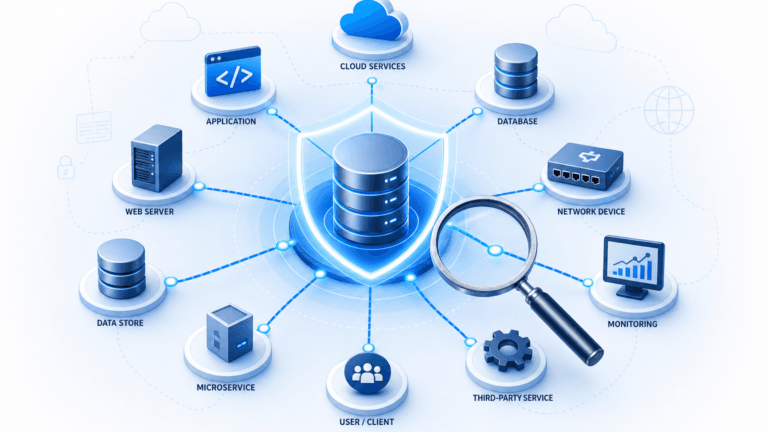
What came through clearly is that resilience depends on understanding the environment. In distributed architectures, it’s no longer enough to secure individual components. Teams need to know how systems relate, which services depend on which assets, and how failures propagate.
Several conversations returned to the same challenge: without clear, continuously updated IT visibility, resilience strategies remain theoretical. You can’t protect or recover what you can’t clearly see.
| What this signals: Resilience isn’t just about adding more security controls, it depends on understanding the environment well enough to act under pressure. My hot take is that, ‘leaders should ask whether their teams can clearly visualize assets, dependencies, and services during an incident’. If that answer is unclear, resilience plans will struggle when speed and clarity matter most. |
KeyTakeaway 4: Cost, sustainability, and the I&O operating model are colliding
Cost management was one of the most pragmatic themes at IOCS.
Across cloud, observability, and AI discussions, leaders acknowledged that existing cost models are under strain. Generative AI introduces new consumption patterns. Observability tools generate massive volumes of data. Cloud sprawl continues to challenge forecasting and accountability.
At the same time, sustainability and talent pressures are reshaping the I&O operating model. Organizations are being asked to do more with less, while also building new skills and governance structures that support long-term value. ESG considerations surfaced not as a separate initiative, but as another constraint shaping infrastructure and tooling decisions.
What was striking is how often these topics were discussed together. Cost optimization, sustainability goals, and operating-model evolution are no longer treated as independent tracks. They’re increasingly recognized as interconnected forces that must be addressed holistically.
| What this signals: Cost challenges rarely come from a single tool or platform. They come from operating models that lack clear ownership and decision discipline. Leaders who focus only on cutting spend without addressing governance, accountability, and usage patterns often find that costs reappear in different forms with less visibility and control. |
KeyTakeaway 5: Unified, AI-driven observability is becoming central to ESM and cloud operations
Observability remains a cornerstone of modern IT operations, but IOCS made it clear that its role is expanding.
Many sponsors emphasized “intelligent” or AI-powered observability, positioning it as essential for resilience, performance, and cost control in hybrid and multicloud environments. The emphasis has shifted from collecting more telemetry to making sense of it, correlating signals, reducing noise, and tying insights back to services and business impact.
What stood out in discussions was the desire to collapse silos. Organizations are looking to reduce tool sprawl and connect observability data directly into ITOps and ESM workflows. Faster MTTR, better prioritization, and clearer business context were consistently cited as the outcomes teams are trying to achieve.
In practice, this requires more than better dashboards. It depends on having accurate service models and relationships that allow signals to be interpreted in context.
| What this signals: More observability data does not automatically lead to better decisions. Leaders should push for observability that connects signals directly to services and workflows, rather than adding yet another dashboard. If insights don’t shorten decision cycles or improve response times, they aren’t helping operations; they’re adding noise. |
The persistent challenge beneath it all: CMDBs and service context
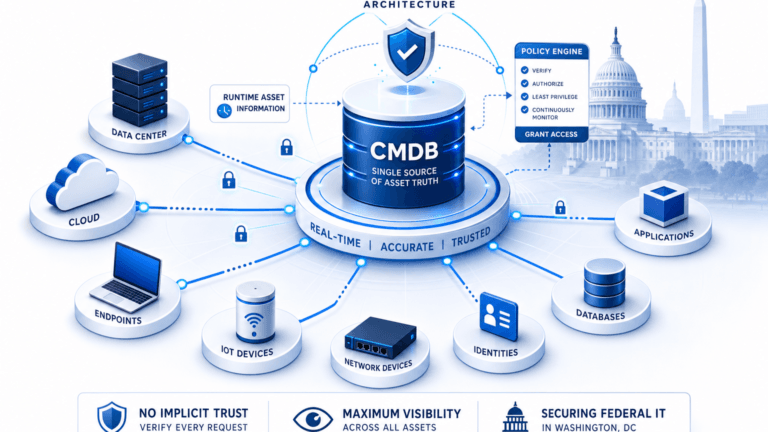
Threaded through many of these themes is a long-standing issue that remains unresolved for many organizations: the CMDB.
Most CMDBs were designed for relatively static environments. Today, they’re expected to represent fast-changing, hybrid, multi-cloud architectures and complex business services often using batch discovery and rigid schemas that can’t keep pace.
The consequences are familiar:
- incomplete or stale configuration data
- unreliable impact analysis and change risk assessments
- ESM initiatives that struggle to gain adoption or deliver automation
When the configuration layer can’t be trusted, service maps, SLAs, and workflows are built on fragile assumptions. Over time, teams stop relying on them.
At IOCS, modern approaches to this problem came up repeatedly. These include automated, federated discovery from cloud APIs and domain tools; graph- and topology-based models that better represent complex relationships; and tighter integration with observability and AIOps to keep service context current.
Just as importantly, several discussions emphasized scope discipline. Successful organizations are narrowing CMDB focus to the minimum viable set of services, relationships, and data that drive real decisions and treating configuration data as a living product with ownership and governance.
Closing reflections
Walking away from IOCS this year, what stood out wasn’t a single breakthrough technology. It was a shared recognition that IT operations are being reshaped by convergence.
AI, infrastructure choices, security, cost pressures, and service management are no longer separate conversations. They’re tightly coupled, and progress in one area increasingly depends on maturity in the others.
At the center of this convergence is the need for a clear, accurate, and continuously maintained understanding of the environment.
The organizations that move forward successfully won’t be the ones chasing every new capability. They’ll be the ones that invest in the right foundations, make deliberate trade-offs, and treat operational clarity as a strategic asset.
IOCS remains valuable precisely because it surfaces these patterns early, not as prescriptions, but as signals. And those signals this year were hard to miss.
P.S.: This is my hot and fresh take on each learning from Gartner IOCS 2025, but I would love to hear from you as well in the comments. Let’s bring it on!