Reduce MTTR with Xurrent Ticketing & Virima Service Mapping

Incident pressure builds quickly inside the Xurrent ticketing system. Alerts arrive in waves, tickets pile up, and multiple teams are pulled into the same issue. When those tickets lack clear service and dependency context, investigations slow down, and ownership becomes unclear.
That delay is costly. Industry estimates show downtime can cost around $1,670 per minute on average, with many organisations reporting figures closer to $5,600 per minute. In large enterprises, the impact can exceed $1 million per hour once lost productivity, customer impact, and recovery efforts are factored in.
Pairing Xurrent with Virima’s ViVID™ service mapping adds real-time dependency visibility to every ticket. Teams can instantly see affected services, understand upstream and downstream impact, identify the true root cause faster, and reduce MTTR without unnecessary hand-offs.
The Context Gap in ITSM: Why Tickets Alone Aren’t Enough
Xurrent is built for ticketing excellence, capturing incidents clearly and keeping workflows moving. For broader service insight and end-to-end operational context, teams often extend Xurrent through integrations that connect tickets to the underlying services and dependencies.
A ticket in the Xurrent ticketing system might say “Server ABC is down” or show an error code, but that information on its own isn’t enough to fix the issue.
Support teams may not know which business services rely on that server. Without a visual dependency map, they’re left guessing—searching through tools, calling teammates, or digging through the CMDB software for answers.
This slows progress and increases stress. Without system-wide visibility, identifying the true root cause becomes significantly harder.
This missing context is a major reason many teams struggle with high MTTR, revealing deeper operational pain points across ITSM workflows. Companies with MTTR under 1 hour report ~50% fewer customer-churn incidents, according to Hyperping, highlighting just how much fast resolution impacts retention.

Integrating Xurrent’s IT ticketing system with Virima’s ViVID™ service mapping gives responders immediate operational context for faster diagnosis.
Instead of working through possibilities, server, network, or a recent change, teams can see service dependencies and impact in one view. That visibility reduces manual investigation, speeds root-cause isolation, and helps cut MTTR even when multiple incidents are coming in at once.
Virima’s Service Maps: A 360° View of Service Dependencies
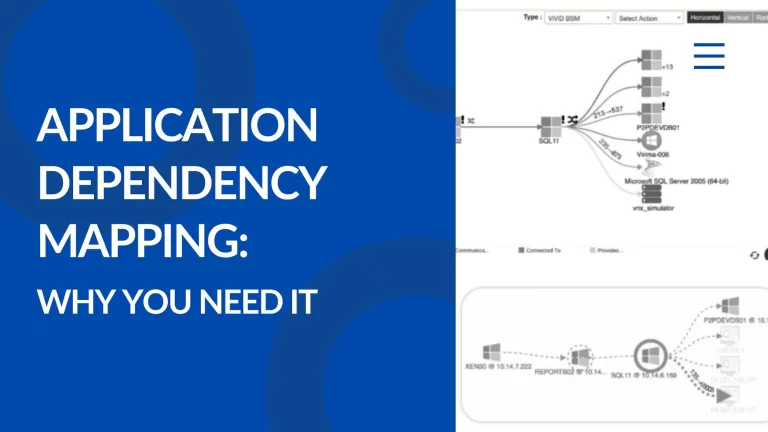
Imagine if every incident came with its own map. That’s exactly what Virima’s Service Mapping and Visual Impact Display (ViVID™) delivers, offering a near real-time, end-to-end view of your IT environment and how every component connects.
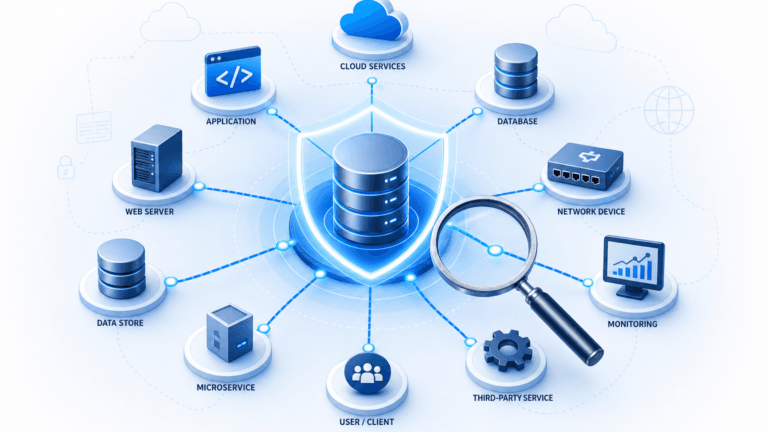
Virima automatically discovers and maps dependencies between servers, applications, databases, and network devices, creating a living visual diagram of your IT ecosystem. If Server ABC relies on Database XYZ and Web Service JKL, you’ll see those exact connections on the map.
This visual clarity helps your team quickly understand how each component fits into the larger service structure.
What makes this even more powerful is adding live ITSM data from the Xurrent ticketing system to the service maps
Through the Xurrent–Virima integration, open Xurrent tickets, incidents, alerts, or changes automatically appear on the map.
Example:
| If Server ABC has an active incident logged in the Xurrent ticketing software, Virima’s ViVID™ map displays a clear alert icon on that system.Immediately, your support team can see which services might be affected, such as a Payments Application relying on that server, its database, and a connected network switch. |
The map can also display recent changes like a configuration update applied earlier in the day, giving responders even more context.
This added visual context, especially when combined with near real-time ticket data from Xurrent, significantly improves incident understanding.
Instead of searching through logs or CMDB entries, your team can see the issue immediately—instantly understanding the scope and impact of the incident.
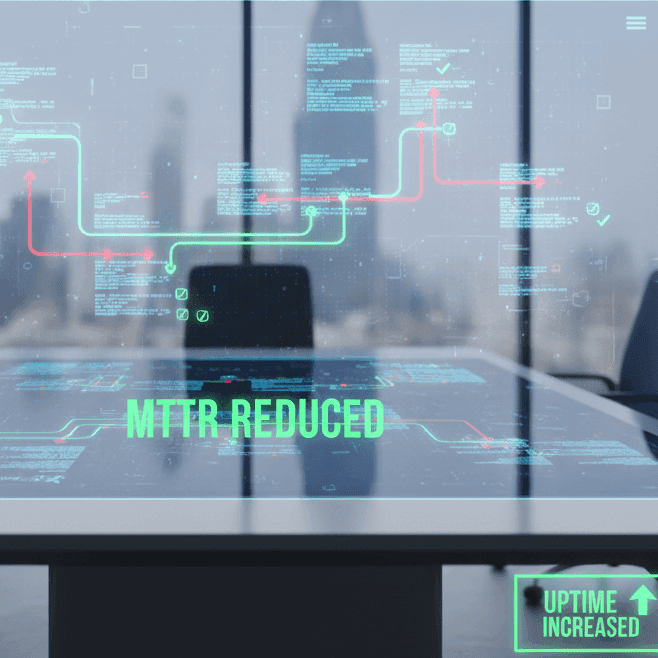
If a server shows an alert and related systems such as its database or web service also display issues, it’s clear the problem is widespread. Virima gives you one unified view of all dependencies and live conditions.
Research insights
| Research shows that seeing these links as a visual map helps you understand how one outage affects others — and Birlasoft found that implementing service mapping reduced MTTR by 35% in a real-world case.. It also improves teamwork and reduces downtime. In simple terms, an incident is no longer just a ticket in a queue — it’s a highlighted spot on your map. |
Your team can instantly see how everything is connected, letting them move straight to the root cause rather than wasting time searching for answers.
Most importantly, this kind of insight helps you find the root cause faster. A good service map, built on an accurate CMDB (CMDB benefits) shows how systems connect and depend on each other. When something fails, you can quickly see what’s affected upstream and downstream.
Experts agree that effective incident response requires clear visibility into affected systems and business impact. That context enables teams to resolve issues much faster.
Virima’s visual maps provide exactly that near-real-time context that guides you directly to the root cause.
Faster MTTR: From Reactive to Proactive Incident Resolution
Bringing Xurrent tickets into Virima’s ViVID™ service maps adds the operational context responders need to move faster. Instead of jumping between ticket details, dashboards, and CMDB records, teams can see impact, dependencies, and recent change signals in one place—making triage more consistent and resolution measurably quicker.
Immediate Impact Analysis
When an incident is logged in Xurrent, responders can open the related Virima service map to view connected systems and dependencies within seconds. Patterns also surface faster.For example, multiple server incidents may trace back to a shared dependency like a single network switch. With relationships visible, teams can prioritize the true root cause instead of working through symptoms ticket by ticket.

Efficient Troubleshooting Scenario
A late-night alert comes in: the e-commerce checkout service is down. The on-call engineer opens the “E-commerce Checkout” ViVID™ map and immediately sees the incident on the application server, plus its dependencies on the database and payment gateway. A “recent change” marker on the database showing a patch applied earlier that day narrows the investigation instantly. What typically takes hours of cross-tool investigation can drop to minutes with clear visual context.
Collaborative “War Room” Visualization
During major incidents, shared maps become a common operating picture for service desk, app, database, and network teams. Instead of lengthy explanations, everyone can see what’s impacted, where changes occurred, and which dependencies are most at risk. This keeps triage aligned, accelerates handoffs, and reduces time lost to miscommunication especially in high-pressure, multi-team scenarios.
This approach aligns with broader industry research: studies from IDC and Gartner show that using a strong CMDB (CMDB compliance) and service mapping can cut MTTR by 18–25%on average.
Bridging Xurrent and Virima: How the Integration Works
So how do you put this into practice? The Xurrent–Virima integration makes it easy. It’s quick to set up, simple to use, and fits seamlessly into your existing workflow.
There’s no need to adjust your current processes. The integration connects your Xurrent ticketing system with Virima’s service maps, giving you instant visual context for every incident.
Here’s a quick overview of how it works and the key benefits it delivers to your team:
Seamless Data Flow
The integration allows incident data from the Xurrent ticketing software to flow into Virima in near real time.
Simply put, whenever a ticket is created or updated in Xurrent—whether it’s an incident, problem, or change—it automatically links to the corresponding system or service in Virima’s CMDB tools.
And given that downtime costs can range from US $100,000 per hour to over US $540,000 per hour in many enterprises, the payoff for speeding resolution is huge.
Virima’s Visual Impact Display shows the ticket directly on the service map. From within Xurrent, agents can open the related Virima map via an embedded view or quick link. This two-way connection keeps critical context just one click away.
Best of all, your team doesn’t need to change how they work. Whether you’re on an enterprise subscription or evaluating the platform, agents continue using Xurrent as their primary ITSM tool logging, updating, and closing tickets as usual.
The Virima integration enhances this workflow behind the scenes. It delivers powerful visualization without adding extra steps or requiring your team to learn a new tool.
Out-of-the-Box and Easy to Use
This integration is a certified connector available in the Xurrent App Store for both the Xurrent ticketing system and Xurrent ticketing software, developed in partnership with Streamline Partners.
Setup is fast and straightforward just a few configuration steps connect the systems. No custom coding or major changes to your environment are required.
Once enabled, a Xurrent user can switch to the Virima service map with a single click, thanks to a clean, user-friendly interface that keeps navigation simple.
For example, clicking “View Service Map” on a ticket instantly opens the live dependency map for that service.
The design prioritizes speed and simplicity. In seconds, an agent can transition from viewing a text-based ticket to seeing near-real-time system connections.
Because it’s an out-of-the-box solution, your team can start using it right away. There’s no need for long projects or outside help and for context, Gitnux notes that manufacturing downtime averages $260,000 per hour, underscoring the value of quick deployment. In short, it’s a code-free, easy-to-deploy integration that makes daily IT operations faster and smarter.
Key Benefits at a Glance
Integrating the Xurrent ticketing system with Virima gives your team faster context, clearer impact visibility, and smoother collaboration without changing how they work in Xurrent.
Rapid impact & root cause analysis
Virima’s ViVID™ overlay connects Xurrent tickets to the affected services and dependencies, so responders can quickly understand scope and pinpoint likely root causes. This reduces time spent correlating symptoms across multiple tickets.
Up-to-date, trustworthy CMDB data
Virima’s automated discovery keeps CI and relationship data current, so tickets link to an accurate view of the environment. That reliability improves triage decisions and reduces rework caused by outdated configuration data.
Dynamic visualization of relationships
Maps update as conditions change, showing current operational status and ticket signals like incidents or recent changes. This helps teams spot ripple effects early and prioritize the highest-impact work.
Collaboration and knowledge capture
Teams can share a single visual view during triage, so everyone stays aligned without lengthy explanations. Over time, these maps also support faster onboarding and stronger operational documentation.
Lower MTTR, higher MTBF
With faster context and clearer handoffs, teams resolve incidents quickly and prevent repeat issues more effectively. The result is fewer prolonged outages, improved uptime, and higher service reliability without adding complexity to your ITSM workflow.
Don’t resolve incidents blindly. Map them!
Xurrent users know speed matters when incidents pile up. Pairing the Xurrent ticketing system with Virima’s service maps adds live dependency context to each ticket, so teams can assess impact fast, isolate root cause, and move from reactive firefighting to proactive prevention.
This aligns with ServiceNow’s 2024 findings, where 43% of IT leaders named proactive incident response as their top strategy for reducing downtime.
Schedule a quick demo to see how easily you can connect the Xurrent ticketing system with Virima’s service maps. Your next big outage could be resolved in record time all because you had the right map in hand.
Get in touch with us today by scheduling a quick demo and see how this powerful integration can transform your incident management.
Frequently Asked Questions (FAQs)
1. How does the Xurrent–Virima integration help reduce MTTR?
The integration provides instant visibility into the relationships between affected systems and services. When an incident is logged in Xurrent, it automatically appears within Virima’s visual service map. This enables IT teams to see the full context of an issue, what’s impacted, why it’s happening, and how different components are connected. So they can diagnose and resolve incidents significantly faster.
2. Do we need to replace our existing ITSM tools to use this integration?
No. The integration is designed to complement your existing Xurrent ticketing system, not replace it. Your IT team continues to use Xurrent as their primary ticketing tool for incident management. The Virima integration further simply adds a powerful visual layer of service context and impact analysis.
3. How difficult is it to set up the Xurrent–Virima integration?
Setup is simple and fast. The integration is available as a certified connector in the Xurrent App Store, requiring only basic configuration steps no heavy coding or custom development. Most organizations can also have it up and running in a matter of hours.
4. How does Virima ensure the service maps stay accurate and up to date?
Virima’s automated discovery engine continuously scans your IT environment to detect and map configuration items (CIs) and their dependencies. This also ensures that the service maps always reflect the current state of your infrastructure, providing trustworthy data for every incident.
5. What kind of organizations can benefit most from this integration?
Any organization that relies on complex IT infrastructure such as financial services, healthcare, e-commerce, or managed service providers can benefit. Teams handling frequent incidents, changes, or outages will see the most immediate value in reduced MTTR, improved collaboration, and enhanced visibility across their IT ecosystem.