Spiceworks Alternative: What IT Teams Actually Need

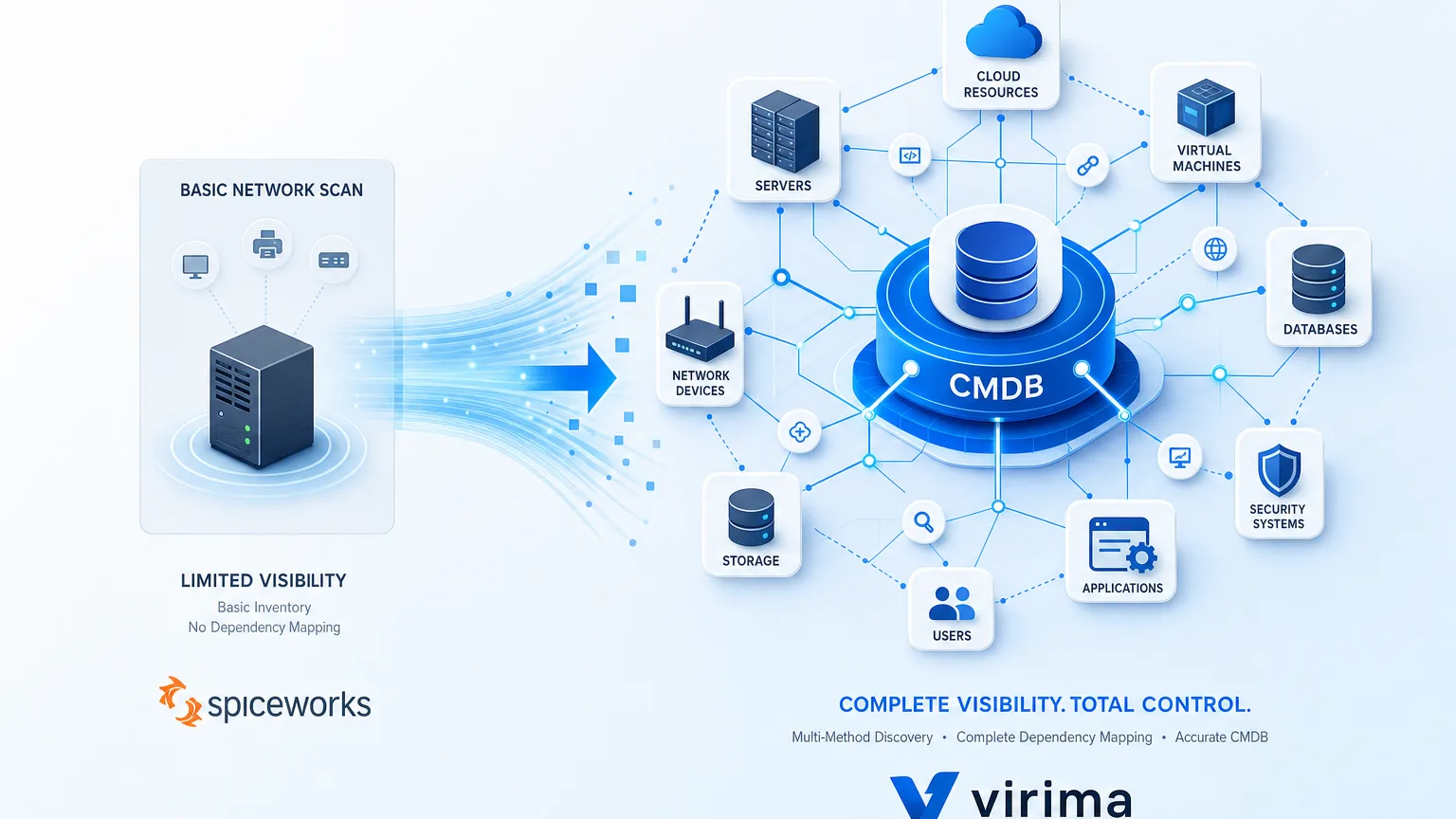
You are looking for a Spiceworks alternative because free network-scan inventory stopped answering the questions your change and incident decisions require. A change request lands. Someone asks what services break if this server goes offline for a maintenance window. The inventory shows the server exists. It does not show what depends on it, who owns it, or what business processes stop if it goes down during the change window.
That is the moment the search starts, and for IT Ops Managers and Directors at 500+ employee organizations running ServiceNow or Jira Service Management, it usually hides two different problems: a ticket-workflow gap and a CI-authority gap. Spiceworks scans what is reachable on the network. It does not reconcile that data into a CMDB you can trust for change or incident decisions. Virima closes that specific gap with discovery-sourced, dependency-mapped CI records, without replacing the helpdesk you already run.
This piece walks through what forces that switch, which evaluation criteria matter once free inventory runs out, how common replacement categories map to those criteria, and where a discovery-sourced CMDB tool fits if inventory authority, not ticket workflow, is the real problem.
If your environment is about 50 devices and one IT generalist managing a straightforward ticket queue with no audit or compliance pressure, Spiceworks may still fit. Keep reading if you have scaled past that threshold and need a replacement that can carry mid-market or enterprise change and incident work.
Why IT Teams Outgrow Spiceworks
Spiceworks combined free helpdesk software with basic network inventory. That mix works for small, predominantly Windows-based on-premises environments. Limits show up as the estate grows.
Spiceworks discovery relies primarily on WMI and SNMP scanning. At scan time, it records what is reachable and responsive on the network. Assets that do not answer those queries (cloud workloads, containerized services, SaaS endpoints, ephemeral virtual machines) do not appear in the inventory. The CMDB records what the scanner saw in the last cycle. It does not reconcile multiple discovery sources, and it does not flag CI conflicts when two sources return different attribute values for the same asset.
That gap is measurable, and it is getting worse, not better. Flexera’s 2026 State of ITAM Report found complete visibility into IT assets dropped to 36%, down from 43% the year before, even as organizations added more cloud, SaaS, and AI-application footprint to track (“Flexera 2026 State of ITAM Report”). A single-method scanner built for on-premises Windows devices only widens that visibility gap as the estate diversifies.
The integration gap compounds that over time. Pushing accurate, reconciled CI data from Spiceworks into ServiceNow, Jira Service Management, Ivanti, or a similar ITSM platform requires manual export and reimport, so the CMDB your ITSM platform uses for change and incident decisions stays current only as far as the last manual sync. A closer look at hybrid IT discovery gaps like this one is available on the Virima blog. Virima blog post on hybrid IT discovery challenges for growing IT teams
You need a tool that closes the distance between a network scan and a CI record reliable enough for blast-radius analysis, incident triage, and audit responses.
Spiceworks ITAM limitations are covered in depth in our companion piece. The focus here is the evaluation framework once you have decided to move past free network-scan inventory.
This piece does not claim anything about Spiceworks ownership, pricing, or product roadmap. Vendor status changes quickly. Confirm current product status on the Spiceworks site before you lock it into internal docs or a vendor shortlist.
What Breaks First
Ticket workflow depth, SLA configuration, and AI-assisted support features are the wrong scorecard for a Spiceworks alternative. They fix a ticket-queue gap, not the inventory-authority gap that forces most teams off Spiceworks as the estate grows.
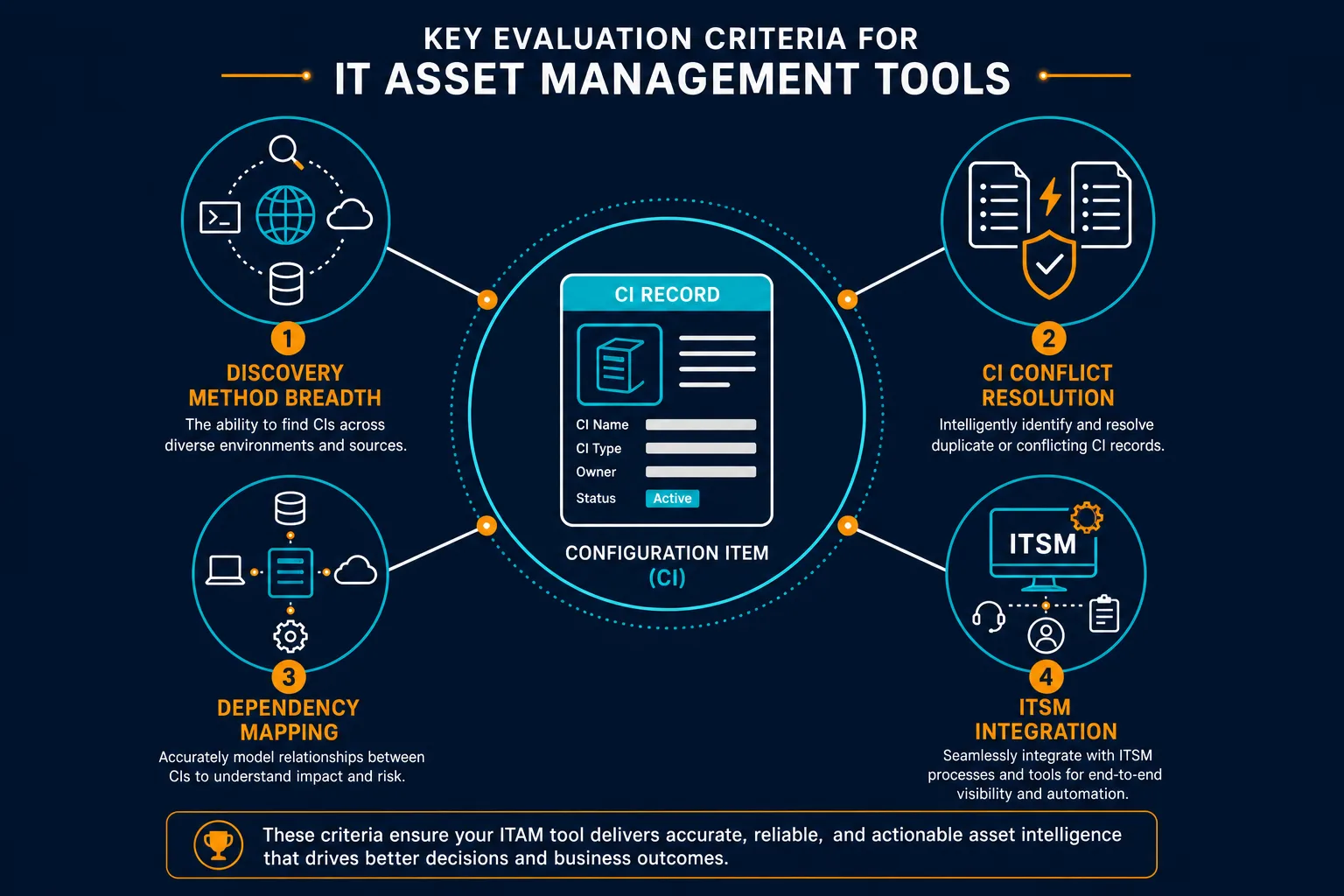
Four criteria separate a Spiceworks-class free inventory tool from a replacement worth shortlisting for mid-market and enterprise IT.
Discovery method breadth. A single-method scanner records only what its one method can reach. A multi-method approach (agent-based, agentless, API-based, and network scanning) records on-premises servers, cloud workloads, SaaS endpoints, containerized infrastructure, and network hardware from one platform. An inventory that misses a category of assets is incomplete for change and incident work.
CI conflict resolution. When two discovery sources return different values for the same CI (different owner, version, or location data), a tool without reconciliation logic stores both records or silently overwrites one. A tool with configurable authority rules resolves the conflict and records which source supplied the accepted value.
Service and dependency mapping. Change decisions need what a CI connects to, not only that it exists. Without a dependency map, a team changing a database server cannot see which application services consume it or what breaks during the change window. ViVID™ service maps build that dependency layer on the discovered CI record, making change risk visible before a change window opens rather than during an incident post-mortem.
Native ITSM integration. A discovery tool that cannot push reconciled CI data into the ITSM platform you already use adds a manual sync step between every discovery cycle and every ticket, a gap that widens over time. Bidirectional data exchange with your live ITSM platform is a production requirement, not a secondary feature checkbox.
Categories of Tools You Will See on a Shortlist
When you shortlist a Spiceworks alternative in 2026, candidates usually fall into a few categories. Match the category to the gap driving your switch before you invest demo time.
| Tool | Category | Discovery / CMDB depth |
|---|---|---|
| monday service | Helpdesk/work management | Ticketing-first; no discovery-sourced CMDB |
| Zendesk | Helpdesk / ITSM | Ticketing and CX focus; asset management is a thin add-on |
| Freshservice | ITSM suite | Broader ITSM workflows; agent-based discovery only |
| ManageEngine ServiceDesk Plus | ITSM suite | Basic bundled CMDB; limited conflict resolution |
| Jira Service Management | ITSM (dev-adjacent) | Strong dev/ops workflows; basic CMDB; also a Virima integration partner |
| SysAid | ITSM + RMM | Helpdesk and asset tracking combined; limited enterprise-scale discovery |
| SolarWinds Service Desk | ITSM suite | Ticketing-first; asset data relies on agent-based discovery |
| Atera | RMM for MSPs | Built for MSP device management; not positioned as an enterprise CMDB |
| NinjaOne | RMM / endpoint management | Strong endpoint visibility; not a CMDB or service-mapping platform |
| Lansweeper | IT discovery/asset inventory | Discovery-category peer; inventory-led; limited enterprise CMDB and service-mapping depth |
| Virima | IT discovery / CMDB / service mapping | Multi-method discovery, CI conflict reconciliation, ViVID™ service maps, bidirectional ITSM integration; not a helpdesk replacement |
Helpdesk-first tools address ticket-workflow gaps; RMM tools address endpoint management. If free inventory no longer supports change, incident, or audit decisions, shortlist discovery-sourced CMDB tools such as Lansweeper and Virima, then score multi-method discovery, CI reconciliation, dependency mapping, and bidirectional ITSM integration.
Lansweeper and Virima sit in the same discovery category. If a head-to-head with Lansweeper is on your shortlist, use the dedicated Lansweeper comparison rather than treating this page as a full Lansweeper teardown.
What replaces Spiceworks for enterprise IT asset management?
Helpdesk platforms cover the ticket workflow gap but leave CI authority unresolved. Discovery-sourced CMDB tools address the inventory gap directly, building a reconciled, dependency-mapped asset record that connects to enterprise ITSM platforms. The right replacement depends on which gap is driving the evaluation: ticket workflow or CI authority.
Where Virima Fits (and Where It Doesn’t)
Virima is not a helpdesk replacement. It does not manage ticket queues, SLA policies, or customer-facing support workflows. Evaluate the ITSM platforms in the table above for that part of the stack.
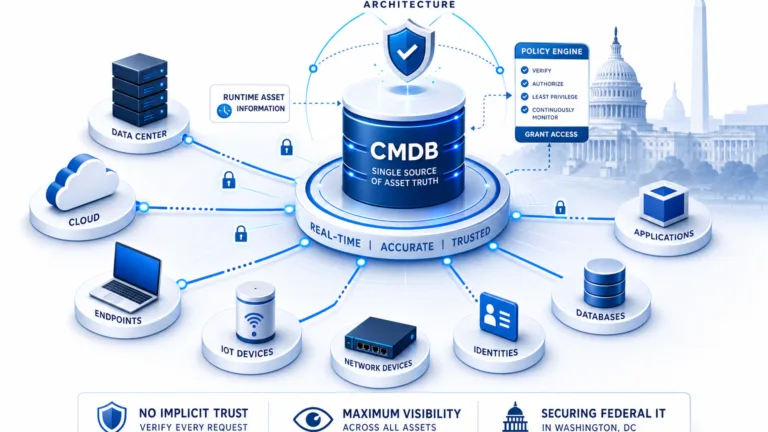
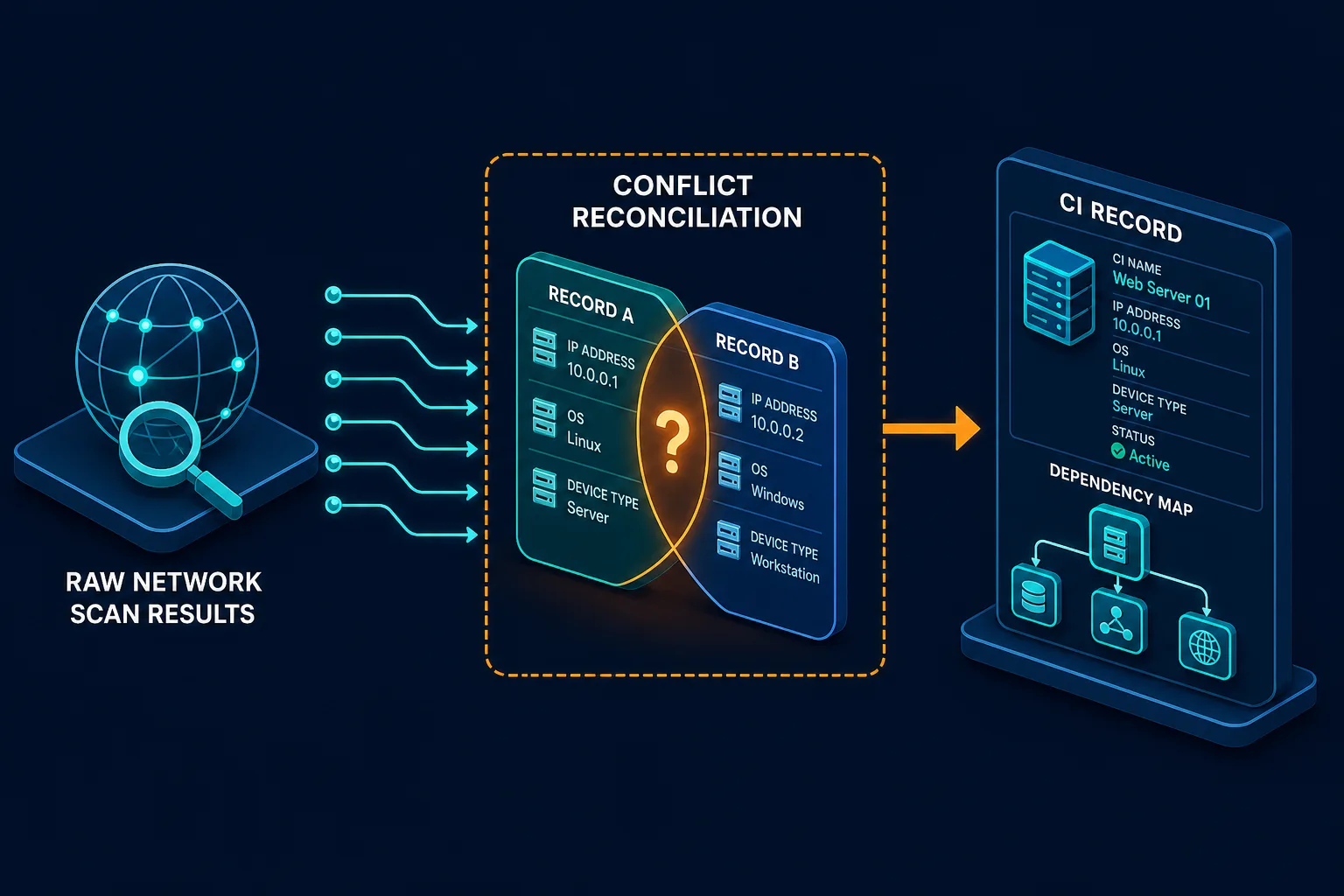
Virima addresses the discovery-to-CMDB gap: the distance between a raw network scan and a reconciled, service-mapped CI record you can use for change decisions, incident triage, and audit responses.
IT discovery runs across agent-based, agentless, and API-based methods, covering on-premises servers, cloud workloads on AWS and Azure, SaaS endpoints, and network infrastructure. The platform reconciles CI data across those sources with configurable authority rules: when two sources return conflicting values for the same CI, the reconciliation layer resolves the conflict and records which source supplied the accepted value. ViVID™ service maps build the dependency layer from that discovered CI data, showing which application services depend on which infrastructure components and which business services are affected if a CI changes or goes offline, making change risk visible before a change window, rather than during an incident retrospective.
Virima integrates with ServiceNow, Jira Service Management, Ivanti, HaloITSM, Xurrent, Hornbill, TeamDynamix, and other ITSM platforms. The integration hub covers how reconciled CI and relationship data flows into the ITSM platform CMDB, bidirectionally, so the data available at ticket time reflects what discovery has confirmed.
If you carry GRC, compliance, or audit requirements, Virima’s configuration management use case covers how discovery-sourced CI records support audit evidence, the same visibility CISA Binding Operational Directive 23-01 requires as a prerequisite for federal vulnerability remediation timelines.
The augment-or-replace decision is straightforward: run Virima alongside your existing ITSM platform to close the CI authority gap. Virima supplies the discovery-sourced CMDB and service maps; the ITSM platform keeps the workflows it already owns.
Does Spiceworks integrate with ServiceNow or Jira Service Management?
Spiceworks does not offer native bidirectional integration with ServiceNow or Jira Service Management. Pushing reconciled CI data from Spiceworks into an enterprise ITSM platform typically requires a manual export and import process, which introduces lag between discovery cycles and the CI data available at ticket time.
Teams that keep Spiceworks-class inventory and a separate ITSM stack usually discover this lag the first time a change window depends on CI ownership that no longer matches the ticket record.
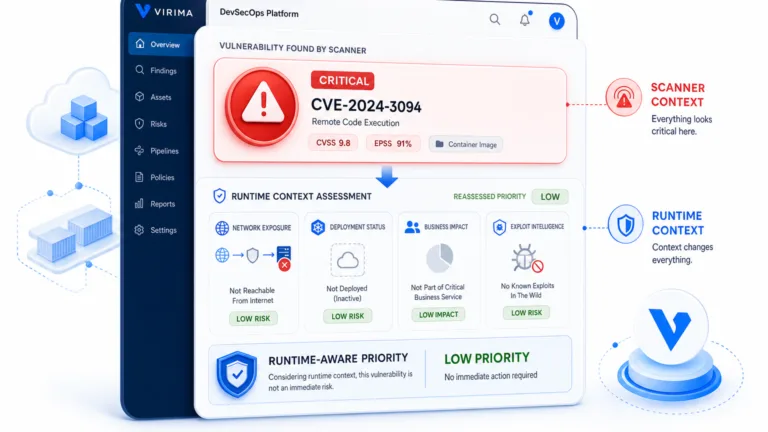
See how discovery-sourced Trusted Runtime Truth closes the gap between a free network scan and an audit-ready CMDB
Before You Commit: Two Questions the Demo Won’t Answer
The four criteria above cover what to ask a vendor to show you on screen. Two more questions decide whether you are solving the right problem in the first place.
Is your primary gap ticket workflow or CI authority? If the problem is ticket queue management, a helpdesk platform addresses it directly. If the CI record behind the ticket is unreliable, replacing the helpdesk does not fix the CI record. You will be back in this evaluation within a year.
What does your environment look like in two years? A tool that handles a few hundred on-premises Windows endpoints today may need heavy manual reconciliation once you scale across cloud, on-premises, and SaaS. Score discovery breadth against the estate you are growing into, not only the one you have today.
When to Move Past Free Inventory
Free discovery tools fit smaller, more homogeneous environments where CI data doesn’t drive time-sensitive decisions. As you grow into hybrid cloud, deepen ITSM integrations, and face audit requirements that demand asset traceability, the CI record stops being a background reference and becomes an operational dependency.
IT asset management at mid-market and enterprise scale needs a CI record that can answer questions under pressure (during a change window, an incident, or an audit). A periodically refreshed scan is not enough. Virima’s blog covers what an audit-ready asset management practice looks like in more detail. Mastering IT asset management through Virima ITAM solutions
Run the two questions and four criteria above before you lock a vendor. The tools that close this gap are built for the discovery-to-CMDB gap, not for a lightweight asset module bolted onto a ticket queue.
Moving past free inventory also means planning for a commercial platform. See Virima Business Pro and the current plans for growing IT teams, and what each one includes.
Frequently Asked Questions
Why do IT teams move away from Spiceworks?
Most teams leave Spiceworks when the environment grows beyond what WMI and SNMP scanning can record. Cloud workloads, containerized services, and SaaS endpoints fall outside that scan footprint. The deeper trigger is usually a change or incident decision the inventory cannot answer, such as which services break if a server goes offline, or an audit that needs traceable CI records across a hybrid estate.
Is there a free alternative to Spiceworks that scales to enterprise environments?
Free tools trade depth for cost. Multi-method discovery, CI conflict resolution, dependency mapping, and bidirectional ITSM integration are not available in free tiers at enterprise depth. If you are replacing Spiceworks for mid-market or enterprise work, plan on a commercial product and weigh that cost against decisions made on stale CI data.
What should I look for in a Spiceworks replacement for IT asset management specifically?
Score discovery breadth across agent, agentless, API, and network scanning; CI conflict resolution logic; and how discovered asset data flows into your ITSM platform. A tool that covers hardware inventory well but cannot reconcile cloud and SaaS data, or needs manual exports to populate your CMDB, recreates the gap you are trying to close.
Does Virima replace Spiceworks entirely?
Virima does not replace Spiceworks helpdesk functionality. For a ticket queue, SLA management, and helpdesk workflows, evaluate ITSM platforms. Virima addresses the discovery-to-CMDB gap: a reconciled, dependency-mapped CI record that integrates with the ITSM platform owning the ticket workflow. Many teams run Virima alongside an ITSM platform rather than ripping out helpdesk tools.
How does Virima handle discovery across hybrid cloud environments?
Virima runs agent-based, agentless, and API-based discovery across on-premises servers, AWS and Azure cloud workloads, SaaS endpoints, and network infrastructure, reconciling CI data across those sources with configurable authority rules that resolve conflicts when two sources return different values for the same asset.