Spiceworks IT Asset Management Features, Limitations and Alternatives

Spiceworks inventory finds the laptop, printer, and switch you need. Tickets stay inside the free help desk. The dashboard looks complete for a small shop. Then the estate grows past a few hundred assets, change risk needs hybrid CI context outside the Spiceworks desk, or ServiceNow, Jira Service Management, or Ivanti becomes the system of engagement, and free network-scan inventory stops answering blast radius under those tickets.
That is the Spiceworks IT asset management decision in practice. Spiceworks fits teams that need free SMB inventory, basic network scanning, cloud setup without on-site servers, and a built-in Cloud Help Desk without a license line item. Teams evaluate an alternative when third-party ITSM needs discovery-sourced CIs, hybrid on-prem and cloud depth outgrows scan-and-spreadsheet discipline, or service dependency maps matter for change and incident work. Virima is a discovery-sourced ITAM and CMDB layer with service mapping under ITSM. It does not replace Spiceworks as a free help desk for every small team.
This guide covers Spiceworks IT asset management features and limits, where the free model is enough, and how to choose stay, augment, or Virima paths without a false rip-and-replace frame.
| When incident and change decisions need current hybrid IT CIs and service paths under your ITSM platform, not only free network-scan inventory, the missing layer is discovery-sourced runtime accuracy. Explore Trusted Runtime Truth. |
When is Spiceworks IT asset management enough, and when do teams evaluate an alternative?
Spiceworks fits teams that need free SMB inventory, basic network scanning, cloud setup, and a built-in Cloud Help Desk without a license line item. Teams evaluate an alternative when third-party ITSM needs discovery-sourced CIs, hybrid estates outgrow scan depth, or change risk needs service dependency maps under tickets.
What Spiceworks IT asset management does
Spiceworks is an IT asset management platform built for small to medium-sized businesses. It tracks hardware, software, and network components so teams can monitor inventory and lifecycle status from one place. The platform commonly includes automated network scanning, basic reporting, and a built-in Cloud Help Desk for managing IT requests. Confirm current packaging and product boundaries on official Spiceworks materials before a bake-off, including whether free inventory and help desk modules still ship as described publicly.
Key features of Spiceworks IT asset management
Capabilities organizations commonly evaluate include:
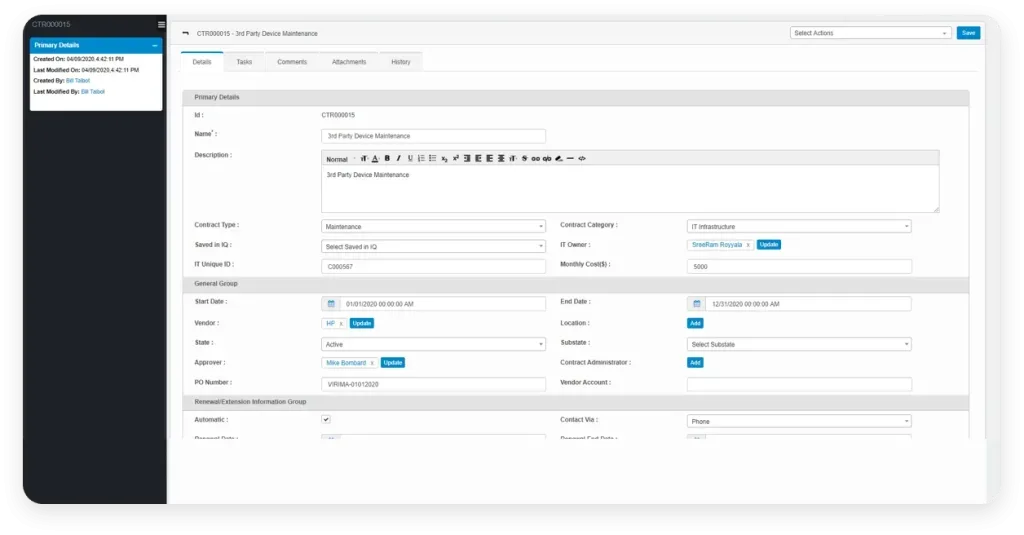
- Device discovery and tracking: Network scans identify devices and surface hardware and software details such as serial numbers, IP addresses, and user information. Public materials describe near-real-time detail on the Spiceworks side. Treat that as a product claim to validate in a pilot.
- Customizable reports: Inventory, usage, and compliance-oriented reports with filters for audits, budgets, or performance reviews.
- Help desk integration: Integration with Spiceworks Cloud Help Desk for tickets, assignments, and rule-based workflows inside that stack.
- Mobile access: Mobile apps for managing assets away from the desk.
- Cloud-based setup: Cloud delivery so teams avoid on-site server hardware for the product itself, with vendor-handled backups and maintenance in typical packaging.
- Vendor and contract management: Vendor records, contract deadlines, and renewal reminders for basic compliance hygiene.
Benefits of Spiceworks IT asset management for small teams
For organizations whose primary constraint is SMB IT basics without a paid ITAM line item, common benefits include:
- Centralized asset visibility in one dashboard
- Time savings from automated discovery and ticket routing inside the Spiceworks stack
- Faster troubleshooting when connectivity alerts stay current
- No licensing cost under the free model when packaging still matches that claim
- Audit-ready asset reports for internal policies
- Fewer tools when asset management, help desk, and network monitoring sit together
- Remote access without VPN dependency for the cloud product
- Large peer community for shared troubleshooting
Outcomes still depend on scan credentials, network design, and process discipline.
What does Spiceworks IT asset management do well?
It keeps free inventory, basic network scanning, and a built-in Cloud Help Desk close to SMB day-to-day work. That cohesion is strongest when the primary job is free desk-plus-inventory, not hybrid discovery depth or service maps under third-party ITSM tickets.
Limitations when the job expands beyond free SMB ITAM
Spiceworks is a solid free path for many small teams. Evaluation gaps appear when the constraint is hybrid operations and external ITSM rather than free inventory alone. Themes that show up in public reviewer discussions on sites such as Capterra and G2, and in buyer diligence, include:
- Limited customization: Custom asset categories and deep interface tailoring can be hard when classification needs grow.
- Network performance impact: Scans can stress constrained networks. Some MSP-style environments report instability during heavy update or scan cycles.
- Shallow dashboard and device integrations: High-level device data may lack the configuration depth ops teams need for real troubleshooting.
- Manual network remapping: Location and configuration changes can require manual remapping instead of high-frequency discovery reconciliation.
- Device detection gaps: Bad credentials or incomplete scan scopes leave assets missing. Downstream incident, change, and license work then runs on incomplete inventory.
- No native third-party ITSM integration: Spiceworks ties to its own Cloud Help Desk. Teams on ServiceNow, Jira Service Management, Ivanti, or similar platforms often need manual export or workarounds for CI context under tickets.
Free Spiceworks is a real start for many small IT teams. The ceiling shows up when discovery depth, CMDB-grade configuration records, and ticket enrichment become weekly work rather than a once-a-quarter cleanup.
When that shift happens, treat the limits above as operating signals, not product bashing. The free path still owns help desk and basic inventory for lean shops. What it does not carry is multi-method discovery across hybrid estates, reconciled configuration items for change and incident decisions, or native CI context under third-party ITSM platforms you already run.
Spiceworks alternative path when free inventory is not enough
Spiceworks covers free SMB inventory well, and for many small teams that is enough. The ceiling shows up when discovery, CMDB, and ticket enrichment become weekly work. Move to a discovery-sourced layer once you are past free inventory and need clear shortlist criteria.
- Stay on Spiceworks when free inventory, basic network scanning, and the Spiceworks Cloud Help Desk still match the job, and hybrid or external ITSM pressure is light.
- Pair free Spiceworks desk workflows with a discovery-sourced ITAM and CMDB layer when the desk still fits but hybrid drift, missing cloud or SaaS CIs, and weak CI context under ServiceNow, Jira Service Management, Ivanti, or similar platforms are the weekly pain.
- Virima is that discovery-sourced path: multi-method scheduled discovery, hardware and software ITAM context, ViVID™ service maps after you define business services, and hub integrations into the ITSM you keep. Virima packages that capability for growing IT estates. Plans are contact-led, so you can size the path to your estate. It doesn’t replace a free help desk that still works, and it isn’t a second free inventory clone.
Validate the ceiling on a pilot that includes at least one hybrid service path, one change or incident that needs blast-radius context, and your real system of engagement, not only a free inventory demo.
When free inventory still works for tickets but discovery, CMDB records, and ticket enrichment are weekly work, see how Virima Business Pro packages discovery-sourced ITAM and CMDB depth beside the desk you keep.
Spiceworks IT asset management vs Virima: decision table
Virima delivers discovery-sourced ITAM, CMDB population, and service mapping under ITSM. It does not replace Spiceworks as a free SMB help desk and inventory stack for every team.
| Criterion | Spiceworks | Virima | Choose when… |
|---|---|---|---|
| Primary job | Free SMB ITAM + own Cloud Help Desk | Discovery-sourced ITAM and CMDB/maps | Free desk stack vs hybrid runtime truth |
| Cost model | Free packaging (confirm current) | Commercial platform | Budget vs depth |
| Population model | Network scan/inventory collectors | Agent-based and agentless methods plus APIs, high-frequency scheduled cycles | Estate change rate and credential model |
| ITSM | Own Cloud Help Desk only | Integrates with ITSM platforms; does not replace them | System of engagement |
| Dependencies | Limited service map depth | ViVID™ maps after business service definitions are provided | Change blast radius under tickets |
| Hybrid and cloud depth | SMB-oriented scan inventory | On-prem plus AWS and Azure focus with hybrid coverage | Scale and complexity |
| Best fit | Small teams on free model | Growing hybrid visibility under ITSM | Path selection below |
Stay/Pair/Virima:
- Stay on Spiceworks when free inventory, basic scanning, and the Spiceworks Cloud Help Desk are the constraints.
- Pair free inventory with discovery-sourced CIs and maps where hybrid runtime accuracy and external ITSM tickets are the bottleneck.
- Take the Virima path when hybrid inventory, software and hardware ITAM context, and ViVID™ maps under ITSM tickets are the binding gap.
Should you replace Spiceworks or add a discovery-sourced layer?
Most teams should not frame this as ripping out a free help desk that still fits. Stay on Spiceworks when free inventory and the Spiceworks desk are the job. Add a discovery-sourced ITAM and CMDB layer when hybrid drift and weak CI context under third-party ITSM are the constraint. Virima is evaluated as that data layer, not as a free help desk clone.
Virima as a discovery-sourced alternative to Spiceworks IT asset management
Virima focuses on IT infrastructure management: what exists in the estate, how it is configured, how it connects, and how that truth supports ITAM and ITSM work across hybrid environments.
High-frequency scheduled discovery and asset inventory
An agent-based and agentless IT discovery engine covers hardware, software, and cloud resources through scans and API integrations across environments such as AWS and Azure, plus on-premises systems. Discovery runs on high-frequency scheduled cycles so inventory reflects estate changes without pure manual entry. Current public positioning does not claim passive event-driven discovery as shipping product.
Hardware and software lifecycle and metering context
Virima provides a centralized way to manage hardware assets and software licenses, with configuration details for ITSM and security workflows. See IT asset management for product scope when free scan inventory leaves hybrid and license gaps.
Service mapping after definitions are provided
Business services are defined by your team through manual entry, import, or architecture tools. ViVID™ then builds dependency maps from those definitions and discovered infrastructure. It does not invent service composition without that input. Maps can carry ITSM incident and change context, plus vulnerability intelligence where product supports it, for example, NIST NVD overlays associated with Windows Server findings, on service maps for blast-radius and remediation prioritization.
ITSM integration without replacing the service desk
Virima integrates with ServiceNow, Jira, Ivanti, HaloITSM, and other ITSM platforms so discovery-sourced CIs and maps support the system of engagement you already run. Partner names stay plain text. See the integrations hub.
Warranty, vendor, and license workflows can sit beside discovery-sourced records so renewal and audit conversations use owned configuration data. Trust signals such as PinkVERIFY ITIL process certifications and SOC 2 Type II, where still current on official materials, support compliance-driven buyers. Confirm certification scope on current Virima documentation during diligence.
How does Virima approach IT discovery and service mapping?
Virima populates IT CIs through scheduled discovery using agent-based and agentless methods, with multi-source reconciliation for authoritative attributes. Business services are defined by the customer. ViVID™ then builds dependency maps from those definitions and discovered infrastructure and does not invent service composition without input.
If your Spiceworks evaluation is stuck on whether free network-scan inventory can keep up with hybrid change risk under an external ITSM platform, shift the proof from brochure features to a short discovery and mapping pilot on a critical IT service path while Spiceworks keeps free desk workflows where they still fit.
Making the right choice for your Spiceworks ITAM path
Spiceworks IT asset management is a solid path for free SMB inventory, basic scanning, and a built-in Cloud Help Desk. Virima is the alternative when you need high-frequency scheduled IT discovery, hybrid ITAM and CMDB context, and ViVID™ maps under third-party ITSM tickets. Outcomes teams chase include fewer surprises from stale hybrid inventory, clearer change blast radius, and stronger evidence from owned IT configuration data.
Disclaimer: Product capabilities and packaging change. Confirm current Spiceworks features and free-model terms in official documentation before purchase decisions. Reviewer themes on Capterra and G2 are diligence signals, not fixed product scores.
Frequently asked questions
Is Spiceworks IT asset management enough if we mainly need free inventory and a built-in help desk?
Often yes when free SMB inventory, basic network scanning, and the Spiceworks Cloud Help Desk are the primary job and hybrid depth is limited. Revisit when third-party ITSM CI context and service dependency questions become the binding constraint.
Does choosing Virima mean replacing Spiceworks?
No. Virima is positioned as a discovery-sourced ITAM and CMDB layer. Many evaluations keep free Spiceworks desk workflows where they still fit and improve hybrid runtime truth under external ITSM. Teams that outgrow the free model can review Virima Business Pro for growing IT estates.
Can Spiceworks integrate with ServiceNow or Jira?
Public materials and common buyer experience point to Spiceworks tying to its own Cloud Help Desk, not native connectors to third-party ITSM platforms. Confirm current connectors on official Spiceworks documentation. Virima feeds discovery-sourced CIs and maps into ITSM platforms through the integrations hub path.
What is the difference between free network-scan inventory and discovery-sourced CMDB?
Free network-scan inventory centers SMB device lists and basic reports inside a free stack. A discovery-sourced CMDB centers multi-method inventory of hardware, software, and hybrid CIs, plus configuration relationships used in operations and audits under ITSM.
How does Virima handle service mapping?
You define business services. ViVID™ builds dependency maps from those definitions and discovered infrastructure. Maps become useful for incident and change work when definitions and discovery stay current.