Which Asset Management Platform Combines Discovery, ITAM, and CMDB Without a Full ITSM Suite?

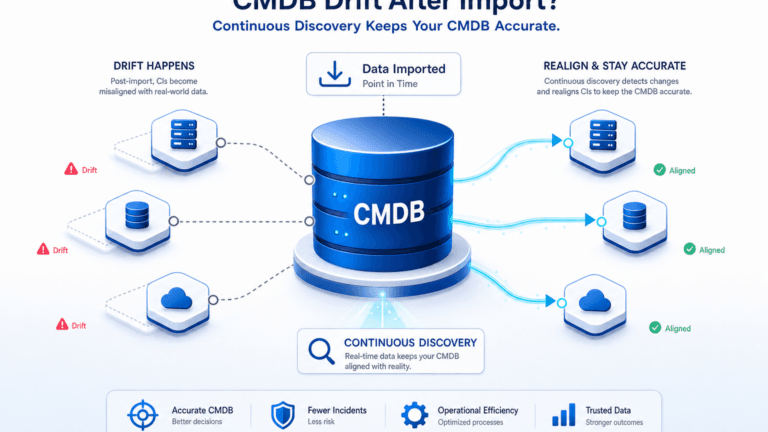
A mid-size IT team runs Jira Service Management or ServiceNow and closes tickets on time. Then an audit or a change review asks what depends on a given server, and who owns it. Nobody answers with confidence, because the desk’s bundled configuration management database (CMDB) module was never fed by real discovery. That gap gets patched with a bigger suite contract that re-platforms workflows nobody asked to replace. A narrower option exists: an asset management platform built for discovery, IT asset management (ITAM), and CMDB without a full IT service management (ITSM) suite, running beside the desk the team already trusts. The deciding factor is whether the desk’s native CMDB gets fed by real discovery or by manual entry.
This page is the buy-architecture decision, not a three-vendor feature grid. For a product-level three-way view, use the live Virima vs Device42 vs ServiceNow comparison. For module detail after you choose the architecture, see IT asset management and CMDB.
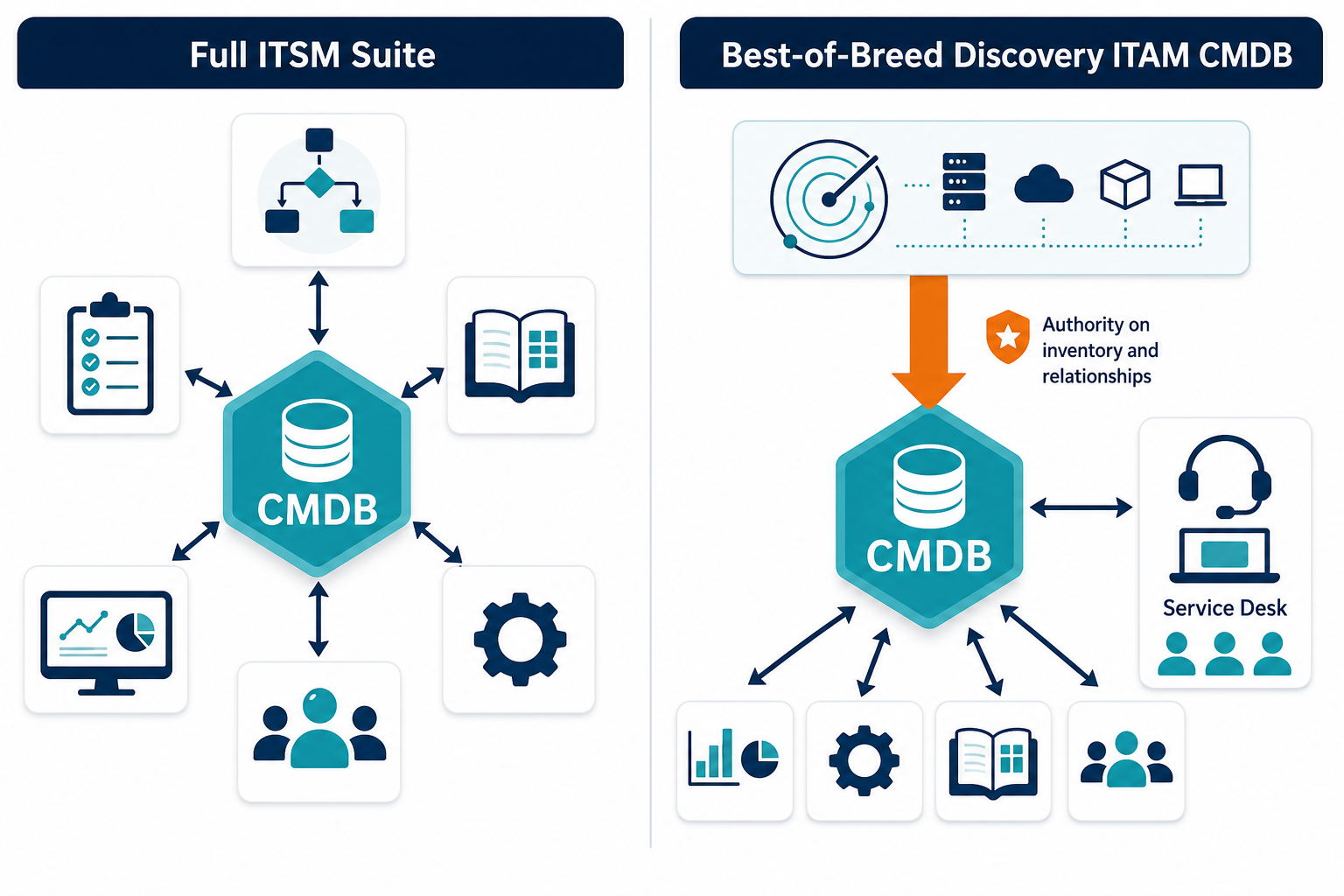
Full ITSM suite vs. best-of-breed ITAM and CMDB
| Dimension | Full ITSM suite path | Best-of-breed discovery ITAM CMDB |
|---|---|---|
| Primary buy | Workflow, catalog, tickets, often bundled CMDB | Discovery authority, inventory, CMDB relationships |
| Estate truth owner | Suite CMDB module, quality varies by discovery feed | Dedicated discovery into governed CIs |
| Desk role | Same vendor for tickets and many CMDB screens | Existing desk stays system of engagement |
| Lock-in risk | Platform economics and data gravity inside one suite | Integration contract plus dual-vendor ops |
| When it wins | Greenfield desk and CMDB together, deep suite roadmap | Desk already live; gap is multi-source truth and maps |
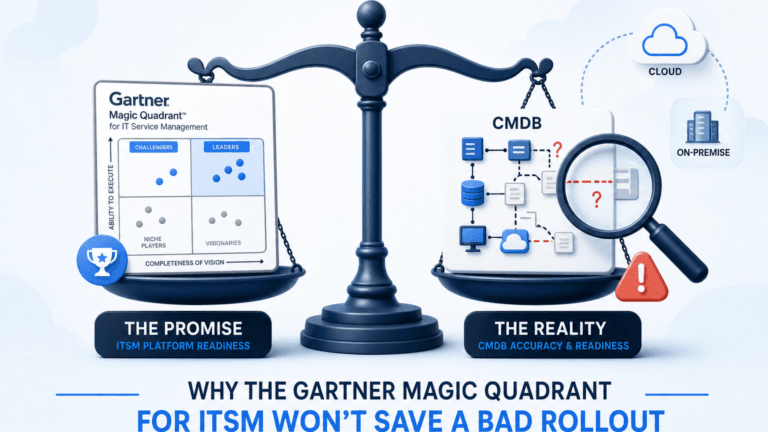
A platform suite’s CMDB module can show a clean health-dashboard score while still missing real discovery depth underneath it. That gap between a passing completeness score and real accuracy is what Virima’s review of ServiceNow CMDB health scores against discovery findings breaks down. A 2025 BCG survey on suite-versus-best-of-breed buying decisions across enterprise software found cost was the top concern for 75% of leaders. Organizations with more complex operating models leaned toward best-of-breed over a single bundled suite, and CMDB and ITAM buying decisions tend to track that same pattern: the more complex the hybrid estate, the less a single suite module tends to cover it well.
Common integration patterns
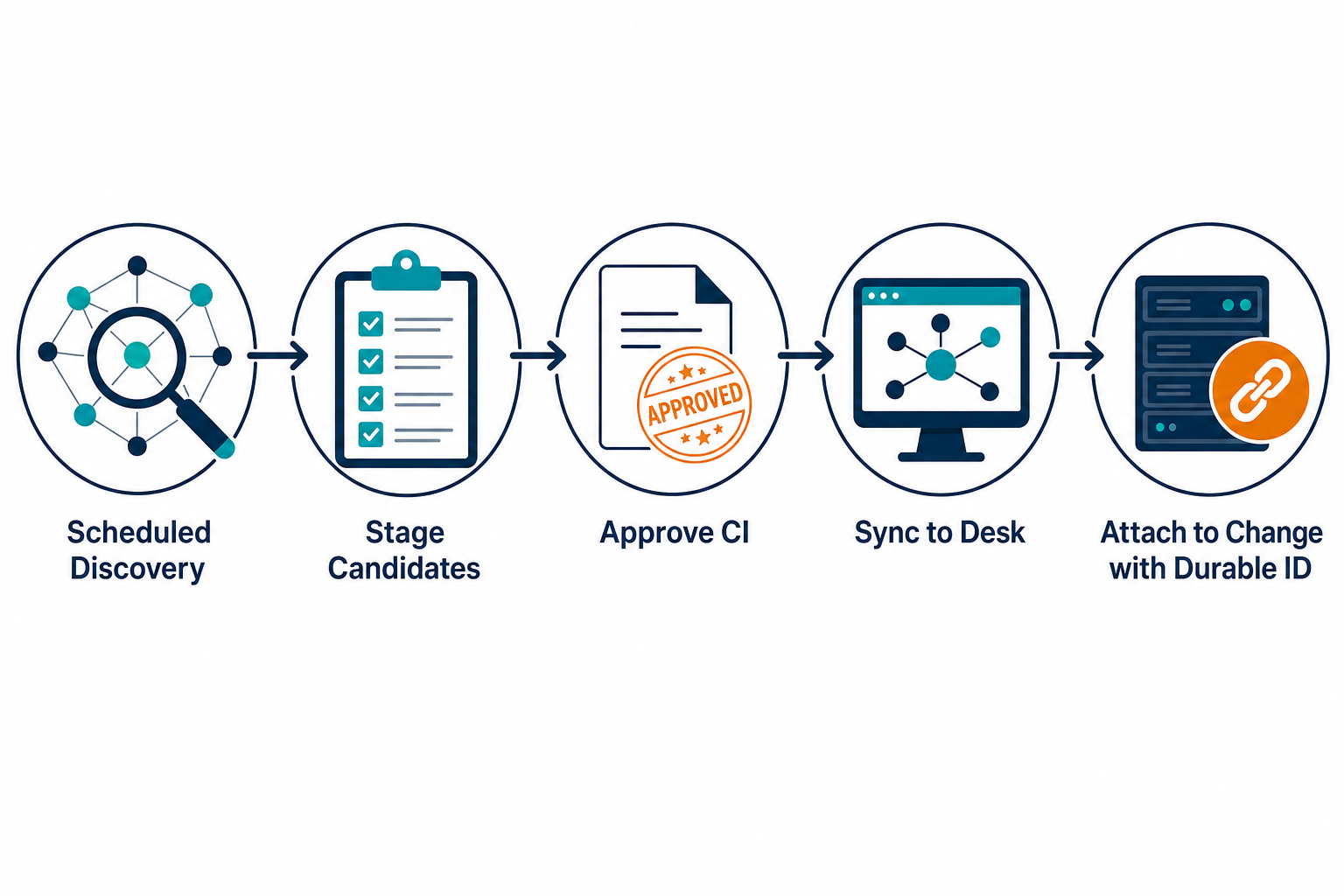
Keep the desk as the system of engagement. Keep discovery-sourced CMDB as the system of record for what exists, how it connects, and when it was last verified. These five patterns are how teams pair CMDB with an existing ITSM investment without a rip-and-replace.
- Discovery to CMDB promote path. Scheduled multi-source discovery stages candidates. Humans approve items into configuration items with source tags and durable keys such as serial or cloud instance ID. Hostname alone is a weak join key.
- CMDB to desk CI sync. Approved CIs and key relationships flow to the desk so incidents and changes attach to trusted records rather than free-text hostnames.
- ITAM commercial fields. Ownership, purchase, and contract data live where finance expects them, reconciled to technical CIs a scan cannot invent.
- Service definitions then maps. Your team defines business services. After that input, ViVID™ builds dependency maps from discovery data for blast-radius context.
- Hub-mediated connectors. Partner product names stay plain text. Connection paths live on the integrations hub rather than a scatter of deep partner URLs.
Durable identity is what makes the promote path trustworthy in the first place. Why CMDB completeness is the wrong accuracy metric explains why a record count alone cannot replace verified identity and relationship data. Do not expect the desk to invent multi-protocol discovery quality it never had. Do not expect the discovery platform to replace catalog, SLA, or agent workspace design.
Why is hostname a weak join key for CMDB accuracy?
Hostname alone is a weak join key because hostnames change, get reassigned, or collide across environments. Durable identity — a serial number or cloud instance ID — is what lets a discovery-to-CMDB promote path produce configuration items a change process can actually trust.
Can you run discovery ITAM and CMDB without a full ITSM suite?
Yes. Many teams keep their service desk for tickets and workflows, then add a discovery-sourced ITAM and CMDB platform for estate truth. You trade one integration design for less suite lock-in and clearer ownership between workflow and configuration data.
When an ITSM suite wins vs. when best-of-breed wins
Suite-first signals
- You are selecting a new desk and want one vendor contract for tickets plus CMDB screens.
- Process design, catalog, and fulfillment are the main program, and inventory quality is secondary for year one.
- Leadership has already standardized on a single platform roadmap with budget for platform services.
Best-of-breed signals
- The desk is stable and agents trust ticket workflow more than they trust the asset list behind it.
- Audits, change risk, or hybrid cloud sprawl expose inventory gaps the suite CMDB cannot close without a stronger discovery authority.
- You need multi-source discovery, durable identity, and service maps without re-platforming the entire ITSM stack.
- Procurement wants estate truth options that can feed more than one engagement system over time.
How do I decide between a full ITSM suite and best-of-breed discovery and CMDB?
Choose a full ITSM suite when the desk and the CMDB are being replaced together in one program. Choose best-of-breed discovery and CMDB when the desk already runs tickets well and the real failure is stale inventory, weak discovery, or dependency maps nobody trusts.
NIST’s IT asset management lifecycle framework treats authoritative inventory as the foundation for both security and operations use cases, as detailed in NIST SP 1800-5 — and neither source requires that inventory live only inside the same product that opens tickets.
What actually drives total cost of ownership
Skip list prices in this decision and compare the real cost drivers instead. The gap these costs are meant to close is real and getting wider. Flexera’s 2025 State of ITAM Report found complete technology-stack visibility fell to 43%, down from 47% the year before. That decline happened even as more organizations run a platform suite with a bundled CMDB module. 15 CMDB statistics every IT leader should know rounds up more of where that inventory drift shows up in practice.
| Path | Cost drivers |
|---|---|
| Suite path | Platform subscription tiers, module packs, implementation services, and the long-term cost of moving data if discovery quality disappoints |
| Best-of-breed path | Discovery and CMDB platform cost, integration build or connector care, and dual-vendor support pathways |
| Shared either way | Identity design, field ownership, pilot scope, and staff time to reconcile discovered-not-in-register and register-not-found lists |
Total cost favors the path that matches the real gap. Buying a full suite only to fix discovery often funds workflow features you already own. Buying best-of-breed without a desk integration plan leaves trusted CIs stranded outside incident and change screens.
Do you lose ITSM workflows without a full suite CMDB?
You keep workflows on the desk you already run. Best-of-breed discovery and CMDB supply configuration items and relationships the desk consumes. You lose a single-vendor screen set, not the ability to run incident, request, and change processes.
Where Virima fits beside the desk
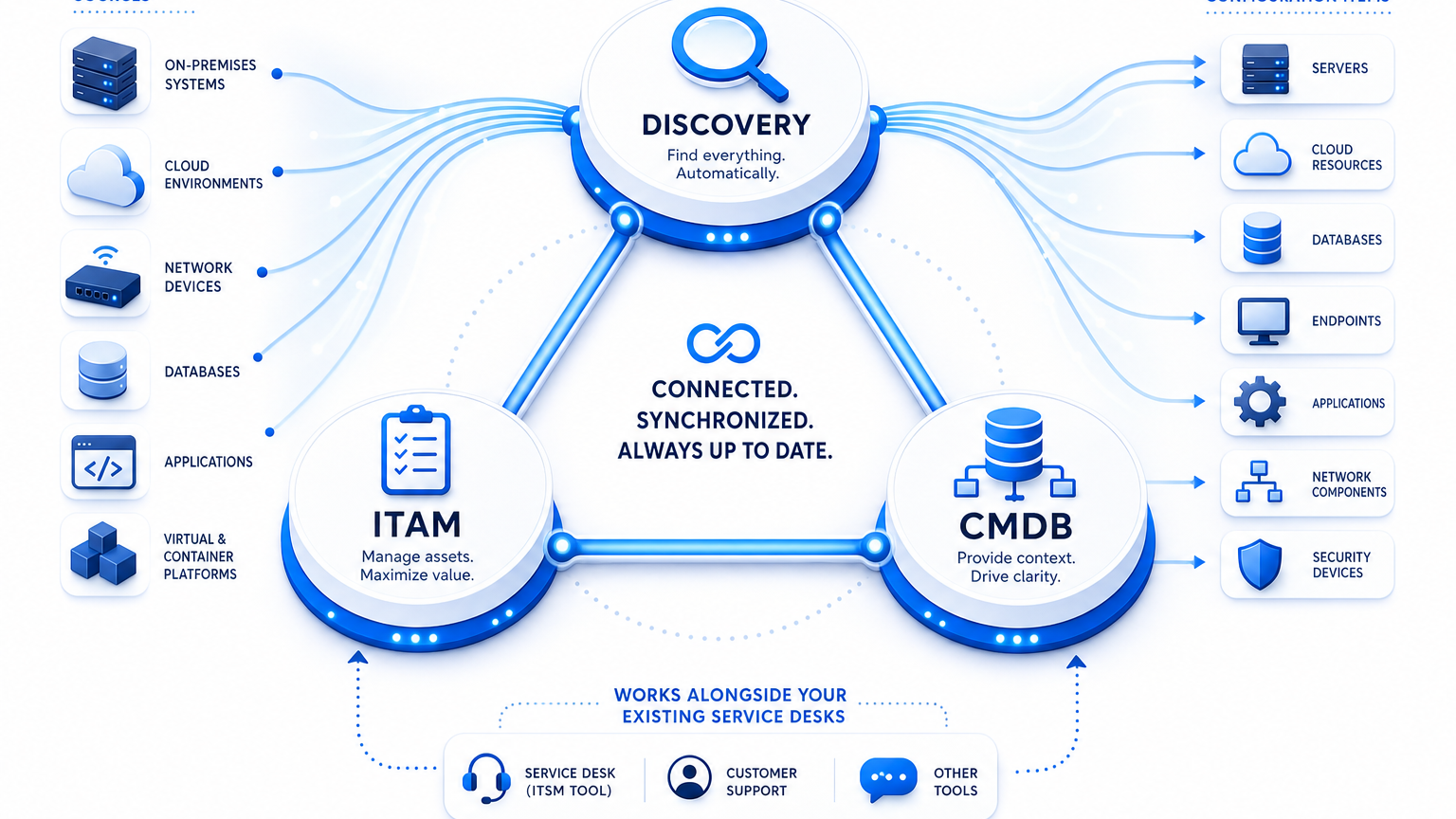
Virima provides the discovery, ITAM, and CMDB layer for teams that already have a service desk. Scheduled discovery cycles feed candidates for review. Approved items become configuration items with source and last-verified context. ITAM holds assignment and commercial fields. After service definitions exist, ViVID™ maps support blast-radius questions change owners ask.
ITSM platforms stay systems of engagement. Connect through the integrations hub once. That pattern answers the common question about pairing with ServiceNow or Jira Service Management: the desk keeps tickets; Virima keeps multi-source estate truth flowing into CI-quality records those desks can use.
Does Virima replace ServiceNow or Jira Service Management?
No. Virima runs beside the desk as a discovery and CMDB authority: scheduled multi-source scans produce candidate configuration items, humans approve them with durable IDs, and only approved records sync to the desk’s CI and change screens. Tickets and workflows stay exactly where they are.
See how Trusted Runtime Truth frames live, explainable records before you book a walkthrough of the split architecture.
Want discovery, ITAM, and CMDB depth beside the service desk you already trust? Walk a sample estate and see how Virima stages discovered items into governed CIs your change process can use.
Choose the split before you choose the logo
An asset management platform can combine discovery, ITAM, and CMDB without forcing a full ITSM suite purchase when the desk already works and estate truth does not. Suites win on greenfield platform programs. Best-of-breed wins when integration is cheaper than re-platforming workflow. Virima fits the second path: discovery-sourced runtime records beside systems of engagement.
Ready to test the split on one segment and one CI class? Schedule a demo and bring your desk name, one discovery gap, and the fields change owners already argue about.
Frequently Asked Questions
Can Virima work with ServiceNow or Jira Service Management?
Yes as a discovery and CMDB authority beside those desks. Tickets and workflows stay on the service desk. Approved configuration items and relationships feed engagement systems through supported integration paths listed on the integrations hub.
Do I lose workflows without a full ITSM suite?
No. Incident, request, and change processes continue on your current desk. What you add is stronger discovery-sourced configuration data those workflows can attach to, rather than free-text asset names.
Does Virima support Jira Service Management out of the box?
Yes. Virima connects to Jira Service Management through the integrations hub, syncing approved configuration items and relationships so changes and incidents reference governed records instead of spreadsheet rows, while Jira SM stays the system of engagement for tickets and queues.
When should I still buy a full ITSM suite CMDB?
Choose the suite path when you are replacing the desk and CMDB together, need deep single-vendor process design, and have budget for platform services. If the desk already works and inventory is the failure, prefer discovery authority first.
How should other help desks fit this pattern?
Treat any help desk as the system of engagement. Confirm connector and field-mapping paths on the integrations hub for platforms Virima supports, and keep mechanical ownership of tickets on the desk you already run.