Why the Gartner Magic Quadrant for ITSM Won’t Save a Bad Rollout

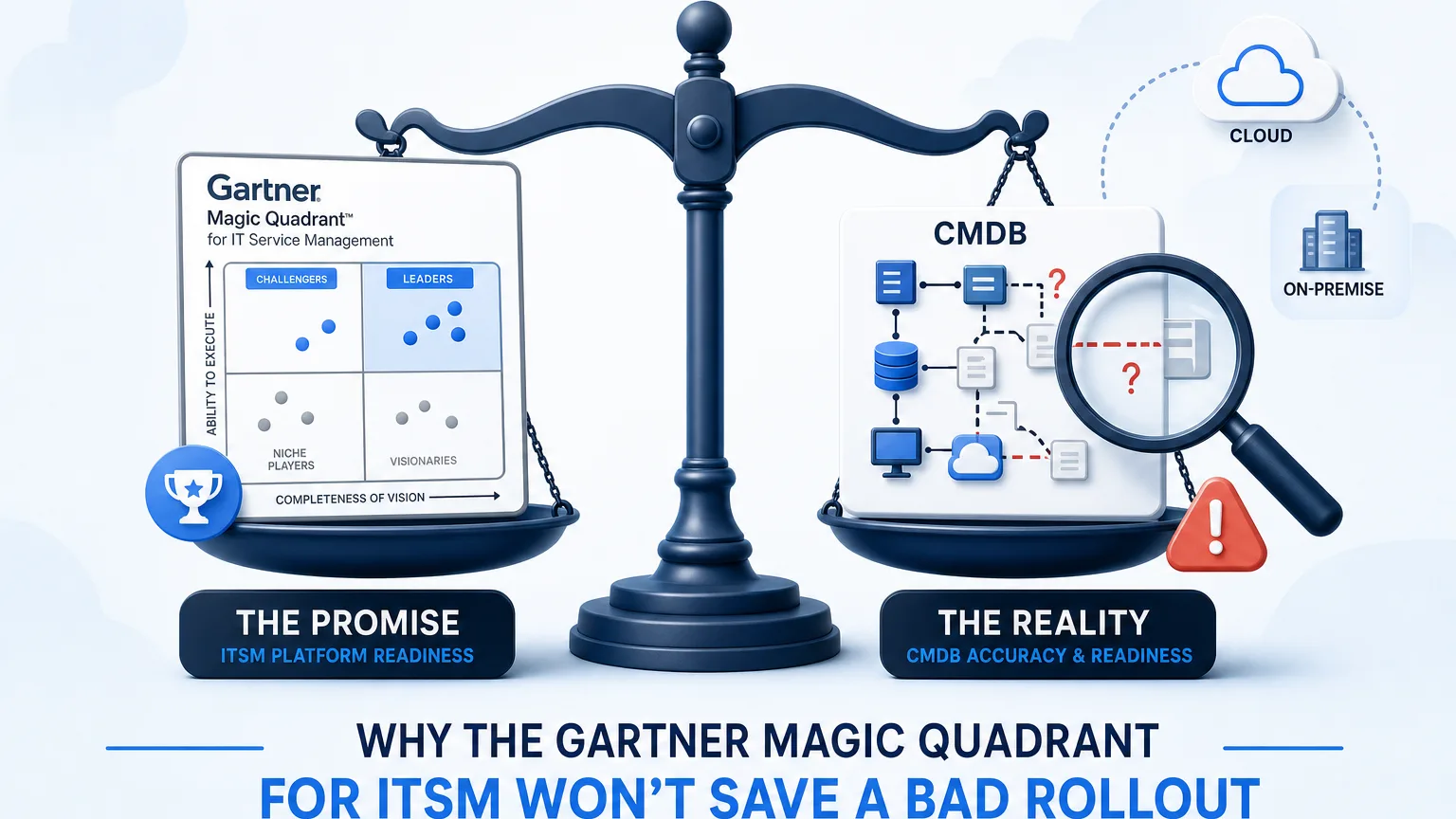
A Leader badge on the 2026 Gartner Magic Quadrant ITSM report gets a project greenlit, and then, six months later, change approvers are still guessing at the blast radius because the CMDB never caught up to the new platform. Gartner brought the report back in 2026 after retiring it in 2022, and independent analysis on ITSM.tools shows the map grew from ten positioned vendors to sixteen, with fresh Challengers and a Leader shift that drew board attention. Inclusion still requires an integrated configuration management capability. None of that scores whether the configuration records in your estate are accurate, fresh, or complete enough to carry incident, change, and request work after go-live.
That gap is why a strong Gartner Magic Quadrant ITSM shortlist can still produce a weak rollout. The platform can ship the right modules. The CMDB under it can still lag installs, cloud resources, and ownership. Tickets then run on a picture of the estate that no longer matches production.
What is the Gartner Magic Quadrant for ITSM?
Gartner Magic Quadrants place vendors on two axes: Ability to Execute and Completeness of Vision. Leaders score high on both. Challengers execute strongly with a narrower vision score. Niche Players sit lower on both. Visionaries score high on vision with lower execution. The 2026 Gartner ITSM report for IT Service Management Platforms was published 27 July 2026, with analysts including Rich Doheny and Jen Lichucki (public vendor citations of the report, including Atlassian’s MQ page, carry that date and authorship).
To appear, platforms must cover core ITSM practices such as incident, problem, request, change, and knowledge, plus an integrated configuration management system. That bar is about product scope, not a grade on configuration item (CI) data quality inside a customer environment after migration.
Independent coverage of the 2026 map lists sixteen positioned vendors, including Atlassian, BMC Helix, EasyVista, Freshworks, Halo, Ivanti, ManageEngine, Matrix42, OpenText, Salesforce, ServiceNow, SymphonyAI, SysAid, TeamDynamix, TOPdesk, and Xurrent, with InvGate receiving an honorable mention in secondary reporting.
The hidden problem
| What the Magic Quadrant emphasizes | What your rollout still depends on |
|---|---|
| Vendor execution and market vision | CI accuracy against live installs and cloud resources |
| Workflow and AI roadmap strength | Discovery coverage across hybrid estates |
| Breadth of ITSM practice modules | Freshness of owners, relationships, and service context |
| Relative peer positioning | Evidence your auditors can sample without hand assembly |
Configuration management, in plain terms, is the discipline of recording what IT components exist and how they relate. That shared record is what change and incident work run on. Shipping a CMDB module meets the analyst inclusion bar. Keeping that CMDB honest after cutover is a data problem your team still owns.
Why this matters right now
IT budgets are under pressure even as total spend rises. Gartner’s July 2026 forecast put worldwide IT spending at about $6.37 trillion for 2026, up 14.2% from 2025, with growth concentrated in infrastructure and software that support AI and cloud scale. Boards still ask which platform badge justifies multi-year license and services spend. More vendors now sit on the same Gartner Magic Quadrant ITSM canvas, so shortlists get longer while migration windows stay short.
Ops teams feel the cost when the badge decision outruns data readiness. A new portal and a cleaner ticket UI do not repair stale CIs. Leadership feels it when MTTR and change failure stay flat after a six-figure implementation. Regulated teams feel it when audit samples still need spreadsheet evidence because the CMDB never became trustworthy.
4 ways a quadrant pick still falls short
- The platform migrates. The CMDB never fully reconciles. Tickets move, but relationships and owners stay partial as agents work a modern desk on an outdated estate map.
- Incident tooling improves. Mean time to restore does not. Dashboards load faster, but the first half hour still rebuilds “what’s connected”, and reliability work waits on inventory questions.
- Change process looks mature. Approvals stay blind. CAB forms list free-text impact while dependency context is missing or weeks old.
- Audit season arrives. Evidence is still hand-built. Samples need CI history and ownership trails the tool can’t export cleanly.
Teams that want a practical checklist of CMDB capabilities before another ITSM bet should read must-have CMDB capabilities for ITSM success. For a closer look at why a “no impact” change ticket can still be wrong, see why zero-risk change assessments still fail. Platform choice and configuration quality are separate parts of ITSM vendor evaluation that only work when both are tested. Procurement can close on workflow fit, and operations still needs proof that CIs, owners, and relationships will survive the first quarter after go-live, a discovery and CMDB problem, not a quadrant graphic problem.
The real cost of treating the MQ as the whole decision
For IT leadership
A Leader or Challenger badge reduces procurement friction. It does not reduce board exposure when a failed change or slow major incident traces to unknown dependencies. Peer references often praise workflow and agent experience; they rarely guarantee your CI graph will match hybrid reality three months after go-live.
For CMDB owners and ops teams
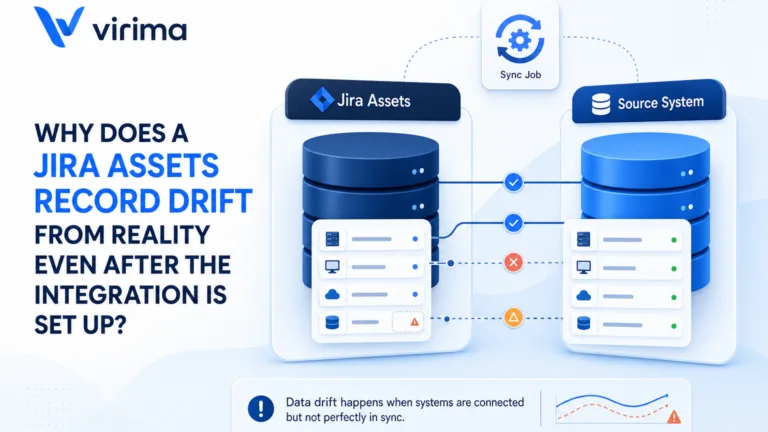
Manual reconciliation after a platform swap consumes the same scarce hours the project promised to free, and every unresolved import conflict becomes a weekly cleanup job. Under-resourced configuration practice then looks like a “people problem” when the root is missing discovery authority under the new desk. The ITSM and ITOM connection only holds when configuration records stay current for both service and infrastructure views; ownership has to stay joint, not siloed, after the desk swaps.
For regulated environments
Auditors sample populations for access and change. That risk compounds when devices carry no assigned owner going into the sample set, and stale CIs turn those samples into exceptions even when the ITSM workflow screens look complete. The CMDB is infrastructure for control evidence, not the GRC tool itself. When configuration truth lags, compliance teams rebuild that truth outside the platform you recently certified as the system of engagement.
Treating the Gartner Magic Quadrant ITSM as the full decision confuses market research with readiness. Research shortens the vendor list. Readiness decides whether the shortlist can run on your estate without a year of cleanup debt.
How discovery-sourced CMDB changes the rollout math
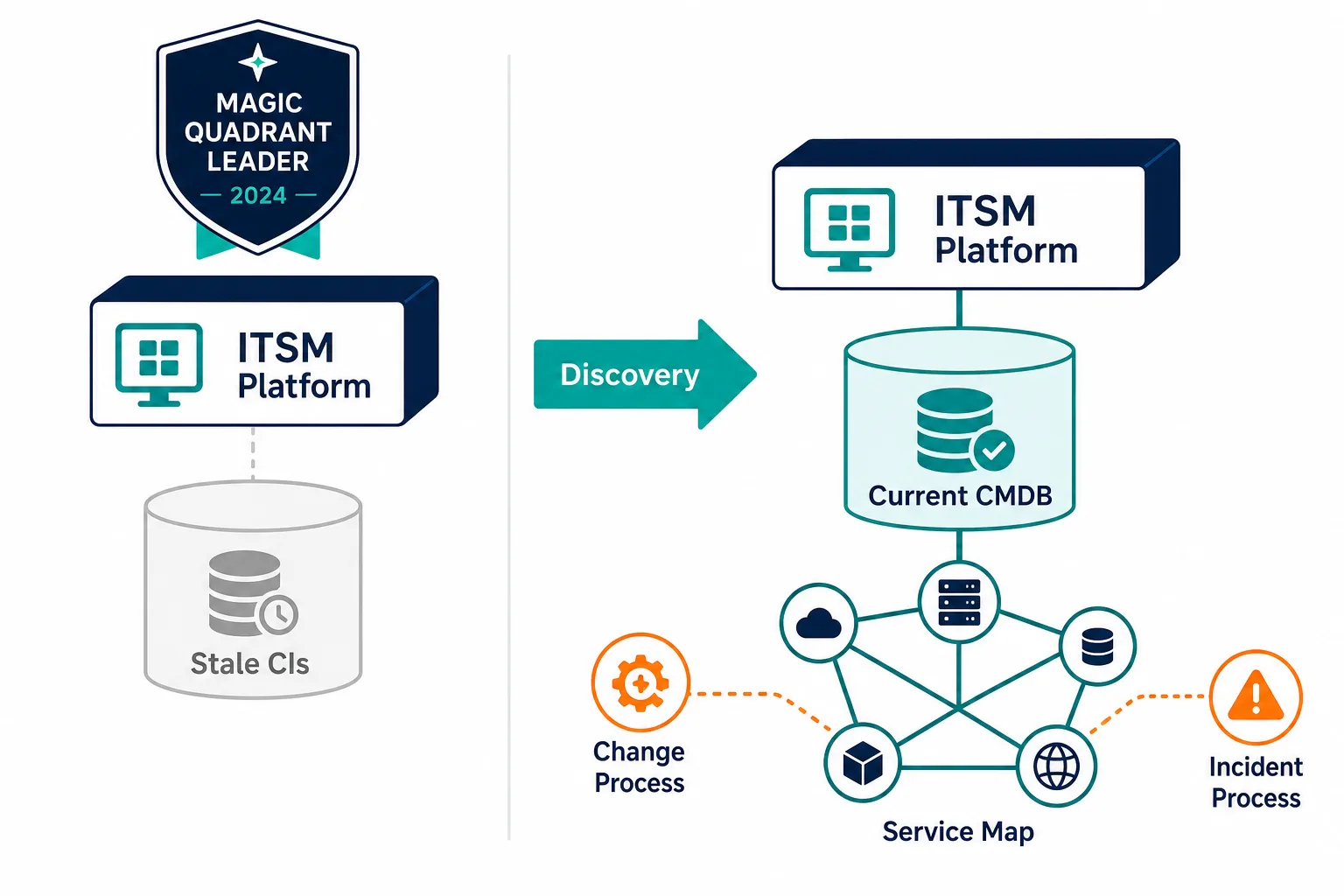
Virima supplies discovery-sourced configuration truth, CMDB records, and service maps after definitions are provided, then feeds the desk you already run, closing the CMDB accuracy gap the Magic Quadrant doesn’t score.
Three mechanisms that matter before and after cutover
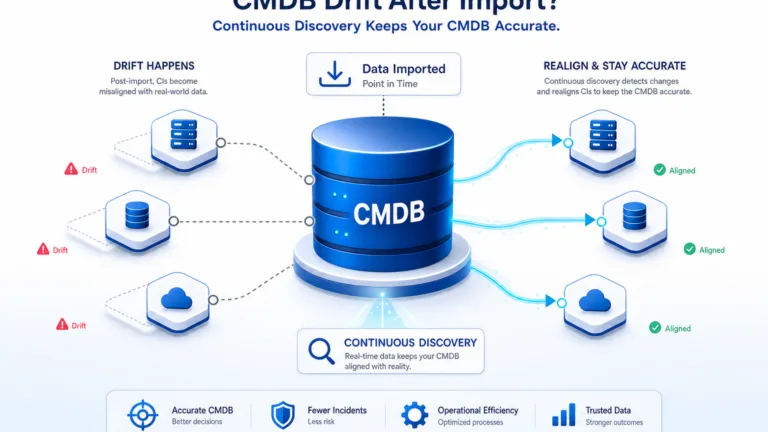
- Scheduled discovery keeps CI records current. Agent, agentless, and API paths inventory on-prem, cloud, and hybrid estates on a known cadence. Records carry source and freshness inside Virima’s CMDB so ops can see drift without waiting for the next audit scramble. This is scheduled discovery, not continuous or real-time event streaming.
- ViVID™ service maps show impact once service definitions exist. Service composition is supplied manually, by import, or through architecture feeds, and Virima then builds dependency maps so change and incident work can see what a CI supports, with live context overlaid instead of free text.
- Bi-directional patterns with the ITSM platform already in place keep one inventory. ServiceNow, Jira Service Management, Ivanti, HaloITSM, Xurrent, and peer desks stay the system of engagement. Partner names stay plain text. Connect discovery through one hub across all integrations rather than a chain of one-off partner pages.
Keep the desk and discovery in separate lanes
Keep the desk as the system of engagement. Keep discovery as the authority that refreshes what the desk displays. When those roles blur, discovery data decays until someone rebuilds it by hand within months of cutover, losing the value the platform license was meant to buy. Configuration owners then spend nights fixing imports instead of governing exceptions, and the board still thinks the Magic Quadrant decision finished the hard work.
| Manual CMDB maintenance | Discovery-sourced CMDB |
|---|---|
| Updates wait on project sprints and ticket hygiene | Updates follow scheduled discovery cycles with visible freshness |
| Accuracy decays between cleanups | Accuracy is checked against live inventory on a known cadence |
| Effort concentrates on spreadsheets and import fixes | Effort shifts to exceptions and ownership, not bulk typing |
| Incident diagnosis rebuilds topology in the war room | Relationships and owners are available earlier in triage |
What changes for approvers, responders, and leadership
Immediate impact shows up in fewer blind change approvals and faster CI identification during incidents. Longer term, CI accuracy compounds when discovery remains the authority under the desk, keeping tickets and configuration on one record set instead of a parallel shadow CMDB. Approvers see relationships instead of free-text guesses. Responders spend fewer minutes reconstructing ownership during a P1. Leadership gets one estate picture for risk talk instead of competing exports from project, ops, and security teams.
When that shared map has to be trusted under automation and agentic load, start from Trusted Runtime Truth: what exists, how it connects, what changed, what breaks, and who owns it.
Peer Insights are not Magic Quadrant placement
Gartner Peer Insights ITSM ratings are a separate signal from Magic Quadrant placement — Peer Insights hosts vendor feedback for the broader ITSM and adjacent markets, while the Magic Quadrant scores execution and vision. Virima maintains a Peer Insights presence as a supporting proof channel. Treat peer comments as directional experience signals, not a certification that your imported CI graph matches hybrid production after a multi-month migration.
What this looks like in practice
These are composite patterns, not named customer claims.
- Change approver before sign-off. A network path change looks low risk on the ticket, but the map shows shared identity and payment hops the free-text field missed: CAB delays one window instead of owning a multi-service outage.
- ITAM manager before audit. A hardware population export still lists decommissioned hosts. Discovery deltas flag the gap early, so the sample set is cleaned before auditors arrive, not during exception meetings.
- SecOps analyst at alert triage. An endpoint alert lands without business context. CI ownership and service linkage shorten the path from symptom to who must act: the desk stays in the ticket system, and the map supplies the missing join.
Platform bake-offs are part of ITSM vendor evaluation, but buyers comparing large desks often land on process and cost tradeoffs long before CMDB quality gets tested. No badge replaces a test of configuration truth on your estate. Run a discovery baseline on one business service before you freeze the SOW. Bring the delta between the CMDB claim and live inventory into vendor demos. Make CI freshness and relationship coverage acceptance criteria, not a year-two cleanup theme.
Moving from quadrant research to a CMDB-ready rollout
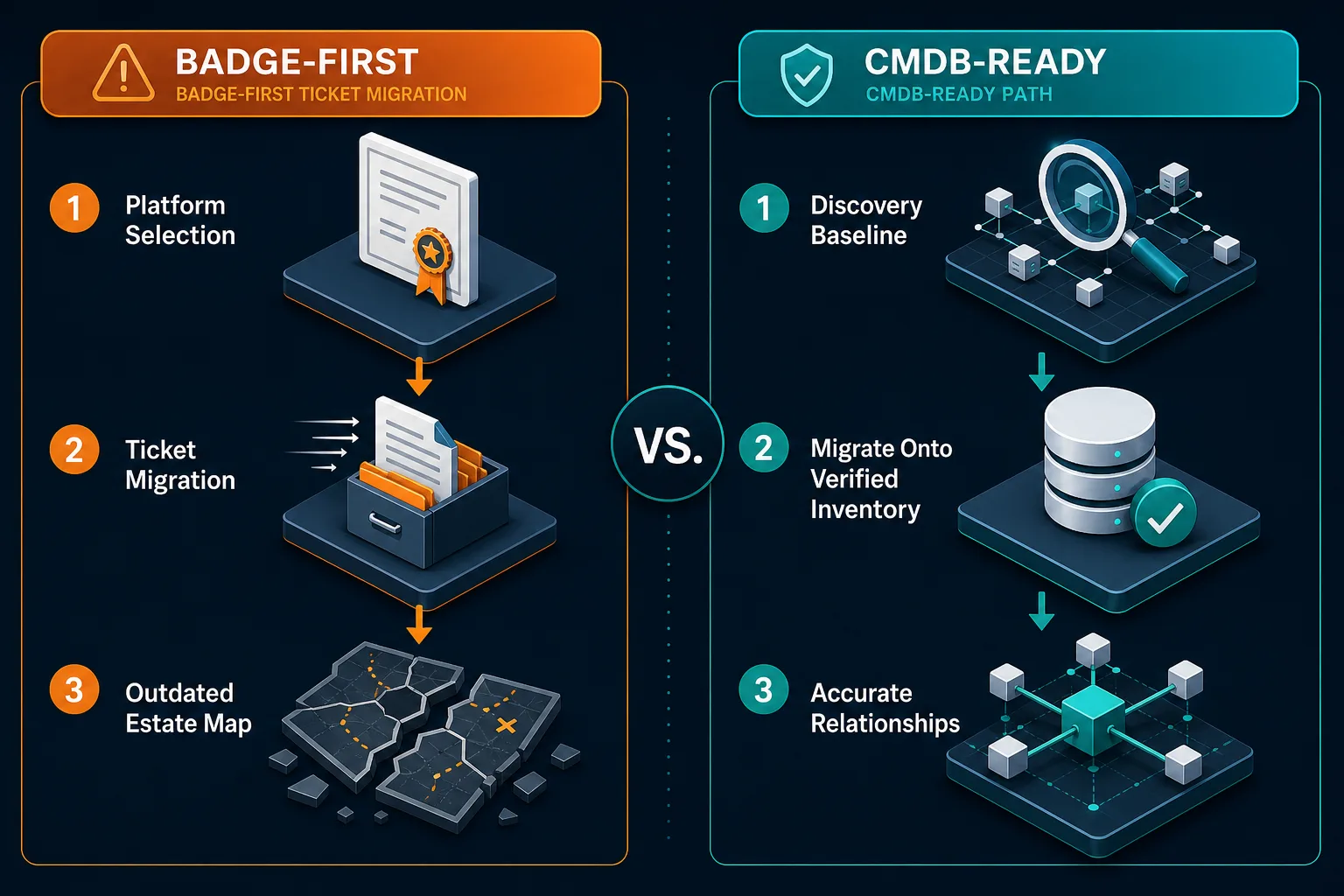
| Old way | CMDB-ready way |
|---|---|
| Pick a quadrant badge, then migrate tickets | Baseline discovery and CI health before cutover |
| Import CMDB last and hope imports stick | Migrate onto verified inventory and relationships |
| Measure success by go-live date | Measure success by CI freshness, change impact clarity, and audit sample pass rates |
| Fund cleanup as a year-two project | Fund discovery authority as part of the rollout budget |
Getting started
If you are still building the shortlist itself, run platform comparison and data readiness on the same calendar as your ITSM platform selection process:
- Score one critical service path: what the CMDB claims versus what discovery finds.
- List the highest-traffic change types and required CI relationships before the next CAB.
- Connect discovery output into the ITSM tool already selected, not a parallel queue.
- Set a drift review cadence after the first cleanup, with owners for exceptions.
- Give platform, CMDB, and security leads the same map in the tools they already open.
A badge alone is not a cutover plan. Hold vendors to workflow demos and hold your own team to a configuration readiness gate before tickets move. That dual track is how rollout risk stays priced instead of deferred.
Close the gap the Magic Quadrant leaves open
The Gartner Magic Quadrant ITSM is useful market research, but it doesn’t score whether your configuration items, owners, and dependencies will hold up after go-live. Fix the shared inventory under the desk you choose, and the badge decision can deliver the workflow gains the business funded. Start with the one-service-path scorecard above before your next procurement conversation. When you’re ready to put discovery-sourced truth under that path, schedule a free demo and bring the results with you.
Frequently Asked Questions
What is the Gartner Magic Quadrant for ITSM?
It is Gartner’s market map of ITSM platform vendors on Ability to Execute and Completeness of Vision. The 2026 ITSM platforms report returned after a multi-year gap and positions more vendors than the 2022 edition.
Why doesn’t a Gartner Magic Quadrant placement guarantee a smooth ITSM rollout?
Placement scores vendor execution and vision in the market. It does not score whether your configuration items, owners, and dependencies match live production after migration. Rollout quality still depends on CMDB accuracy and discovery coverage in your estate.
Which vendors appear in the 2026 Gartner Magic Quadrant for ITSM?
Independent and vendor-public coverage of the 2026 map cites sixteen positioned vendors, including Atlassian, ServiceNow, Freshworks, ManageEngine, TeamDynamix, Ivanti, and Xurrent, among others. Always confirm the live report abstract for the full official list.
Does Virima appear in the Gartner Magic Quadrant for ITSM?
No. Virima is not an ITSM platform and is not positioned among the ITSM Magic Quadrant vendors. Virima provides discovery-sourced CMDB and service mapping that feed the ITSM platform you already run.
How does a discovery-sourced CMDB improve an ITSM rollout?
Scheduled discovery keeps configuration items current. Service maps, after definitions are supplied, show impact for change and incident work. Bi-directional sync keeps the desk and the inventory on one shared record set instead of a stale import.