CMDB vs. SACM: Understanding the Difference and Why Both Matter in ITIL v4

TLDR: The CMDB is a tool — a database that stores configuration item records and relationships. SACM is an ITIL v4 practice — the governance discipline that determines how the database is populated, controlled, verified, and used. Organizations that have one without the other consistently fail at configuration management.
What is the difference between a CMDB and SACM in ITIL v4?
A CMDB is the database that stores configuration item records and relationships. SACM is the ITIL governance practice that sets policies, ownership, verification, and controls so CMDB data stays accurate, controlled, and usable for impact analysis and change planning.
Ask an IT manager whether their organization does configuration management, and they’ll almost certainly say yes. Then ask what governs how CI records get created, who reviews discrepancies when discovery finds something unexpected, and how they know their CMDB data is accurate. The answers get uncertain fast.
The confusion is structural. Most organizations equate configuration management with owning a CMDB. They deploy the tool, populate it during implementation, and consider configuration management done. What they miss is that the CMDB is only the storage layer. SACM — Service Asset and Configuration Management — is the practice that makes the storage layer trustworthy.
This distinction matters because organizations that have a CMDB but no SACM practice consistently end up with the same outcome: a database that starts accurate and progressively degrades until practitioners stop trusting it and start working around it.
What Is a CMDB?
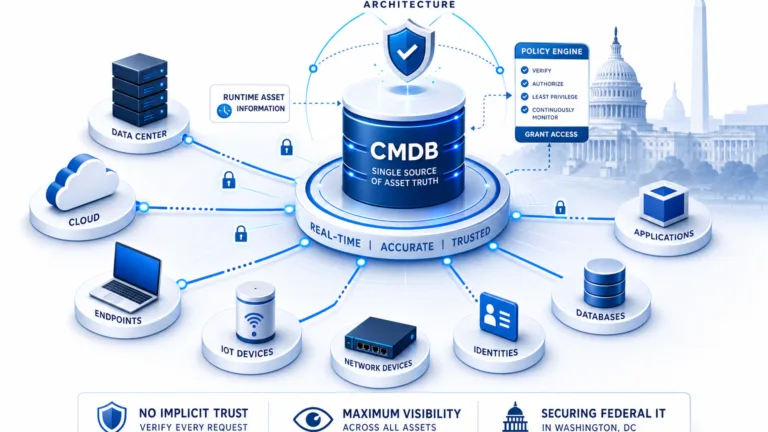
A Configuration Management Database (CMDB) is a data repository that stores records for configuration items (CIs) — the components that make up an organization’s IT infrastructure and services — along with their attributes and the relationships between them.
A CMDB stores:
- Hardware CIs: servers, workstations, network devices, storage systems
- Software CIs: installed applications, operating systems, middleware
- Service CIs: business services, technical services, and the relationships that map them to supporting infrastructure
- Other CIs: contracts, documentation, facilities, virtual instances, cloud resources
The CMDB’s value comes from its relationships. A server CI linked to the application CIs running on it, linked to the business service those applications support — that relationship chain is what makes the CMDB useful for impact assessment, incident scoping, and change planning. Without relationships, the CMDB is an asset list, not a configuration database.
The CMDB is technology. It’s deployed, configured, and maintained. Organizations can stand up a CMDB within days with modern tooling like Virima’s CMDB platform. Having a CMDB does not mean having configuration management. It means having a place to store configuration data.
What Is SACM?
Service Asset and Configuration Management (SACM) is an ITIL v4 management practice. Its purpose is to ensure that accurate and reliable information about the configuration of services — and the CIs that support them — is available when and where it is needed.
SACM is not a tool. It’s a discipline. It encompasses:
- Policies that define what gets tracked in the CMDB, at what level of detail, and under what conditions
- Processes that govern how CI records are created, updated, and retired
- Roles that assign accountability for CI data accuracy — who owns which CI types, who reviews discrepancies, who approves configuration baselines
- Controls that ensure CI changes happen through authorized processes, not ad-hoc edits
- Verification mechanisms that confirm CMDB data matches the actual environment
- Reporting that measures configuration data quality and surfaces issues for resolution
SACM transforms the CMDB from a database that was accurate at deployment into a database that stays accurate over time.
Note on ITIL 4 naming: ITIL v3 used Service Asset and Configuration Management (SACM) as one process name. ITIL 4 splits the work into Service Configuration Management and IT Asset Management. Enterprise teams still say SACM for the combined governance discipline that keeps configuration and asset records accurate. This article uses SACM in that practitioner sense while staying aligned with ITIL 4 practice goals.
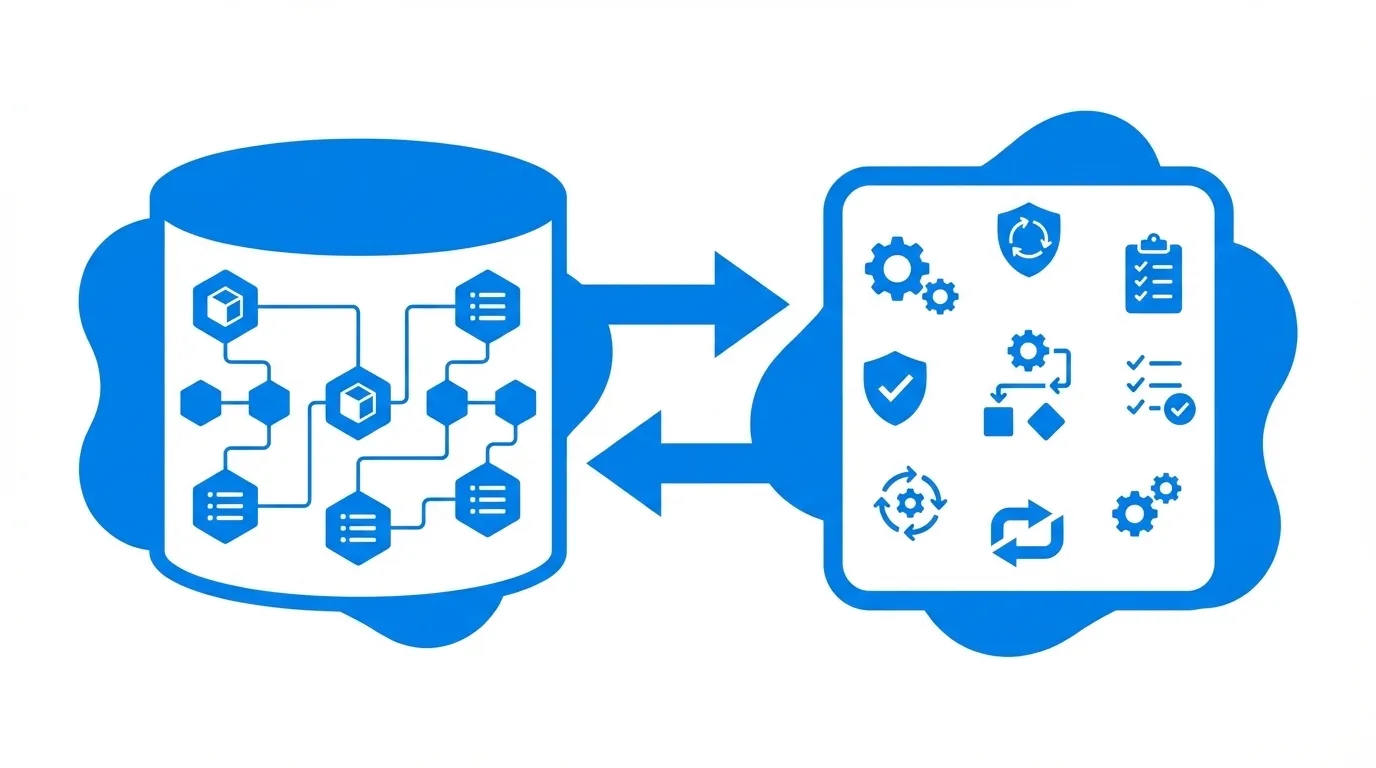
The Key Difference: CMDB Is the What; SACM Is the How and Why
The clearest way to understand the CMDB-SACM relationship:
The CMDB answers “what.”
- What CIs exist in the environment?
- What attributes does each CI have?
- What relationships connect CIs to services?
SACM answers “how” and “why.”
- How do CI records get created and updated?
- How do we know the data is accurate?
- How do we control who can make changes to CI records?
- Why does this CI exist in this configuration?
- Why did this CI’s state change?
A CMDB without SACM has answers to “what” — but those answers degrade in accuracy the longer the system runs without governance. SACM is what keeps the “what” answers reliable.
Another way to frame it: the CMDB is an infrastructure for configuration data. SACM is the operating model for that infrastructure. Neither is sufficient alone.
Why does a CMDB fail without a SACM practice?
Without SACM, environment changes outpace CMDB updates. Ungoverned drift lowers data quality. Teams stop trusting the database, verify facts by hand, and treat the CMDB as a weak starting point instead of a source of truth for change and incident work.
Why Organizations That Have a CMDB But No SACM Practice Fail
The failure pattern is consistent and recognizable:
Phase 1 — Implementation. The organization deploys a CMDB and populates it, either through discovery or manual data entry. At launch, the data is reasonably accurate. The team celebrates and considers the configuration management implemented.
Phase 2 — Drift. The environment changes. New servers are provisioned. Old workstations are decommissioned. Applications are upgraded. Some of those changes generate CMDB updates. Many don’t — because there’s no governance process requiring them. CI records start diverging from reality.
Phase 3 — Workarounds. Practitioners who rely on CMDB data for impact assessment, incident scoping, or change planning start finding inaccuracies. They learn to verify CMDB data manually before trusting it. The CMDB becomes a starting point rather than a source of truth. The time saved by having a CMDB is spent compensating for its inaccuracy.
Phase 4 — Abandonment. The CMDB is still there, technically active, still receiving some updates. But nobody trusts it. Major decisions get made based on direct investigation rather than CMDB queries. The organization has a CMDB and no configuration management.
The failure happens not because the tool was wrong, but because the practice was never established. SACM prevents this progression by ensuring that the governance model keeps pace with the environment.
ITIL 4 service configuration management practice guidance is direct on why CMDB programs fail to sustain data quality: without formal ownership roles, a Configuration Manager, CI owners, and defined governance accountabilities, configuration data degrades over time regardless of platform. Structure determines sustainability. Tooling is secondary (Source: AXELOS, ITIL 4 Service Configuration Management practice).
How Virima Supports Both the CMDB Tool and the SACM Practice
Virima 6.1.1 provides both the CMDB technology and the capabilities required to implement a SACM practice within a single platform:
CMDB capabilities:
- Configurable CI types, attributes, and relationship model covering hardware, software, services, and network infrastructure
- Multi-OS, multi-environment Discovery that continuously populates CI data from the live environment
- ViVID Service Mapping for automated service relationship discovery, connecting supporting infrastructure to the business services they enable
- Full CI relationship visualization for impact assessment and root cause analysis
SACM practice capabilities:
- Business rules engine for CI control — defining who can create, update, or retire which CI types under what conditions
- CI lifecycle state management (New, Active, Maintenance, Retired, Deleted) with state transition history logged for every CI
- Audit history for every CI record — every attribute change and relationship update logged with timestamp and user attribution
- Blueprint-based integrity checking — define expected CI configurations and surface deviations for review
- Configuration baselines — capture and compare approved configuration states for change verification and compliance monitoring
- Discrepancy management — Discovery findings that conflict with CMDB records surface for review and resolution through a governed workflow
- Exportable configuration reports for audit, compliance, and executive governance
The combination means organizations can deploy Virima as the CMDB tool and establish the SACM practice within the same platform — rather than attempting to graft a governance framework onto a tool that doesn’t natively support it.
SACM Maturity Levels: Where Does Your Organization Stand?
SACM maturity typically develops through recognizable stages:
Level 1 — Reactive. The organization has a CMDB but no formal SACM practice. CI data is populated at implementation and updated inconsistently. Discovery may run, but discrepancies are not systematically reviewed. Data quality is unknown and assumed to be poor.
Level 2 — Defined. The organization has documented SACM policies. CI types and attributes are formally defined. A discovery process runs regularly. Discrepancy review exists but is not consistently followed. Data quality is monitored for critical CI types only.
Level 3 — Managed. CI control processes are active. Business rules govern who can create and update CIs. Discovery discrepancies go through a formal review queue. Configuration baselines exist for critical services. Data quality metrics are tracked and reported on a regular schedule.
Level 4 — Optimized. SACM is continuous and largely automated. Discovery runs frequently. Drift is detected and resolved automatically where possible, flagged for human review otherwise. Configuration baselines cover all critical services. SACM data quality reliably supports all downstream ITSM practices.
Most organizations sit at Level 1 or 2. The jump from Level 2 to Level 3 — from defined policies to active governance — is where Virima’s business rules engine, baseline management, and discrepancy review workflows make a measurable difference in both data quality and operational reliability.
CMDB and SACM Work Together, or Not at All
The CMDB is the tool. SACM is the practice. Organizations that invest in the tool but not the practice end up with a degrading database. Organizations that implement both end up with a reliable source of configuration truth that supports every other ITSM practice that depends on it.
ITIL 4 Service Configuration Management guidance is clear: without ownership roles, CI owners, and defined governance, configuration data degrades over time on any platform. Structure sustains quality. Tooling alone does not.
For context on the operational cost of CMDB gaps, read the EMA ServiceOps 2025 report.
See how discovery-sourced configuration truth supports governed SACM practice on the Trusted Runtime Truth page.
Frequently Asked Questions
Can an organization have SACM without a CMDB?
In theory, SACM can run on any structured data store. In practice, SACM without a purpose-built CMDB is hard to sustain at scale. Relationship models, life cycle tracking, discovery integration, and audit history match what a modern CMDB provides. SACM and the CMDB are not the same thing, but they are natural complements.
Is SACM still relevant in modern cloud and DevOps environments?
Yes. Cloud environments provision and retire CIs faster than manual tracking can keep up. DevOps pipelines change configuration continuously. SACM in cloud and DevOps settings relies on scheduled discovery scans and CI control rules to hold accuracy at environment speed. Virima Discovery supports high-frequency discovery cycles across cloud and on-premises infrastructure.
How does SACM relate to software asset management (SAM)?
SACM governs configuration items that support IT services at the configuration level. SAM governs software products for cost and license life cycle. They meet at the software CI: one instance is a SAM asset and a SACM CI. Virima’s ITAM module and CMDB support both, with software CIs carrying configuration attributes for SACM and financial attributes for SAM.
This article reflects capabilities in Virima 6.1.1. For the latest feature information, visit virima.com.