Does Virima Include IP Address Management (IPAM)? How IPAM and CMDB Work Together

TLDR: Virima 6.1.1 includes native IPAM within the CMDB. Discovery automatically correlates discovered IP addresses to CIs, subnet records link to CI data, and ITSM integration connects IP address context to change and incident workflows — all in one platform, with no reconciliation required between separate tools.
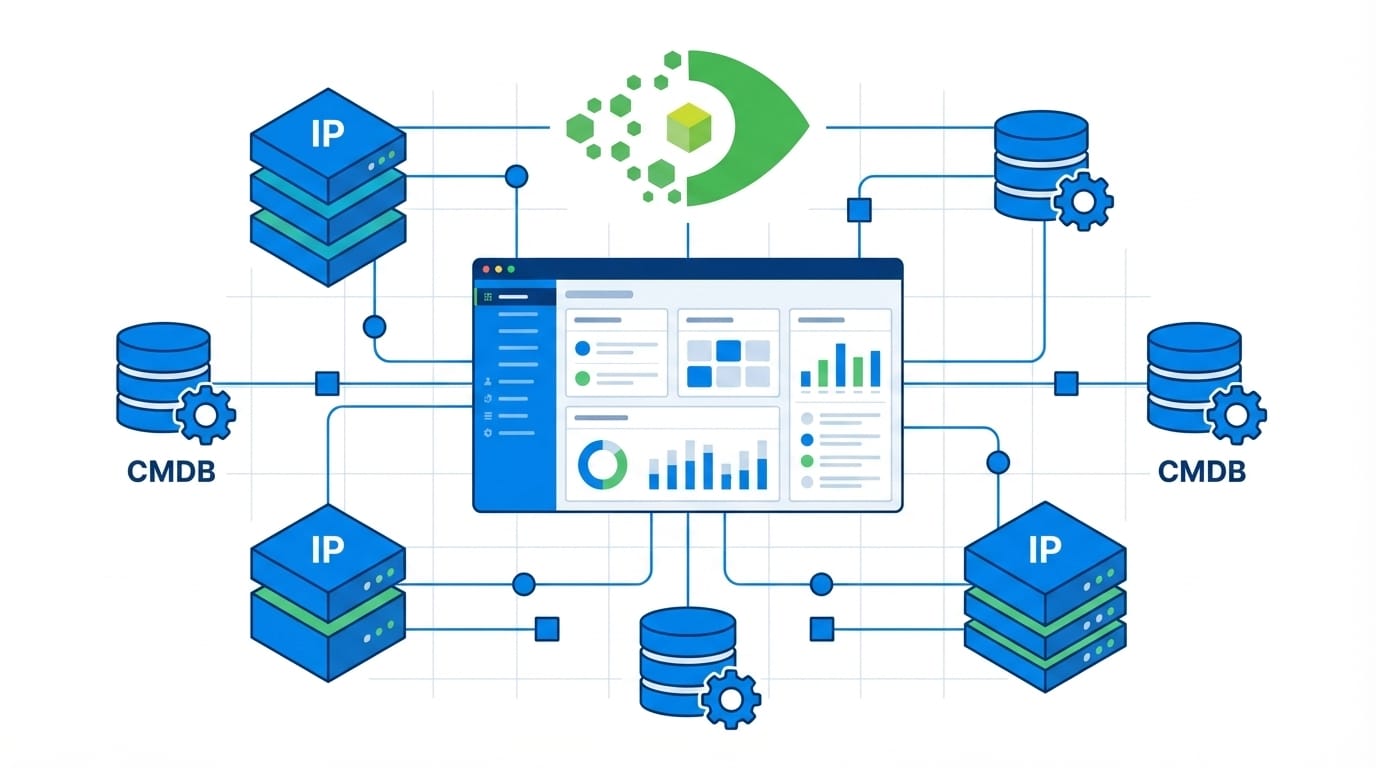
Managing IP addresses and configuration items in separate systems creates a persistent reconciliation gap. Virima solves this by including IPAM natively within the CMDB — so IP address data and CI data are always in sync, always in context, and always from the same source of truth.
This guide answers the most common questions about Virima’s IPAM capability and how it works with the CMDB
Does Virima Include Built-In IPAM?
Yes. Virima 6.1.1 includes IP Address Management (IPAM) as a native capability within the CMDB. IPAM in Virima is not an external integration, a third-party add-on, or a separately licensed module.
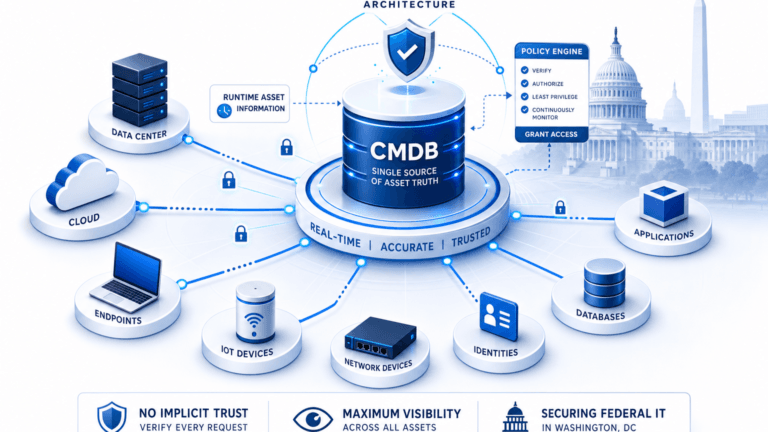
IP address records and subnet records live in the same data layer as CI records, with the same relationship model, audit history, and governance framework. This architecture means IP address data and CI data are never out of sync. There is no integration to maintain, no reconciliation job to schedule, and no gap between what an IPAM tool shows and what the CMDB shows — because they are the same system.
How Does Virima’s IPAM Work with the CMDB?
In Virima, every IP address is a tracked record with attributes — address, subnet, status, and assignment — linked via a relationship to the CI that holds it. The relationship works exactly like any other CI relationship in Virima:
- An IP address record connects to the CI assigned to that address
- A subnet record connects to every CI with an IP address in that range
- Changes to IP assignments update in real time alongside CI updates
When a network engineer or incident responder queries a CI in Virima, the IP address data appears immediately in context. There’s no need to open a separate IPAM tool and cross-reference against the CMDB. The IP context and the CI context are the same record.
How Does Discovery Automatically Populate IPAM Data?
Virima’s Discovery engine scans the network on a configurable schedule and correlates IP addresses to CIs automatically. The process runs as follows:
- Discovery identifies active devices on the network
- Each device is matched to an existing CI, or a new CI is created
- The IP address for that device is created or updated in the IPAM layer
- A relationship is established between the IP address record and the CI
- The subnet record for that IP range updates to reflect current allocation status
IPAM data stays current with the actual network state after every discovery run. New devices get their IP records created. Decommissioned devices have their IP records updated to reflect that the address is now unallocated. No manual data entry is required to keep the IP address inventory current.
Can Virima Manage Subnets and IP Ranges?
Yes. Virima supports subnet management as part of its native IPAM capability. Each subnet record in Virima captures:
- Total IP capacity for the subnet
- Allocated IPs and the CIs they’re assigned to
- Available IPs for new provisioning
- Historical allocation data for audit and planning purposes
Because subnet records connect directly to CI records, network teams can identify available IP ranges for new provisioning, understand which services a subnet supports, and assess the impact of network changes on connected infrastructure — all from the same platform where CI relationships are managed.
This context is unavailable in a standalone IPAM tool, which tracks addresses but not the service relationships those addresses support.
What Is the Advantage of Native IPAM in a CMDB vs. a Standalone Tool?
The core advantage is data unity. Standalone IPAM tools maintain IP address records that must stay synchronized with the CMDB. That synchronization requires integrations, scheduled sync jobs, or manual reconciliation — all of which are subject to drift. The two systems update at different rates, by different teams, for different reasons. The gap reappears as fast as you close it. Teams still weighing standalone options can compare the leading IPAM software before deciding whether a separate tool is worth the reconciliation overhead.
The NIST Cybersecurity Framework 2.0 (2024) identifies network asset inventory — including IP address assignments — as a foundational element of the Identify function, noting that fragmented toolsets are a leading source of persistent visibility gaps in IT environments.
Native IPAM in Virima eliminates the gap at the source:
- No reconciliation gap. IP records and CI records update from the same discovery process.
- Richer context. When you look at an IP address, you see the CI, the service it supports, and the relationships — not just the allocation status.
- Single audit trail. IP address history and CI configuration history share the same versioning and audit log framework, so historical questions (what device held this IP on this date?) have reliable answers.
- Fewer tools to maintain. No separate IPAM platform to license, integrate, update, and keep synchronized.
Does Virima’s IPAM Integrate with ITSM Workflows?
Yes. Virima integrates with ITSM platforms including ServiceNow, Jira, Ivanti, Halo ITSM, Xurrent, and Hornbill. In these integrations, IPAM data becomes part of the change and incident management workflow.
A change request for a network reconfiguration automatically surfaces the CIs and IP records affected, giving change managers the full network context before approving the change. An incident involving a server pulls in the IP and subnet context — which network segment the server is on, which other CIs share that segment, and whether any recent IP changes might relate to the incident.
IPAM data in Virima doesn’t sit in isolation. It enriches every ITSM workflow that involves network infrastructure, turning IP address context from a siloed network team artifact into a shared operational resource.
Schedule a Demo at virima.com to see how Virima’s native IPAM capability works within the CMDB and ITSM workflows.
This article reflects capabilities in Virima 6.1.1. For the latest feature information, visit virima.com.