CMDB Automation for London’s Global Retail HQs and Heathrow Logistics Corridor

Between Horseferry Road and Heathrow’s cargo terminals, a fifteen-mile corridor concentrates more global retail IT decision-making power than almost any other stretch of geography in Europe. In 2025, that same corridor sat at the centre of one of the most disruptive UK retail cyber-attack waves on record. Boardroom SaaS, treasury platforms, thousands of store-edge nodes, and warehouse systems along the Heathrow belt share one problem: configuration data that does not keep pace with how the estate actually runs.
For IT operations directors and infrastructure architects at London-headquartered retailers and logistics operators, CMDB automation London is not a tidy asset-register project. It is the difference between containing a third-party breach in hours and watching online channels stay dark for weeks. CMDB automation London means discovery-sourced, multi-method configuration data — refreshed on a schedule and reconciled by authority rules — mapped to the business services that run boardroom SaaS, store edge, and Heathrow-corridor logistics.
The London retail-logistics corridor: a structural overview
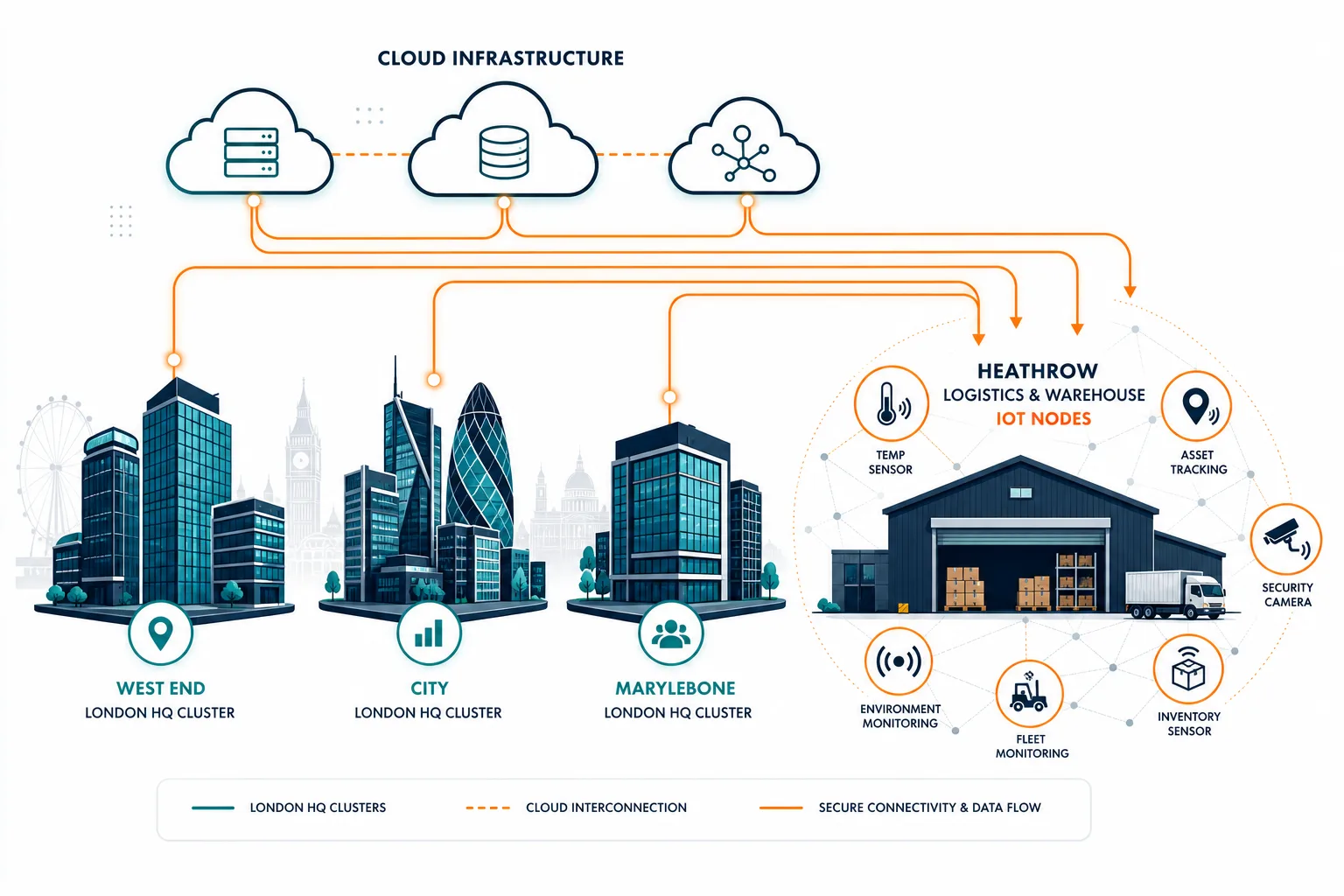
London’s retail HQ footprint runs from the West End and Marylebone through the City and out toward West London. Burberry on Horseferry Road, Primark/ABF at the Weston Centre, and Tesco’s orbit around Welwyn Garden City all run global IT decisions from this geography. The estate rarely stops at the HQ campus.
A typical topology looks like this:
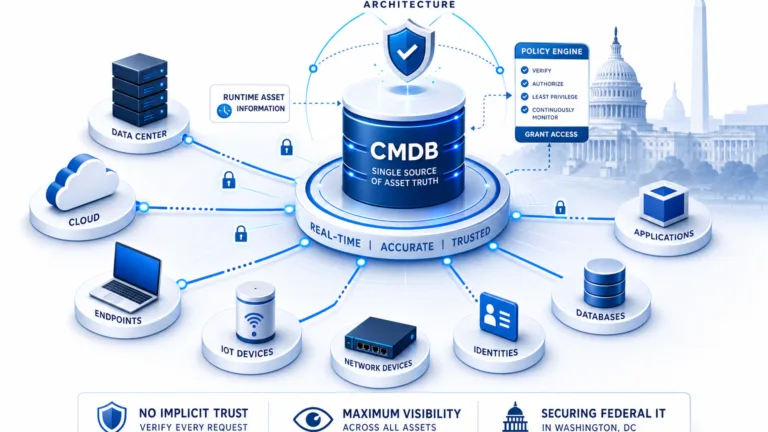
- Corporate data centres and multi-cloud tenancies for finance, merchandising, and identity
- HQ collaboration and treasury platforms
- Thousands of store-edge nodes (POS, local servers, network gear)
- Logistics and warehouse systems along the Heathrow corridor, including IoT and partner APIs
Heathrow remains one of Europe’s densest passenger and cargo nodes, sharing its physical and digital supply chain with retail fulfilment, bonded warehousing, and third-party logistics operators. A configuration item that “lives” in a West London shed still touches the same payment, inventory, and identity paths the board watches from central London.
That span is the CMDB problem. A register built for a homogeneous data centre cannot represent boardroom SaaS, store edge, and corridor IoT as one coherent service graph. When those layers share credentials, APIs, and change windows, stale configuration becomes a corridor-wide risk, not a local hygiene gap.
What 2025 taught London retail about configuration visibility
Public reporting on the 2025 UK retail incidents points to a shared operational failure mode: teams could not enumerate connected systems fast enough to contain impact.
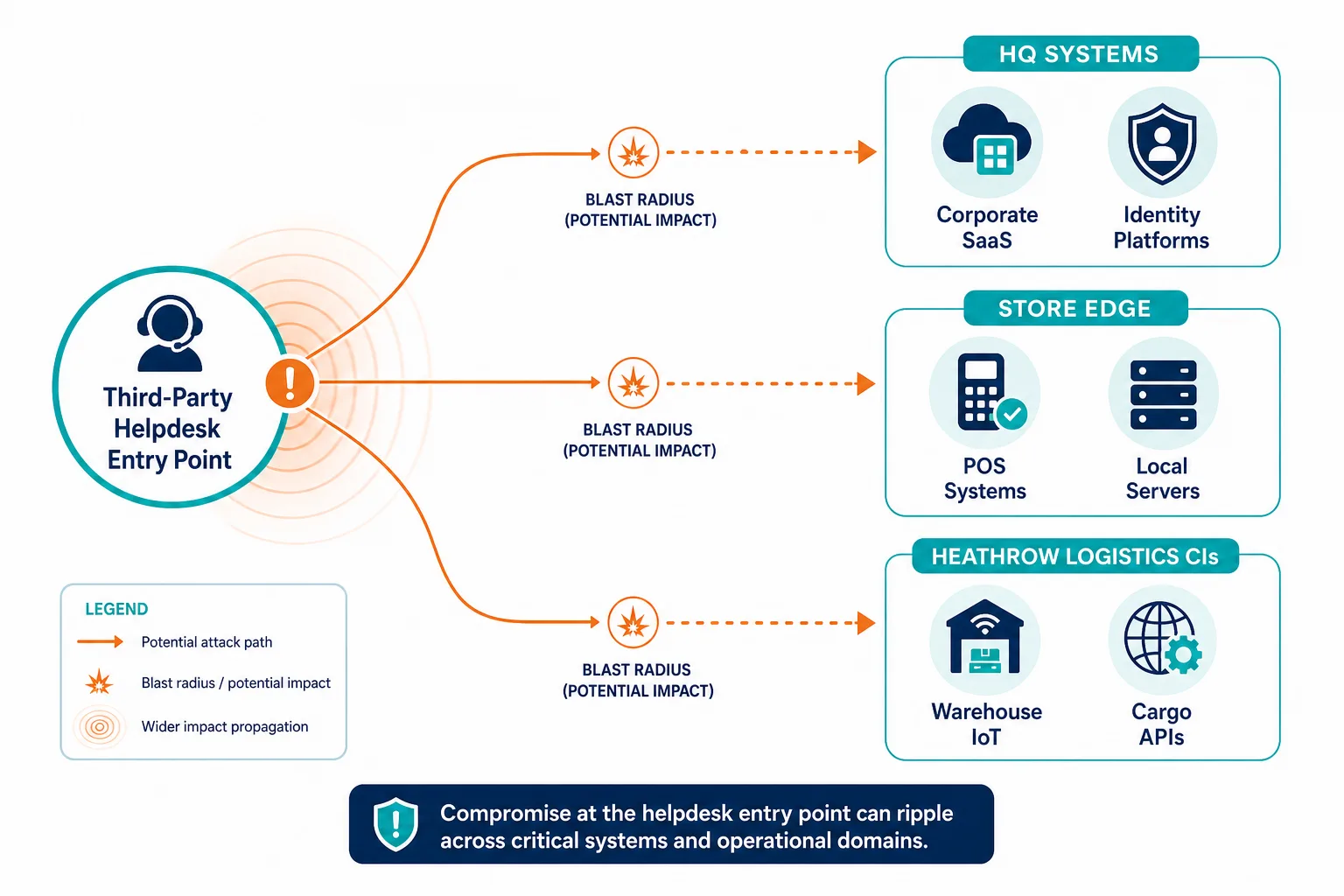
Marks & Spencer faced a ransomware-linked disruption that began with social engineering against a third-party helpdesk path. Lateral movement followed. Online disruption stretched across roughly forty-six days, with publicly reported operating-profit impact on the order of £300 million. The lesson for configuration practice is structural: speed of dependency enumeration, not the mere existence of a CMDB record, governed how long the blast radius stayed open.
Co-op took a different path under related criminal activity that also touched Harrods in separate incidents. Co-op shut systems proactively to limit ransomware spread. Shelves emptied across more than two thousand stores. That choice traded short-term trading pain for containment. It also exposed how thin the live map of store, supply, and HQ dependencies can be when every hour counts.
Heathrow’s Collins Aerospace supplier incident showed the corridor side of the same pattern. A compromised third-party software path cascaded into multi-day flight disruption, including manual check-in processes at Terminal 4. Retailers that depend on Heathrow cargo and passenger-linked logistics felt the same lesson HQ teams felt on Oxford Street: one supplier endpoint can sit on the critical path of many brands at once.
None of these cases require guessing which CMDB product any named firm ran. The pattern repeats at Heathrow, at the store edge, and in the boardroom alike: a configuration baseline that isn’t refreshed from discovery and joined to service context can’t match the pace of social-engineering entry and supplier compromise.
For a deeper treatment of why automation matters to CMDB accuracy in general, see Virima’s guide on CMDB automation and CMDB success.
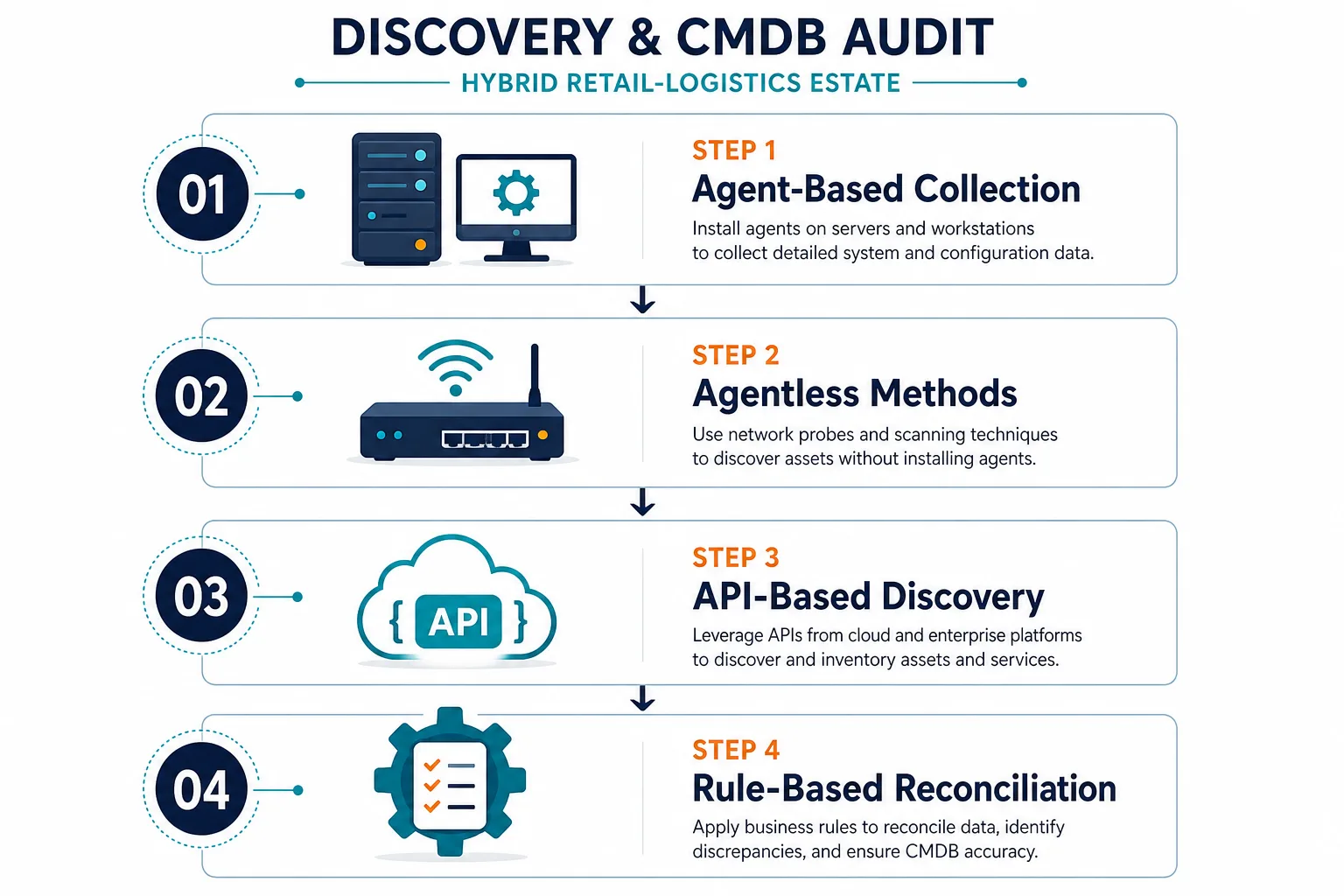
Before you audit your own estate: download the How to Build an AI-Ready CMDB Checklist for 2026 built from the four-step framework later in this article — a working audit list for HQ, store-edge, and Heathrow-corridor CIs.
Why generic CMDB automation falls short for retail-logistics estates
Most CMDB automation content assumes a fairly uniform enterprise data centre. London retail HQ estates are not uniform.
They mix:
- Corporate SaaS and identity platforms
- Treasury and payment-adjacent systems
- POS and store-edge infrastructure
- Warehouse management and refrigeration or sensor fleets
- Third-party logistics and airport-corridor APIs
Automation that only ingests what lives inside the DC or the primary cloud account leaves the attack surface that matters most partially dark. Agent-only coverage misses locked-down network devices, agentless-only coverage struggles on some endpoints, and API-only cloud pulls miss on-prem and edge assets. Without field-level authority rules, the last scan to write a CI attribute can overwrite a better source and create silent drift.
Retail-logistics teams therefore need IT asset discovery for retail logistics that combines multiple collection methods with explicit conflict resolution. Agent-based collection on Windows, macOS, and Linux hosts; agentless probing across common protocols; and API-based pulls from cloud and virtualisation platforms must feed one configuration model. Authority rules should decide which source owns which attribute, instead of a blunt last-write-wins model.
A CMDB without discovery as the ongoing source of truth decays into a project artefact. In a corridor estate, that decay shows up first at the edges: store gear, partner APIs, and warehouse controllers that never made the original import spreadsheet.
Why does generic CMDB automation fail London retail-logistics estates?
It assumes a homogeneous data centre. London retail HQs span SaaS, treasury, store edge, warehouse IoT, and Heathrow-corridor partner APIs. Discovery limited to the DC or one cloud account leaves the paths attackers and suppliers actually use incompletely mapped.
Discovery-sourced configuration baselines for hybrid retail estates
Virima approaches this as discovery-sourced CMDB automation: a configuration baseline built from live discovery, not a one-time import.
IT discovery combines:
- Agent-based collection on major server and workstation operating systems
- Agentless methods using a broad probe set across protocols such as SNMP, WMI, and SSH, depending on estate design
- API-based discovery for environments such as AWS, Azure, and VMware
Those feeds land in a discovery-sourced CMDB where authority rules resolve conflicts at the attribute level. POS firmware data, warehouse sensor inventory, and cloud workload metadata can share one CI model without every source fighting for the same fields.
Important product boundaries stay explicit. Virima runs high-frequency scheduled discovery cycles; it does not claim passive continuous or event-driven always-on monitoring as current behaviour. Teams design scan windows and credentials to match change rate and risk, then reconcile on that cadence — scheduled multi-method collection plus rule-based reconciliation, not a promise that every packet change appears instantly in the CMDB.
For retail estates, edge and corridor assets change ownership, location, and software state faster than annual audit cycles. A baseline that refreshes on a deliberate schedule gives change, incident, and audit teams one inventory language for both HQ and the edge.
What does discovery-sourced CMDB automation mean for hybrid retail IT?
It means agent, agentless, and API discovery feed one CMDB on a high-frequency schedule, with authority rules resolving field conflicts. The goal is a configuration baseline tied to runtime inventory across HQ, store edge, cloud, and logistics systems, not a static register rebuilt after each audit.
Explore how Trusted Runtime Truth frames live inventory, dependency context, and ownership for teams that must act under incident pressure.
Blast radius mapping before the next incident
Inventory alone does not answer the war-room question: which business services and partner paths sit on this credential or this host?
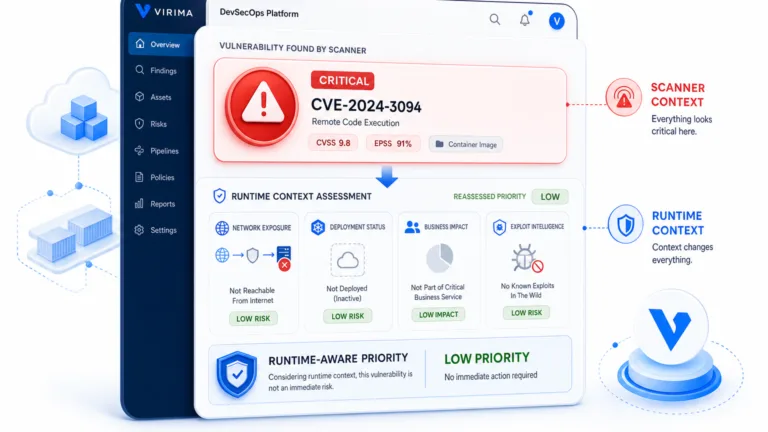
ViVID™ service mapping sits on top of discovery-sourced CIs once service definitions are supplied (manually, via import, or through architecture integrations). Virima then builds dependency views that operations teams use for blast-radius analysis and for correlating incident or change tickets to the systems in scope. The point is operational: when a third-party helpdesk path or a logistics supplier endpoint is implicated, maps help teams see shared dependencies before containment decisions are made in the dark. For the mechanics of turning CI relationships into an actual blast-radius view, see Virima’s guides on what blast radius means in IT and on tying asset criticality to vulnerability remediation.
Revisit the M&S pattern structurally: when service maps show which logistics and digital channels share infrastructure or identity paths with the entry system, containment planning moves from tribal knowledge to a shared picture — and hours matter when online channels and store operations are both on the clock.
Virima integrates with ServiceNow, Jira Service Management, Ivanti, and many more platforms. The role is to feed discovery and map context into the ITSM tools teams already run, not to replace those platforms.
See how service mapping supports dependency and blast-radius views for hybrid estates.
How does service mapping reduce blast radius after a retail cyber incident?
After service definitions are provided, dependency maps join CIs into paths operators can inspect during incidents and changes. Teams can see which channels, stores, or logistics systems share infrastructure or identity with a compromised entry point, which supports faster, more targeted containment decisions.
Operational resilience and the compliance tailwind
The FCA’s operational resilience framework has been fully in force for in-scope firms since March 2025. It requires mapping the dependencies behind important business services, staying within impact tolerances, and taking third-party risk seriously. Follow-on FCA observations have stressed that technology mapping alone is incomplete; people, processes, and third parties belong in the same picture.
Operational resilience CMDB work — mapping the dependencies behind important business services — increasingly reaches upstream retailers too. Most pure retailers are not FCA-authorised firms. Many still sit upstream of payment processors, insurers, trade-finance partners, and logistics providers that are. Those partners increasingly push dependency evidence and resilience questions into retail IT questionnaires and contracts. London HQs that can produce current CI inventories and service-level dependency views answer those requests with less manual assembly.
Discovery-sourced CMDB data and service maps are foundation layers for that work, not a replacement for GRC platforms, legal advice, or formal operational-resilience programmes — they supply the inventory and relationship evidence those programmes sample. For configuration-management process context, Virima’s configuration management use case describes how SACM-style discipline ties to discovery and CMDB practice. See Virima’s guide on CMDB audit essentials for a closer look at keeping CI data accurate and audit-ready between formal assessments.
Guardrail: Treat all regulatory references here as general awareness. Have legal and compliance counsel review any published claims about FCA rules, impact tolerances, or partner obligations before you rely on them in customer-facing or regulated materials.
Next steps for CMDB automation London
- Audit CMDB freshness against discovery reality. Compare last reconciliation dates and attribute owners for HQ, store-edge, and Heathrow-corridor classes. Flag CIs that only exist because someone typed them once.
- Inventory blind spots on the logistics belt. Warehouse controllers, partner APIs, and cargo-site network gear often sit outside the original CMDB import. Put them on the discovery plan with clear credentials and windows.
- Map critical third-party dependency paths. Helpdesk providers, payments, and airport-corridor software suppliers deserve explicit service links, not a vendor row in a contract folder.
- Evaluate multi-method discovery with authority rules. Score tools on agent plus agentless plus API coverage, field-level conflict handling, and ITSM handoff quality, not on dashboard aesthetics alone.
London’s retail-logistics corridor will keep concentrating decision power and shared risk in the same few miles of infrastructure. CMDB automation London that stops at the corporate DC leaves the store edge and the Heathrow belt under-described. Discovery-sourced baselines and ViVID™ maps give operations leaders a practical way to see dependencies before the next supplier or helpdesk path turns into a multi-week outage story.
Start with the How to Build an AI-Ready CMDB Checklist for 2026 — the four-step audit above, ready to run against your own HQ-to-Heathrow estate. Ready to see it applied to your systems? Request a demo of discovery-sourced CMDB and ViVID™ service maps.
Frequently Asked Questions
How do London-based retailers automate CMDB updates across hybrid IT estates?
They combine scheduled agent-based, agentless, and API discovery into one CMDB, then apply authority rules so competing sources do not silently overwrite critical fields. HQ cloud, store edge, and logistics systems need the same reconciliation cadence, not a separate spreadsheet track for the corridor.
What CMDB capabilities help retail HQs map dependencies to logistics corridors?
Teams need discovery that reaches warehouse and partner-connected infrastructure, a CMDB that holds those CIs with clear owners, and service maps that link corridor systems to the business services HQ runs. Without that join, Heathrow-side assets stay inventory rows instead of impact paths.
How does automated IT discovery reduce blast radius after a retail cyber attack?
Fresh discovery shrinks the time spent guessing which hosts, identities, and integrations sit on the same path as the entry point. Operators still make containment decisions, but they start from a current inventory rather than last quarter’s import file.
What role does service mapping play in UK operational resilience work?
Resilience programmes need dependency views behind important business services, including technology and third parties. Service maps built on discovery-sourced CIs help teams evidence those paths. They support GRC and legal processes; they do not replace formal resilience frameworks or counsel review.
Does Virima replace ServiceNow or other ITSM platforms for London retail IT?
No. Virima supplies discovery-sourced CMDB and service-mapping context and integrates with ServiceNow, Jira Service Management, Ivanti, and other ITSM tools. Retail teams keep their system of engagement and use Virima as the inventory and dependency layer underneath.
How does Virima’s multi-method discovery differ from agent-only or agentless-only CMDB tools?
Agent-only tools miss locked-down or unmanaged devices; agentless-only tools struggle with some endpoint types; API-only tools miss on-premises and edge infrastructure. Virima combines all three methods and applies field-level authority rules, so no single blind spot decides what the CMDB knows about a retail-logistics estate.