Boost Your ITSM Strategy with Application Discovery and Dependency Mapping

Technology environments are growing fast. IoT device counts are projected to climb from 15.14 billion in 2023 to 29.42 billion by 2030. Whether you manage ITSM operations, troubleshoot issues, or plan infrastructure upgrades, you need a clear view of every asset and connection in your environment. That clarity becomes especially important when resolving urgent service requests. Application discovery and dependency mapping (ADDM) provides that view.
This blog covers why ADDM matters for ITSM teams and what to look for in a dependency mapping tool.
What Is Application Discovery and Dependency Mapping?
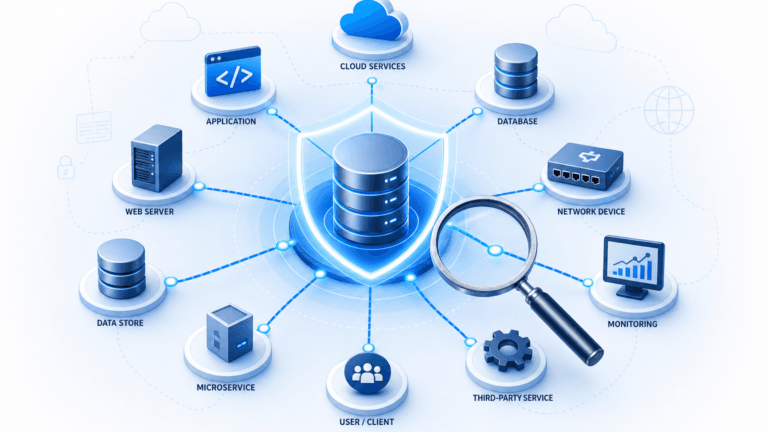
Application discovery and dependency mapping (ADDM) identifies and documents connections between software applications and the infrastructure that supports them. It shows how applications interact with each other and with the hardware and network resources they rely on. This visibility is the foundation of effective IT management.
Why Application Discovery and Dependency Mapping Matters
ADDM delivers specific, measurable benefits for ITSM teams. Here is how application mapping software helps across key IT functions:
1. Enhanced Dependency Visibility
A dependency mapping tool shows how applications connect to servers, networks, databases, and storage. This view helps ITSM teams trace where issues originate. When you can see which components depend on which, identifying root causes becomes faster and more direct.
2. Improved Change Management
Mapping dependencies supports accurate impact assessments before changes go live. ITSM teams can predict how updates or migrations will affect connected applications. This reduces the risk of unplanned service disruptions.
3. Faster Incident Resolution
Detailed dependency maps speed up root cause analysis. When application relationships are clearly documented, ITSM teams can trace and resolve incidents more quickly.
4. Better Resource Allocation
Application dependency data supports better resource management. ITSM teams can allocate resources more precisely to maintain network performance and prevent bottlenecks.
5. Improved Service Mapping
ADDM feeds into ITSM platforms to build accurate service maps. These maps show how applications, services, and infrastructure relate to each other, which strengthens IT service delivery. For teams deciding how to structure these maps, reviewing the differences between application dependency mapping and service mapping helps clarify which approach fits each layer of IT operations.
6. Accurate Configuration Management
Dependency mapping tools keep configuration records current. This gives ITSM teams accurate, up-to-date tracking of configuration items across the environment.
7. Proactive Risk Management
Dependency maps surface potential risks before they affect services. Knowing which components connect to which gives IT teams the context to act early and prevent larger incidents, improving IT risk management.
8. Informed Capacity Planning
Dependency visibility helps IT teams plan infrastructure capacity for future growth. This data supports smarter decisions about where to invest in scaling.
9. Streamlined Compliance and Audits
Detailed dependency maps simplify compliance and technology audit processes. A clear view of application relationships makes it easier to demonstrate compliance and produce audit documentation.
ADDM strengthens ITSM platforms across nine operational areas: dependency visibility, change management, incident resolution, resource allocation, service mapping, configuration management, risk mitigation, capacity planning, and compliance.
6 Steps for Mastering Application Discovery and Dependency Mapping
The right application mapping software and processes help your team manage complex IT environments with greater control. Follow these steps to put ADDM to work:
1. Choose the right tools. Select a dependency mapping tool that works across physical, virtual, and cloud platforms. Look for high-frequency discovery cycles and built-in visualization features. Virima’s application discovery and dependency mapping covers all three environment types and provides broad platform support.
2. Define your scope. Identify what to discover and map in your ITSM environment. Define asset types, discovery depth, and detail level upfront. This clarity prevents information overload and keeps your team focused on what matters.
3. Run scheduled discovery. Schedule discovery jobs to keep your IT asset catalog current and growing. More discovery runs mean richer data, fewer errors, and less time spent on manual cataloging. Freeing your team for higher-value work.
4. Map dependencies. Start mapping critical components, including servers, software, and devices. Expand coverage as needed. Update your maps regularly to reflect changes in the IT environment.
5. Integrate with ITSM processes. Connect your dependency mapping tool to your ITSM platform. A strong integration keeps incident management, change control, and IT support working from shared, up-to-date dependency data.
6. Regularly review and update. IT environments change constantly. Schedule regular reviews to keep your maps accurate. Refresh your dependency maps after any significant change to the IT environment.
Boosting ITSM Efficiency with Virima’s Application Discovery and Dependency Mapping
As IT environments grow more complex, traditional methods for tracking application dependencies break down. Virima’s application discovery and dependency mapping tools address this directly. With Virima, teams can track and manage dependencies with confidence, keeping ITSM operations running reliably.
Enhancing ITSM Visibility
Virima’s service mapping feature gives ITSM teams detailed dependency visibility. It builds visual maps of applications, services, and their connections based on your service definitions. This keeps your IT landscape documented and current, helping teams spot issues and understand component relationships quickly.
Optimizing Resource Utilization
ADDM delivers a complete, current view of all IT assets, including hardware, software, and cloud resources. Connecting this data to the CMDB (Configuration Management Database) gives IT teams a dynamic overview of configuration items and their relationships. This integration improves IT asset tracking, management, and optimization across the environment.
Accelerating Incident Response
Virima improves incident response through dynamic visualizations and ViVID™ service maps. ITSM teams can see dependencies and identify root causes of incidents directly from the service map. By overlaying open incidents and recent changes, Virima speeds up resolutions and reduces IT downtime, enhancing the overall incident management process.
Supporting Change Management
Virima’s ADDM tools are central to effective change management. Virima integrates with ITSM platforms like ServiceNow to improve visibility and support change management workflows. By delivering precise, up-to-date information about the IT infrastructure, Virima helps IT teams plan and assess change impact more accurately. This leads to less downtime, faster incident resolution, and better IT service delivery.
Put Application Discovery and Dependency Mapping to Work in Your ITSM Stack
Application discovery and dependency mapping gives ITSM teams what they need to act with confidence: a clear, current map of every application and its dependencies. With this view, your team can catch potential issues before they escalate and resolve incidents faster when they do occur.
Dependency mapping also strengthens your ability to scale IT infrastructure with fewer surprises. If you’re ready to see what this looks like in practice, explore how Virima’s Trusted Runtime Truth supports application discovery and dependency mapping across your ITSM environment.
→ Explore Virima’s Trusted Runtime Truth and schedule a demo at virima.com!
Frequently Asked Questions
What is the difference between application dependency mapping and service mapping?
Application dependency mapping documents technical connections between software, infrastructure, and hardware. Service mapping groups those dependencies into business services to show how IT components support specific outcomes. Most ITSM teams need both: dependency mapping for root cause analysis and incident response, service mapping for change impact and service delivery reporting.
How often should dependency maps be updated?
Dependency maps should be refreshed after any significant change to the IT environment, including software deployments, infrastructure migrations, and configuration changes. Scheduled discovery jobs help keep the catalog current between changes. In fast-moving environments, frequent discovery runs reduce the risk of acting on outdated dependency data during incidents or change reviews.
What are the biggest challenges in application dependency mapping?
The most common challenges are incomplete discovery coverage, data that goes stale between scans, and dependency maps that are never updated after initial setup. Shadow IT and cloud sprawl add further complexity. Addressing these requires a tool that runs scheduled discovery across physical, virtual, and cloud environments and integrates directly with the CMDB to keep records current.
How does Virima integrate application discovery with ITSM platforms?
Virima integrates with ITSM platforms including ServiceNow, Jira Service Management, Ivanti, Halo, Xurrent, and Hornbill. Once connected, dependency and configuration data flows into the ITSM platform to support incident management, change impact analysis, and service mapping. This gives IT teams a single, shared view of the IT environment without switching between tools.
How does Virima’s ViVID™ service mapping use dependency data?
ViVID™ service maps are built from your service definitions and the dependency data discovered across your IT environment. Once a service is defined, Virima maps the applications, infrastructure, and connections that support it. Teams can overlay open incidents and recent changes on these maps to identify root causes and assess change impact without manual investigation.