Top 7 Network Access Control (NAC) Solutions for 2026

Last updated: July 2026
What is network access control (NAC)? Network access control is a security framework that determines which users and devices can connect to a corporate network. It evaluates endpoint compliance, verifies identities, and assigns access levels based on device health, user role, and security posture. NAC operates at the network entry point, blocking non-compliant or unrecognized devices before they reach sensitive data or internal systems. |
Why NAC Belongs at the Center of Your Security Stack
Hybrid work permanently expanded the attack surface. Employees connect personal devices, contractors bring unmanaged laptops, and IoT endpoints multiply across branch offices and warehouses faster than most IT teams can catalog. Each new connection represents a potential entry point. NAC solves this by applying policy at the moment of connection, before a device touch anything critical.
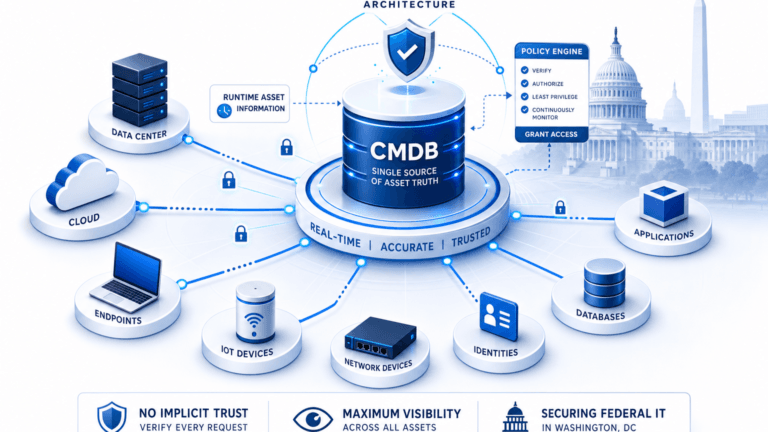
Even so, NAC alone does not close every gap. Many deployments underperform because they enforce policy against incomplete or stale asset data. If your CMDB does not accurately reflect what devices exist on your network, your NAC policies defend a map that no longer matches reality. That gap is where attackers find opportunities.
Cisco Identity Services Engine holds an 18.4% mindshare in the NAC category, down from 25.1% the prior year, according to PeerSpot’s July 2026 NAC category data. The share shift reflects growing buyer interest in cloud-native and agentless alternatives, particularly for environments where IoT and OT device populations make agent-based coverage impractical.
6 Criteria to Evaluate Before You Choose a NAC Solution
Before reviewing vendors, map your requirements against these six criteria.
- Device visibility. Can the solution discover and classify every device type on your network, including IoT, OT, and BYOD?
- Agentless capability. Does it work without deploying agents on every endpoint? Agentless support is critical where agents are impractical, such as on OT floors or medical devices.
- Authentication protocols. Does it support 802.1X, MAC authentication bypass (MAB), and certificate-based authentication?
- Policy granularity. Can it assign access levels by user role, device type, compliance state, and time of day?
- Integration with ITSM and CMDB. Does it connect with your IT service management platform and feed quarantine events into your ticketing workflow?
- Deployment flexibility. Can it run on-premises, in the cloud, or as a hybrid model depending on your environment?
For a broader look at how leading solutions compare, eSecurity Planet’s NAC comparison guide covers evaluation criteria in depth for 2026.
What is the difference between NAC and a firewall? A firewall governs traffic between network segments after a device is already connected. NAC determines whether a device can connect to the network in the first place. They work at different layers: NAC controls entry, firewalls control movement. Together, they form a defense-in-depth architecture where no device gets in without verification and no traffic moves without policy review. |
The 7 Best Network Access Control Solutions for 2026
How did we select these 7 NAC platforms?
We evaluated NAC platforms against six criteria: Gartner Peer Insights market presence, deployment model diversity (cloud-native, on-premises, open-source), agentless capability for IoT and OT environments, ITSM integration depth, policy granularity, and total cost of ownership range. The seven platforms below represent the solutions enterprise IT and security teams most frequently shortlist in 2026.
1. Cisco Identity Services Engine (ISE)
Cisco ISE is one of the most widely deployed enterprise NAC platforms on the market. It pairs authentication, authorization, and accounting (AAA) with posture assessment, guest access, and policy-based segmentation, and it sits at the center of a zero trust architecture as the policy decision point.
Key features
- AAA with 802.1X across wired, wireless, and VPN, plus TACACS+ for device administration
- Endpoint profiling and posture assessment, now backed by AI/ML classification for unknown device clusters
- TrustSec segmentation using Security Group Tags, so access is based on business role rather than IP address
- pxGrid integration that shares context with 50+ Cisco and third-party tools (SIEM, firewalls, threat defense)
Pros
- Deep, granular control and a very large integration ecosystem
- Built directly into the network rather than bolted on
- Strong fit if your switching, routing, and wireless are already Cisco
Cons
- Complex to deploy and tune at enterprise scale; needs dedicated resources
- Total cost of ownership rises sharply without in-house Cisco expertise
- Tiered licensing (Essentials, Advantage, Premier) adds planning overhead
Best for: Cisco-heavy enterprises that need granular policy control across wired, wireless, and VPN.
What is Cisco ISE used for?
Cisco Identity Services Engine (ISE) is an enterprise NAC platform that enforces policy-based access across wired, wireless, and VPN connections using 802.1X authentication, posture assessment, and TrustSec segmentation. It is best suited to Cisco-centric enterprises that need granular role-based access control and have the in-house expertise to manage a complex policy engine.
2. HPE Aruba ClearPass
Aruba ClearPass is a mature, vendor-neutral NAC platform from HPE. The Policy Manager interface gives security teams a single view of every endpoint and its compliance state across wired, wireless, and VPN connections.
Key features
- 802.1X authentication with RADIUS and TACACS+ support, plus a context-based policy engine
- Modular add-ons: Guest for guest portals, Onboard for BYOD, OnGuard for posture and remediation
- Device profiling using DHCP and TCP fingerprinting, with cloud-based Device Insight
- ClearPass Exchange integrations with 140+ security technology partners
Pros
- Runs in multi-vendor environments with no Aruba hardware required
- Avoids the hardware lock-in that limits some competitors
- Scales to tens of thousands of devices and authentications
Cons
- Appliance-based (hardware or virtual), so you size and maintain it yourself
- Full policy model has a learning curve
Best for: Organizations on mixed-vendor infrastructure that want enterprise-grade NAC without vendor lock-in.
What is HPE Aruba ClearPass used for?
HPE Aruba ClearPass is a vendor-neutral NAC platform that enforces 802.1X and RADIUS-based access across multi-vendor infrastructure. Its modular add-ons cover guest access, BYOD onboarding, and posture remediation. Best suited to mixed-vendor environments that need enterprise-grade NAC without committing to a single network hardware vendor.
3. Fortinet FortiNAC
FortiNAC brings network access control into the Fortinet Security Fabric. It profiles devices with both agent-based and agentless methods and responds to policy violations with targeted actions.
Key features
- 21+ profiling methods covering IT, IoT, OT, and IoMT device types
- IoT classification via FortiGuard IoT Service cloud lookup against a database of millions of devices
- Automated response: dynamic VLAN reassignment, quarantine, or SIEM alerts
- Out-of-band architecture (it does not sit inline of traffic) supporting 2,400+ network devices and scaling to 50,000 endpoints per server
Pros
- Behaves as an extension of existing controls for FortiGate users
- Particularly strong IoT and OT visibility
- Multi-vendor support beyond the Fortinet stack
Cons
- Greatest value is realized only alongside other Fortinet products
- Requires both a Control and an Application server, adding setup steps
Best for: Fortinet-centric organizations and environments with significant IoT or OT device estates.
What is Fortinet FortiNAC used for?
Fortinet FortiNAC controls network access using 21+ device profiling methods across IT, IoT, OT, and IoMT environments. It integrates with the Fortinet Security Fabric for automated VLAN reassignment and quarantine responses. Best suited to Fortinet-centric organizations managing significant IoT or OT device populations.
4. Forescout Vistaro Platform
Forescout (formerly Forescout Platform and CounterACT) takes an agentless-first approach, discovering and classifying devices across IT, IoT, OT, and IoMT environments without installing software on endpoints. That makes it especially effective in healthcare, manufacturing, and critical infrastructure.
Key features
- Agentless discovery using 20+ protocols (DHCP, SNMP, RADIUS, SSH, WMI, and more)
- Continuous posture assessment with 802.1X and non-802.1X (MAB) enforcement options
- eyeSegment for network segmentation and eyeExtend for 70+ bi-directional integrations
- Live asset inventory built automatically as a byproduct of discovery
Pros
- Agentless visibility that is hard to match, including for unmanaged devices
- Vendor-agnostic and well suited to OT and medical device environments
- Goes beyond access control into asset management and exposure
Cons
- Modular licensing (eyeSegment, eyeInspect, eyeExtend priced separately) makes budgeting harder, and renewals can rise
- On-premises appliance roots add friction for cloud-first and hybrid identity scenarios
Best for: Environments with large IoT, OT, or healthcare device populations needing agentless coverage across all device types.
What is Forescout used for in enterprise security?
Forescout Vistaro Platform provides agentless discovery and access control across IT, IoT, OT, and IoMT environments using 20+ protocols including DHCP, SNMP, and SSH. It is best suited to healthcare, manufacturing, and critical infrastructure environments where large populations of unmanaged devices cannot support software agents.
5. Portnox Cloud
Portnox is a cloud-native NAC platform that removes on-premises appliances entirely, delivering zero trust network access through a SaaS model from a single cloud console.
Key features
- Fully cloud-delivered NAC with cloud-hosted RADIUS, no appliances or VMs to size
- Passwordless, certificate-based authentication (acts as a CA or integrates with a third party, plus SCEP)
- Continuous device risk scoring rather than a one-time check at connection
- Deploys in days and scales toward 100,000 devices without a professional services engagement
Pros
- Faster rollout than most appliance-based alternatives
- Updates and patches arrive without firmware upgrades
- Low operational overhead for distributed teams
Cons
- SaaS model depends on cloud connectivity (a lightweight on-prem component covers cloud outages)
- Less depth in heavy on-prem OT scenarios than the appliance incumbents
Best for: Mid-market organizations and distributed enterprises that want cloud-native, low-maintenance NAC.
What is Portnox Cloud used for?
Portnox Cloud is a SaaS-delivered NAC platform that eliminates on-premises appliances, offering continuous device risk scoring, certificate-based passwordless authentication, and cloud-hosted RADIUS. Best suited to mid-market organizations and distributed enterprises that want NAC enforcement without the operational overhead of sizing and maintaining appliance infrastructure.
6. Juniper Mist Access Assurance
Juniper Mist Access Assurance brings AI-assisted operations to NAC, built on the Mist AI platform. It provides cloud-managed zero trust access for wired and wireless environments through client-side certificates and identity provider integration.
Key features
- Microservices-based, cloud-native NAC with no on-prem NAC hardware
- X.509 certificate-based auth plus IdP integration (Microsoft Entra ID, Okta, Google Workspace)
- 802.1X and MAC Authentication Bypass for non-802.1X IoT devices
- Marvis AI surfaces root cause for access failures and policy violations; geo-aware routing minimizes latency
Pros
- AI-assisted troubleshooting reduces time spent on manual log analysis
- Natural extension for existing Juniper Mist wireless customers
- Bi-weekly automatic updates with no service downtime
Cons
- Strongest value for organizations already on the Mist platform
- A newer entrant compared with the depth of legacy NAC suites
Best for: Organizations running Juniper Mist wireless that want unified, AI-assisted management and access control in one platform.
What is Juniper Mist Access Assurance used for?
Juniper Mist Access Assurance is a cloud-native NAC platform built on the Mist AI engine. It enforces zero trust access for wired and wireless environments using X.509 certificate-based authentication and IdP integration with Microsoft Entra ID, Okta, and Google Workspace. Best suited to organizations already running Juniper Mist wireless that want unified AI-assisted access management without on-premises NAC hardware.
7. Ivanti Policy Secure
Ivanti Policy Secure is a network access control platform that enforces zero trust access policies across wired, wireless, and remote connections. It sits inside the broader Ivanti Neurons ecosystem, sharing context with endpoint management, patch management, and ITSM workflows on the same platform. For organizations already running Ivanti for endpoint or service management, Policy Secure adds NAC enforcement without introducing a separate vendor relationship.
Key features
- 802.1X and MAC Authentication Bypass enforcement across wired and wireless infrastructure
- Integration with Ivanti Neurons for ITSM, allowing quarantine events to automatically open service tickets
- Endpoint posture assessment tied to Ivanti patch and vulnerability data, so access decisions reflect actual patch state
- Guest and BYOD onboarding with self-service registration flows
Pros
- Native integration with Ivanti ITSM removes the integration overhead that most NAC deployments require
- Posture data is enriched by Ivanti’s endpoint management layer, giving NAC policies more accurate compliance context
- Strong fit for organizations that have standardized on the Ivanti platform
Cons
- Value is strongest inside an Ivanti-first environment; organizations on other ITSM platforms gain less from the native integration story
- Less agentless IoT depth than Forescout for environments with large unmanaged device populations
Best for: Organizations already standardized on the Ivanti platform that want NAC enforcement tightly coupled to their existing endpoint management and ITSM workflows, without adding a separate vendor.
What is Ivanti Policy Secure used for?
Ivanti Policy Secure is a NAC platform that enforces zero trust access across wired, wireless, and remote connections within the Ivanti Neurons ecosystem. It integrates natively with Ivanti ITSM so quarantine events automatically open service tickets, and posture assessments draw on Ivanti patch data for accurate compliance checks. Best suited to organizations already standardized on the Ivanti platform.
| How does NAC support zero trust security? Zero trust requires continuous verification of every user and device before granting access. NAC enforces this at the network entry point by evaluating device health, identity, and compliance posture before allowing any connection. It acts as the policy enforcement layer that zero trust architecture depends on, blocking non-compliant or unrecognized devices regardless of their location inside or outside the network perimeter. |
NAC Solutions Compared: Quick Reference
| Tool | Deployment Model | Agentless? | IoT/OT Support | ITSM Integration | Best For |
|---|---|---|---|---|---|
| Cisco ISE | On-premises / VM | Partial (MAB) | Moderate | ServiceNow, Jira, 50+ via pxGrid | Large Cisco enterprises |
| HPE Aruba ClearPass | On-premises / VM | Yes | Moderate | 140+ partner integrations | Multi-vendor, mixed estates |
| Fortinet FortiNAC | On-premises | Yes | Strong (IT, IoT, OT, IoMT) | Fortinet Security Fabric | Fortinet-centric environments |
| Forescout Vistaro | On-premises / Cloud | Yes (agentless-first) | Strong (IT, IoT, OT, IoMT) | eyeExtend (70+ integrations) | Healthcare, OT, critical infrastructure |
| Portnox Cloud | Cloud-native (SaaS) | Yes | Moderate | API-based | Mid-market, distributed enterprise |
| Juniper Mist Access Assurance | Cloud-native | Yes (MAC-auth bypass) | Moderate | Mist platform | Juniper Mist wireless customers |
| PacketFence | Self-hosted (Linux) | Partial (SNMP) | Basic | Nessus, OpenVAS, Rapid7 | Budget-conscious, Linux-skilled teams |
| Ivanti Policy Secure | On-premises / Cloud | Yes | Moderate | Native Ivanti ITSM, ServiceNow | Ivanti-standardized environments |
The Asset Data Gap That Weakens Most NAC Deployments
Virima is not a NAC platform. It provides the discovery-sourced CMDB and asset intelligence layer that NAC policies rely on for accurate enforcement. The distinction matters: NAC controls who gets in; Virima determines whether the asset inventory that NAC reads is trustworthy. Even the best NAC solution enforces policy against the data it has. When your network inventory is incomplete, stale, or spread across disconnected tools, your policies develop blind spots. A device with no asset record may bypass profiling entirely. An endpoint with outdated ownership data may land in the wrong access tier. Neither error is visible until something goes wrong.
This is where Virima adds value to security and GRC teams running NAC deployments. Virima’s CMDB builds a discovery-sourced asset register that reflects what actually exists across your on-premises and cloud infrastructure (AWS and Azure). Through high-frequency discovery cycles, Virima populates and maintains a live inventory of every configuration item, its relationships, its ownership, and its compliance state.
That inventory directly strengthens your NAC strategy. When your access policies reference an authoritative source of device truth, the gap between what NAC thinks exists and what actually exists closes. For organizations pursuing a successful CMDB implementation alongside a NAC platform, the result is fewer policy gaps, faster forensic investigation, and a more defensible audit trail across compliance reviews.
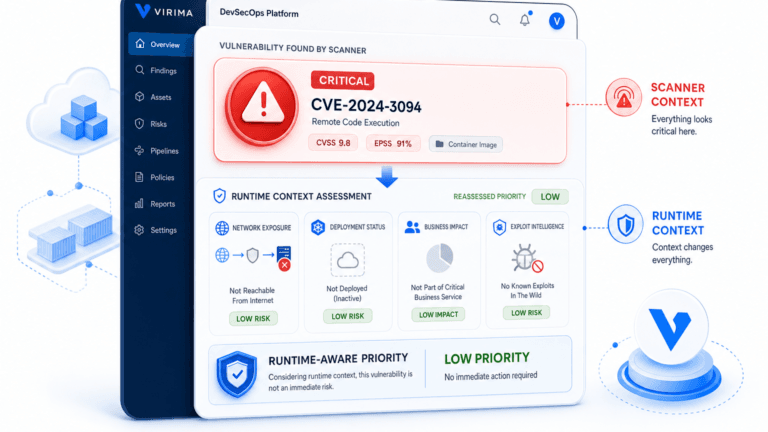
Virima’s cybersecurity asset management capabilities extend this further by tracking configuration drift across your discovered asset population. Combined with ViVID™ service maps, which build dynamic dependency maps of your services, your team can assess the blast radius of a quarantined device before it escalates into a service outage.
For organizations managing HIPAA compliance via CMDB or running change risk intelligence workflows, this context is not optional. When a NAC quarantine fires during a change window, your team needs to know immediately what services that device supports and who owns it. Virima provides that context at the moment it matters.
| How does NAC support HIPAA compliance? NAC supports HIPAA compliance by enforcing access controls at the network entry point, ensuring only authorized and compliant devices reach systems that handle protected health information (PHI). Combined with a discovery-sourced CMDB, NAC enforcement produces the audit trail HIPAA’s technical safeguard requirements demand, including access logs, device compliance state, and quarantine histor |
Teams looking at how IT incident management and CMDB work together to speed up response will find the same principles apply directly to NAC-triggered quarantine events. As organizations move toward CMDB for AI agents and discovery-driven autonomous operations, accurate, policy-aware asset data powers both your NAC strategy and your agentic workflows.
See how Virima delivers Trusted Runtime Truth to security-adjacent use cases and explore why discovery-sourced asset accuracy is the foundation that determines how well every NAC policy actually holds.
| What asset data does a NAC solution need to enforce effective policies? An effective NAC policy engine needs accurate device identity (hostname, MAC address, certificate), current endpoint compliance state (patch level and security software status), user identity from a directory service, device ownership and classification, and service dependency context. When any of these data points are stale or missing, policies develop enforcement gaps that unmanaged or miscategorized devices can reach. |
| How does a CMDB improve NAC policy accuracy? A CMDB provides NAC with discovery-sourced data about what devices exist, who owns them, what services they support, and what their compliance history looks like. Rather than relying on self-reported device data or outdated spreadsheets, NAC policies can reference a continuously refreshed inventory. This reduces blind spots, lowers false-positive quarantine actions, and strengthens the audit evidence that compliance frameworks require. |
Your NAC Policies Are Only as Strong as the Asset Truth Behind Them
Selecting the right NAC solution is one decision. Ensuring that solution has accurate, current, enriched asset data to enforce against is the ongoing work that determines whether your policies actually hold. The teams that get the most from their NAC investment are the ones who close the gap between their network inventory and their enforcement policies before an attacker finds it first.
Virima gives your security and GRC teams that foundation. Discovery-driven, continuously refreshed, and tightly integrated with the ITSM platforms your team already uses, including ServiceNow, Jira Service Management, Ivanti, Halo, and Xurrent. Virima ensures your NAC policies reflect what your network actually looks like, not what it looked like at the last scheduled audit.
| Schedule a demo to see how Virima’s Trusted Runtime Truth strengthens your security posture from the asset layer up. |