HIPAA Compliance via CMDB for Los Angeles Healthcare Teams

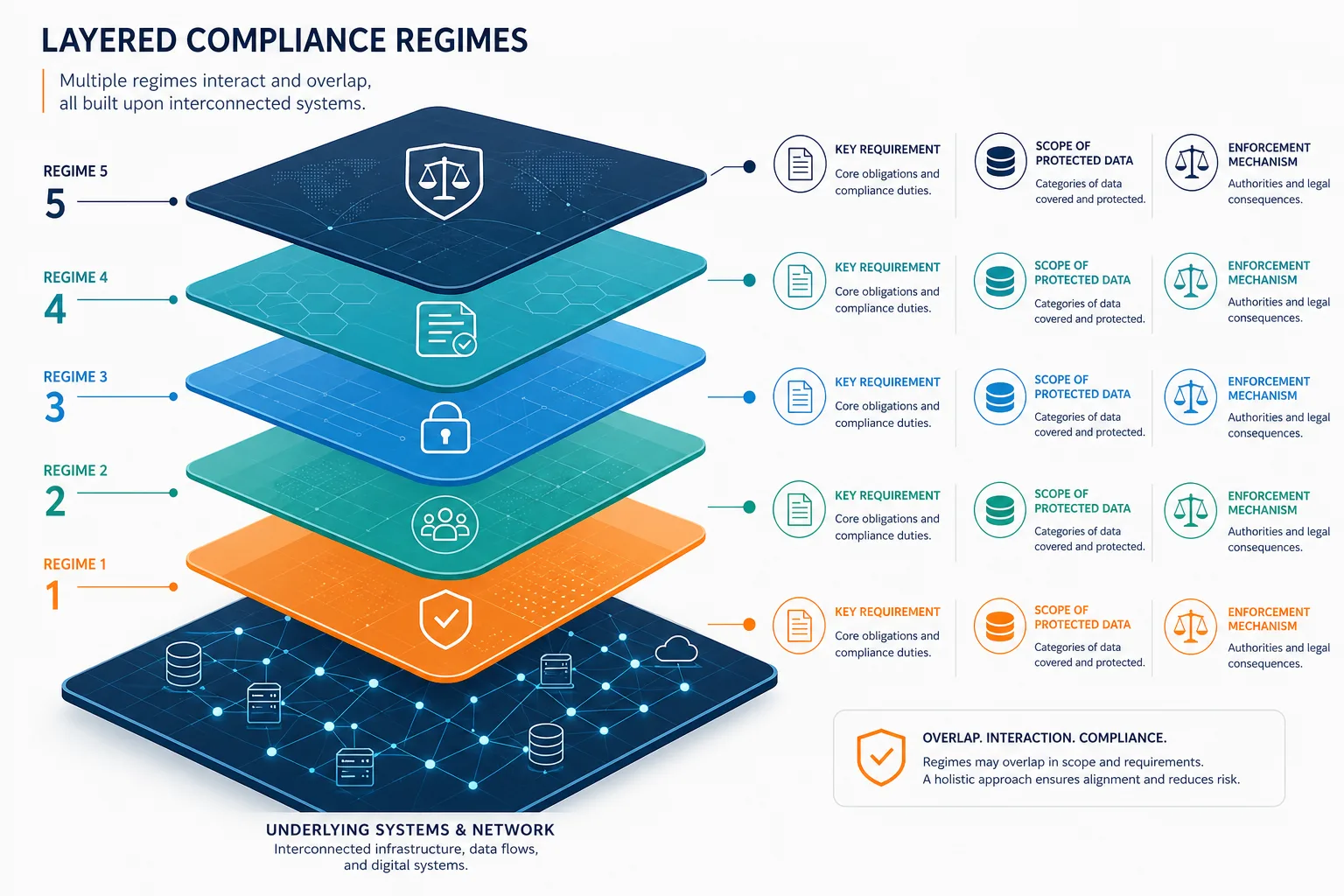
A HIPAA compliance program in Los Angeles doesn’t stop at the HIPAA Security Rule. It has to account for at least four additional regimes layered on top of the federal floor, each with its own scope, its own timeline, and its own trigger for what counts as a reportable disclosure. California’s Confidentiality of Medical Information Act (CMIA) predates HIPAA by more than 15 years and covers medical information more broadly than HIPAA’s own definition.
The Patient Access to Health Records Act (PAHRA) compresses HIPAA’s 30-day access-request window down to five. CCPA/CPRA reaches the non-medical data, portal activity, marketing lists, website tracking, that sits outside HIPAA and CMIA’s definitions of protected information entirely. Depending on the organization, Cal/OSHA and DMHC contract requirements add further layers on top of that.
None of these are substitutes for HIPAA compliance. They’re additions to it, and a health system operating in Los Angeles has to satisfy all of them at once, for the same underlying data, often through the same systems.
What HIPAA compliance in Los Angeles actually has to cover
The HIPAA Security Rule requires a comprehensive risk analysis and an ongoing risk management program, the federal baseline every covered entity and business associate has to meet regardless of state. CMIA adds a second layer that a Los Angeles compliance program has to satisfy simultaneously: written authorization before nearly any disclosure of medical information, a broader definition of what counts as protected, and, unlike HIPAA, a private right of action. A patient can sue directly for a negligent disclosure under CMIA, recovering $1,000 in nominal damages per violation without proving actual harm, up to $250,000 for willful violations. HIPAA gives that enforcement power only to OCR. CMIA gives it to every patient.
PAHRA tightens HIPAA’s own patient-access requirement specifically, a Los Angeles provider has five days to respond to an access request, not the 30 HIPAA allows. And CCPA/CPRA governs a category of data a HIPAA compliance program often doesn’t touch at all: the non-medical patient data collected through a hospital’s website, patient portal, or marketing systems, tracking pixels, appointment-booking analytics, contact lists. A hospital can be fully HIPAA-compliant on its clinical systems and still be exposed under CCPA on its public-facing digital footprint.
A live test of how far these layers actually reach
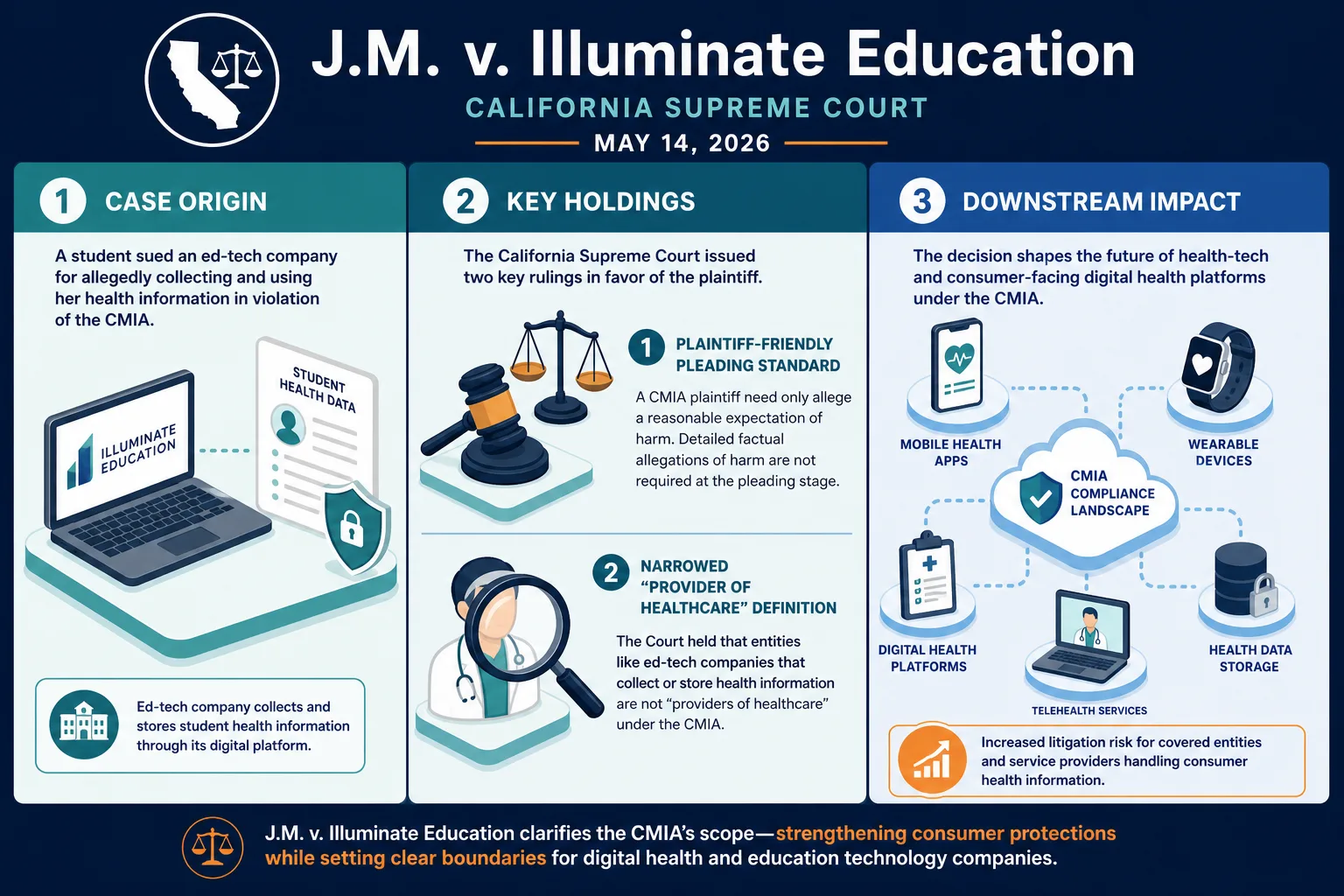
On May 14, 2026, the California Supreme Court ruled in J.M. v. Illuminate Education, Inc., a case testing exactly where CMIA’s boundary sits. The court adopted a plaintiff-friendly standard for pleading a CMIA breach-of-confidentiality claim, while simultaneously narrowing the statute’s definition of who counts as a covered “provider of healthcare.” That’s not a settled question resolved once and for all, it’s a live boundary that courts are actively redrawing, in a case that originated outside traditional healthcare (an ed-tech company handling student health data) and is expected to affect how CMIA applies to health-tech and consumer-facing digital health platforms going forward.
For a Los Angeles health system, that ruling is a reminder that CMIA’s reach isn’t something a compliance program can determine once and file away. It’s a boundary that shifts as courts interpret it, applied against whatever systems and vendor relationships the organization actually has at the time.
What goes wrong when the underlying inventory is incomplete
Every one of these regimes assumes an organization can answer a basic question before applying the rule: does this system touch data the law covers. A PAHRA access request can’t be routed and answered within five days if nobody can quickly confirm which system holds the record, or that the record exists at all. A CMIA authorization gap doesn’t get caught by a compliance review that only checks the interfaces someone remembered to document, an integration nobody logged doesn’t get reviewed for whether the right authorization was captured before it started moving data. A patient-facing app that should be evaluated under CCPA, or under CMIA’s extended reach to consumer health platforms, doesn’t get assessed at all if it was stood up by a marketing team or a vendor outside IT’s visibility, it simply doesn’t appear on the list of things anyone is checking.
None of these are failures of any single law’s design. HIPAA, CMIA, and PAHRA each describe a clear, specific obligation. The failure sits earlier: a compliance review can only evaluate the systems it knows about. A system that exists but was never discovered, catalogued, or connected to a formal record isn’t out of scope, it’s invisible to the process that would have put it in scope. That gap doesn’t surface as a specific violation until an access request goes unanswered, a disclosure gets challenged, or a lawsuit forces the question, at which point the organization is explaining, after the fact, why a system nobody knew existed was handling protected data all along.
Where an accurate asset inventory fits
A HIPAA risk analysis is supposed to start from a complete, current picture of where electronic protected health information lives and how it moves through an organization’s systems. In Los Angeles, that same inventory is what makes it possible to ask the follow-on questions California’s other regimes require: does this system also fall under CMIA’s broader definition, does it carry the non-medical data CCPA governs, would a PAHRA request touching this system actually get answered inside five days. None of that evaluation can happen for a system that isn’t in the inventory in the first place.
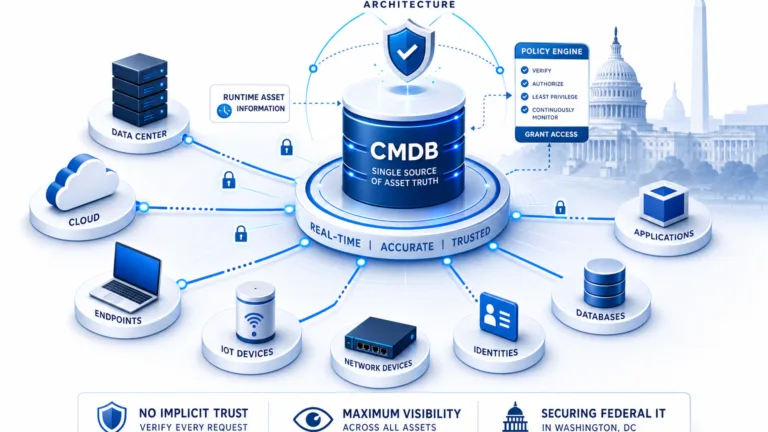
A CMDB’s contribution here is upstream of any single regime, not a substitute for satisfying one. Discovery and service mapping produce the record of what exists and what connects to what, kept current through scheduled discovery rather than reconstructed from memory during an audit.
That record doesn’t determine whether a disclosure was properly authorized, classify what data moves through a given connection, or decide who’s allowed to access it, those remain policy, data-classification, and access-control questions sitting elsewhere. What it does is make sure the systems carrying regulated data are known and reviewable before any of California’s four additional regimes, or HIPAA itself, can be evaluated against them.
The layer every regime depends on
Los Angeles doesn’t give a HIPAA compliance program one set of requirements to satisfy. It gives it five, running simultaneously against the same underlying systems, with CMIA’s boundaries actively being redrawn by California courts.
What every one of these regimes depends on, and none of them names directly, is an organization’s ability to say with confidence what it actually has. That inventory doesn’t resolve a CMIA authorization question or answer a PAHRA request on its own. It’s the layer that has to exist before any of those questions can be answered at all.