Why a well-structured CMDB schema is essential for cloud and hybrid IT environments

Are you managing a cloud or hybrid IT environment and struggling to figure out how to implement a well-structured CMDB schema? Or maybe you’ve already taken the first steps, but unsure how to fine-tune your schema to meet the demands? Perhaps you’ve set up a CMDB, but keeping the data up to date feels like a never-ending task?
If any of this sounds familiar, you’re in the right place. We’ll discuss why a well-organized configuration management database schema is essential for effective IT management. You’ll also learn how Virima can help you maintain a reliable CMDB that scales with your needs.
Let’s start by breaking down why a structured CMDB is so crucial in cloud and hybrid environments.
Overview of CMDB schema
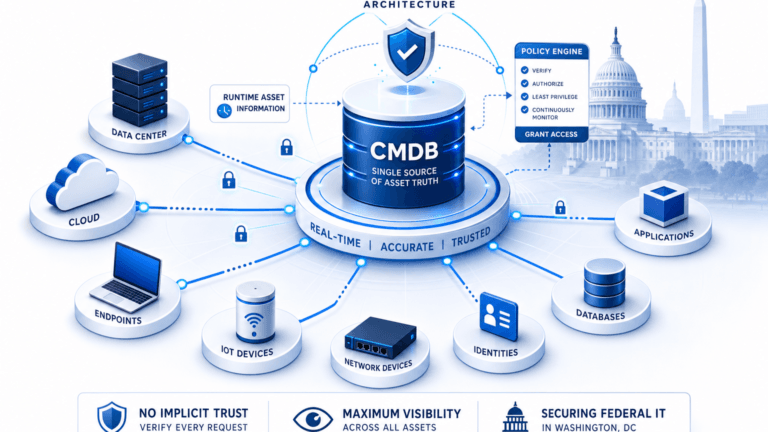
A Configuration Management Database (CMDB) serves as a single source of truth for an organization’s IT assets. It stores detailed information about all IT components, including hardware, software, systems, and their connections. The ITIL CMDB schema organizes this data into structured tables and rows, thus, making data management and retrieval easy.
An object CMDB schema serves as the core of your CMDB. It’s a compilation of object types, their attributes, and the connections between them. This also includes configuration items like roles, icons, statuses, and automation rules.
Consider CMDB schemas as blueprints that structure every detail precisely in one location. You can further maintain multiple object schemas and reference their objects within your issues and requests.
Key components of ITIL CMDB schema
- Configuration items (CIs): CIs are the main elements in a CMDB, such as servers, applications, network devices, and staff. Each CI has attributes like type, owner, status, as well as links to other CIs.
- Relationships: The schema shows how different CIs connect and rely on each other. This insight is also essential for assessing how changes affect the IT setup.
- Attributes: Each CI contains detailed attributes, including its location, version, ownership history, and operational status. These details also make it easier to understand and manage each item.
Why a well-structured CMDB schema is essential for cloud and hybrid IT environments
A well-structured ITIL CMDB schema is essential for effective IT management. With the right CMDB schema setup, you improve incident response, cybersecurity, compliance, and planning across IT processes. Let’s look at how a clear CMDB schema supports cloud and hybrid IT success.
Understanding the role of a CMDB schema
A CMDB schema defines how information is organized in the CMDB. It also specifies the types of objects, their attributes, and their relationships among Configuration Items (CIs). It includes the components like servers, applications, and network devices in an IT environment. This schema provides structure, thus, ensuring that each CI accurately categorizes and meaningfully connects.
- Enhancing incident management
Incidents happen, especially in cloud and hybrid environments. A structured ITIL CMDB schema streamlines incident response by organizing CIs and their relationships. With data consolidated, IT teams can trace root causes, assess impacts, and resolve incidents quickly. This configuration management database schema improves reliability by linking incidents to affected CIs and speeding up response times.
- Strengthening change management
Change management is crucial, especially for cloud and hybrid setups. A well-structured CMDB schema tracks dependencies and assesses risks of proposed changes. Moreover, mapping relationships among CIs helps identify conflicts, minimizes disruptions, and reduces the risk of failed changes.
- Improving cybersecurity
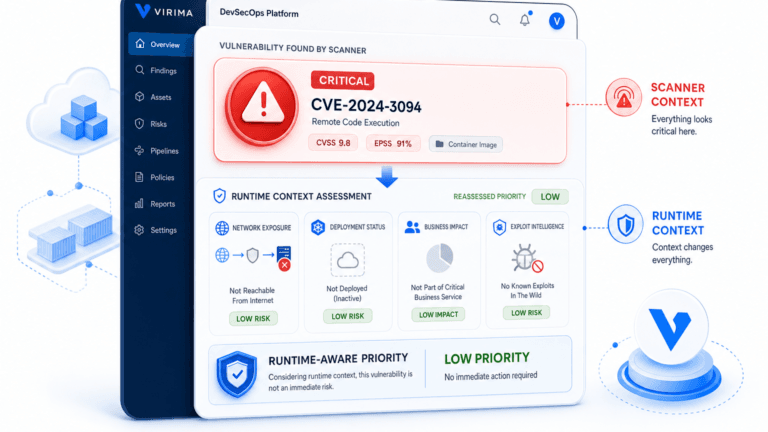
Effective cybersecurity requires visibility into IT assets and configurations. A well-organized CMDB schema maintains an accurate record of assets, helping security teams spot unauthorized devices or vulnerabilities. Integrated tools leveraging CMDB data enable targeted threat remediation by prioritizing vulnerabilities based on asset criticality.
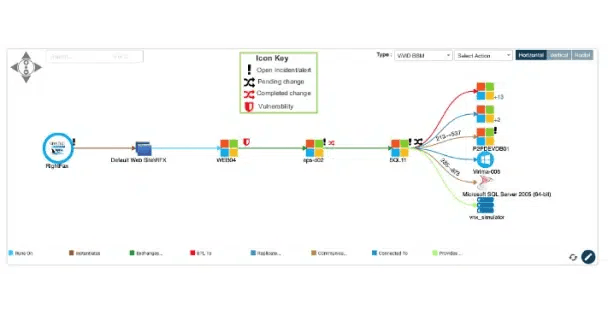
Virima CMDB schema enhances security by adding an extra layer to existing vulnerability management tools.
- Supporting compliance and reporting
Compliance demands strong control over configurations with records that demonstrate effective CMDB management. A structured ITIL CMDB schema ensures a complete asset inventory and configuration history. Consequently, it makes it easy for auditors to verify compliance. Further, tracking asset ownership and changes also ensure adherence to regulatory standards.
- Facilitating IT asset management
Accurate IT asset management relies on real-time data about each asset’s status. With a structured CMDB schema, IT teams can monitor asset condition, usage, and lifecycle. Altogether, it enhances resource allocation, cost control, and compliance. In hybrid environments, the CMDB schema centralizes asset data, thus, providing a unified view of all assets.
- Improving planning and capacity management
For future planning, a comprehensive resource map is essential. A CMDB schema offers insights into current resources and relationships, thus supporting data-driven infrastructure decisions. IT leaders can also assess server and network performance, allocate resources optimally, and plan for growth with confidence.
How Virima enhances CMDB schema management for cloud and hybrid IT
Here’s how Virima elevates CMDB schema management, making it the top choice for a streamlined IT environment.
Flexible CMDB schema design
Many CMDB solutions are rigid, making adjustments challenging as infrastructure changes. Virima’s flexible approach lets you easily add, remove, or adjust CMDB schema elements to match your IT environment. This adaptability reduces the cost and complexity of managing configurations as systems evolve.
Effortless customization for cloud and hybrid IT
Virima enables seamless configuration management database schema customization. Whether migrating to the cloud or managing hybrid systems, you can customize schemas to match your unique IT services. This alignment with cloud and hybrid systems keeps your CMDB relevant, thus, supporting better decision-making and faster troubleshooting.
Easy modification for ongoing adaptation
Virima understands that as technology and business needs change, your CMDB must adapt. Its configuration management database schema features make it easy to create or modify schemas as infrastructure grows. You have full control to keep your CMDB aligned with evolving needs, thus, ensuring scalability and efficiency throughout.
Additional benefits
- Dynamic schema management: Modify or create new schemas to suit specific needs without the typical hassles.
- Intelligent automation: Automate data updates and use business rules to keep your CMDB accurate without duplicating or overwriting data.
- Automated discovery and maintenance: Automated asset discovery keeps configuration data accurate, thus, reducing manual work and errors.
- Virima Visual Impact Display (ViVID™): ViVID™ offers dynamic visuals of CMDB relationships. Consequently, it helps IT teams see dependencies and make better decisions.
- Integration capabilities: Seamlessly integrates with ITSM platforms like ServiceNow, Jira Service Management, HaloITSM, Ivanti etc. It also provides a unified view of assets, including AWS and Azure cloud data.
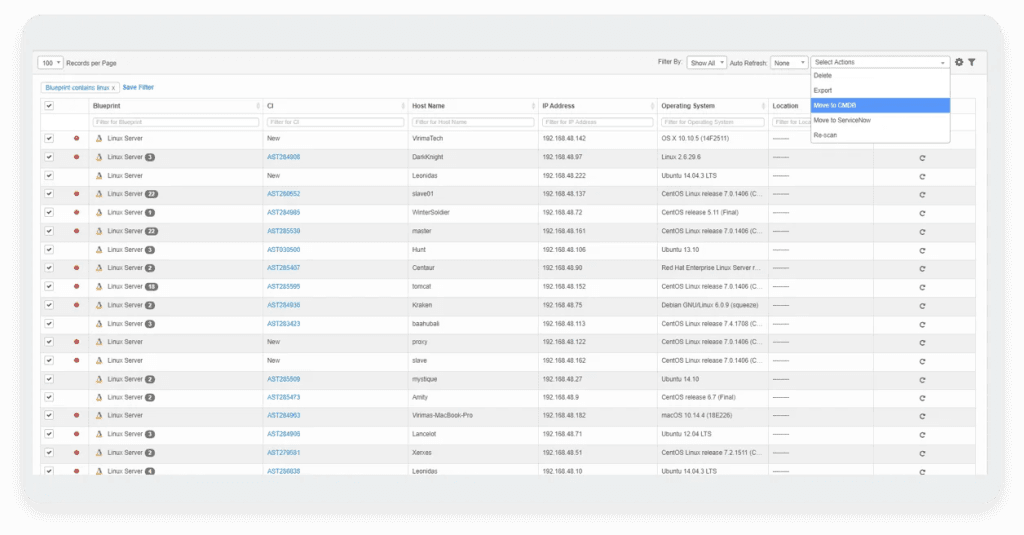
Virima CMDB schema’s ITSM integration capabailities
- Blueprints for rapid deployment: Over 120 predefined blueprints allow fast setup of configuration items, so you don’t start from scratch.
- Support for hybrid IT environments: Track as well as manage assets across on-premises and cloud resources in hybrid setups.
Why Virima is the best choice for adaptive CMDB schema solutions
A clear CMDB schema is vital for managing cloud and hybrid IT environments. It provides visibility and control over assets, configurations, and dependencies, reducing risks and boosting efficiency. Traditional CMDB schemas can feel rigid and hard to modify, but Virima changes that with unmatched flexibility. Our solution lets you quickly adjust existing schemas or build new ones tailored to your unique environment.
With Virima, you can add or remove elements to ensure your CMDB evolves with your IT needs. Choose Virima for a customizable CMDB solution and gain complete control of your IT management.
Request a demo today to explore how Virima can help you with CMDB schema management!