State Verification and Drift Detection When Agents Remediate Infrastructure

An auditor samples a closed remediation ticket and compares it with the live configuration. If the two differ, the owner of the Configuration Management Database (CMDB) explains why. Automated remediation closes tickets faster than anyone can confirm the result, so those conversations come up more often.
Every remediation creates two versions of the truth: the state the automation reports and the state the estate holds. Teams that never run state verification after a remediation absorb those drift detection failures silently, and the CMDB is where they surface last.
Why a completed remediation does not confirm the final state
A remediation workflow records that it sent a command and received an acknowledgment. That describes the workflow and says little about what the target system holds afterward. Gartner surveyed 782 infrastructure and operations leaders in November and December 2025. Only 28% of AI use cases in IT infrastructure and operations fully met ROI expectations, while 20% failed outright. Teams that assume an automated job did what it reported inherit that same gap between intended and actual outcomes.
Four common causes separate a successful job from a correct outcome:
- A configuration management tool reverts the change on its next run.
- A node was unreachable, and the job logged a retry that never completed.
- The fix applied to the running instance but not to the image used to build it.
- A second automation altered the same setting minutes later.
Each case leaves the ticket resolved while the system holds a different value. NIST SP 800-128 treats monitoring as its own phase of security-focused configuration management, after change control.
What state verification compares
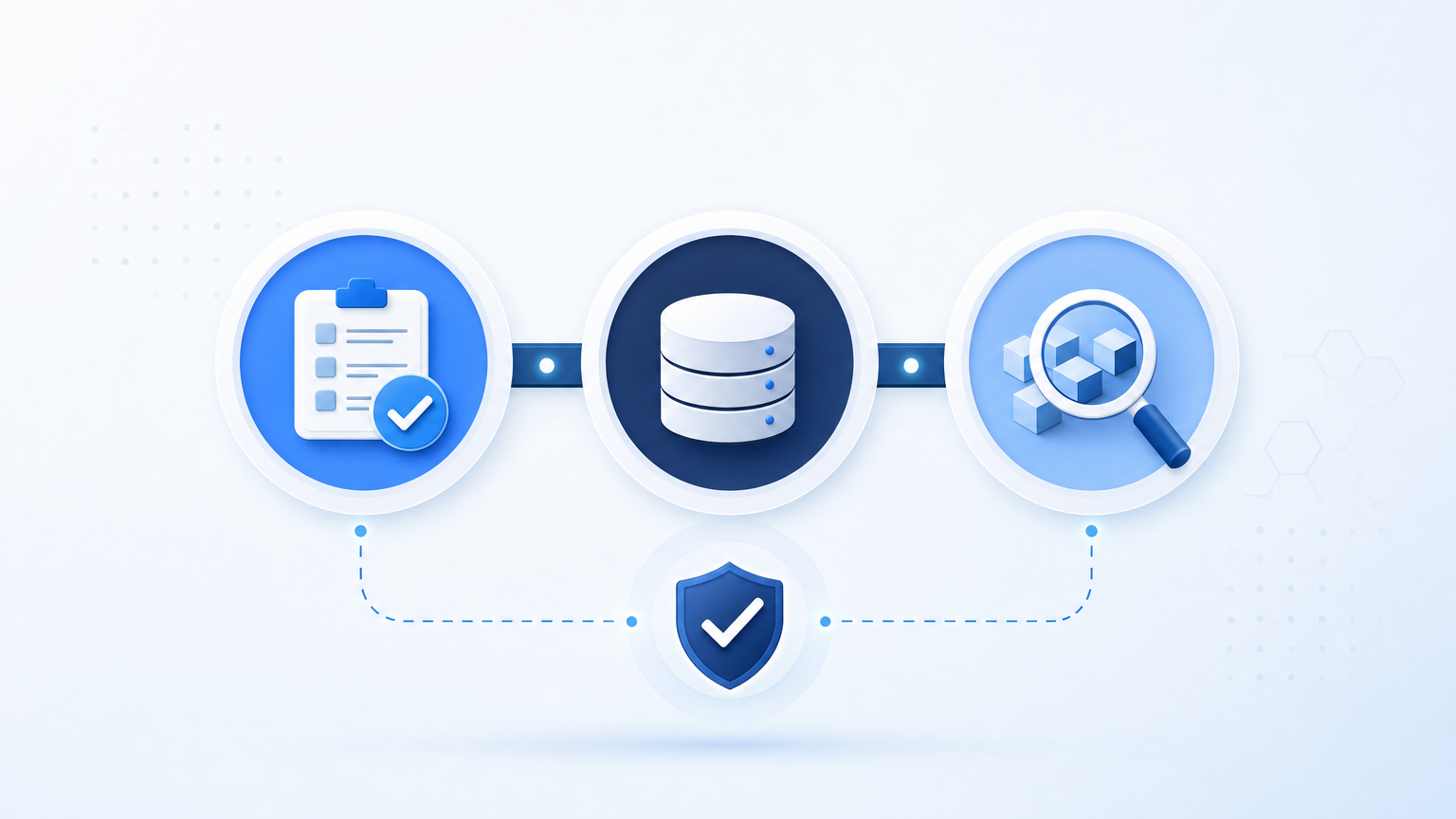
State verification checks three values for every configuration item (CI) that a remediation touches:
- Intended state is the value the remediation was meant to produce.
- Recorded state is the value the CMDB or asset record holds.
- Observed state is the value a discovery cycle reads from the target.
Drift exists whenever the three values differ, and the pattern shows where the failure sits. If observed matches intended but recorded differs, the CMDB update failed. If recorded matches intended but observed differs, the remediation did not hold.
The observed value must come from a source independent of the remediation tooling. A job that verifies its own work reads the same interface that made the change. A scheduled discovery cycle reads the target directly, which makes it a usable second opinion.

What is the difference between recorded state and observed state for a configuration item?
Recorded state is the value a Configuration Management Database (CMDB) holds for a configuration item (CI). Observed state is the value discovery last read from the target. To test your own environment, compare both values for five CIs that automation changed last week. Any mismatch marks a failed update or a remediation that did not hold.
Matching records on durable identifiers
Verification fails when the comparison pairs the wrong records, and hostnames are a frequent cause. Remediation workflows rename, rebuild, and re-provision machines, so a hostname can move to a different host overnight.
Use the serial number for physical hardware and the cloud instance ID for AWS and Azure workloads. Both identifiers survive renames and rebuilds alike. A hostname-keyed comparison can report a clean match between two different machines, which is worse than a mismatch.
Virtual machines on VMware and Hyper-V carry platform identifiers, and those belong in the join as well. Record the identifier on the CI at first discovery so every later cycle compares like with like.
How drift detection works on a discovery schedule
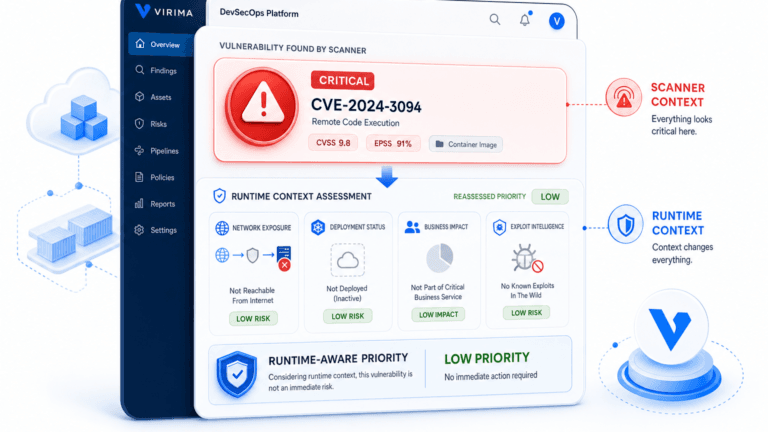
Drift detection runs the comparison on a schedule instead of waiting for someone to notice a problem. Each scheduled discovery cycle reads the observed state of in-scope CIs and compares it with the recorded state. Every difference becomes a drift finding. Virima’s own analysis of CI drift between discovery scans shows how quickly that gap widens the longer a cycle runs.
The cycle interval sets how long drift can go unseen. A remediation that lands right after a cycle finishes stays unverified until the next one runs. Teams that remediate heavily should schedule discovery more often for the CIs that change most.
How long can a remediation go unverified between discovery cycles?
A remediation can stay unverified for as long as the discovery interval. The next cycle is the first independent reading after the change. Under a weekly schedule, that window reaches seven days. Compare your interval with the time an auditor or change board needs before it trusts a configuration item (CI) record.
A drift finding helps only when it carries context:
- The CI.
- The differing attribute.
- The last cycle that confirmed the old value.
- The remediation job that touched it.
Without the job reference, the CMDB owner searches logs to find the cause.
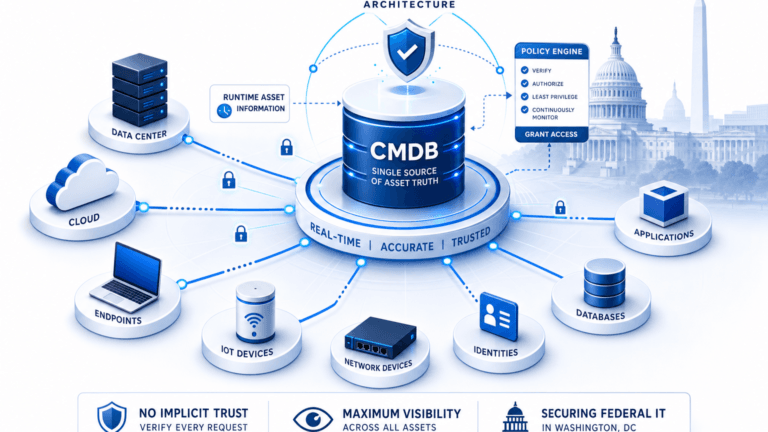
Virima’s discovery-sourced Trusted Runtime Truth gives CMDB owners the independent reading to check every remediation against.
Drift in ServiceNow import sets
ServiceNow CMDB reconciliation runs through import sets, transform maps, and the Identification and Reconciliation Engine (IRE). A transform map writes staged rows into CMDB tables, and the IRE then decides which source may update which attribute.
Drift enters at three points in this path:
- A staged row holds the corrected value, but a transform error or ignored field leaves the CI untouched.
- A source with lower precedence for an attribute loses to an older value, and the correction is discarded.
- A later scheduled import from another source restores the stale value.
To detect these, compare the CI attribute after each import against the value discovery observed. Add import set row status counts to every verification cycle. A job that reports success while holding skipped or errored rows is a drift source. Virima’s comparison of CMDB health scores against discovery findings walks through why a passing completeness score can still hide this exact failure mode.
Precedence rules need review before remediation volume makes the question urgent. The same principle applies to any CMDB fed by several sources.
Drift in Jira Assets CMDB objects
Jira Assets stores configuration data as objects inside a schema, with attributes defined per object type. Imports, automation rules, and direct edits can all write to the same object.
Four patterns recur in Jira Assets environments:
- A rebuilt server imports as a new object, and the old object keeps its last known attributes.
- An import maps only some attributes, so the remediated field never updates.
- An analyst corrects an attribute by hand, and the next scheduled import restores the earlier value.
- Objects that reference a replaced asset keep pointing at the stale record.
Start verification with a count of objects per object type against observed inventory. Then compare the attributes that a remediation targets. A count mismatch flags duplicate or orphaned objects, and an attribute mismatch flags a failed or overwritten update.
Teams that run ServiceNow, Jira, and other IT service management (ITSM) platforms need the same comparison logic applied to each. Virima shares discovery-sourced CI data with them through its ITSM platform integrations, so the observed value stays aligned across tools.

A verification workflow for each remediation
Build the verification step into the remediation process so it runs every time.
- The remediation job writes its identifier and intended state to the change record before it runs.
- The next discovery cycle reads the touched CIs directly and returns the observed state.
- The comparison checks intended, recorded, and observed state on a serial number or cloud instance ID.
- Each CI is labeled verified, record stale, or remediation not held.
- Record-stale results go to the CMDB owner, and not-held results return to the remediation owner with evidence.
- The change ticket closes only after the comparison passes or an exception is accepted.
Closing the ticket on verification makes ticket status reflect the estate and not only the job log.
What should happen before a remediation ticket closes?
A remediation ticket should close only after a discovery cycle confirms the configuration item (CI) holds the intended value. Earlier closure hides disagreement between the Configuration Management Database (CMDB) and the estate until an audit sample exposes it. To test this, list tickets closed last month with no discovery timestamp after the close time.
Measuring whether verification works
Track these four measures of CMDB data accuracy over time:
- The share of remediated CIs verified within one discovery cycle.
- The count of record-stale findings per month, grouped by source system.
- The count of remediations that did not hold, grouped by job type.
- The age of the oldest open drift finding.
A falling record-stale count shows that import and reconciliation fixes work. A stubborn not-held count points to a remediation job that needs redesign. These measures give a CMDB owner evidence for the audit team before anyone asks. Virima’s cost analysis of CMDB inaccuracy breaks down what a stubborn not-held count costs an organization that never corrects it.
Start with the CIs your automation touches most — OS-patch or firewall-rule remediation jobs that run weekly are a practical first target — then widen scope to the rest of the estate as the record-stale count falls.
Ranking drift findings by service impact
A list of drift findings does not say which to fix first. A mismatch on a test server and one on a payment database look identical in a table.
ViVID™ service maps tie each CI to the business services that depend on it. This works once service definitions arrive by spreadsheet import, manual entry, or an integration. Review findings on CIs behind customer-facing services first.
Frequently Asked Questions
How do you verify that an automated fix actually changed the system?
Compare three values for each configuration item: the intended state, the state the CMDB records, and the state an independent discovery cycle observes. A fix is verified when all three match. Verification should read the target directly and not rely on the remediation tool’s own success message.
What causes configuration drift after remediation?
Common causes include a configuration management tool reverting the change and an unreachable node that never received it. A second automation overwriting the setting or an import restoring an older value has the same effect. Each leaves the record and the live system disagreeing while the ticket reads resolved.
Why is hostname a poor key for matching CMDB records?
Rebuilds and renames reassign hostnames between machines, so a comparison can pair two different hosts and report a false match. Serial numbers for hardware and cloud instance IDs for AWS and Azure workloads persist across those events. Both give a reliable join across rebuilds.
Does Virima integrate with ServiceNow and Jira?
Yes, Virima provides bi-directional CMDB sync with ServiceNow and pushes discovered CIs and relationships into the ServiceNow CMDB. For Jira, Virima links assets and CIs to Jira issues and projects.
Does Virima keep a history of changes to configuration items?
Yes, Virima tracks changes to CI records in an audit trail for compliance and governance. That history gives a reference point when you compare a remediation outcome with the previous recorded state.