The Real Cost of CMDB Inaccuracy: A TCO Analysis

CMDB inaccuracy is well understood in IT operations circles. In the boardroom, it almost never shows up as a line item.
That gap is expensive.
When your configuration management database is stale — even by 20 to 30 percent — the financial consequences compound quickly. Failed to change windows. Extended outages. Overpaid software licenses. Bloated cloud spend. Audit findings that cost more to remediate than the original tool investment ever did. None of these appear on a CMDB cost optimization report by default. But they should.
This analysis walks through three categories where CMDB inaccuracy generates measurable business cost — and gives you a framework to quantify the gap for your CFO and board.
Why CMDB Accuracy Is a CFO-Level Issue
Gartner has noted that only 25 percent of organizations extract meaningful value from their CMDB investments. That is a striking number. Most organizations have made significant platform investments — either in a standalone CMDB or embedded within their ITSM suite. Yet the data inside those systems drifts constantly.
Industry research puts the average CMDB accuracy at roughly 60 percent. Consider what that means in practice. For every ten decisions your IT team makes using CMDB data — change approvals, incident triage, license audits, capacity planning — four of them rest on information that is wrong or incomplete.
CMDB cost optimization is not a configuration management project. It is a financial governance decision. Until it reaches an executive agenda with a dollar figure attached, the cost accumulates invisibly — quarter after quarter.
Cost Category 1: Operational Downtime and Extended MTTR
Failed Changes That Were Never Caught
Change management depends on knowing what is connected to what. A stale CMDB breaks that visibility chain before the change window even opens.
When a systems engineer approves a change to a server without knowing that the server hosts three production services, the risk assessment is incomplete. The change goes through. Something breaks. The team spends hours tracing the impact instead of resolving it.
ITIC’s 2024 Hourly Cost of Downtime research found that hourly downtime now exceeds $300,000 for 90 percent of midsize and large enterprises. For 41 percent of enterprises, that figure climbs to $1 million or more per hour.
A single failed change that causes two hours of downtime costs between $600,000 and $2 million or more. That is not a theoretical risk. For any organization with more than a thousand configuration items and a manually maintained CMDB, it is a likely quarterly event.
For CMDB cost optimization to land with finance, you need a dollar value attached to failed changes. Pull your ITSM data from the last 12 months. Count change-related incidents where the impact was broader than anticipated. Multiply the extended resolution time by your organization’s hourly downtime rate. The resulting number will get attention.
Longer Mean Time to Resolution
When an incident hits, every minute has a cost. Your engineers need accurate dependency maps — which applications run on which servers, which services share infrastructure, and what changed in the last 72 hours. Shortening that resolution window is a measurable priority, and organizations focused on how to reduce MTTR find that CMDB accuracy is one of the most impactful levers.
A stale CMDB forces manual investigation. Engineers check spreadsheets. They call colleagues. They escalate to senior staff who know the environment from institutional memory. That tribal knowledge approach routinely adds 30 to 90 minutes to every major incident response.
If your organization handles 50 major incidents per year and each runs 45 minutes longer because of CMDB gaps, that is over 37 hours of senior engineer time wasted. Add the extended customer and revenue impact during each window, and the number grows significantly beyond the labor cost.
Cost Category 2: Financial Waste at Scale
Software License Overpayment
This is the most underestimated cost category in any CMDB cost optimization exercise.
When your software asset inventory is incomplete, you cannot reconcile entitlements against actual deployments. This is where IT asset management discipline becomes essential. You renew licenses based on prior headcount. You pay maintenance on software that was decommissioned 18 months ago. You miss true-up obligations because unknown deployments exist outside what the CMDB tracks.
Industry research indicates enterprises waste an average of $18 million per year on unused SaaS licenses. Roughly half of all purchased software licenses sit idle at any given time. That waste grows every year as enterprise SaaS portfolios expand.
For a mid-sized organization with a $10 million annual software spend, a 20 percent overpayment is $2 million per year in avoidable cost. That is a significant budget line for any CFO — and the fix starts with an accurate, continuously maintained software asset inventory, which starts with an accurate CMDB.
When you know every software deployment across every managed device, you have the data to right-size contracts, reclaim unused licenses before renewal cycles close, and eliminate shelfware systematically rather than reactively.
Over-Provisioned Cloud Spend
Cloud environment waste is now a visible board-level concern. Research from Harness projects that global enterprises will waste $44.5 billion on cloud infrastructure in 2025, driven largely by provisioning decisions made without visibility into actual utilization.
The CMDB sits directly upstream of this problem. Teams that lack accurate data about existing workloads over-provision to manage risk. Reserved instances go unused. Resources sit idle. Spend is attributed incorrectly because tagging is inconsistent and resource-to-service mapping is incomplete.
CMDB cost optimization in cloud environments requires real-time automated inventory of cloud resources mapped to business services. Without that mapping, your FinOps program operates on incomplete inputs and delivers incomplete results.
A single poorly mapped cloud cluster can represent $50,000 to $500,000 in annual waste, depending on workload scale. Multiplied across a hybrid environment, the numbers justify significant investment in accuracy.
Cost Category 3: Risk and Compliance Exposure
Audit Findings That Carry Price Tags
Regulated industries treat CMDB accuracy as a compliance control — not an IT preference. Organizations that treat IT audits as a continuous process rather than a periodic scramble avoid the worst remediation costs.
SOX requires documented evidence of change management processes and access controls tied to specific systems. HIPAA mandates accurate inventories of systems that store or process protected health information. ISO 27001 requires a maintained, current asset register. When auditors find gaps — assets not tracked, relationships not documented, changes not linked to approved records — remediation costs follow immediately.
External consultants. Emergency documentation sprints. Control attestation work that should have been routine. These costs appear on a P&L even though they trace directly back to stale CMDB data.
HIPAA violations carry penalties ranging from $100 to $50,000 per record per violation. A CMDB that misses 200 systems touching PHI data is not a configuration management oversight. It is a legal liability. CMDB cost optimization in regulated environments is a risk management discipline, and the cost of maintaining accuracy is a fraction of the cost of remediating a material audit finding.
Security Gaps No One Can See
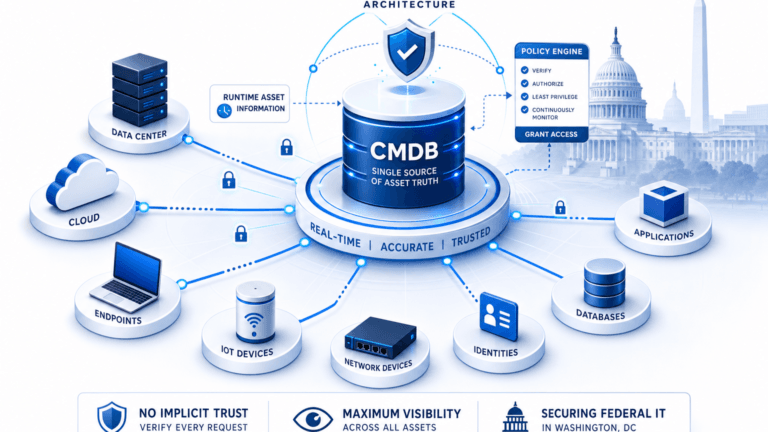
Every asset not in your CMDB is an asset your security team cannot manage. Without reliable IT discovery, unmanaged endpoints miss patch cycles. Shadow IT infrastructure bypasses vulnerability scanning. Rogue cloud accounts fall outside access policy enforcement.
IBM’s 2024 Cost of a Data Breach report put the average breach cost at $4.88 million. Asset visibility gaps are a direct contributor. You cannot respond to a threat on an asset you do not know exists.
An accurate, continuously updated CMDB is one of the most cost-effective security controls available — not because it prevents breaches directly, but because it ensures the tools that do the prevention work are operating with complete asset context.
How to Build Your CMDB Business Case
Most IT and business leaders know intuitively that CMDB inaccuracy costs money. The challenge is quantifying it in a format that gets CFO and board-level attention.
Here is a straightforward five-step framework:
Step 1: Baseline your current CMDB accuracy
Run a sample audit of 200 to 500 configuration items. Compare what is recorded in the CMDB against what a discovery scan finds in the environment. Calculate the gap. Most organizations find 30 to 50 percent drift.
Step 2: Quantify operational cost
Pull 12 months of change-related incidents from your ITSM system. Identify incidents where broader-than-expected impact occurred. Apply your organization’s hourly downtime rate to the extended resolution time across those events.
Step 3: Audit software and cloud spend
Request a license reconciliation from your SAM tool or directly from your top five software vendors. Identify licenses paid for but not deployed. Identify cloud resources not mapped to any current business service. These represent direct savings once accuracy improves.
Step 4: Assess your compliance exposure
Work with your compliance team to identify audit findings from the last two cycles that traced back to asset data quality gaps. Assign a cost to remediation and any external consulting fees incurred.
Step 5: Model the ROI
A CMDB cost optimization investment typically returns 3x to 5x in year one through downtime reduction, license reclamation, and avoided compliance remediation. Build the model with conservative assumptions and present it with a range. Executives respond to numbers, not narratives.
This five-step exercise is repeatable. Run it annually. Accuracy improvements compound over time, and the business case for continued investment becomes progressively easier to make.
Where Virima Changes the Equation
Virima’s approach to CMDB cost optimization addresses each of these cost categories directly.
Continuous automated discovery keeps your CMDB current without manual effort. Virima scans your hybrid environment — on-premises servers, cloud workloads, network devices, endpoints — and populates configuration data in real time. Organizations typically reach accuracy above 95 percent within weeks of deployment.
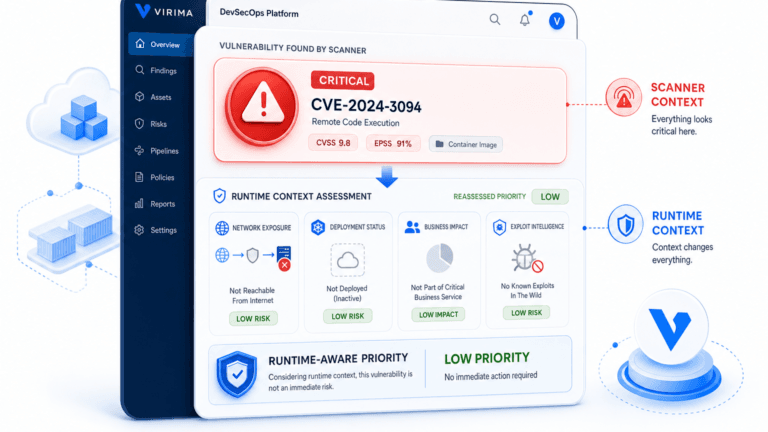
ViVID service mapping gives your change management team the dependency context they need before every change window. When engineers can see exactly what a proposed change touches — across services, applications, and shared infrastructure — failed changes drop significantly. That alignment between CMDB and change management is what turns reactive firefighting into controlled execution. MTTR decreases because incident responders have accurate service maps, not tribal knowledge.
ITAM integration ensures your software license data and hardware inventory are reconciled automatically. License reclaim becomes a continuous process rather than an annual scramble. Cloud resource tagging and attribution feed directly into FinOps reporting, so your finance team can act on accurate data.
The result is a CMDB that supports every IT process that depends on it. For CIOs focused on operational efficiency, that matters. For CFOs evaluating IT spend, the ROI case is clear. For VPs of IT managing team capacity, the reduction in manual reconciliation work compounds across every quarter.
Key Takeaways
– Most enterprise CMDBs operate at roughly 60 percent accuracy. That gap has a measurable dollar cost across operations, finance, and compliance.
– CMDB cost optimization must address three distinct categories: operational downtime, financial waste (software and cloud spend), and risk and compliance exposure.
– A single hour of downtime costs 90 percent of enterprises more than $300,000. CMDB-related failed changes are a recurring, preventable contributor.
– Software license waste averages $18 million per year per enterprise. An accurate CMDB is the foundation of any effective software asset management program.
– Cloud waste is projected at $44.5 billion globally in 2025. Incomplete CMDB-to-service mapping is a direct root cause.
– A CMDB cost optimization investment typically returns 3x to 5x in year one through downtime reduction, license reclamation, and avoided audit remediation costs.
– Virima delivers continuous automated discovery, ViVID service mapping, and integrated ITAM to make CMDB cost optimization a measurable business outcome — not just a program goal.
Ready to quantify the CMDB cost optimization opportunity for your organization? Schedule a Demo at virima.com