Service Mapping for Oil and Gas: Tracing Production Downtime to Cause

When a production-support application goes down at an oil and gas facility, the operations team may have only minutes, not hours, to identify which services depend on it. The incident may involve an application, a shared database, or a network connection between sites. Each possibility requires a different owner and different evidence to confirm during a production downtime investigation.
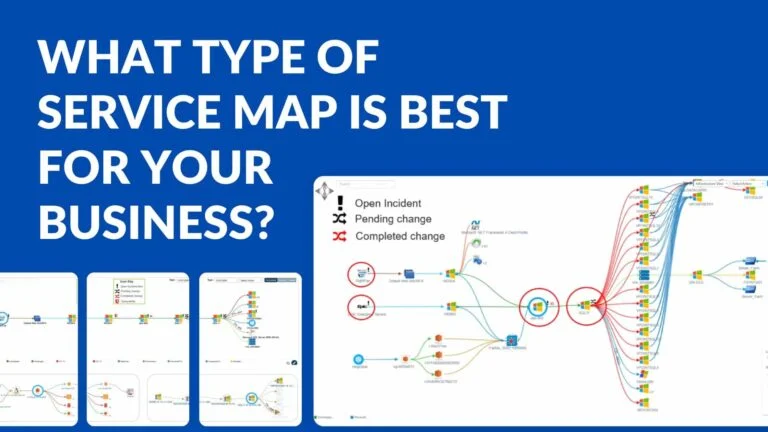
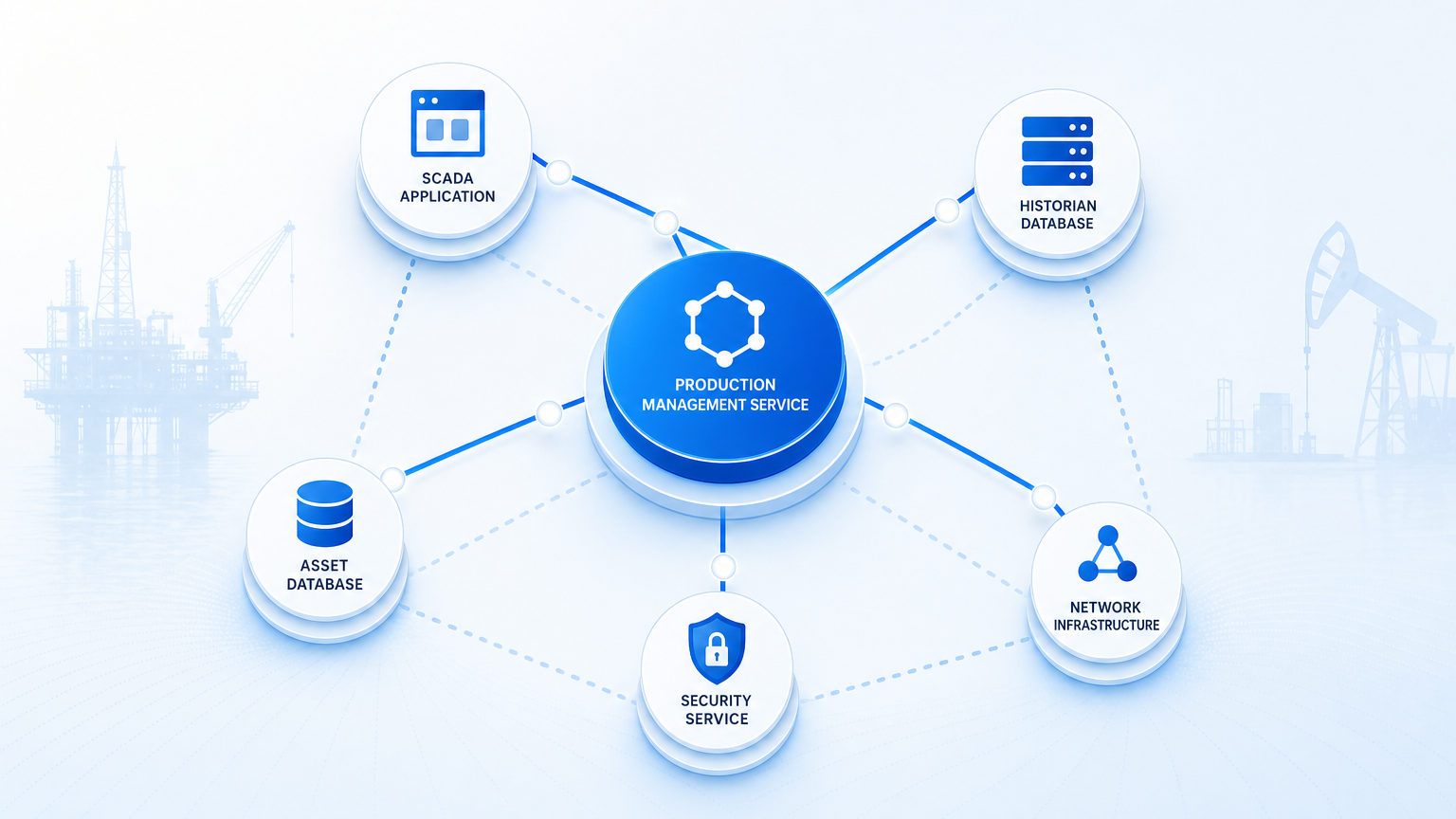
A service map gives responders a starting point for that investigation. It connects a defined business service to its supporting applications and infrastructure. That’s what service mapping for oil and gas production downtime is built to shorten: the time between the first symptom and a validated cause. Teams can then compare those relationships against incident records and observations from engineering systems. The map supports diagnosis, while the evidence establishes the cause.
Why oil and gas production downtime investigations cross team boundaries
Oil and gas operations depend on physical equipment and the information systems that support planning, reporting, maintenance, and coordination. The technology estate may span field locations, corporate data centers, and cloud environments. Different teams own different parts of that estate, and their records often describe the same service from conflicting angles.
Unplanned downtime is already expensive industry-wide, so the cost of a slow investigation compounds quickly. A 2025 Fluke survey of manufacturers found that 61 percent had experienced unplanned downtime in the past year, with industry-wide costs reaching an estimated $852 million a week. Oil and gas facilities carry that same exposure, often multiplied by the distance between field assets and the teams positioned to diagnose them.
An operations engineer may see a process alarm. An infrastructure team may see a server incident. A service desk may receive reports that a production application cannot be reached. Responders need a shared description of the service and its dependencies to decide which records deserve attention together.
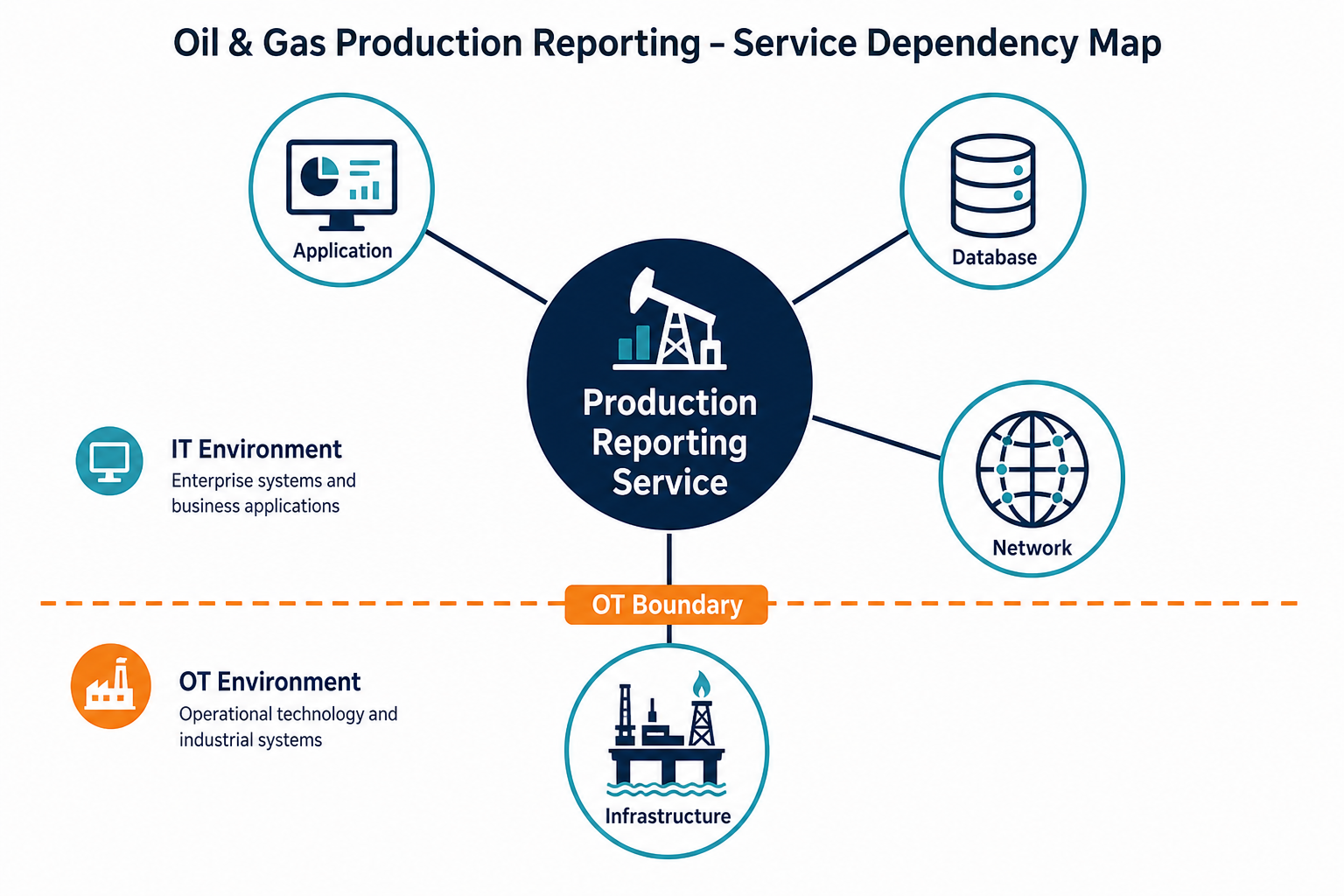
The Cybersecurity and Infrastructure Security Agency describes operational technology (OT) as systems and devices that interact with the physical environment. It identifies energy as a critical infrastructure sector that depends on these systems. That distinction matters when teams investigate across the boundary between enterprise IT and industrial operations.
A dependency map can document the enterprise services that support an operational workflow. It should also show where the available evidence stops. Plant engineers retain responsibility for interpreting control-system behavior and physical process conditions.
Define the service before tracing its dependencies
Start with a named service that operations teams recognize. A production reporting service, for example, could include a reporting application and its supporting database. A maintenance planning service may rely on a different application and a shared identity provider. The scope should match the question responders need to answer during an incident.
Record the following for each service:
- Service owner and operational contact
- Supported locations and business importance
- Applications that form the service
- Infrastructure those applications depend on
- Whether each relationship came from discovery or was supplied by a person or another system
A configuration management database, or CMDB, holds configuration items and their relationships. A service map presents selected relationships in the context of a named service. The two views work together when records have an owner and a defined refresh process.
What’s the difference between a CMDB and a service map?
A CMDB stores configuration items and their relationships as a system of record. A service map presents a selected subset of those relationships in the context of one named business service. Teams use the CMDB to maintain data and the service map to investigate a specific incident.
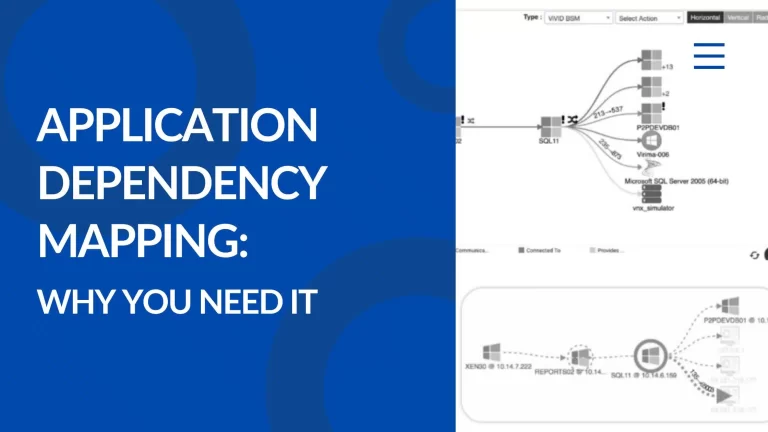
That distinction is the foundation of an oil and gas CMDB built for incident investigations, not just asset inventory. In Virima, teams supply service definitions manually, through an import, or through supported integrations. ViVID™ then builds dependency maps from those definitions and available relationship data. The service owner should review the result against the intended service boundary.
What should an oil and gas service map include?
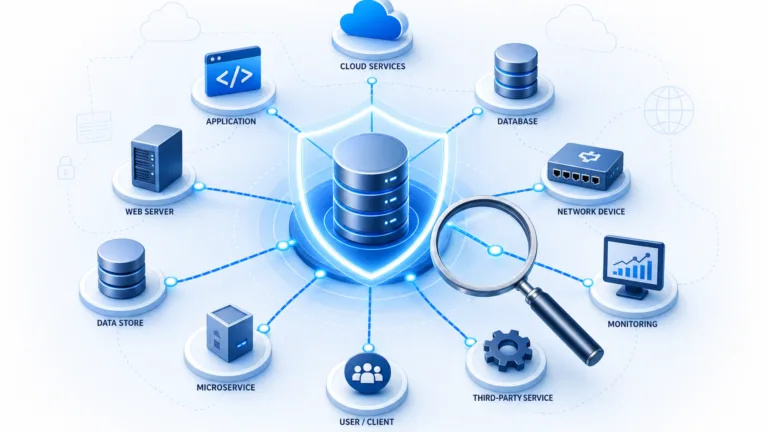
Start with a named production-support service and its owner. Add the applications, databases, servers, network components, and external services that support it. Record the source and review date for important relationships, then identify the plant teams responsible for validating operational dependencies.
The value of a map depends on the records behind it. Explore Trusted Runtime Truth to see how discovery-sourced information supports decisions about assets, connections, changes, and ownership.
Trace from a service symptom to candidate causes
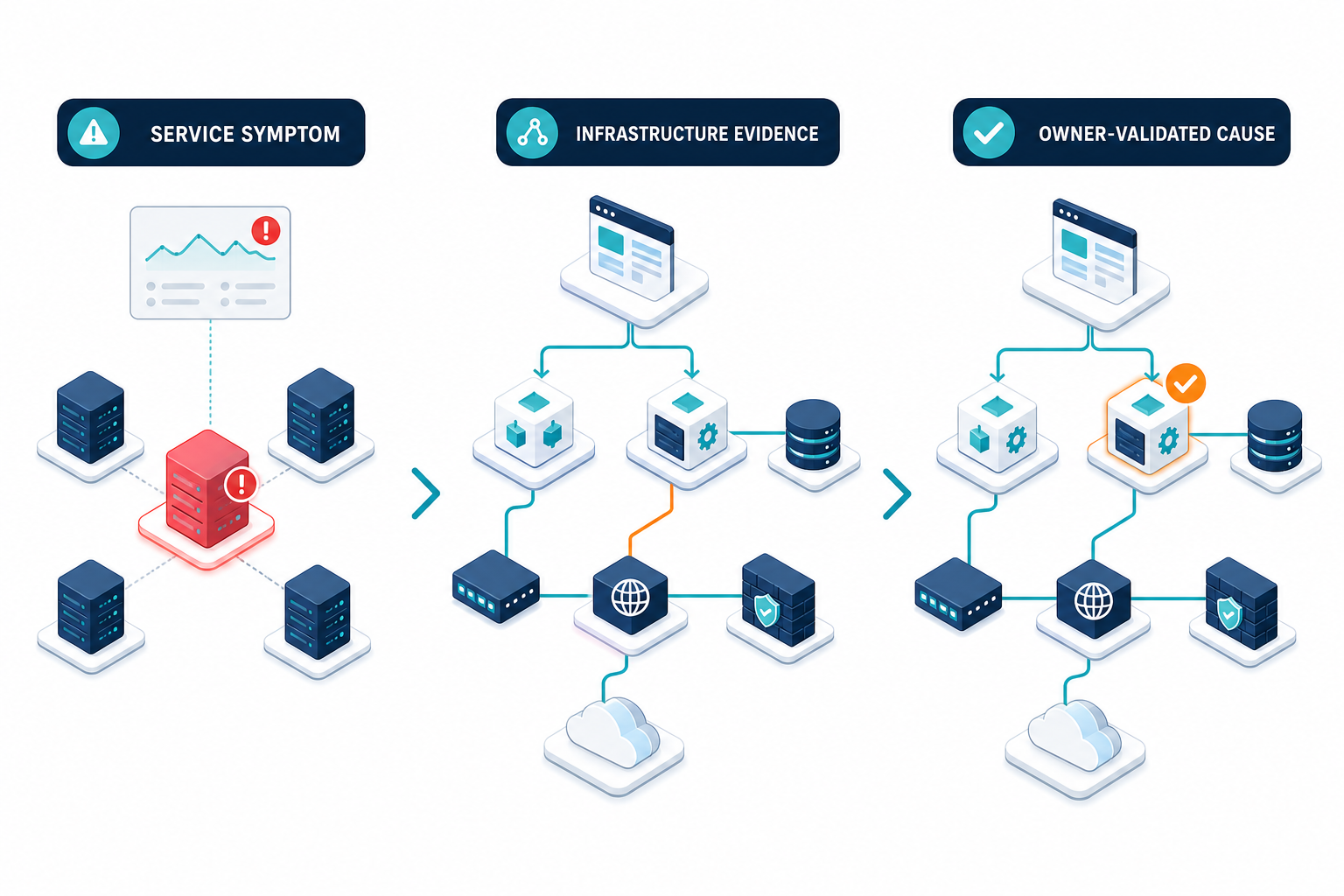
Begin with the service users report as affected. Capture the time of the symptom, the locations involved, and the operational activity affected. Link that report to the service record so that the investigation has a consistent starting point.
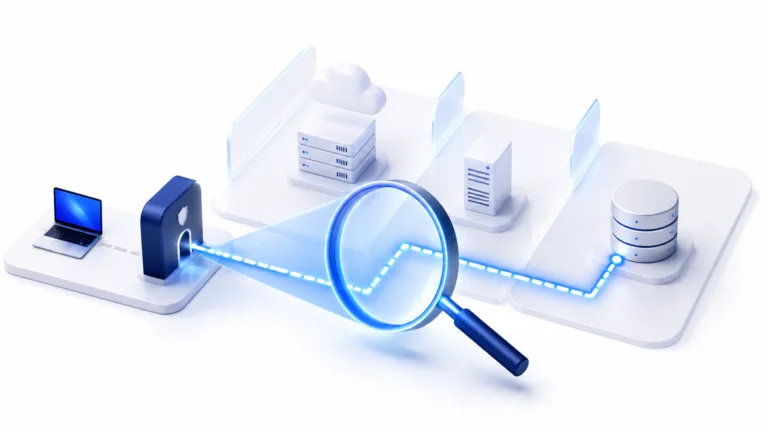
Follow the map from the service to its supporting applications. Check the hosting infrastructure and shared components where relationships are available. The map may show that several applications depend on the same database or network component. That shared dependency gives the incident team a root cause candidate to investigate, not a confirmed diagnosis.
Compare the candidate with evidence from monitoring, incident tickets, logs, and recent changes. Ask whether the timing fits the reported symptom and whether unaffected services use the same component. If the candidate fails those checks, move to the next plausible path and record why it was ruled out.
The direction of investigation can also be reversed. If a server incident is already known, inspect the services linked to that server. Owners can then validate which locations or workflows may need attention. A relationship in the map indicates a possible impact path; service owners confirm whether impact occurred.
Can a service map identify the cause of production downtime?
A service map identifies dependencies that investigators can test against incident evidence. It does not establish causation on its own. Teams confirm a cause using timestamps, technical observations, change records, and the operational expertise of the people responsible for affected systems.
Keep industrial safety and discovery scope visible
IT/OT convergence visibility remains the exception rather than the rule. The SANS Institute’s State of OT Security 2025 survey found that only 12.6 percent of organizations report full visibility across their industrial control environment. That gap means most teams must treat any dependency outside their own domain as unverified until an owner confirms it.
Operational technology environments have safety, availability, and access requirements that must shape the investigation. Obtain approval from the plant or asset owner before introducing discovery activity into a controlled network. Agree on the permitted network segments, methods, credentials, and maintenance windows with the relevant engineering and security teams.
Where direct discovery is unsuitable, service owners can use approved records from other sources to document known dependencies. Label those records with their source and review date. A map built from several sources remains useful when teams understand which portions were verified and which require confirmation. For a closer look at discovery methods suited to this kind of mixed environment, see Virima blog post on agentless discovery for hybrid and OT-adjacent IT environments.
Schedule discovery cycles for approved IT infrastructure and reconcile the resulting information with existing configuration records. Use stable identifiers such as serial numbers or cloud instance IDs where appropriate. Hostnames can change or be reused, so they should not serve as the only durable join key.
A gap in visibility should appear as an explicit gap in the service record. Assign an owner to validate it, and avoid drawing an unsupported connection across the IT and OT boundary. During an active incident, engineering teams should follow their established operational safety procedures.
Put dependency context into the incident workflow
Service desk and infrastructure teams need an agreed handoff before an outage occurs. A useful incident record identifies the affected service, the suspected configuration item, the service owner, and the time the symptom began. It also records the source of the dependency information and the person validating it. For a deeper look at tightening that handoff, see Reduce MTTR with Xurrent Ticketing & Virima Service Mapping.
When ServiceNow or another supported service management platform is part of the workflow, teams can use Virima’s integrations hub to review available connections. Partner names remain separate from the technical evidence captured in the incident. Confirm the supported fields and synchronization behavior for the chosen integration before designing the handoff.
After restoration, update the incident with the confirmed cause and contributing conditions. If the map pointed to a misleading relationship, assign its correction to the configuration owner. If the map omitted a shared component, add it only after its owner validates the dependency.
See how your team can connect production-support services to their infrastructure dependencies during an incident investigation.
Test the map before the next outage
Choose one production-support service and walk through a recent incident with its owner. Identify the first symptom, the records responders consulted, and the evidence that established the cause. Compare the actual investigation path with the relationships shown in the map.
For each missing or incorrect relationship, record the source, owner, and next review date. Separate an unknown dependency from a confirmed absence. A missing line on a diagram does not prove that systems operate independently.
Review the map again after major infrastructure changes and during scheduled service reviews. Track practical measures such as the proportion of critical service relationships with named owners and review dates. These measures help teams identify where further validation is needed without promising a specific reduction in downtime. See ITIL Change Management and CMDB Accuracy: Why One Depends on the Other for a closer look at tracking that kind of measure over time.
How often should a production-support service map be reviewed?
Set a review cadence with service and infrastructure owners. Review important relationships after relevant changes and incidents, then reconcile scheduled discovery results with approved source records. The appropriate interval depends on the service, the pace of change, and the operational risk of stale information.
A production incident demands evidence from several teams. A defined service map helps them identify candidate dependencies, route questions to owners, and document what remains unknown. The strongest investigation combines that context with logs, change records, and plant engineering judgment.
Schedule a demonstration to review how Virima can support dependency mapping for industrial IT and production-support services.
Frequently Asked Questions
How does service mapping help investigate production downtime?
It shows relationships between a defined service and supporting components. Investigators use those relationships to select candidate paths, then validate them against incident evidence.
Does a service map replace industrial monitoring or plant engineering?
A service map provides dependency context for an investigation. Plant monitoring and engineering teams provide the observations and operational expertise needed to evaluate physical process conditions.
What evidence should teams combine with a service map?
Teams can compare dependency records with timestamps, monitoring alerts, logs, change records, and incident reports. Service and plant owners should validate the relationships relevant to the investigation.
How does Virima build service dependency maps?
Teams provide service definitions manually, through an import, or through supported integrations. ViVID™ builds maps from those definitions and available configuration relationship data.
Can Virima support an incident workflow alongside an existing service desk?
Virima offers supported service management integrations. Teams should verify the specific connection and data exchange for their environment before designing the incident handoff.