ITOM for Oil and Gas: Preventing Production IT Outages

A production-support application can become unavailable after a routine infrastructure change. The service desk may see a failed application, while field teams lose access to schedules or maintenance information. The physical process and its safety controls remain the responsibility of plant operators.
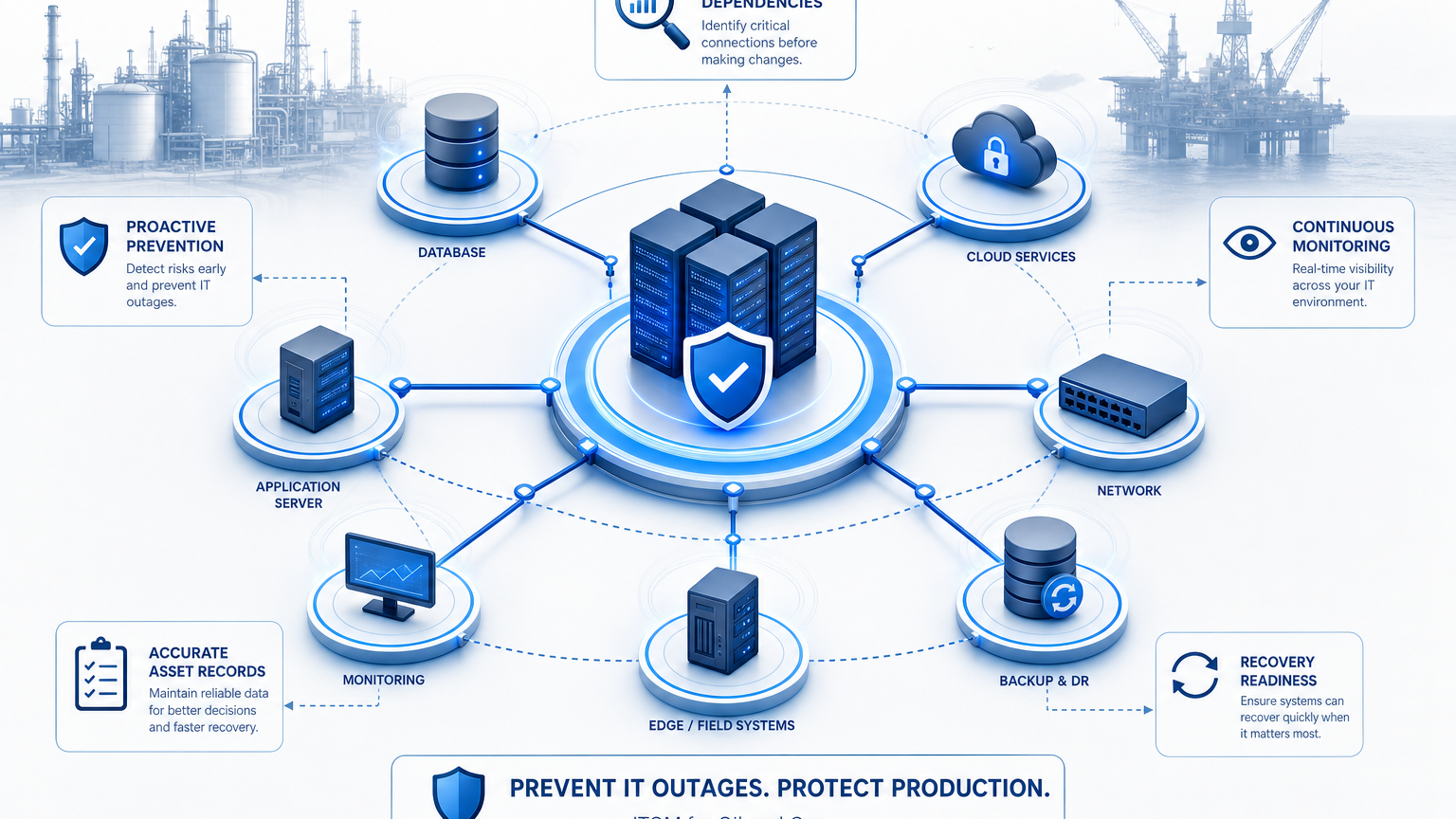
IT operations managers in oil and gas can reduce exposure by identifying critical dependencies before a change window. They also need reliable asset records, clear ownership, and an agreed response to early warning signs. IT operations management (ITOM) brings those activities together around the services the business depends on.
An ITOM program cannot guarantee that an outage will never happen. It can help teams identify conditions that deserve attention before they affect a production-support service. The strongest approach combines configuration evidence with operational judgment from IT and plant teams.
Identify the production-support services that need protection
Start with the services whose interruption would make production coordination harder. Examples include maintenance planning, production reporting, field communications, and access to engineering documentation. Each organization should confirm which applications support its own production workflow. Unplanned downtime in upstream oil and gas now runs close to $500,000 an hour. Operators face an average of 27 days of unplanned downtime a year (Xenoss, March 2026).
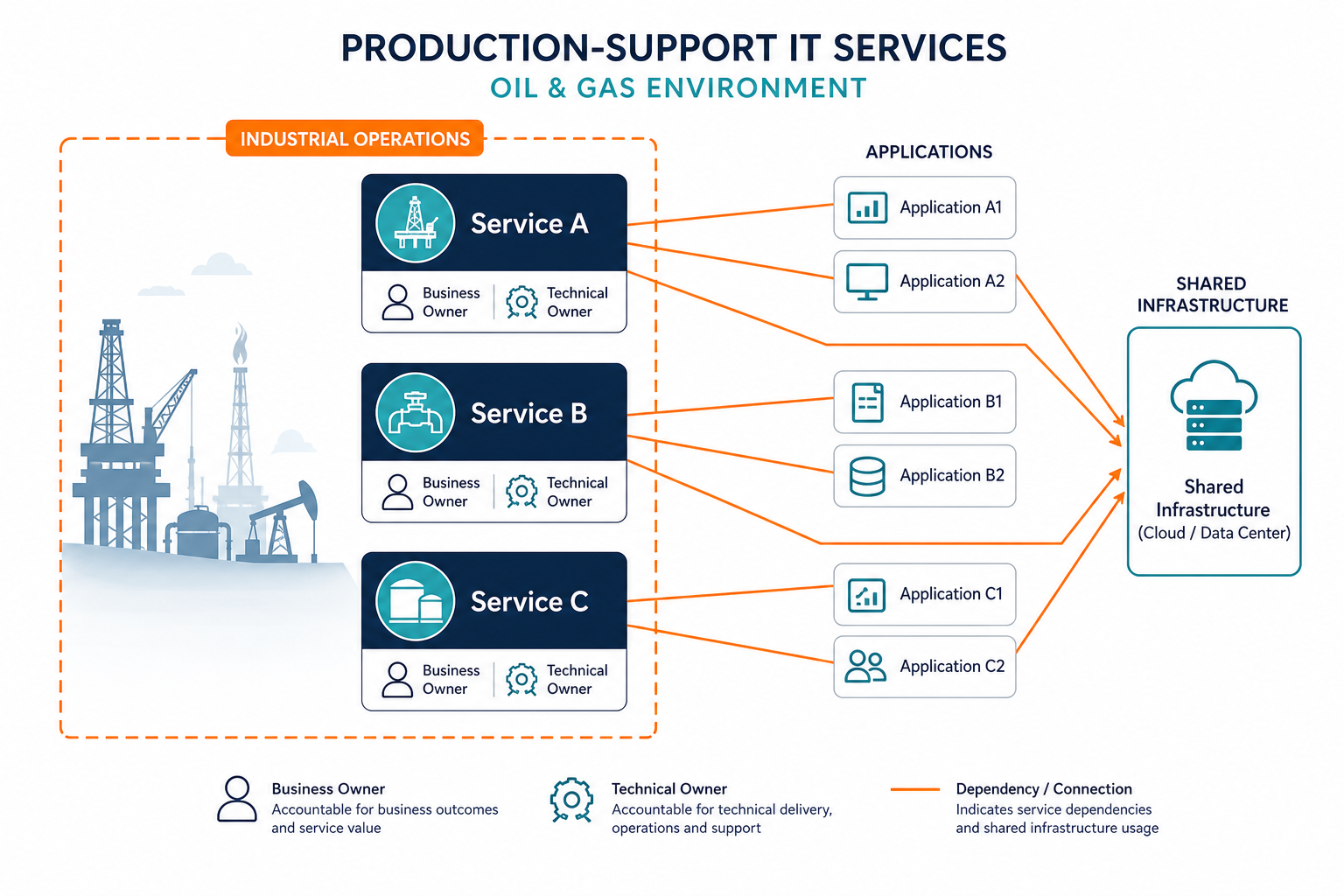
Assign a business owner and a technical owner to each selected service. Record the locations that rely on it and the operating periods when interruption would have the greatest effect. Ask plant representatives to verify the practical consequences of an unavailable service.
Next, list the applications and infrastructure supporting each service. A maintenance application may depend on a database, identity provider, virtual host, and network connection. Check each proposed relationship with its owner before treating it as a basis for change decisions.
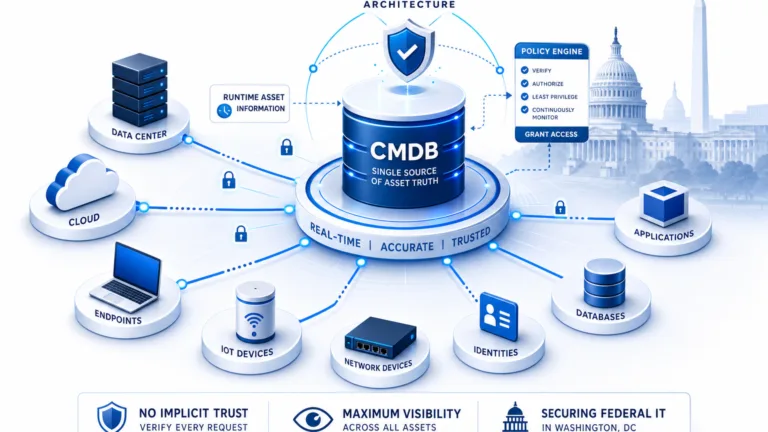
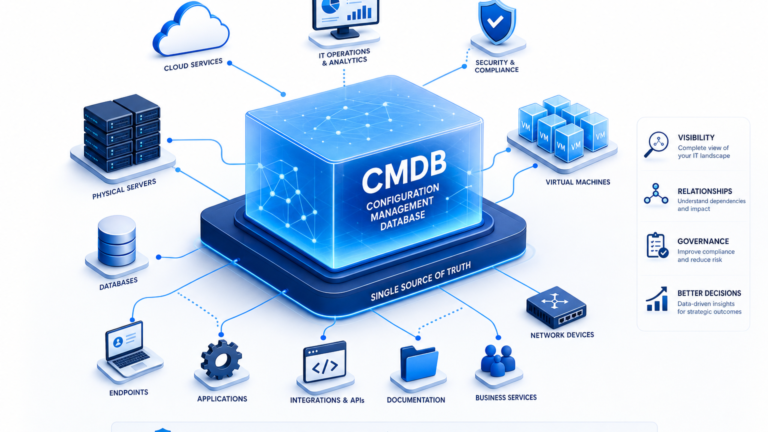
Virima’s configuration management database (CMDB) holds configuration items and their relationships. Teams provide service definitions manually, through an import, or through supported integrations. ViVID™ builds dependency maps from those definitions and available relationship data.
Which production-support services should IT operations protect first?
Start with services whose loss would interrupt an important operating task or leave teams without a practical workaround. Ask business and plant owners to validate the consequences. Include the affected locations, required operating hours, and available alternatives in each service record.
Explore Trusted Runtime Truth to connect what exists, what changed, what a change could affect, and who owns it.
Build a dependable inventory before assessing risk
A dependable CMDB for oil and gas production environments depends on the coverage of its underlying records. Scheduled discovery cycles — agentless, agent-based, and API-based — can collect configuration information from approved infrastructure across distributed sites without relying on a single scanning method. Compare the resulting records with existing inventories and investigate assets that appear in one source but not another. That reconciled inventory is what feeds ITOM dependency mapping before a change is approved. IT and networking issues accounted for 23% of impactful outages in 2024, according to Uptime Institute’s 2025 Annual Outage Analysis.
For distributed oil and gas environments, document the coverage of each site and network segment. Record the discovery method, permitted access, most recent successful cycle, and responsible team. A missing record may indicate a discovery gap, a retired asset, or a network boundary that requires separate review.
Reconcile records using suitable stable identifiers such as a serial number or cloud instance ID. Hostnames may change or be reused and should not serve as the only durable join key. Assign source ownership for important attributes so conflicting values receive a deliberate review. Virima’s blog on determining CMDB accuracy walks through this reconciliation step in more detail.
The CMDB owner should also record known blind spots. An unapproved or unreachable segment should have an owner and a plan for obtaining information through an authorized source. This makes uncertainty visible before a change request depends on incomplete data.
A scheduled cycle provides a view at a particular time. Choose the cadence with infrastructure owners based on the pace of change and the impact of stale information. Teams should investigate failed cycles rather than assuming the previous record still describes the current environment.
Protect operational technology boundaries
Production environments can include operational technology (OT) with distinct safety and availability requirements. NIST’s guide to operational technology security addresses those requirements alongside security risks. Its guidance is a useful starting point for discussions with engineering and security teams. Oil and gas downtime research largely focuses on predictive maintenance for process equipment; IT-layer dependency and change risk is a separate, often unaddressed discipline that deserves its own governance process.
Obtain plant-owner approval before any discovery activity touches a controlled environment. Agree on scope, methods, credentials, maintenance windows, and escalation contacts. Where scanning is unsuitable, use approved inventories or engineering records and identify their owners.
Can an IT inventory include information from operational technology?
IT teams can document approved information supplied by operational technology owners. The source, review date, and permitted use should be recorded with the asset. Plant engineering remains responsible for deciding whether discovery activity is appropriate within a controlled environment.
Review change impact before the maintenance window
A planned change should identify the configuration item involved and the service it supports. The change owner can use mapped relationships to inspect other applications and shared infrastructure that may be affected. A service owner can then confirm whether the proposed window is acceptable. Weak change review is a known driver of outages; Virima’s research on IT change management statistics is worth reviewing alongside your own change records.
Consider an update to a server supporting a maintenance application. The reviewer should check whether another application shares the same host or database. If relationships are incomplete, the change owner should obtain confirmation from the relevant technical teams before approval.
A useful change record includes the proposed work, affected components, service owner, expected interruption, and rollback plan. Attach the evidence used to assess dependencies and record any uncertainty. Approval belongs to the designated change authorities and the teams responsible for the affected service.
Virima’s CMDB and ViVID™ maps can provide configuration and relationship context for that review. The map shows available relationships; not every dependency is captured. Owners should verify critical paths against current architecture records.
For service management workflows, review the available integration options. Confirm which configuration fields and relationships reach the selected ticket or change record. Test that handoff with the people who approve and execute changes.
See how ViVID™ turns your reconciled inventory into dependency maps your team can use in the next change review.
Make shared dependencies visible
Shared identity, network, and database services can support several production applications. Record those relationships across service boundaries, then confirm the affected owners before scheduling work. A single change may require coordination across multiple sites even when only one server appears in the request.
When evidence conflicts, pause the impact assessment and resolve the disagreement. A system owner may know about a dependency missing from the map. The CMDB owner can record the correction and its source after validation.
Prioritize lifecycle risks before components fail
Unsupported software and aging hardware can complicate recovery when a production-support service is interrupted. Add vendor support dates and responsible owners to the relevant asset records. Review these records alongside service criticality rather than treating every approaching date as equally urgent. The real cost of CMDB inaccuracy extends beyond discovery gaps into lifecycle blind spots like these.
Start with components supporting services that have limited workarounds. Confirm the applicable vendor lifecycle status and check whether an approved replacement or support arrangement exists. Create a remediation task with an owner and a target date that fits operational constraints.
Virima’s IT asset management capabilities include tracking hardware and software lifecycle details. Teams can relate those records to configuration items and use service context to guide review. Verify the accuracy of lifecycle information against vendor documentation and internal contracts before committing to a decision.
When a replacement cannot be scheduled promptly, document the interim controls and their owners. Those controls might include tested backups, spare hardware, or a documented recovery procedure. Their suitability depends on the system and should be approved by the relevant engineering and security teams.
How should teams prioritize an end-of-support asset?
First identify the service that depends on the asset and the operating consequence of its failure. Then verify the vendor support status, replacement options, and recovery arrangements. Assign an owner to the resulting remediation or exception and review it before the next relevant change window.
Use events and ownership to act on early warning signs
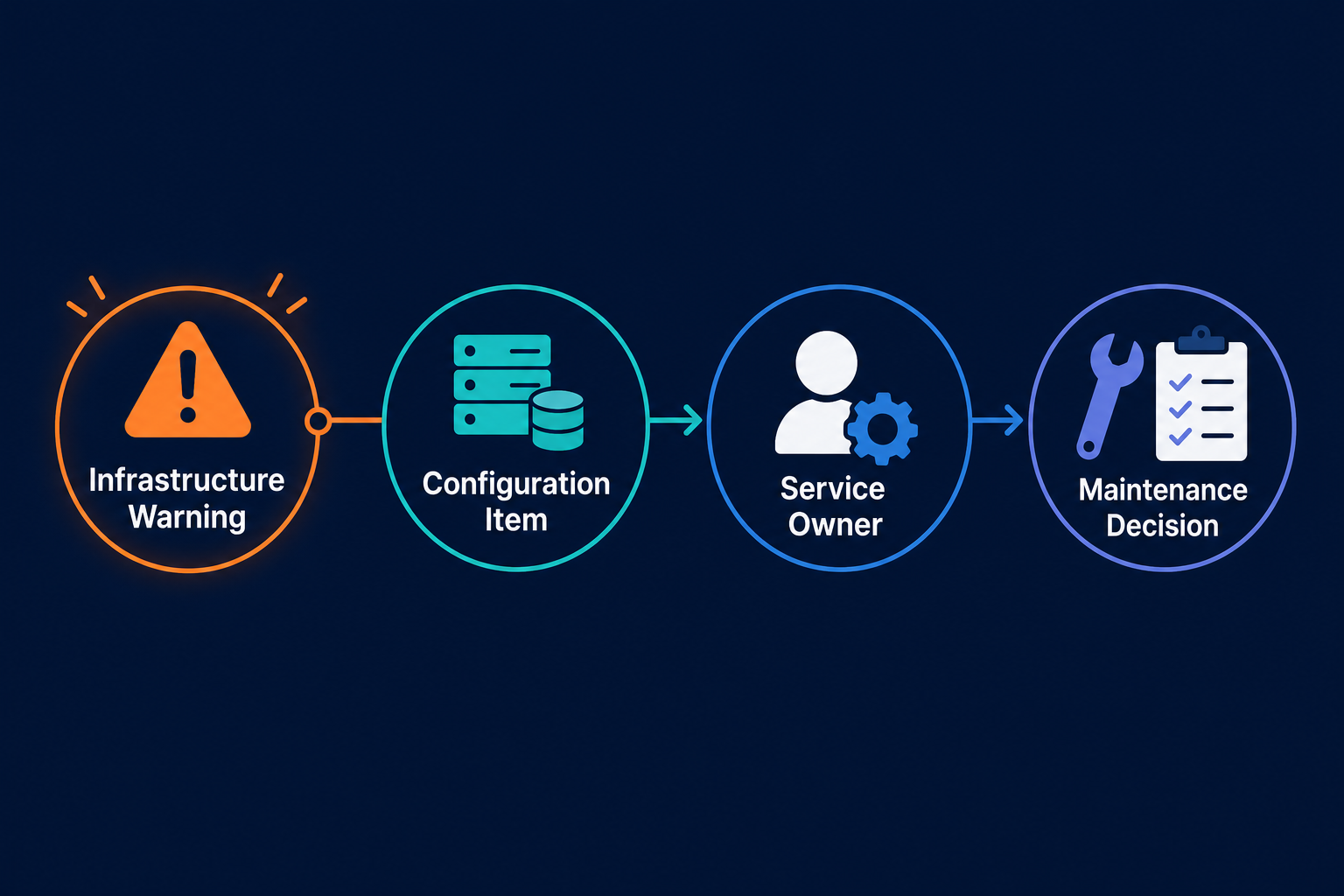
Monitoring tools can alert teams to conditions that may require investigation. Examples include a failing network device, a capacity warning, or an unavailable application component. An event becomes more useful when responders can connect it to the affected configuration item and its service owner.
Virima’s ITOM capabilities include operational dashboards and infrastructure health views. Virima integrates with ServiceNow and Jira Service Management to route those alerts into the ticketing workflow your team already uses, without replacing it. They also support linking alerts with configuration items and affected services for triage. Confirm the source, data exchange, and available fields for the monitoring tools in your environment.
Define a response for each important alert category. The runbook should name the first responder, the service owner, and the conditions requiring escalation. It should also explain where plant operations must be consulted before any action affects a controlled environment.
Review alert routing with a representative event before relying on it. Check whether the event points to the correct CI and the owner can identify the affected service. Record gaps as tasks for the monitoring and configuration teams.
Repeated warnings deserve a separate review from urgent incident response. Group recurring issues by component and assign an owner to investigate the underlying condition. The team can then determine whether maintenance, capacity planning, or a change to the monitoring rule is appropriate.
Test recovery and measure the preventive process
Preventive work should pair with recovery planning for failures that still occur. Service owners can define acceptable recovery targets and document the resources needed to restore each critical application. Infrastructure and plant teams should validate those targets against the needs of the operating environment.
A recovery exercise can expose dependencies that were missing from the service record. Test the restoration order and confirm application owners can access what they need. Record any discrepancies and assign corrections to named owners.
Business continuity and disaster recovery address different responsibilities: continuity planning considers how essential work proceeds during disruption, while recovery planning covers restoring the affected technology and data. Both plans benefit from accurate service ownership and configuration records.
Measure the preventive process with evidence your teams can inspect. Useful measures include the share of critical services with named owners, the share of changes with reviewed dependencies, and overdue lifecycle exceptions. Track results over time without assuming any single measure proves an outage was prevented.
Review these measures at an agreed operational cadence. If a critical service lacks an owner or an expected discovery cycle fails, create a follow-up task. Escalate unresolved gaps through the same governance process used for production-support change risk.
Build an outage prevention routine around critical services
Start with one production-support service and review its ownership, dependencies, lifecycle risks, and planned changes. Confirm the evidence with both IT and plant stakeholders. Expand the routine once the teams can maintain the records and use them in actual decisions.
Frequently Asked Questions
How can ITOM help reduce production-support IT outage risk?
Owners can use infrastructure records, service dependencies, warnings, and planned changes together as evidence to prioritize maintenance and investigate risks before they interrupt a production-support application.
Which dependencies should be reviewed before a production IT change?
Review the application, hosting infrastructure, network connections, identity services, and shared components relevant to the change. Ask service and infrastructure owners to confirm the paths and any uncertain relationships.
Can IT operations tools guarantee uninterrupted oil and gas production?
No tool can guarantee uninterrupted production. IT records and dependency views support decisions about production-support technology. Plant engineering, safety procedures, maintenance, and recovery planning remain essential to operational resilience.
How does Virima build service maps for change reviews?
Teams provide service definitions manually, through an import, or through supported integrations. ViVID™ builds maps from those definitions and available relationship data. Owners should validate the resulting paths before using them in change decisions.
Can Virima support an existing IT service management workflow?
Virima supports integrations with selected service management platforms. Teams should verify which records and relationship fields are available for their chosen integration and test the change handoff in their environment.