IT Discovery for Telecommunications: Closing the Gap

Telecom carriers do not add network capacity through centralized upgrades. They add it one tower, one small cell, and one fiber hut at a time, thousands of times a year, through field crews stretched thinner every year they do it. The paperwork rarely keeps pace. For the Network Operations, CMDB Owners, and SecOps leads who own inventory accuracy, that lag turns into stalled change approvals, unmonitored network segments, and a scramble once audit season arrives. IT discovery for telecommunications closes that gap by verifying what is actually live on the network, independent of whether a build record was ever filed.
Why telecom infrastructure outpaces its own paperwork
Enterprise IT discovery content usually targets shadow IT: unsanctioned devices installed outside approved channels. Telecom network expansion produces a different gap entirely.
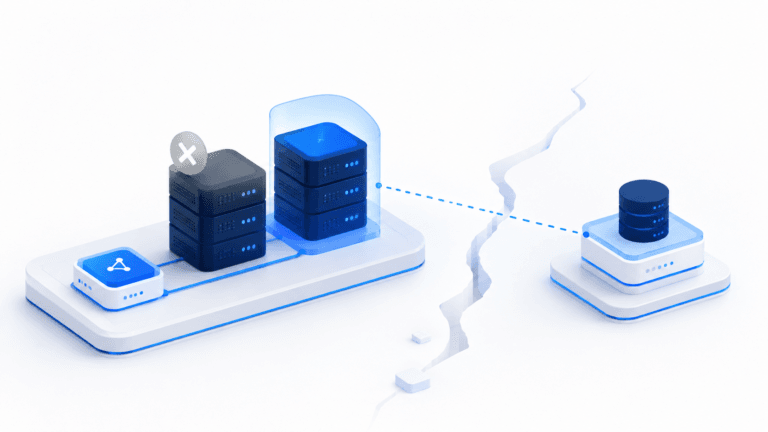
At a carrier or network operator, the devices that end up unrecorded were part of approved builds. A contractor crew turns up a macrocell site, terminates the fiber, installs the backhaul equipment, and moves to the next job. Every step of the physical build follows process. The step that gets shortchanged is the administrative follow-through: updating the OSS or CMDB with what was actually installed, at which location, and with what exact configuration.
Telecom expansion runs through many independent crews across geographically dispersed physical sites. Each site is a separate potential point where as-built data fails to make it back to a central system of record.
Compressed contractor margins push this drift further. When margins are tight, field crews prioritize physical turnup, so updating the system of record gets deferred. A growing delta between what was built and what the inventory system knows about is the direct output.
Why do approved telecom network builds still create inventory gaps in OSS systems?
The physical build and the inventory update are two separate steps. Contractor crews complete installations on schedule, but updating the OSS or CMDB with what was actually installed, at which location, and with what configuration, is a separate administrative task. When crews move quickly across many dispersed sites and contractor margins are compressed, that task gets deferred. The physical network expands faster than its own record does.
The numbers behind the inventory gap
Site growth versus workforce decline
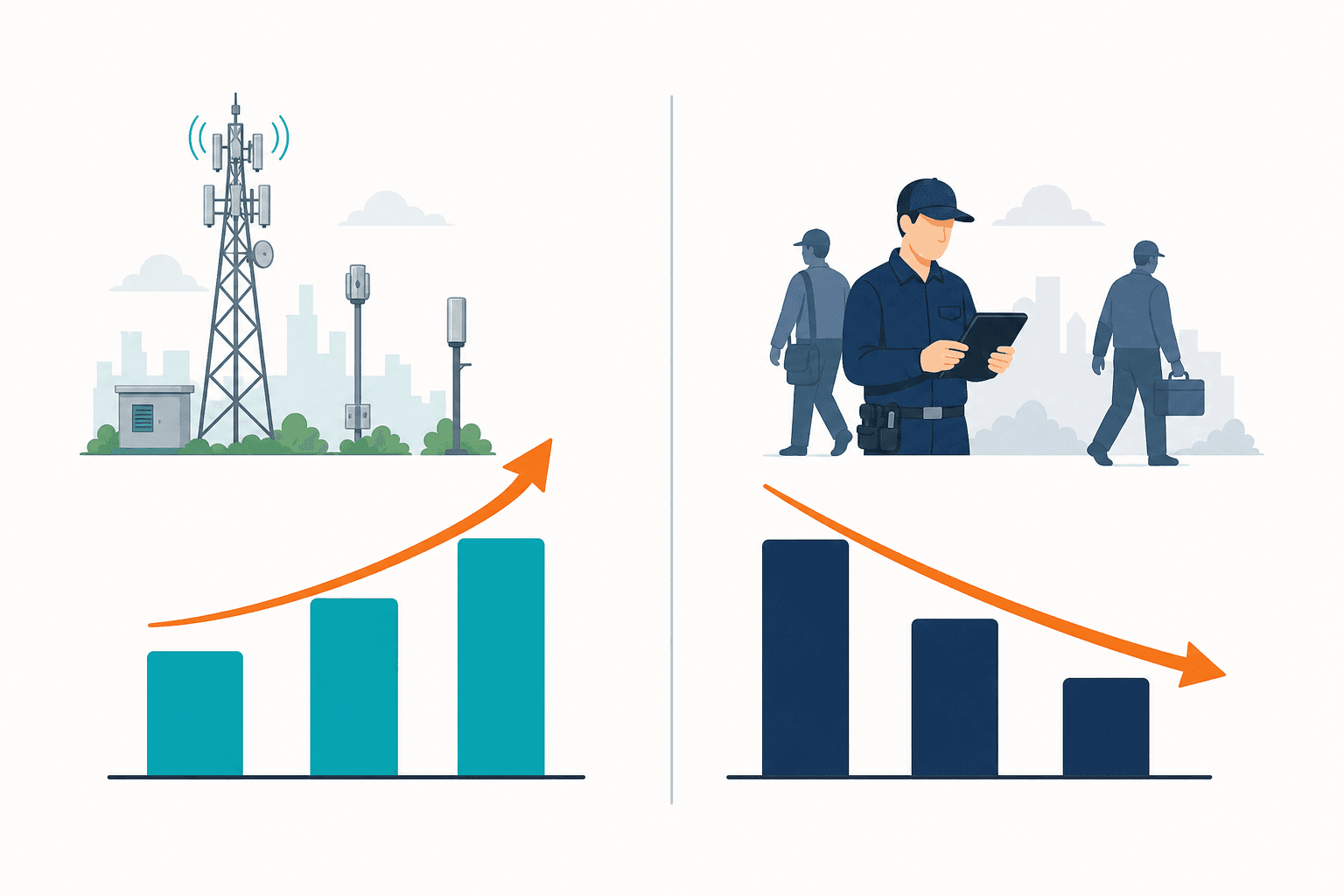
The Wireless Infrastructure Association’s 2025 “Wireless Infrastructure by the Numbers” report documents both sides of this pressure. U.S. cellular towers reached 158,500, adding 3,700 from the prior year. Macrocell sites reached 254,850, adding 6,800. Indoor 5G small-cell nodes reached 830,350, adding 27,850, making this the fastest-growing site category by count.
At the same time, the full-time workforce building and maintaining that infrastructure fell by 26,400 people, down to 342,350. The report attributes this decline to compressed contractor margins and project pricing that has not kept pace with labor and compliance costs.
The implication is direct: more sites going up, built by fewer people, with administrative tasks spread across a smaller workforce.
The cost of inventory drift
Manual OSS updates, field-engineer entry errors, and informal workarounds widen the telecom network inventory accuracy gap further. VC4’s analysis of service provider network inventory accuracy puts roughly 35 percent of network assets in the stranded category: provisioned, still carrying maintenance cost, but without an accurate record of location or status. Industry research on CMDB program outcomes puts the broader failure rate at roughly 75 percent of deployments falling short of their intended goals. The underlying reason is the same: the record and the reality drift apart.
How much of a telecom network’s asset inventory is typically out of sync with physical infrastructure?
Roughly 35 percent of service provider network assets sit stranded, provisioned and carrying maintenance cost without an accurate record of location or status, according to VC4’s analysis of network inventory accuracy. Industry research on CMDB program outcomes puts the broader failure rate at roughly 75 percent of deployments. For a Network Operations Center or change management team, that gap directly affects fault isolation and change impact analysis, because dependency relationships are only as accurate as the inventory behind them.
An unrecorded device is a security exposure and audit risk
The security exposure
An unrecorded network device is an unwatched one. Threat actors operate longest in the parts of a network nobody is actively monitoring, so that same blind spot slows incident response once something does go wrong. Virima’s guide to reducing MTTR covers how accurate dependency data cuts resolution time for exactly this reason.
The Salt Typhoon espionage campaign, disclosed in 2024, demonstrated this exposure. Chinese state-sponsored actors gained persistent access inside major U.S. telecom carrier networks. Network segments with incomplete asset visibility gave the intrusion room to persist undetected.
The regulatory exposure
The regulatory environment remains unpredictable. The FCC adopted cybersecurity certification requirements for telecom carriers in January 2025. It reversed that ruling on November 21, 2025, citing legal grounds, and replaced it with a Council on National Security framework and targeted rules for critical infrastructure. Commissioner Anna Gomez dissented, warning the reversal leaves carriers less protected than when the breach was discovered.
A separate, binding requirement carries an immediate deadline. The FCC’s semi-annual Broadband Data Collection filing requires carriers to submit network and serviceable-location data matched against the national Broadband Serviceable Location Fabric. An inventory that does not reflect what is actually built puts the accuracy of that filing at risk, independent of federal cybersecurity rulemaking.
What does the FCC Broadband Data Collection filing require for network inventory accuracy?
The FCC’s semi-annual Broadband Data Collection (BDC) filing requires carriers to submit network and serviceable-location data matched against the national Broadband Serviceable Location Fabric. If the underlying network inventory does not reflect what is installed in the field, the filed data carries the same gaps, creating regulatory filing risks and audit exposure.
Where OSS inventory and generic discovery tools fall short
IT discovery for telecommunications sits in a gap between tool categories that each address part of the problem without closing it.
Telecom-native OSS platforms (VC4, Netcracker, Ciena Blue Planet, FNT Software) act as systems of record for planned builds. They document the network as designed and provisioned. VC4 markets a live reconciliation function to align records with the physical network. Others emphasize orchestration, documentation, or platform scale. They are not built primarily to verify what is live on the network independent of whether someone submitted a build record.
Generic enterprise discovery tools (runZero, Lansweeper) cover part of network device discovery telecom teams rely on in corporate office environments. They are not designed for carrier-scale network footprints or thousands of geographically dispersed physical sites managed by independent contractor crews.
Network visibility tools (Armis, Forescout) score attack-surface risk on discovered devices. They do not reconcile findings into a CMDB of record with authority rules that planning, provisioning, and compliance teams rely on for operational decisions.
Each of these tool categories stops short of independently verifying what is live on the network against what the build and inventory records claim. That independent verification is a distinct operational layer.
What IT discovery for telecommunications actually requires
Closing the inventory gap in a carrier network means running discovery independently of the build process, not as a downstream step that depends on field paperwork.
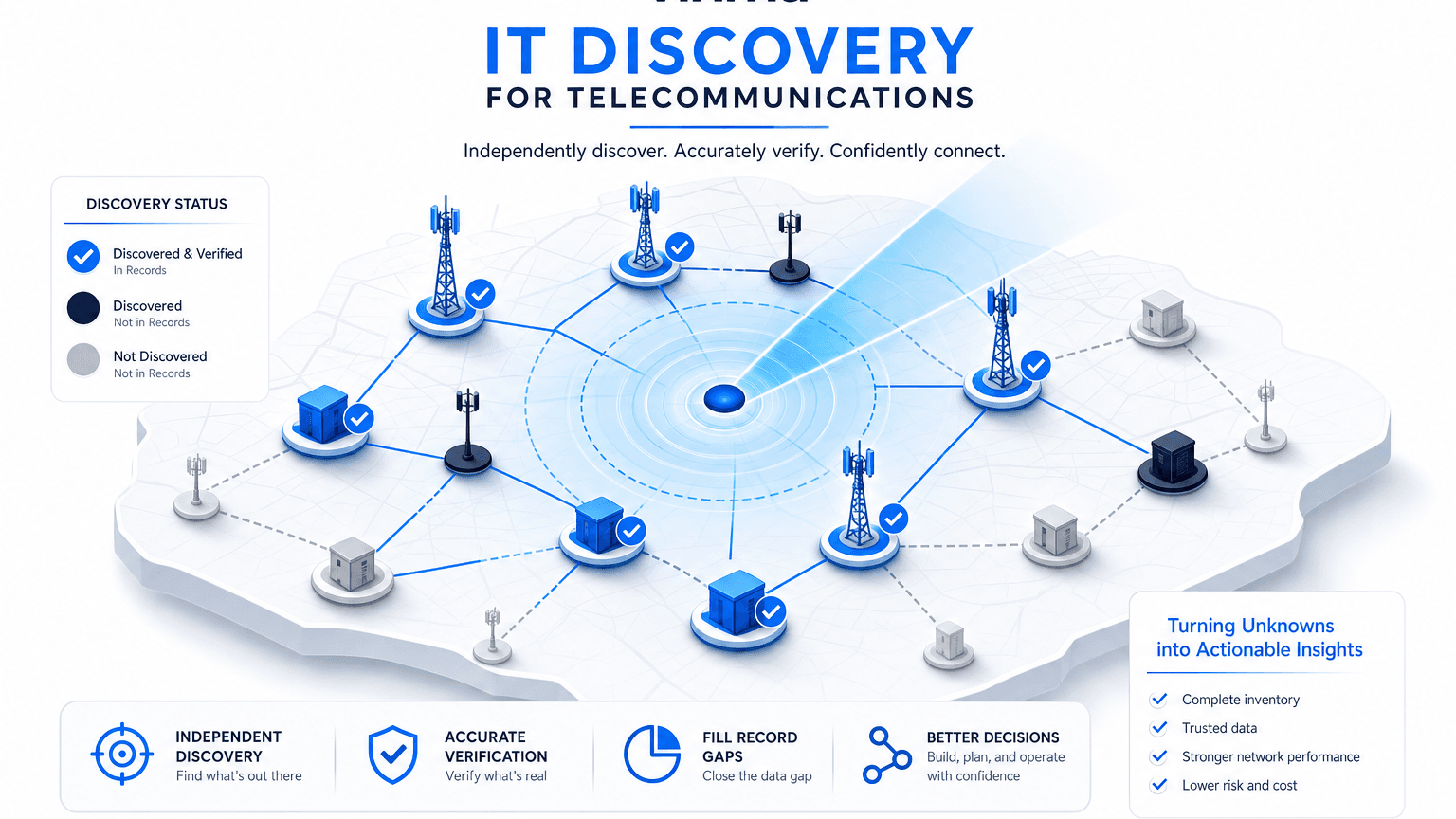
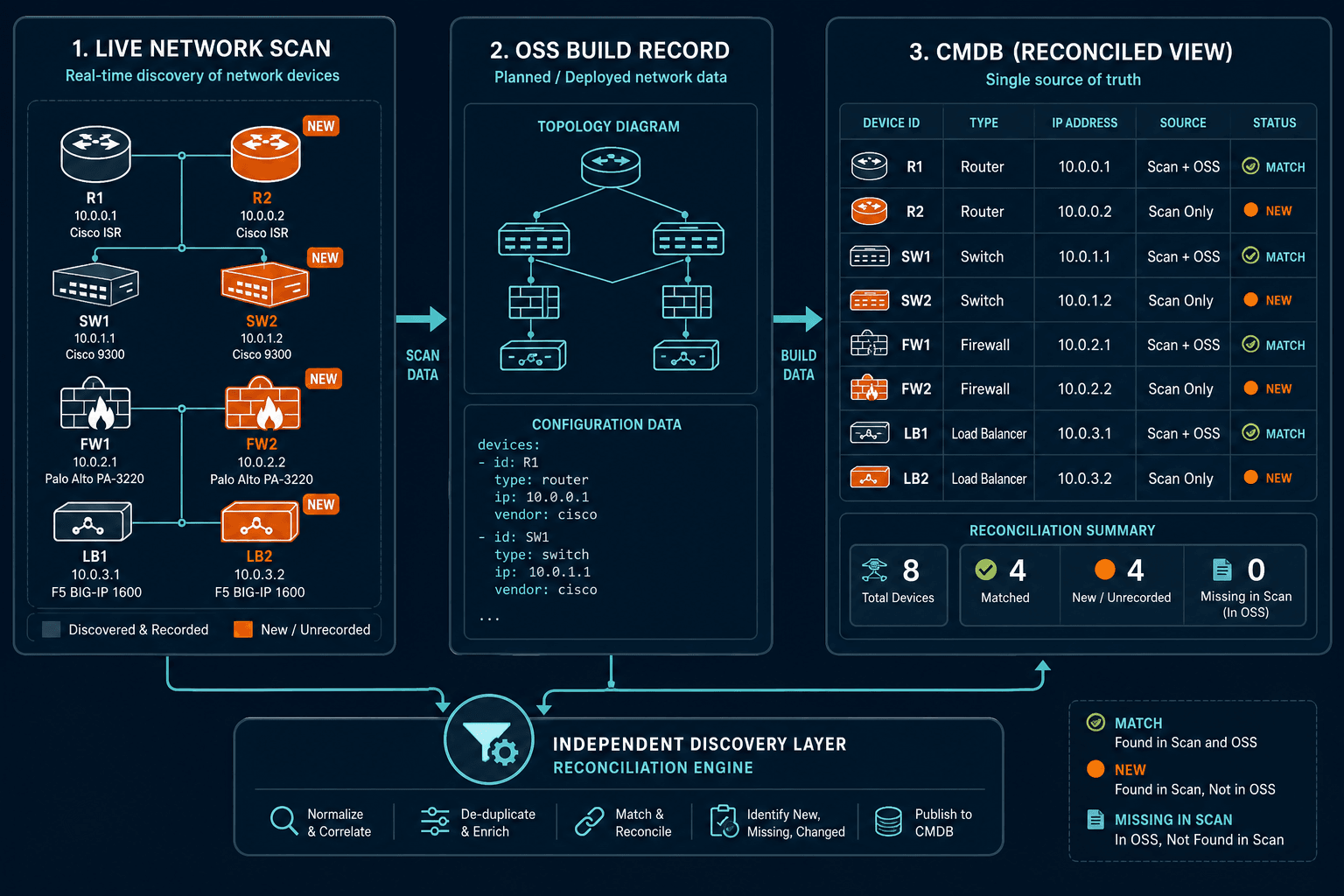
IT Discovery using agentless scanning across SNMP, ICMP, SSH, and WMI protocols finds and classifies reachable assets on the network, regardless of whether a build record was submitted. Routers, switches, firewalls, and load balancers are identified as distinct configuration item types based on scan data.
A one-time sweep does not maintain accuracy. New sites go live continuously, requiring discovery to run on a recurring cadence to keep pace with build velocity. Virima IT Discovery is built for recurring scheduled scans across distributed network estates.
Reconciliation makes discovery data operationally usable — this is the core of telecom CMDB reconciliation: when a live scan, an OSS build record, and a field update conflict, defined authority rules resolve the discrepancy by source reliability rather than update recency. Every configuration item traces back to its source, protocol, and timestamp, feeding a CMDB built to keep that record straight. The mechanics of authority-rules reconciliation are detailed in Virima’s guide to asset discovery and reconciliation automation.
Virima IT Discovery is an independent verification layer. It confirms what is running against what design and inventory records claim, operating alongside existing telecom OSS platforms without replacing them.
Where to start: scoping discovery against build reality
A practical starting point is identifying site types and network segments most susceptible to inventory drift.
Indoor 5G small cells represent the fastest-growing site category in recent WIA data, with 27,850 nodes added in a single year. Because they are geographically distributed and deployed rapidly, their as-built records frequently diverge from physical installations.
Network segments undergoing expansion or contractor turnover carry the highest probability of inventory drift. Cross-referencing discovered devices against serviceable-location data submitted in the FCC Broadband Data Collection filing highlights where discovered state and filed data diverge, resolving inventory and regulatory alignment in a single pass.
Any discovered device lacking an owner, site record, or documentation is exactly the kind of unmanaged network device telecom operators lose track of between builds. Independent discovery surfaces these assets before they create operational or security incidents. Teams scoping a broader reconciliation rollout can start with Virima’s CMDB implementation guide for the wider rollout mechanics.
Verify what is running, not just what was planned
In telecommunications, undiscovered network devices are rarely intentionally hidden. They are installed by approved crews faster than administrative workflows process the paperwork.
Expecting a shrinking field workforce to eliminate inventory gaps through manual data entry conflicts with labor realities. Decoupling discovery from the build process, running protocol-based scans on a recurring schedule, and reconciling findings into a CMDB using defined authority rules resolves inventory drift without adding administrative overhead to field crews.
Frequently Asked Questions
Why do newly installed telecom network devices go unrecorded in OSS inventory?
The physical build and the OSS inventory update are two separate steps. Contractor crews complete installations on schedule, but logging what was installed, where, and with what configuration is a separate administrative task. When crews move fast across dispersed sites with compressed margins, that task gets deferred — and the network outgrows its own record.
What risks does an inaccurate telecom network inventory actually create?
An inaccurate inventory creates operational, security, and regulatory risk. Change impact analysis and fault isolation depend on accurate device data, so gaps mean slower incident response. Unmonitored network segments are also unmonitored attack surface, where intrusions can persist undetected. And the FCC’s semi-annual Broadband Data Collection filing requires network data matched against the national Broadband Serviceable Location Fabric — inventory gaps carry straight through to that filing.
How is IT discovery for telecommunications different from standard enterprise network discovery?
Enterprise discovery targets devices that appeared outside sanctioned channels. In telecom, the devices that go unrecorded were part of approved builds. The problem is build velocity and geographic scale: thousands of dispersed sites turned up by independent contractor crews, each a separate potential point where as-built data doesn’t make it back to a central system of record. The inventory gap in telecom is a capacity and velocity problem, not a governance failure.
How does Virima IT Discovery work for carrier network environments?
Virima’s IT Discovery uses agentless scanning via SNMP, ICMP, SSH, and WMI to find and classify network devices based on what’s actually live and reachable, independent of build plan records. Routers, switches, firewalls, and load balancers are identified as distinct configuration item types. Findings are reconciled into a CMDB using defined authority rules, so when the discovered state, the OSS build record, and a field update disagree about a device, the system resolves the conflict by source reliability, with full source, protocol, and timestamp traceability on every CI.
Does Virima IT Discovery replace existing telecom OSS and inventory platforms?
Virima’s IT Discovery works as an independent verification layer alongside OSS and inventory-of-record platforms — it does not replace them. OSS platforms such as VC4, Netcracker, and Ciena Blue Planet manage planned builds and provisioning records. Virima confirms what’s actually running on the network against what those records claim, then feeds reconciled findings into the CMDB with full traceability back to source.