Why High Availability Alone Won’t Survive a Regional Outage

IT operations teams frequently treat disaster recovery and high availability as interchangeable resilience strategies. This confusion leads to budget misallocation and leaves infrastructure exposed when unexpected failures occur. High availability minimizes localized system downtime through redundant hardware, clustered nodes, and automatic failover mechanisms. Disaster recovery focuses on restoring full operational capability after a catastrophic event compromises an entire primary data center or region.
Understanding where high availability ends and disaster recovery begins is essential for building a resilient enterprise infrastructure. Both strategies require accurate visibility into underlying IT assets, application dependencies, and service maps to achieve their recovery metrics.
What Happens When Resilience Systems Fail to Coordinate
On October 20, 2025, a DNS resolution failure hit the DynamoDB API endpoint in AWS’s us-east-1 region in Northern Virginia. Many of the organizations affected had built exactly the kind of high availability architecture cloud providers recommend. Workloads were spread across all six availability zones, with automated health checks and instant failover between nodes.
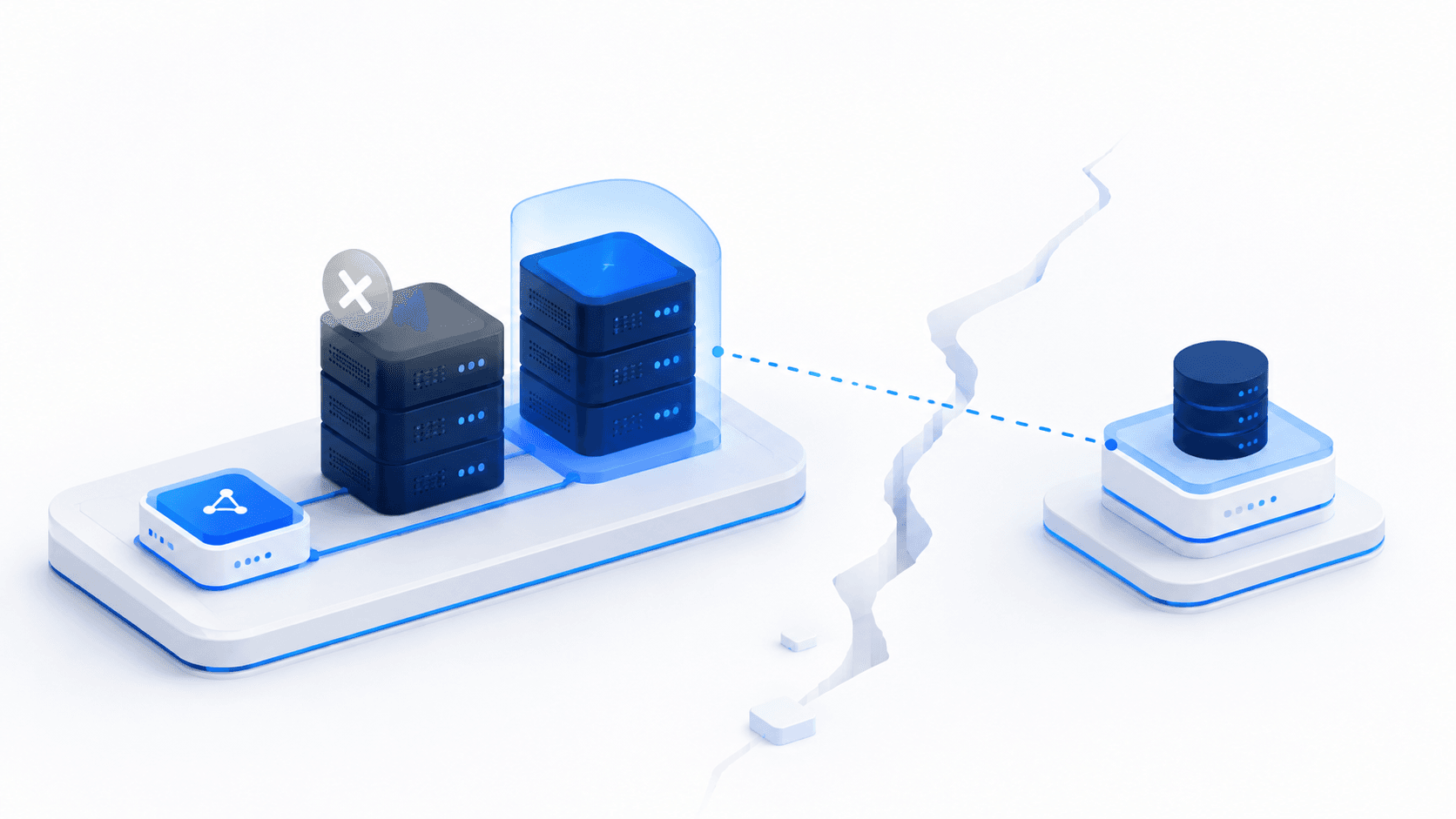
None of that mattered here, since the failure hit the region’s control plane rather than an individual component. Every availability zone lost the ability to resolve DynamoDB requests at the same time, and deployments spread across all six zones went down together. The outage lasted more than fifteen hours and disrupted Snapchat, Fortnite, Duolingo, Signal, and numerous banking applications worldwide.
High availability across multiple zones protects against the failures it is designed for: a bad server, a failed disk, a single rack losing power. It does not protect against a failure at the regional level. Only a true disaster recovery architecture, with an independent standby region, would have kept those services running.
Core Architectural Differences: Disaster Recovery vs High Availability
High availability and disaster recovery solve distinct operational problems using different mechanisms, metrics, and recovery scopes. High availability acts as a continuous operational shield against component-level faults. Disaster recovery serves as an emergency restoration protocol when primary operational environments become unrecoverable.
| Architectural Dimension | High Availability (HA) | Disaster Recovery (DR) |
|---|---|---|
| Primary Objective | Maintain continuous service uptime during minor hardware or software faults | Restore business operations and data state after major site-wide destruction |
| Scope of Protection | Single components, individual servers, network links, or localized clusters | Entire data centers, primary cloud availability regions, or corporate headquarters |
| Recovery Time Objective (RTO) | Real-time to seconds (automatic failover) | Minutes to hours (depending on cold, warm, or hot standby design) |
| Recovery Point Objective (RPO) | Near-zero data loss (synchronous data replication) | Variable data loss (seconds to hours based on backup frequency) |
| System Redundancy | Active-active or active-passive nodes within shared local networks | Geographically separated standby infrastructure across distinct fault domains |
| Trigger Mechanism | Automated load balancers, health checks, and clustering heartbeats | Manual invocation by IT leadership following disaster declaration protocols |
| Typical Cost Structure | Higher baseline infrastructure spend due to duplicate active systems | Variable cost model utilizing cloud targets, warm standby nodes, or cold backups |
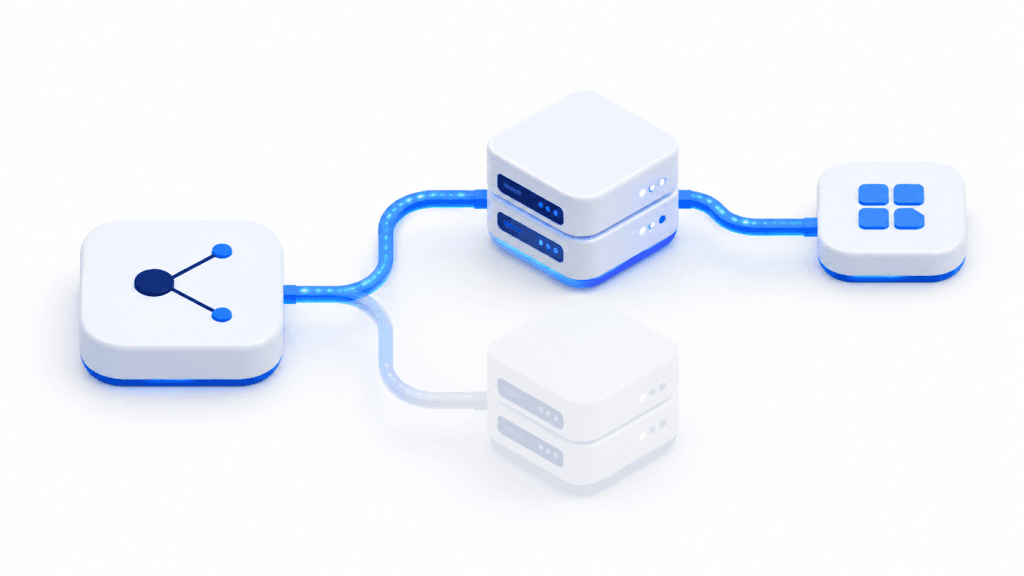
High availability systems operate within a single fault domain or tightly coupled regional availability zones. They rely on heartbeats to detect server crashes, switching traffic instantly to healthy nodes without user intervention. Disaster recovery spans decoupled fault domains across distinct geographical locations to protect against regional power loss, severe weather, or widespread cyberattacks.
Measuring Resilience: Comparing RTO and RPO Targets
Recovery Time Objective (RTO) defines the maximum acceptable duration of system downtime following an outage. Recovery Point Objective (RPO) measures the acceptable threshold of data loss expressed in time. Designing an infrastructure strategy requires balancing these targets against organizational budget constraints.
High availability architectures target near-zero RTO and RPO metrics for routine component failures. When a primary web server fails, a load balancer redirects traffic to secondary instances within milliseconds, keeping RTO near zero. Synchronous database clustering writes transactions to multiple nodes simultaneously, preserving data integrity to keep RPO at zero.
Disaster recovery accepts distinct RTO and RPO windows based on business criticality. Achieving an RTO under fifteen minutes for an entire secondary site requires warm standby clusters and automated DNS redirection. An RPO of five minutes demands continuous asynchronous data replication across WAN connections. Attempting to force zero RTO and zero RPO across a global disaster recovery site dramatically increases bandwidth costs and architectural complexity.
What is the main difference between disaster recovery and high availability?
High availability prevents downtime from localized component failures through automatic failover in shared environments. Disaster recovery restores business operations after catastrophic events destroy primary site infrastructure, using geographically separated secondary environments with defined RTO and RPO targets.
Why Modern Infrastructure Needs Both Strategies Working Together
High availability and disaster recovery are complementary layers within a comprehensive business continuity framework. Relying on high availability alone leaves organizations vulnerable to regional disasters, widespread ransomware encryption, and cascading configuration errors. Relying solely on disaster recovery forces minor hardware failures into extended recovery windows that disrupt daily business.
Cloud redundancy adds another wrinkle to this. In May 2024, a misconfigured deployment tool at Google Cloud auto-deleted UniSuper’s private cloud environment across both zones in its region. Google’s own incident report confirms independent backups held with a separate provider, part of UniSuper’s own architecture, were what enabled recovery. Built-in cloud redundancy was not disaster recovery on its own.
A resilient enterprise architecture layers active high availability clusters inside primary data centers while continuously replicating state to off-site disaster recovery environments. Front-end load balancers manage local server failures, while asynchronous storage replication maintains remote standby databases. This dual approach ensures immediate resilience for routine maintenance alongside long-term protection against major outages.
Maintaining this multi-layered protection requires clear visibility into how applications, servers, and storage assets connect. Enterprise environments change constantly as developers deploy new microservices and cloud resources. Without accurate operational visibility, high availability node additions remain unmapped, and disaster recovery replication schedules miss new storage volumes. Configuration drift, when actual infrastructure diverges from documented configurations, can break both HA failover logic and DR runbook procedures.
To maintain accurate disaster recovery configurations and prevent HA failures from hidden dependencies, IT teams must continuously track underlying asset dependencies across hybrid and multi-cloud environments using service mapping tools.
The CMDB Role in Unifying High Availability and Disaster Recovery
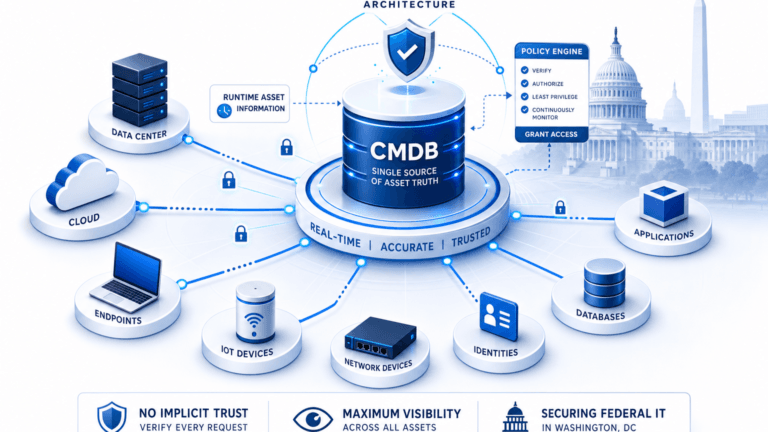
A Configuration Management Database (CMDB) serves as the operational foundation for both high availability and disaster recovery programs. High availability failover rules depend on accurate mapping of IP addresses, load balancer pools, and cluster memberships. Disaster recovery plans require detailed inventories of server configurations, storage volumes, license keys, and application dependencies.
Outdated or incomplete CMDB data introduces severe risk into failover execution. If a primary database server connects to unmapped middleware, the secondary disaster recovery site will fail to initialize properly during an outage. Similarly, high availability clusters can suffer split-brain scenarios if heartbeat configurations do not match mapped network paths across nodes.
Automated IT discovery ensures the CMDB reflects real-time infrastructure changes across physical, virtual, and cloud tiers. Continuous discovery identifies newly provisioned servers, tracks software patch levels, and records configuration modifications as they occur. This structural insight allows IT teams to audit high availability cluster health and update disaster recovery runbooks automatically. A well-maintained CMDB reduces incident resolution time by ensuring teams know exactly which infrastructure components matter and how they connect.
Organizations looking to establish accurate infrastructure visibility can evaluate Virima’s Trusted Runtime Truth to maintain precise operational data across hybrid environments.
How Virima Supports High Availability and Disaster Recovery Management
Virima provides automated discovery, CMDB capabilities, and ViVIDTM service mapping that strengthen both high availability and disaster recovery operations. By combining agentless network discovery with application dependency mapping, Virima delivers complete visibility into complex enterprise architectures.
Immediate Operational Impact
Virima automatically maps relationships between physical servers, virtual machines, cloud instances, and storage arrays. This visibility helps IT teams verify that high availability nodes reside on separate physical hardware and distinct power sources, eliminating single points of failure. Teams can identify configuration drift before it causes failover failures and audit cluster heartbeat paths to prevent split-brain scenarios.
Understanding MTBF vs. service availability metrics alongside your CMDB data reveals whether you’re optimizing for failure prevention or recovery speed. Virima’s frequent discovery surfaces both dimensions, helping teams balance investments across high availability infrastructure and disaster recovery capabilities.
Long-Term Accuracy and Compliance
For disaster recovery planning, Virima builds dynamic business service maps that link underlying infrastructure to critical business functions. During disaster recovery testing or actual site recovery, these service maps reveal precise restoration sequences, ensuring database tiers initialize before dependent application servers. This accuracy prevents cascading failures where dependent services attempt to start before their prerequisites are ready.
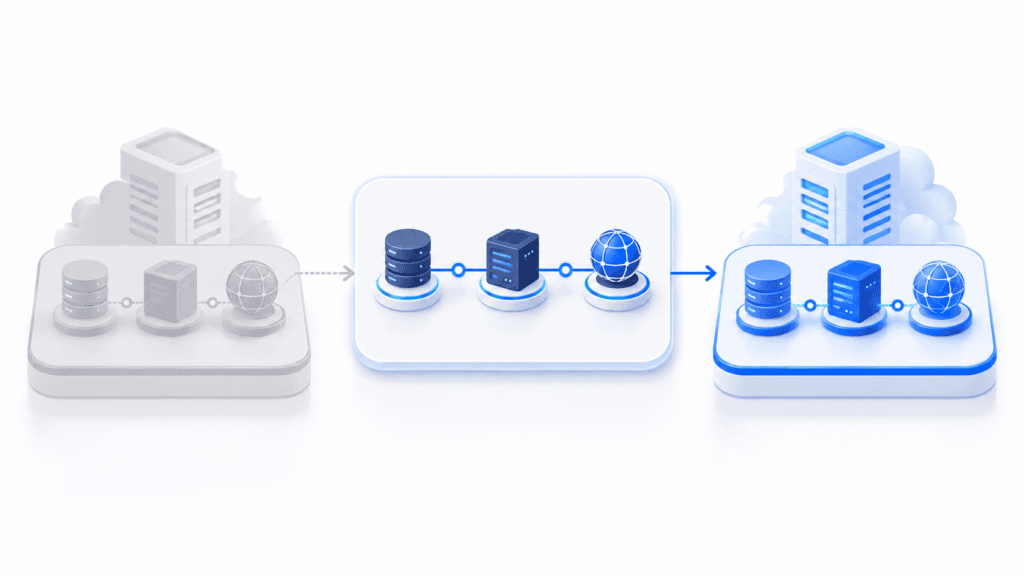
Service mapping specifically designed for disaster recovery planning ensures that recovery procedures stay current as infrastructure changes. New applications, cloud resources, and database clusters are automatically added to service maps as they deploy, preventing runbooks from becoming outdated references.
Integration with Existing Workflows
Virima integrates directly with major ITSM platforms including ServiceNow, Jira Service Management, and Ivanti, allowing teams to trigger disaster recovery workflows and track configuration changes across environments. Change history, incident records, and problem tickets surface directly in ViVIDTM service maps, so IT teams see the blast radius of each change before approving it. SLA monitoring and service health dashboards built on discovery-driven CMDB data reveal which services are at risk and why, enabling teams to prioritize both high availability hardening and disaster recovery investments.
Moving from Manual Dependency Tracking to Map-Driven Resilience
| Challenge (Today) | Map-Driven Approach |
|---|---|
| Manual Excel sheets documenting dependencies; updates lag reality by months | Automated service maps refresh continuously as infrastructure changes |
| HA failover testing discovers unmapped middleware dependencies; recovery fails mid-test | Service maps identify all dependencies before testing; recovery procedures execute correctly |
| DR runbooks list servers by hostname; teams spend hours reverse-engineering which applications depend on which databases | Service maps show application-to-database chains visually; restoration order is clear and executable |
| Configuration drift goes undetected until outage; hidden changes break HA heartbeat paths | Continuous discovery flags configuration changes immediately; teams review and approve before deployment |
| CMDB updates require manual ticket submission and cycle through change queues slowly | Discovery automatically enriches CMDB with real-time data; runbooks and playbooks stay current |
Benefits Cascade: From Planning to Execution
- Faster Disaster Recovery Testing: When disaster recovery teams can visualize the entire infrastructure dependency chain in ViVIDTM service maps, they design realistic test scenarios in hours instead of weeks. Test success rates climb because teams aren’t discovering hidden dependencies mid-execution.
- Reduced High Availability Failures: High availability cluster health checks succeed consistently when heartbeat configurations match actual network paths. Virima’s frequent discovery ensures the CMDB reflects real network topology, preventing configuration drift from breaking failover when you need it most.
- Fewer Configuration Errors During Incidents: When your incident response team opens a service map during an outage, they see which components are affected, what their dependencies are, and who owns each tier. Recovery becomes coordinated and methodical rather than chaotic and error-prone.
Getting Started: Five Steps to Resilience Visibility
- Deploy automated discovery across your physical, virtual, and cloud infrastructure. Let agentless scanning build an initial CMDB baseline without manual data entry.
- Map critical business services in ViVIDTM. Identify which infrastructure components matter for your tier-1 applications and business functions.
- Audit high availability clusters against the service maps. Verify that HA nodes are on separate fault domains and that heartbeat paths match documented network topology.
- Review disaster recovery runbooks against service maps. Ensure restoration sequences respect application dependencies and that all systems are included.
- Establish continuous validation. Run automated discovery on a regular cycle (weekly or daily) so your CMDB and service maps stay current as your infrastructure evolves.
Discover how Virima simplifies disaster recovery planning and strengthens high availability operations by visiting Virima’s schedule demo page.
Frequently Asked Questions
Can high availability eliminate the need for disaster recovery planning?
No, high availability cannot eliminate disaster recovery needs. High availability protects against localized component failures within a site, but regional disasters, ransomware attacks, or site-wide power outages require dedicated disaster recovery environments and process runbooks.
How do RTO and RPO differ between high availability and disaster recovery?
High availability targets near-zero RTO and RPO through instant automated failover and synchronous replication. Disaster recovery defines realistic recovery time and data loss thresholds based on business impact, accepting longer recovery windows for major site restoration.
Why is automated service mapping important for disaster recovery?
Automated service mapping identifies hidden application dependencies across hybrid networks. Virima automatically generates dynamic maps, ensuring disaster recovery teams restore infrastructure components in the correct operational order without missing critical database or middleware links.
How often should enterprise disaster recovery plans undergo validation testing?
Enterprise organizations should conduct disaster recovery validation testing at least annually, or whenever major infrastructure changes occur. Using discovery tools to track ongoing environment modifications helps maintain accurate test scenarios between formal annual recovery drills.
How does a CMDB improve high availability configuration management?
A CMDB tracks cluster relationships, load balancer configurations, and server hardware allocations. Virima’s frequent discovery keeps cluster data current, helping administrators detect single points of failure and misconfigured standby nodes before localized outages happen.