CMDB-Backed Incident Management: How Real-Time CI Data Reduces MTTR and Speeds Up Root Cause Analysis

Virima 6.1.1 — Published by Virima, Inc.
When a major incident stretches into hour two, the most common conversation in the bridge call is not “how do we fix it” — it is “what is actually affected?” Engineers debate which servers are in scope. Nobody is certain which downstream services depend on the failing component. Three different teams check three different systems to get three different answers about what changed in the last 24 hours.
This is a data problem. The skills to resolve the incident are present in the room. The accurate, real-time picture of the environment is not.
Long mean time to resolution (MTTR) is almost always a consequence of insufficient asset context — not insufficient talent. When incident responders do not have immediate access to the full CI record, its dependencies, and its service relationships, they reconstruct that picture manually under pressure. That reconstruction takes time, introduces errors, and delays every decision downstream.
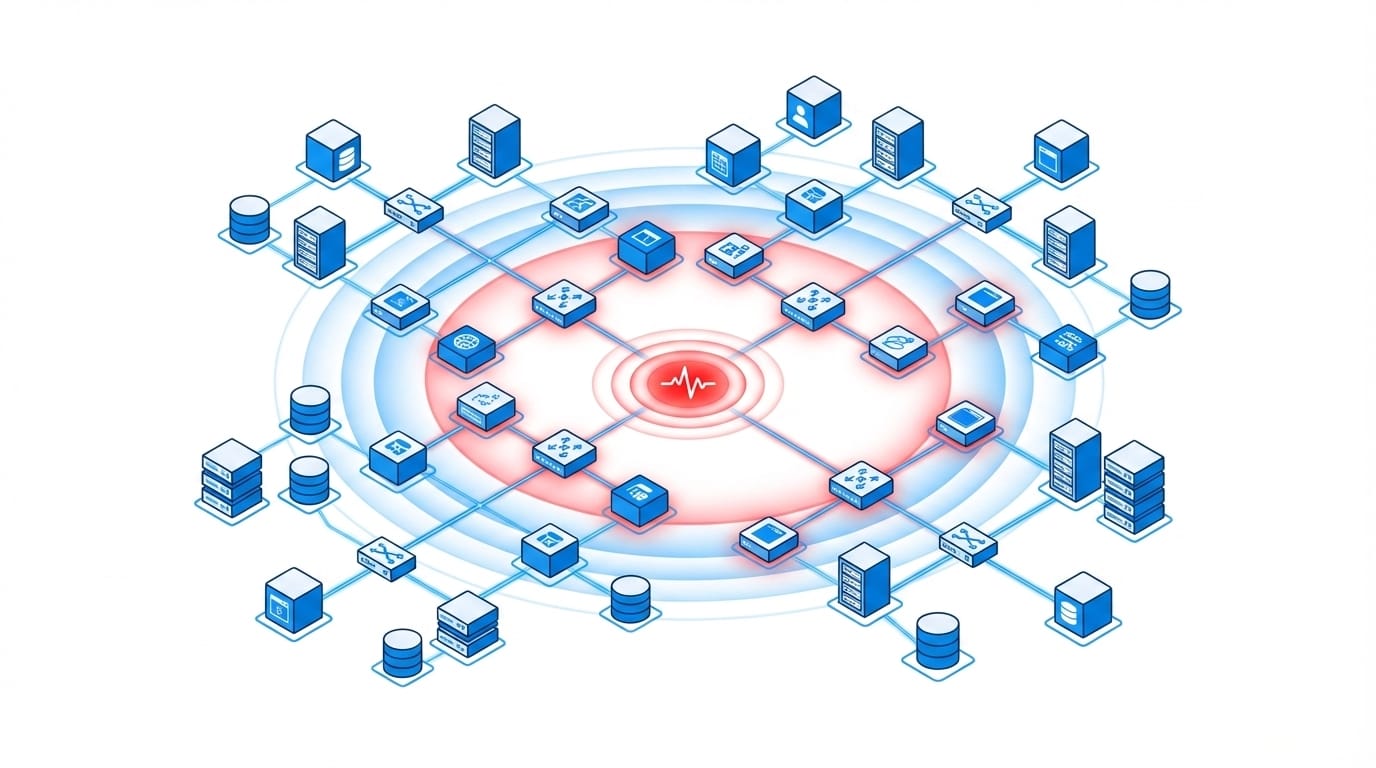
Virima 6.1.1 solves this by connecting every incident to its CMDB configuration item at the moment the incident is created, and by overlaying incident impact on ViVID Service Maps so the blast radius is visible from the first minute of response.
Why Incident Management Without CMDB Context Is Incomplete
An incident record without a CMDB link is essentially a complaint with a ticket number. It captures what the user reported and when, but not the infrastructure reality behind the problem.
Consider what is missing without CMDB context:
- Which physical or virtual server is the root cause? Incident descriptions are user-reported — they reflect symptoms, not systems. “The application is slow” tells you nothing about which CI to investigate.
- What changed on this CI recently? Recent changes are often the root cause. Without CMDB change history linked to the incident, responders search for changes manually across multiple tools.
- What other services depend on this CI? Without service dependency data, responders cannot assess impact scope. They find out what is affected only when downstream teams report their own outages.
- Who owns this CI? CMDB ownership data eliminates the “who do we escalate to?” delay that extends every incident bridge call.
ITIL v4 explicitly requires CI linkage in incident records for this reason. It is not a nice-to-have — it is a foundational requirement for effective incident management.
How Virima Links Every Incident to a CMDB Configuration Item
In Virima 6.1.1, every incident carries a CI relationship. When an incident is created — whether by a user, an automated monitoring tool, or an event management system — the CI affected by the incident is identified and linked to the incident record.
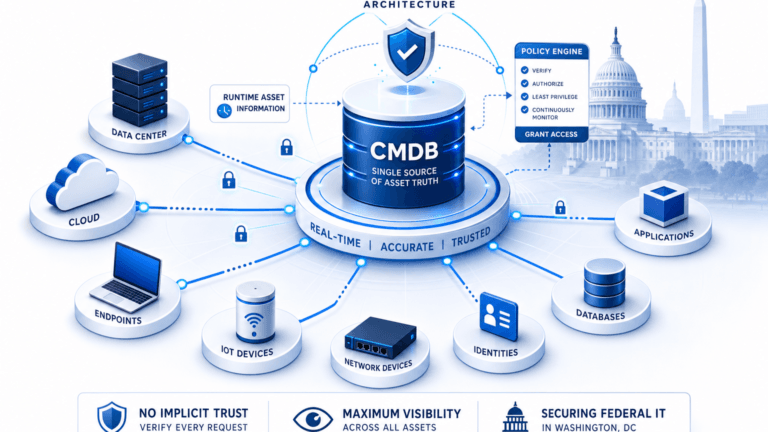
This linkage is not a manual lookup. Virima’s discovery-backed CMDB contains a current, accurate record of every CI in the environment. When an incident references a system, application, or service, Virima matches it to the correct CI record and attaches the full CI context to the incident:
- CI classification and description
- Hardware or software specifications
- Current configuration attributes
- Owner and assigned support group
- Change history
- Related CIs and dependencies
- Service map position (via ViVID)
This context is available to the incident responder within the ticket — not in a separate CMDB interface they have to navigate to independently. The data comes to the responder. The responder does not chase the data.
How Incidents Are Automatically Created
Virima 6.1.1 supports automated incident creation from multiple source channels:
Email: Incoming emails to a defined support address automatically create incident records. Virima parses the email content to populate incident fields and associates the CI based on the system or service referenced.
Self-service portal: End users submit incidents through the Virima self-service portal. Portal submissions include guided CI selection so users describe the affected system in structured terms, improving CI linkage accuracy.
Monitoring and event management tools: Virima integrates with monitoring tools and event management systems. When a threshold breach or alert fires, Virima automatically creates an incident, links it to the affected CI, and assigns it based on SLA routing rules — all before a human reads the alert.
Manual creation by service desk: Service desk agents create incidents directly in Virima, with CI search and selection available inline during ticket creation.
Automated incident creation from monitoring tools is particularly valuable for MTTR reduction. By the time a responder opens the incident, the CI is already identified, the service map context is already attached, and SLA routing has already assigned it to the correct team.
Seeing the Full Blast Radius on ViVID Service Maps
ViVID is Virima’s automated service mapping capability. It builds and maintains visual, dependency-aware maps of IT services — showing exactly which CIs support which services and how services relate to each other.
When an incident is active, ViVID overlays the incident on the affected CI’s position in the service map. Incident responders see:
- The incident CI — highlighted on the service map
- Upstream dependencies — CIs and services that feed into the affected CI
- Downstream dependencies — CIs and services that depend on the affected CI and are at risk of impact
- Full dependency chain — every node in the blast radius, not just first-degree relationships
This view answers the question “what else is affected?” in seconds — not after 45 minutes of bridge call debate. It also enables proactive communication: affected business units and downstream teams receive notification based on ViVID data, before they report their own outages.
The blast radius view also guides resolution sequencing. When restoring a complex service, the dependency chain shows which CIs to restore first — because some CIs must be operational before others can function. Responders follow the dependency map, not a mental model that may be weeks out of date.
ITIL v4-Compliant Incident Workflows in Virima
Virima 6.1.1 incident management is built on ITIL v4 principles, including the core incident management practices of detection, logging, classification, diagnosis, resolution, and closure.
Key ITIL v4 elements supported in Virima:
- Structured incident logging with mandatory CI linkage
- Classification and categorization by incident type, impact, and urgency
- Priority matrix — priority calculated from impact and urgency, driving SLA assignment
- Escalation rules — functional and hierarchical escalation paths defined by workflow
- Resolution and closure with documented resolution notes and CI state update
- Major incident management — distinct workflow for P1/P2 incidents with dedicated routing and stakeholder communication
Virima also includes a workflow generator that allows teams to build custom incident routing logic without code. New routing rules — for example, routing all database incidents to a specific DBA team, or routing incidents affecting PCI-scope CIs to the security team — activate without a development sprint.
SLA-Based Routing and Assignment
Every incident in Virima carries an SLA, derived from the incident priority. SLA timers begin at incident creation and drive routing decisions throughout the incident lifecycle.
SLA-based routing in Virima:
- Assigns the incident to the correct support group based on CI ownership, incident category, and priority
- Escalates automatically when SLA thresholds are approaching — without waiting for a manager to notice
- Re-routes incidents when the originally assigned team does not respond within the defined window
- Tracks SLA compliance across all incidents for reporting and trend analysis
For major incidents — P1 and P2 — Virima’s SLA routing ensures bridge call participants are assembled immediately and stakeholder notifications go out on schedule, without manual coordination overhead.
Using CMDB History for Pattern Analysis and Problem Management
Incident management and problem management are distinct processes, but they share a foundation: CI data. When multiple incidents affect the same CI or the same class of CIs, the CMDB history provides the pattern evidence that elevates an incident investigation to a formal problem.
Virima 6.1.1 supports this in two ways:
CI-level incident history: Every CI record shows the history of incidents linked to it — how many incidents, when they occurred, and what resolutions were applied. A CI with a recurring incident pattern is a candidate for a problem record, regardless of whether any individual incident was escalated.
Change-incident correlation: CMDB change history for a CI is accessible within the incident record. If a change was made to a CI two hours before an incident was created, the correlation is immediate and visible — reducing root cause investigation from hours to minutes in the common case where a change caused the incident.
This connection between incident data and CMDB change history is what ITIL v4 describes as the interface between incident management and problem management. Virima makes it operational by keeping both in the same data layer.
IBM’s Cost of a Data Breach Report 2024 found that organizations using automation in incident response workflows contain incidents significantly faster than those relying on manual processes. CMDB-backed CI linkage and change-incident correlation are central to that speed advantage.
CMDB-Backed Incident Management vs. Standalone ITSM Tools
| Capability | Standalone ITSM | Virima CMDB + Incident Management |
|---|---|---|
| Incident ticketing | Yes | Yes |
| CI linkage on every incident | Manual, often incomplete | Automatic, from CMDB discovery |
| Real-time service dependency context | No | Yes (ViVID Service Maps) |
| Automated incident creation from monitoring | Varies | Yes |
| CMDB change history in incident context | No | Yes |
| SLA-based routing and escalation | Varies | Yes |
| ITIL v4-aligned workflows | Varies | Yes |
| Pattern analysis across incidents by CI | No | Yes |
The core limitation of standalone ITSM tools is that they depend on human-entered CI data. When the CMDB is a separate system that is manually maintained, CI linkage on incidents is only as accurate as the last manual update — which is often weeks or months out of date.
Virima’s incident management runs on the same CMDB that is continuously populated by automated discovery. CI data in incidents is current because the CMDB is current.
Real-World Scenario: Resolving a Service Outage Faster with CMDB Context
Scenario: At 2:14 AM, monitoring tools detect elevated error rates on a customer-facing order processing application. An incident is automatically created in Virima, linked to the application server CI, and assigned to the on-call team — all within 30 seconds.
Without CMDB context: The on-call engineer opens the ticket and begins manually identifying which server, which database, and which downstream services are affected. By 2:45 AM, they have a partial picture. Stakeholder notifications go out at 3:00 AM. Resolution begins at 3:15 AM.
With Virima CMDB context: The engineer opens the ticket. The CI record is attached: application server specs, recent configuration changes (a deployment at 1:50 AM is flagged), and the ViVID service map showing the database server and payment gateway as downstream dependencies. The 1:50 AM deployment is the immediate investigative focus. Resolution begins at 2:35 AM. Stakeholder notifications include the full impact scope from ViVID — no follow-up notices needed as more affected services are discovered.
MTTR difference: 40+ minutes on a single incident. For major incidents that run for hours, the CMDB context advantage compounds.
Conclusion
Long MTTR is a data problem. When incident responders have immediate access to the affected CI’s full record, recent change history, and ViVID service map context, they resolve incidents faster — because they spend time on resolution, not reconstruction.
Virima 6.1.1 delivers CMDB-backed incident management that connects every incident to its CI, every CI to its service context, and every resolution to a documented, traceable record. The result is shorter incidents, fewer recurrences, and audit-ready documentation — built on a CMDB that is always current.
Frequently Asked Questions
Does Virima’s incident management work without an existing ITSM platform?
Yes. Virima 6.1.1 includes a complete, self-contained ITIL v4-aligned incident management module. It does not require a separate ITSM platform. For organizations that already use ServiceNow, Jira, Ivanti, HaloITSM, Hornbill, Xurrent, or TeamDynamix, Virima integrates with those platforms and enriches their incident records with CMDB and ViVID data.
How does Virima handle incidents that span multiple CIs?
Virima supports multi-CI incident linkage. A single incident record can reference multiple affected CIs, and the ViVID service map view reflects the full scope across all linked CIs. This is particularly useful for major incidents that affect infrastructure spanning multiple teams and service tiers.
Can Virima’s incident data feed into a formal problem management process?
Yes. CI-level incident history in Virima allows problem managers to identify recurring failure patterns across incidents linked to the same CI or CI class. Problem records in Virima can reference the contributing incident records, the affected CIs, and the change history that may have introduced the underlying defect — giving problem management teams the full data chain from symptom to root cause.