CMDB automation for Houston Ship Channel petrochemical and port logistics networks

A Ship Channel turnaround window opens on a Tuesday night. CAB already approved a firewall change that isolates a lab subnet at one chemical complex. Two hours in, a terminal gate application five miles down the waterway starts failing authentication — and nobody in the war room can prove, from the configuration management database (CMDB), which identity servers, middleware hops, and network paths that gate service still depends on. The spreadsheet inventory lists hosts, not relationships. CMDB automation Houston Ship Channel operators need means discovery-sourced configuration item (CI) population and dependency mapping that closes that exact gap before the next maintenance window opens.
That pattern is ordinary along the Houston Ship Channel, where plant IT, terminal systems, and headquarters cloud tenancies sit in one economic corridor spanning oil and gas, chemicals, and marine logistics. Spreadsheet CMDBs and last-scan-wins tools fail first at the relationship layer, not the inventory layer. What closes the gap is discovery-sourced CI population, multi-source reconciliation, dependency context, and change impact analysis before the next maintenance window — not more workflow rules stacked on incomplete records, and not a replacement for the process-control systems running the unit.
Why the Houston Ship Channel creates a multi-site CMDB problem
Port Houston describes the Houston Ship Channel complex as more than 200 private terminals and eight public terminals, collectively the nation’s largest port for waterborne tonnage. The same statistics page ties the complex to 1.89 million jobs in Texas and 3.53 million jobs nationwide. It also cites more than $538 billion in statewide economic value and nearly $987 billion in nationwide economic value. Houston ranks first among U.S. ports in foreign waterborne tonnage at 220.1 million short tons in 2024, and the same page cites U.S. Army Corps of Engineers data putting total Ship Channel tonnage at 309.5 million tons in 2023.
Container volume is real too, with a fifth-place U.S. TEU ranking and heavy Gulf Coast share on the same statistics page. For IT leaders, that volume is one more co-dependent layer of yard, gate, and commercial systems sitting alongside energy, chemicals, and corporate shared services in one corridor.
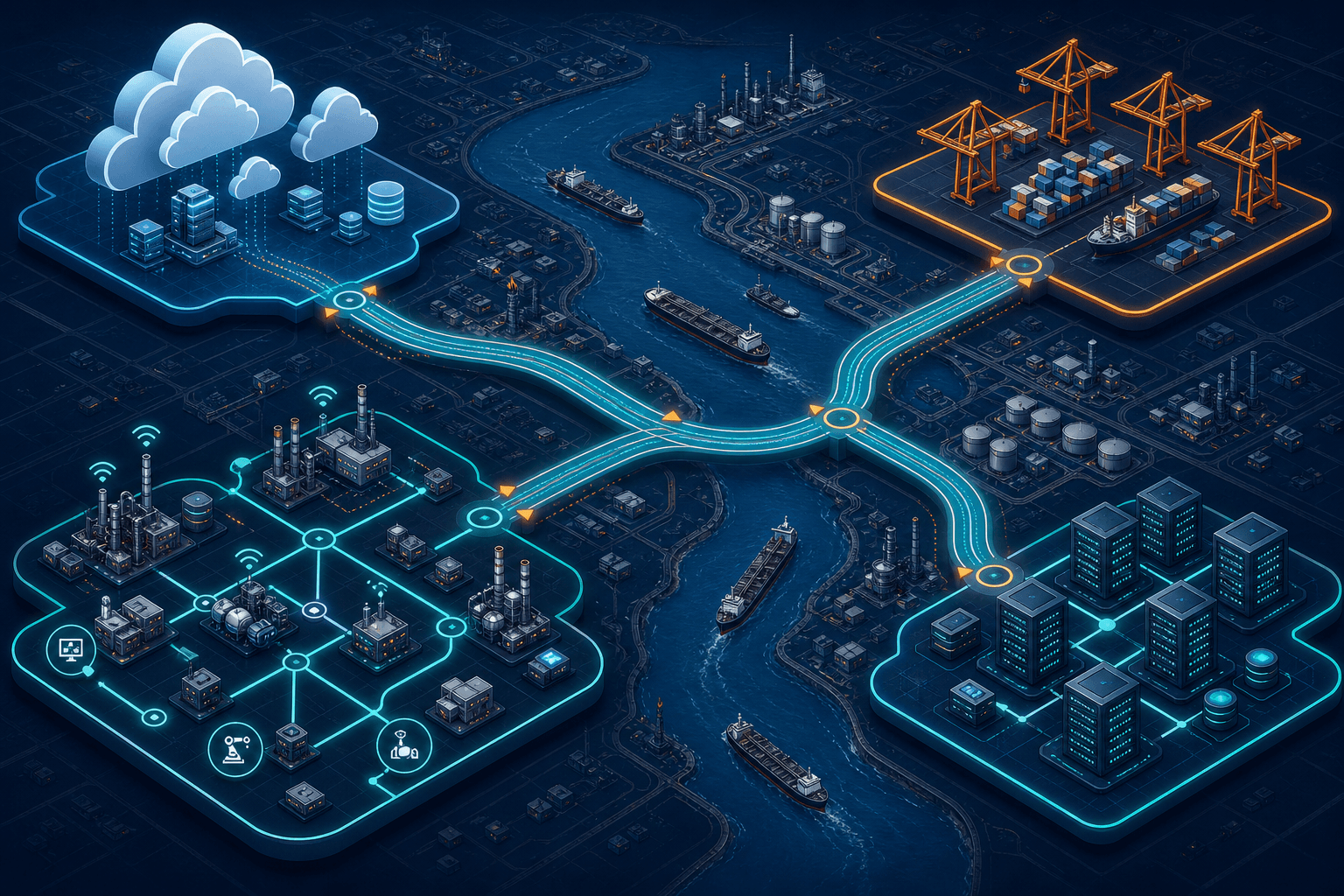
The Greater Houston Partnership still positions the region as the energy capital of the world. That concentration produces an estate pattern generic campus IT rarely sees. One operator may run headquarters applications in Azure or AWS, plant site networks with segmented IT-reachable segments, terminal office domains, and a commercial stack that books berths and product movements. A single change advisory board often governs work that crosses those domains even when local teams own day-to-day operations.
What breaks when CI relationships lag industrial change cycles
Industrial calendars do not wait for CMDB hygiene projects. Turnarounds compress network, server, and application change into short windows. Terminal operators ship releases against vessel schedules. Storm readiness drills force temporary routing and failover tests. Each cycle creates hosts, retires others, and rewires paths. Manual CI entry and quarterly spreadsheet merges lag that pace.
A configuration item (CI) relationship is the documented dependency between two CIs — the fact that one depends on the other, not just that both exist in the same inventory. The failure mode that hurts IT directors and CMDB owners is a missing relationship, not only a missing hostname. A host record can look complete while the map from that host to the gate system, laboratory path, or order service remains empty or stale. When an incident starts, site IT and central ops argue from different inventories. When CAB asks for blast radius, the answer becomes a conference call instead of a dependency path.
Last-scan-wins reconciliation makes the problem worse. An agentless network scan may correct a switch port one night and overwrite a richer agent inventory the next. Without multi-source rules, the CMDB stores conflict as churn, and operators lose trust and rebuild private trackers again. Multi-Source CMDB Reconciliation: Why Last-Scan-Wins Destroys Data Quality covers how reconciliation rules resolve exactly this kind of conflict.
CMDB automation that matters for Gulf Coast operators
Automation that only fires tickets on thin CI data still leaves the relationship gap open. Automation that matters for petrochemical CMDB automation work starts upstream.
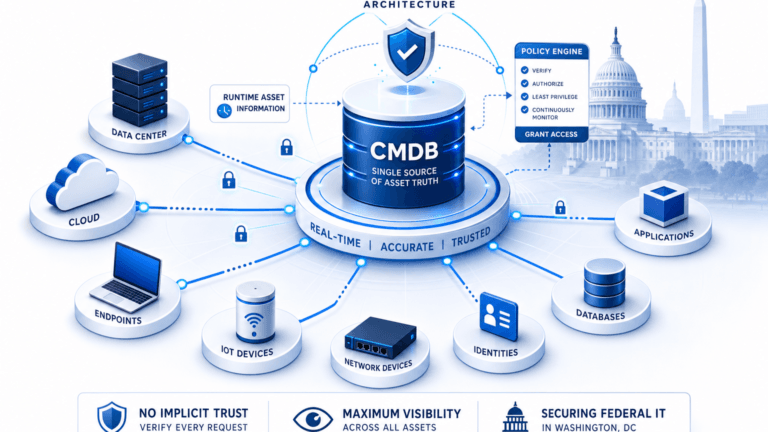
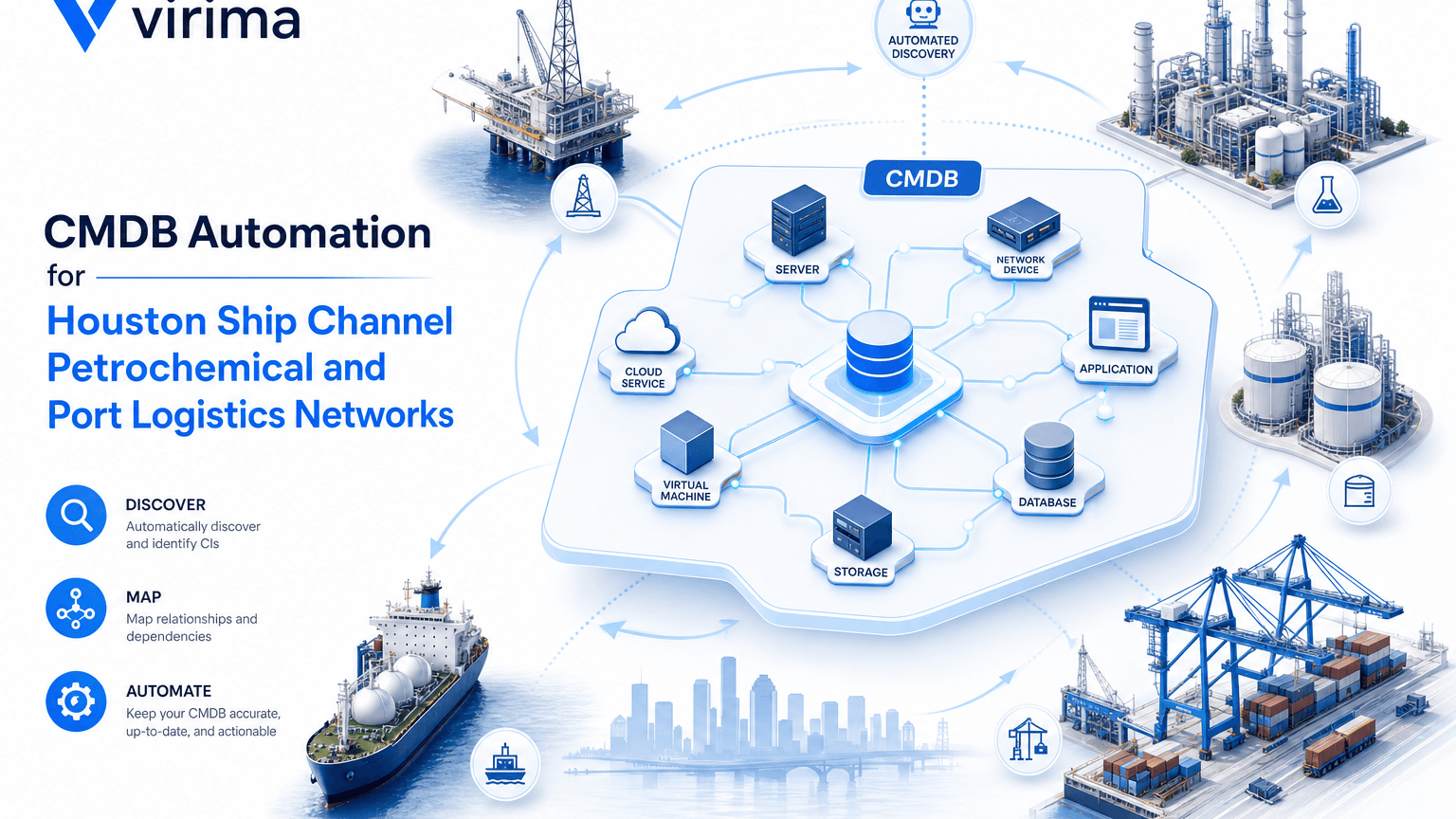
High-frequency discovery cycles, using agent-based discovery on endpoints and agentless credentialed scanning across network ranges, rebuild what is present in IT-reachable environments on a schedule operations teams design. Network device discovery brings routers, switches, and firewalls into the same model as servers. Cloud asset discovery covers AWS and Azure tenancies that hold shared services. Automated CI population writes those findings into the CMDB without re-keying spreadsheets after every turnaround.
Multi-source data reconciliation merges competing observations into one authoritative CI instead of letting the last job win. CMDB health scoring surfaces incompleteness and staleness before CAB week. Relationship mapping records how CIs depend on each other so change and incident workflows stop treating assets as isolated rows.
Virima’s IT discovery stack is built for that discover-and-reconcile path into an authoritative CMDB. Virima does not claim passive continuous real-time or event-driven discovery today. Scheduled, high-frequency discovery cycles are the honest operating model. Virima also does not replace OT and ICS inventories for PLCs, DCS nodes, or process historians. The correct boundary is enterprise IT and IT-reachable infrastructure that supports plants, terminals, and corporate systems.
What does CMDB automation mean for multi-site industrial IT?
CMDB automation for multi-site industrial IT means scheduled discovery populates configuration items, multi-source reconciliation resolves conflicts, and relationship maps stay current enough for change impact review. Ticket macros alone do not fix incomplete configuration item relationships across plant, terminal, and corporate domains.
Mapping business services across plants, terminals, and corporate IT
Inventory without service context still leaves directors answering “so what?” during outages. Service dependency mapping for turnaround and terminal work needs named business services leadership already recognizes. Illustrative examples include a gate and appointment service, a laboratory information path, a commercial order-to-cash path, or a shared identity service used by multiple sites. Those names are planning examples, not claims about any named customer.
Operators define which applications and websites compose each service. Definitions can arrive manually, from a spreadsheet import, or from enterprise architecture tools such as Lean IX. Once definitions exist, ViVID™ service maps build application-to-infrastructure dependency maps and keep those maps aligned as infrastructure discovery refreshes. Impact path tracing follows a failing CI up to the affected business service so site and central teams share one picture.
Service composition stays a human and architecture decision. Map building after that input is where automation removes manual redraw work. Ship Channel service maps must join plant, private terminal, public terminal interfaces, and corporate shared services when those layers share identity, middleware, or network paths. Skipping any layer recreates the Tuesday-night war room gap.
Change impact analysis before the maintenance window
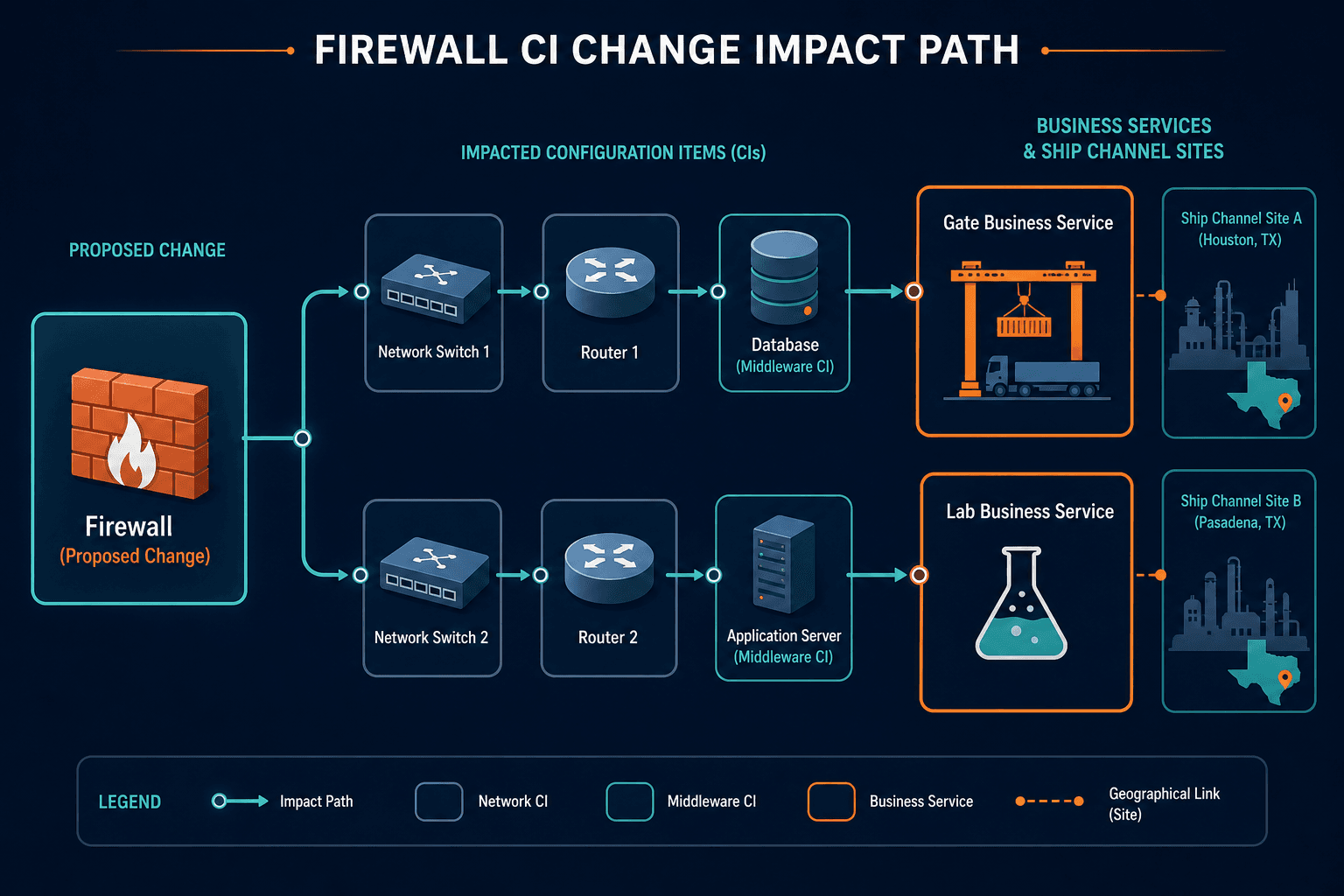
Change impact analysis for chemical plant IT and terminal IT is where CMDB automation earns trust in CAB. In IT change management, blast radius is the full set of configuration items and business services a proposed change can affect, directly or through dependency chains — without a discovery-sourced CMDB, teams estimate it from memory instead of a documented path. Before a firewall rule, hypervisor move, or middleware upgrade, owners need downstream CI impact and the business services on that path. Relationship-backed views turn verbal confidence into a documented blast radius that CMDB change reviewers can challenge with evidence.
Industrial windows raise the cost of surprise. A missed dependency can idle a lab release, block truck gates, or force a rollback that burns remaining turnaround hours. Anchor planning to Port Houston’s published scale of jobs and trade rather than a single historical outage quote. Unclear IT dependencies magnify already high industrial stakes.
Virima change impact analysis uses CI relationships to show downstream effects before approval. Change risk signals help IT operations management teams prepare windows with fewer unknown paths.
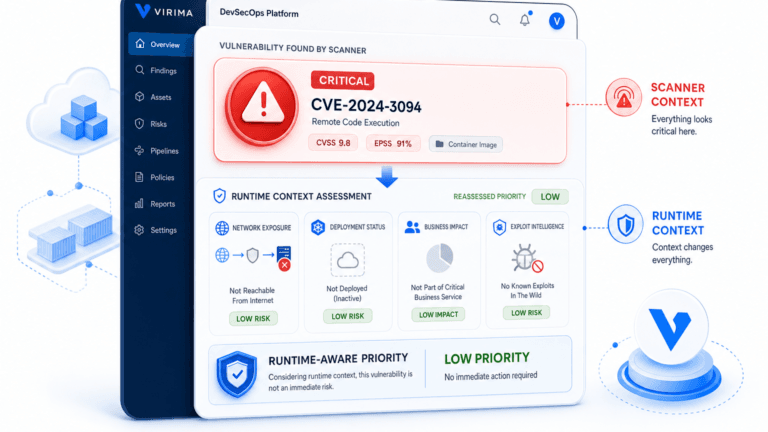
Eliminate data decay with discovery-sourced Trusted Runtime Truth so change reviewers see explainable inventory and dependency context before the window opens.
Why does change impact analysis fail without CI relationships?
Change impact analysis fails when the CMDB stores hosts without reliable relationships, because reviewers cannot trace downstream configuration items or named business services. Discovery-sourced relationship maps give CAB a documented blast radius path instead of a verbal inventory from each site team.
Fitting discovery-sourced CMDB data into existing ITSM platforms
Most Gulf Coast enterprises already run an IT service management platform for tickets, changes, and workflows. The practical requirement is enrichment, not a rip-and-replace story. Discovery-sourced CIs and relationships should sync into the CMDB the service desk already trusts so agents and change managers work from one record set during multi-site incidents and CAB reviews.
Across a Ship Channel footprint, that usually means keeping ServiceNow, Jira Service Management, Ivanti, HaloITSM, Xurrent, or Hornbill as the system of engagement while discovery authority reduces spreadsheet loads. Virima provides bi-directional ServiceNow CMDB sync, partner connectors, and REST APIs for custom hooks. How to Prevent Duplicate CIs and Sync Errors in ServiceNow CMDB Integration walks through how that sync keeps both systems aligned during high-change periods.
ServiceNow CMDB enrichment for multi-facility estates works when discovery authority sits outside brittle manual maintenance. The failure mode is ungoverned data entry and missing relationships, which can appear in any tool chain.
A practical rollout sequence for multi-facility Houston estates
A full-corridor big bang rarely survives plant change freezes. A tighter sequence fits Ship Channel operators better.
- Scope IT-reachable inventory by site class. Separate corporate shared services, one pilot plant, and one pilot terminal. Document credential owners and out-of-bounds OT segments explicitly.
- Design discovery schedules around industrial calendars. Align heavy scans with approved windows. Prefer high-frequency cycles on volatile segments rather than one annual census.
- Turn on multi-source reconciliation early. Decide which source wins for hardware identity, installed software, and network adjacency before parallel tools fight in production.
- Define a short list of business services. Enter or import compositions for the services CAB already argues about, then generate ViVID™ maps from that input.
- Wire impact views into change practice. Require relationship-backed impact notes on changes that cross site boundaries, including plant-to-terminal and terminal-to-corporate paths.
- Measure completeness and staleness. Track CMDB health on the pilot set (Before You Run AI Agents on ServiceNow, Answer These 5 Questions About Your CMDB outlines which fields to track), and expand site by site only after owners trust the pilot records.
Pure manufacturing CMDB programs often stay inside one plant stack. Retail and parcel logistics programs often optimize stores and distribution centers. Houston industrial logistics needs the plant-to-terminal-to-corporate join in pilot design even when the footprint stays small.
Download the Multi-Site CMDB Pilot Checklist — built from the sequence above — to scope a plant-and-terminal pilot before your next turnaround window. How to Build an AI-Ready CMDB Checklist for 2026
What Houston industrial IT leaders should demand from CMDB automation
Demand the following from any CMDB automation vendor:
- Discovery authority that covers plant IT-reachable segments, terminal environments, and corporate cloud — without pretending to be a full OT scanner
- Multi-source reconciliation so competing tools stop thrashing the same CI
- Relationship fidelity strong enough for change impact and incident response
- Service maps that start from operator-defined services and stay current as infrastructure changes
- ITSM sync that respects the platform your service desk already runs
- Honest language about scheduled discovery cycles, not real-time promises the product doesn’t ship
Port Houston’s published scale of terminals, tonnage, jobs, and economic value explains why incomplete CI relationships are an operational risk, not a documentation nicety. Trusted Runtime Truth here means explainable inventory and dependency context for the IT estate that keeps petrochemical and port logistics services movable under change pressure.
Leaders evaluating vendors should ask for a working session that starts with a simple multi-site diagram, not a feature tour. Bring one plant segment, one terminal segment, and the corporate shared services those sites depend on. Ask how discovery credentials, reconciliation rules, and service definitions would be staged without touching OT control networks. Ask how change impact would appear for a firewall or middleware change crossing those domains, and how CI records would land in the ITSM platform your service desk already uses. Those questions separate discovery-sourced CMDB automation from another spreadsheet migration project dressed as a platform upgrade.
CMDB automation Houston Ship Channel operators can defend in CAB starts with a working diagram, not a feature tour. Download the Multi-Site CMDB Pilot Checklist to scope discovery, reconciliation, and service definitions for one plant and one terminal segment before your next turnaround. How to Build an AI-Ready CMDB Checklist for 2026
Frequently Asked Questions
Why do multi-site industrial IT teams lose trust in their CMDB during turnarounds?
Turnarounds create rapid host, network, and application change across plant and shared services. When configuration item relationships stay manual or stale, CAB and incident teams cannot prove blast radius, so they rebuild private inventories and stop trusting the central CMDB.
What is the difference between a network map and a CMDB for terminal and plant operations?
A network map shows connectivity between devices. A CMDB stores configuration items, attributes, relationships, and business service context used in change, incident, and audit workflows. Terminal and plant operations need both, with the CMDB carrying service impact paths.
Can a CMDB replace OT asset inventories on a chemical unit?
No. OT and ICS inventories for controllers, safety systems, and process historians belong in specialized operational technology tools and processes. A discovery-sourced CMDB should cover enterprise IT and IT-reachable infrastructure that supports those units.
How does Virima automate CI updates without real-time passive discovery?
Virima runs agent-based and agentless discovery on high-frequency schedules your team defines, populates configuration items automatically, and reconciles multi-source results into authoritative records with relationships. That model refreshes the CMDB on an operations-controlled cadence rather than promising continuous passive event streams Virima does not ship today.
How does Virima work alongside ServiceNow for multi-facility CMDB accuracy?
Virima discovers and reconciles configuration items and relationships, then syncs bi-directionally with ServiceNow CMDB so service desk and change workflows keep using ServiceNow while discovery authority reduces manual CI maintenance across facilities. The pattern is augmentation of the ITSM platform you already run.