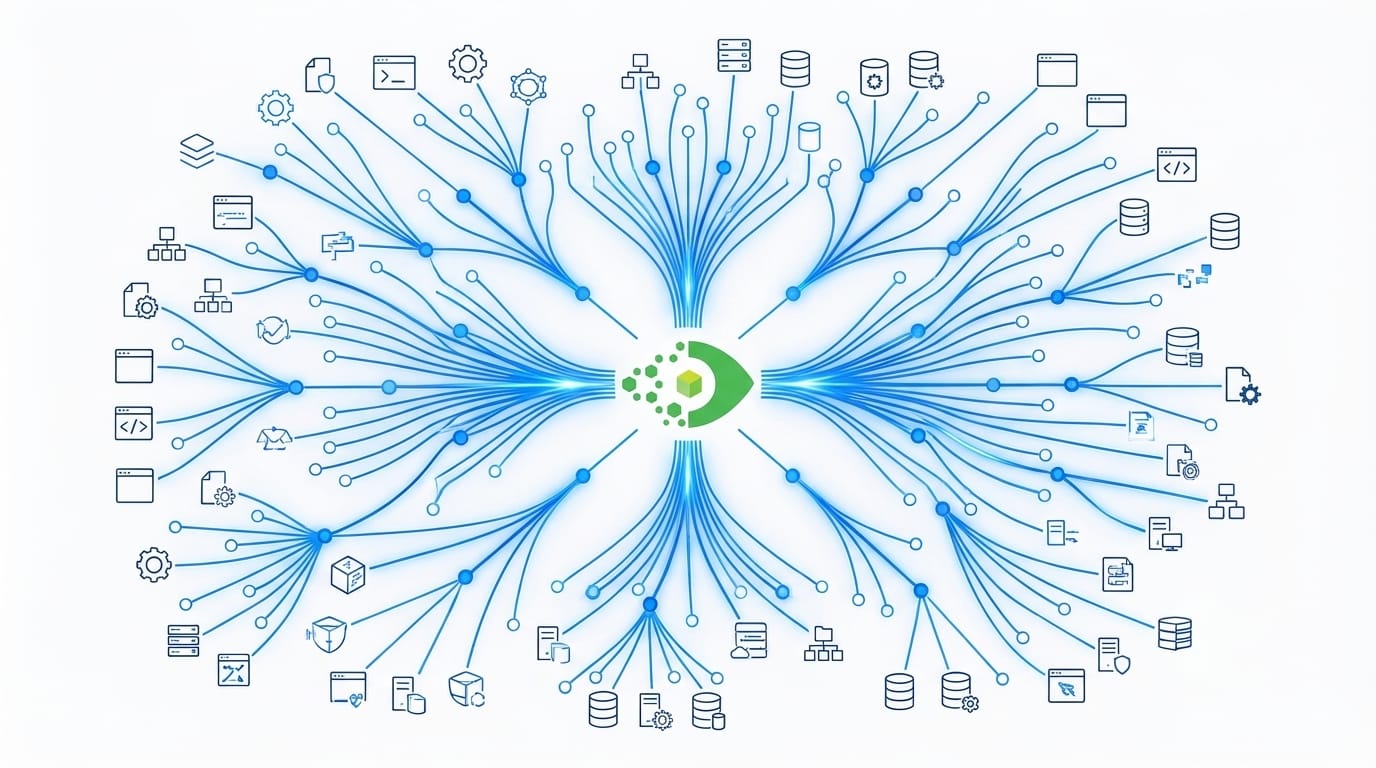
Change Impact Analysis with CMDB: How to Assess Risk Before Every IT Change

- Change-related incidents cause the majority of IT outages, often because teams lack visibility into downstream CI dependencies before a change is deployed.
- Change impact analysis with CMDB gives teams a complete map of every affected configuration item, service, and stakeholder before a change window opens.
- Virima 6.1.1 uses ViVID Service Maps to visualize the full impact zone of any proposed change, including downstream dependencies, related CI relationships, and pending changes on connected CIs.
- Pre-change configuration snapshots via Discovery, and post-change verification using the same Discovery engine, close the loop on change audit and verification.
- Virima supports ITIL v4 change types — standard, normal, and emergency — with automated workflows, stakeholder approval routing, and risk register integration.
Change-related incidents remain the single most common cause of unplanned IT outages. According to Uptime Institute research, over 80% of significant IT outages are attributable to IT operations failures — including software, configuration, and process errors — rather than hardware or infrastructure faults. Yet most change management processes still rely on spreadsheets, tribal knowledge, and manual pre-change checklists to assess risk.
The core problem is a data gap. Teams submit change requests without visibility into which configuration items (CIs) depend on the asset being changed, which services sit downstream, or whether another pending change on a related CI creates a collision risk. Without CMDB-backed change impact analysis, IT teams make change decisions in the dark.
This article explains how change impact analysis with CMDB works, why CMDB relationship data is the foundation of any serious change risk process, and how Virima 6.1.1 closes the gap with automated service maps, pre-change snapshots, and ITIL v4-compliant workflows.
What Is Change Impact Analysis?
Change impact analysis is the process of identifying every IT component, service, user, and stakeholder that a proposed change affects before the change is deployed. Its purpose is to quantify change risk and surface potential conflicts before the change window opens.
A thorough change impact analysis answers four questions:
- Which CIs does this change directly affect? — servers, applications, network devices, databases, and cloud resources that the change touches.
- Which services depend on those CIs? — business-critical services that rely on the affected infrastructure.
- Who owns or operates those services? — stakeholders who need to review, approve, or be notified before the change proceeds.
- Are there any conflicting or concurrent changes? — other open change records on related CIs that could interact with this change.
Without CMDB data, answering these questions accurately is almost impossible. Relationship data — who depends on what, how services are composed, which configuration items (CIs) are upstream or downstream — lives in the CMDB. That is exactly why change management and CMDB are inseparable in modern ITIL practice.
Why Traditional Change Management Fails Without CMDB Data
Traditional change management processes — even those that follow ITIL guidance — frequently fail at impact analysis for one reason: they rely on static documentation instead of live infrastructure data.
Here is what that looks like in practice:
- A change engineer submits a change request for a firewall rule update. The change record documents the firewall. It does not document the three application servers behind the firewall, the two business services those applications support, or the database cluster that depends on one of those services.
- A change manager reviews the request based on category (normal change, medium risk), approves it, and schedules it for the Friday maintenance window.
- The change deploys. The firewall rule creates an unexpected routing conflict. One of the dependent application servers loses connectivity. A business-critical ERP system goes down. An incident ticket opens at 2:00 AM.
None of this failure was inevitable. The dependency chain existed — in the CMDB. The problem was that the change management process had no mechanism to read that data and surface it during change planning.
APMdigest identifies change management and change impact analysis as the core value cases for any CMDB implementation. Organizations that integrate their change process with live CMDB data see dramatically lower change-related incident rates.
How CMDB Relationship Data Enables Real Change Impact Analysis
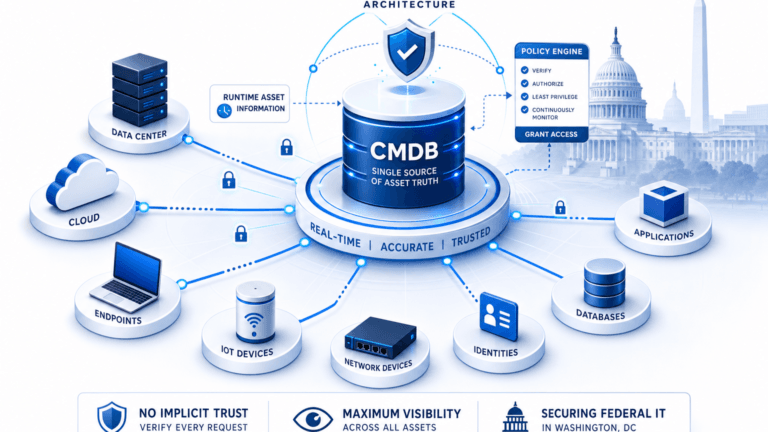
CMDB relationship data is the foundation of accurate change impact analysis. A well-maintained CMDB does not just store CI attributes — it stores relationships between CIs: runs-on, depends-on, connects-to, hosted-by, managed-by. These relationships are exactly what change impact analysis requires.
When a change request targets a specific CI, CMDB relationship data allows the system to:
- Traverse the dependency graph — identify all CIs that depend on the target CI, at any depth.
- Map affected services — determine which IT services are composed of affected CIs.
- Flag concurrent changes — identify other open change records on related CIs.
- Assign risk scores — weight the change based on the criticality of affected services and the breadth of downstream impact.
The quality of this analysis depends entirely on the accuracy and completeness of the CMDB. A CMDB built from real-time discovery data — not manually entered or statically maintained — provides the most reliable foundation for change impact analysis. Virima 6.1.1 populates its CMDB through continuous Discovery, ensuring that CI relationships reflect the actual state of the environment at the time of change planning.
For a deeper look at how risk assessment and impact analysis complement each other as practices, see Virima’s guide on risk assessment vs. impact analysis.
Using ViVID Service Maps to Visualize Change Impact
Virima’s ViVID (Virima Visual Impact and Dependency) Service Maps turn CMDB relationship data into an interactive visual graph that a change engineer can read and act on in seconds.
When a change record is created in Virima, the change engineer can open the ViVID Service Map for any CI in the change scope. The map renders:
How do IT asset dependency maps calculate blast radius before an IT change?
IT asset dependency maps calculate blast radius by tracing relationship paths from the target configuration item to downstream application servers, databases, and business services. Discovery-sourced dependency mapping surfaces all connected assets, active incident tickets, and pending change requests, allowing IT teams to assess change risk and prevent downstream outages before the change window opens.
- The full downstream dependency chain — every CI that depends on the target CI, with relationship type labels (runs-on, depends-on, hosted-by).
- Affected services — the business services that compose the affected CIs, shown as service containers with their member CIs.
- Pending changes on related CIs — open change records on any CI in the map, flagged visually so the change engineer can identify collision risks.
- CI ownership and service ownership — the teams and individuals responsible for each node in the map.
This visual representation transforms change impact analysis from a manual research task into a real-time data query. A change engineer no longer asks “what else could this change affect?” They see the answer in the service map.
ViVID Service Maps also support change conflict detection. If two change records both affect CIs that share a service dependency, Virima flags the conflict — giving the Change Advisory Board (CAB) or change manager a concrete basis for scheduling decisions or change sequencing.
As Virima’s own guidance on service mapping in change management explains, without service map visibility, teams are left guessing about which services a change affects. ViVID eliminates that guesswork.
Pre-Change and Post-Change Configuration Verification with Discovery
Knowing what a change will affect is only half the problem. Confirming that the change was implemented as intended — and that no unintended configuration drift occurred — is the other half.
Virima 6.1.1 handles both sides through Discovery:
Pre-change snapshot: Before a change window opens, Virima Discovery runs a targeted scan of the CIs in the change scope. The scan captures the current configuration state — running services, open ports, installed software versions, network connections, registry keys — and stores it as a baseline snapshot attached to the change record.
Post-change verification: After the change is implemented, Discovery runs again on the same CI set. The post-change scan results are compared against the pre-change baseline. Virima surfaces configuration differences — expected changes (the ones the change record specified) and unexpected changes (configuration drift that was not part of the plan).
This pre/post verification model serves three purposes:
- Change audit — a complete, timestamped record of what changed, verifiable against the original change record.
- Drift detection — identification of unintended configuration changes that accompanied the planned change.
- Rollback support — a known-good configuration baseline that can guide rollback if the change causes adverse effects.
This capability directly supports ITIL v4’s emphasis on configuration assurance as part of the Change Enablement practice.
Stakeholder Identification Through CI Relationships
Change impact analysis is not complete without knowing who needs to approve or be notified about the change. In Virima, stakeholder identification derives from CI relationship data — specifically, CI ownership and service ownership stored in the CMDB.
When a change record targets a CI, Virima traverses the CMDB relationship graph to identify:
- CI owners — the individuals or teams directly responsible for the affected CIs.
- Service owners — the individuals or teams responsible for any service that includes an affected CI.
- Dependency owners — the teams that own downstream CIs, whose services may be affected even if those CIs are not directly in the change scope.
These stakeholders surface automatically in the change record, where they can be routed to approval workflows. Approval workflows in Virima tie directly to the CI and service map — so the approvers are the people with actual ownership of the affected infrastructure, not a static list of CAB members.
Virima also connects change records to CI risk register items. If a CI in the change scope has associated risk register entries — known vulnerabilities, compliance obligations, or historical incident associations — those items appear in the change record, giving approvers the complete risk context. For guidance on keeping that CMDB data accurate and complete, see Virima’s CMDB best practices guide.
ITIL v4 Change Management in Virima
Virima 6.1.1 is designed around ITIL v4 Change Enablement principles. It supports three change types:
Standard Changes
Standard changes are pre-authorized, low-risk changes that follow a defined procedure. In Virima, standard change templates encode the authorization, scope, and implementation steps. When a team submits a standard change request, it follows the pre-defined template — no additional CAB review is required unless the scope deviates from the template.
Normal Changes
Normal changes require individual risk and impact assessment before authorization. In Virima, every normal change record triggers impact analysis via ViVID Service Maps, stakeholder identification via CMDB relationships, and a configurable approval workflow. The CAB reviews the change risk, the service map, and the stakeholder sign-offs before authorization.
Emergency Changes
Emergency changes address critical incidents or urgent service restoration needs. Virima supports emergency change workflows with abbreviated approval paths — allowing a smaller set of emergency approvers to authorize the change quickly, while still maintaining a full audit trail. Post-implementation review of the emergency change record ensures accountability.
Virima’s workflow automation routes each change type through the appropriate process, applies the right approval steps, and maintains the full change record — all without manual process management.
How to Build a Change Risk Assessment Process Using Virima
A structured change risk assessment process in Virima operates across six stages:
Stage 1 — Discovery and CMDB population. Run Virima Discovery to populate the CMDB with accurate CI data and relationships. The quality of every subsequent stage depends on CMDB completeness.
Stage 2 — Change request and scope definition. The change engineer creates a change record in Virima and identifies the CIs in scope. The CMDB immediately provides CI attribute data, ownership, and relationship context.
Stage 3 — ViVID impact analysis. The change engineer opens the ViVID Service Map for the primary CI. The map reveals the full dependency chain, affected services, and any pending concurrent changes. The change engineer documents the blast radius and flags any collision risks.
Stage 4 — Pre-change snapshot. Discovery runs a configuration scan on the in-scope CIs. The baseline snapshot attaches to the change record.
Stage 5 — Stakeholder approval and scheduling. Virima routes the change record to the identified stakeholders and service owners for approval. The CAB reviews the ViVID map, the risk register associations, and the stakeholder sign-offs. Once authorized, the change is scheduled.
Stage 6 — Post-change verification. After implementation, Discovery runs the post-change scan. Virima surfaces configuration differences. The change record closes with a full pre/post configuration audit trail.
Change Impact Analysis vs. Change Advisory Board (CAB)
Change impact analysis and CAB review are complementary, not synonymous. They serve different purposes in the change process.
Change impact analysis is a technical assessment process — a systematic evaluation of what a change affects, based on CMDB data and service maps. It produces the blast radius map, the stakeholder list, and the risk register associations that inform the CAB review.
The Change Advisory Board (CAB) is a governance body — a group of stakeholders that reviews change impact analysis outputs and authorizes the change to proceed. The CAB does not conduct impact analysis; it evaluates the results of impact analysis.
When CMDB data is accurate and ViVID Service Maps are available, CAB meetings become data-driven rather than discussion-driven. The CAB reviews visual impact maps, pre-populated stakeholder approvals, and conflict detection results — instead of asking “what does this affect?” and relying on the change engineer’s verbal description.
Virima 6.1.1 supports this by surfacing all impact analysis data within the change record — so the CAB has the complete picture before the meeting begins.
Conclusion
Change-related incidents are preventable. The data needed to prevent them — CI relationships, service dependencies, ownership, pending concurrent changes — exists in a well-maintained CMDB. The gap is between that data and the change management process.
Virima 6.1.1 closes that gap. ViVID Service Maps make change impact analysis visual and immediate. Discovery provides pre-change and post-change configuration verification. CMDB-driven stakeholder identification ensures the right people approve every change. ITIL v4-compliant workflows — spanning IT asset management, ITOM, and service mapping — keep the process structured, auditable, and scalable.
Schedule a Demo at virima.com to see how Virima’s change impact analysis capabilities work in your environment.
Frequently Asked Questions
How do you measure IT change blast radius before deployment?
Change blast radius is measured by mapping all upstream and downstream dependencies linked to the target configuration item (CI). ViVID Service Maps visualize connected databases, application services, and active ITSM records, identifying which business functions will be impacted if the change fails.
Why does traditional change management fail without CMDB relationship data?
Traditional change management relies on static checklists and manual risk categories. Without CMDB relationship data, teams cannot see hidden multi-tier dependencies or concurrent changes on connected CIs, leading to unexpected outages during routine maintenance windows.
How does Virima assist with change impact analysis?
Virima integrates discovery-sourced CMDB data with ViVID Service Maps and bi-directional ITSM integrations. It automatically overlays pending changes, open incidents, and dependency relationships onto service maps, giving Change Advisory Boards (CAB) clear blast radius visibility before approving changes.