How to Use CMDB Service Maps to Identify Stakeholders and Approval Paths for IT Changes

- Missing the right stakeholder in a change approval workflow is one of the most common causes of change-related incidents and post-change escalations.
- CMDB service maps reveal CI ownership, service ownership, and dependency chains — the three layers of stakeholder data that change management processes need.
- Virima 6.1.1 uses ViVID Service Maps to surface every relevant stakeholder from CMDB relationship data and route them automatically to approval workflows.
- Change records in Virima connect directly to CI risk register items, giving approvers risk context alongside impact context.
Table of Contents
- Why Stakeholder Identification Is a CMDB Problem
- How ViVID Service Maps Reveal Stakeholder Relationships
- Building Automated Approval Workflows from CMDB Data
- Practical Scenario: Using ViVID to Route a Network Change for Approval
- How Virima Connects Change Records to Risk Register Items
- Conclusion
- FAQ
Every change approval workflow has an implicit assumption: that the right people are in the room. When that assumption fails — when a network change goes to the network team for approval but never reaches the application owner whose service runs on that network — the result is an approved change that disrupts an unrepresented service.
This is the hidden cost of incomplete stakeholder identification. The stakeholder information exists — in the CMDB, attached to CI ownership records, service ownership mappings, and dependency relationships. The problem is that most change management tools do not read CMDB relationship data to identify who needs to approve a change. They rely on manually maintained approver lists.
CMDB service maps solve this problem by making stakeholder relationships visible at the moment a change record is created. ITIL 4 Change Enablement guidance identifies stakeholder identification — across all directly and indirectly affected CIs and services — as a foundational requirement of every change authorization decision.
Why Stakeholder Identification Is a CMDB Problem
In a modern IT environment, every configuration item has stakeholders at multiple levels:
- CI owner — the team or individual directly responsible for managing the CI.
- Service owner — the team responsible for the business service that the CI supports.
- Dependency owner — the team responsible for a downstream CI that could be affected if the target CI changes.
Traditional change management captures the first level (CI owner) in the change request. It rarely surfaces the second or third level without manual investigation. In a complex environment — where a single application server might support three business services, each with different ownership — that investigation is time-consuming and error-prone.
The CMDB already stores all three layers of stakeholder data as structured relationship records. CI-to-service relationships map the first two layers. CI-to-CI dependency relationships map the third. A change management process that reads CMDB relationship data surfaces all three stakeholder layers automatically, without manual research.
How ViVID Service Maps Reveal Stakeholder Relationships
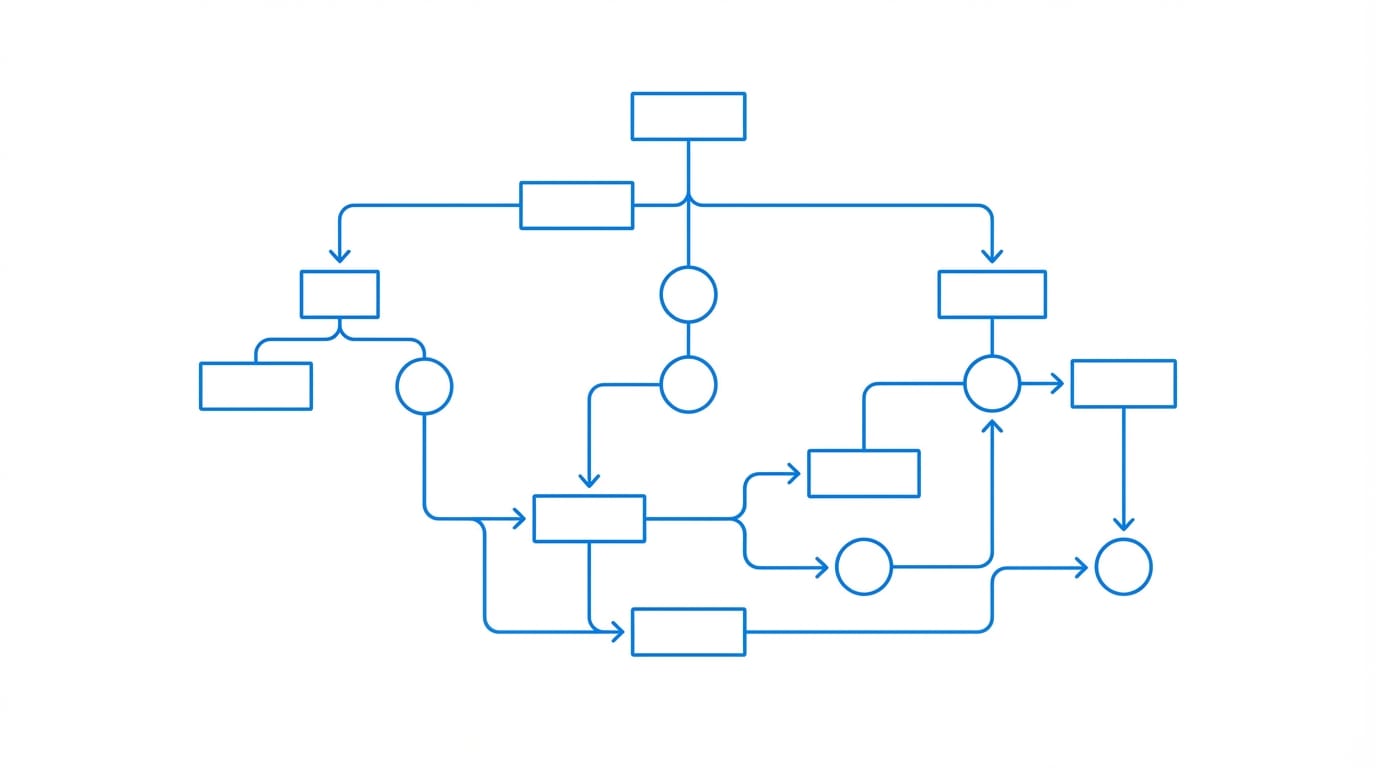
Virima’s ViVID Service Maps render CMDB relationship data as an interactive visual graph. When a change engineer opens the ViVID map for a CI in the change scope, the map displays:
CI Ownership
Every CI node in the map carries ownership metadata from the CMDB — the team and individual responsible for that CI. For the primary CI in the change record, this is the direct owner who must approve or be notified of the change.
Service Ownership
ViVID maps show the service containers that include each CI. Each service container carries service ownership metadata — the team responsible for that business service. If the change affects a CI that is part of a service owned by a different team, ViVID makes that ownership visible in the map.
Dependency Chain Ownership
ViVID traverses downstream CI relationships to show every CI that depends on the target. Each downstream CI node carries its own ownership metadata. This is the third layer — the dependency owners who may not be directly responsible for the change target, but whose infrastructure and services are affected by it.
The result is a complete stakeholder map derived entirely from CMDB data. No manual research. No static approver lists. The stakeholders are whoever owns the CIs and services that the change touches — and ViVID reads that ownership from the CMDB relationship graph. For broader context on why service mapping is foundational to modern IT change processes, see Virima’s overview of service mapping criticality.
Building Automated Approval Workflows from CMDB Data
Once ViVID surfaces the relevant stakeholders, Virima’s change management workflows route approval requests automatically to the right people.
Virima’s approval workflow configuration allows change managers to define approval rules based on:
- Change type — standard, normal, or emergency changes follow different approval paths.
- CI criticality — changes to high-criticality CIs require more stakeholders to approve.
- Service impact scope — changes that affect multiple services trigger multi-team approval sequences.
- Ownership layer — CI owners, service owners, and dependency owners can each have a distinct approval step.
When a change record is submitted, Virima reads the ViVID service map to identify the stakeholders in each ownership layer, applies the relevant approval rules, and routes the change record to the appropriate approvers — in the right sequence, with the right context.
Approvers see the ViVID map directly in the change record. They are not approving a text description of a change; they are approving a visual representation of what the change affects, who else is in the approval chain, and what risk register items are associated with the affected CIs.
Practical Scenario: Using ViVID to Route a Network Change for Approval
Consider a change request to update an ACL rule on a core network switch.
Without CMDB service map integration:
The change engineer submits the request. The network team is listed as the CI owner and approves the change. The change is scheduled and deployed. During deployment, the ACL change blocks traffic to an application server that sits behind the switch. That application server supports a business-critical ERP service owned by the IT Business Applications team — a team that was never in the approval workflow. The ERP service goes down. An incident is raised.
With Virima ViVID Service Maps:
The change engineer creates the change record and opens the ViVID map for the network switch. The map shows:
- The network switch (CI owner: Network Operations Team)
- Three application servers that connect through the switch (CI owners: Server Operations Team)
- An ERP service composed of those application servers (service owner: IT Business Applications Team)
- A database cluster that depends on the ERP service (CI owner: Database Operations Team)
Virima routes the change record to four approval groups, in sequence: Network Operations, Server Operations, IT Business Applications, and Database Operations. Each team approves based on their stake in the change. The network team reviews the ACL change itself. The application team confirms their servers will be unaffected. The business applications team approves with a brief maintenance window notice to ERP users. The database team confirms no downstream impact.
The change deploys without incident. Every affected stakeholder was in the loop.
How Virima Connects Change Records to Risk Register Items
Stakeholder identification is only one dimension of change risk. CIs also carry risk histories — known vulnerabilities, compliance obligations, previous incident associations, and deferred maintenance records. This information lives in the CI risk register.
Virima 6.1.1 allows change records to be directly associated with CI risk register items. When a change engineer opens a change record for a CI that has open risk register entries, those entries appear in the change record. Approvers see not just who owns the affected CIs and services, but what risks are already attached to them.
This risk register association serves several purposes:
- Compliance awareness — if the CI is subject to regulatory controls (PCI, SOX, HIPAA), approvers see the compliance context before authorizing the change.
- Incident history — if the CI has a history of change-related incidents, that pattern is visible in the risk register and surfaces in the change review.
- Risk aggregation — changes that touch multiple high-risk CIs can be flagged for CAB-level review even if each individual CI would normally qualify for a streamlined approval path.
This integration gives the change approval process a second data layer beyond service map ownership — a risk-weighted view of the change landscape. For foundational guidance on keeping CI risk data accurate, see Virima’s overview of CMDB best practices.
Conclusion
Stakeholder identification is a CMDB problem, and CMDB service maps are the solution. ViVID Service Maps in Virima 6.1.1 surface CI ownership, service ownership, and dependency ownership from live CMDB relationship data — eliminating the manual research that causes stakeholder gaps in change approval workflows.
Automated approval routing, combined with risk register integration, gives every change the right approvers and the right risk context — before the change window opens.
Schedule a Demo at virima.com to see how ViVID Service Maps transform stakeholder identification and approval routing in your change management process.
Frequently Asked Questions {#faq}
How does a service map identify change approvers?
A service map identifies change approvers by traversing CMDB relationship data to find the owners of every CI and service affected by the proposed change. In Virima, ViVID Service Maps read CI ownership, service ownership, and downstream dependency ownership from the CMDB, then surface those stakeholders as candidates for the change approval workflow.
What is CI ownership in CMDB?
CI ownership in CMDB refers to the structured assignment of a team or individual as the responsible party for a specific configuration item. CI ownership records in the CMDB determine who manages, maintains, and approves changes to each CI. In Virima 6.1.1, CI ownership is discoverable through the ViVID Service Map and used to automate change management approval routing.
Can a CMDB service map identify emergency change approvers?
Yes. Virima ViVID Service Maps identify CI and service owners regardless of change type. For emergency changes, Virima supports abbreviated approval paths — routing to a smaller set of pre-authorized emergency approvers while still using CMDB ownership data to identify who is notified. Full CAB review follows the emergency change as a post-implementation step.
This article is based on Virima 6.1.1 capabilities. Feature availability may vary by deployment configuration.