NinjaOne Alternatives by Use Case: RMM Ceiling vs Estate Depth

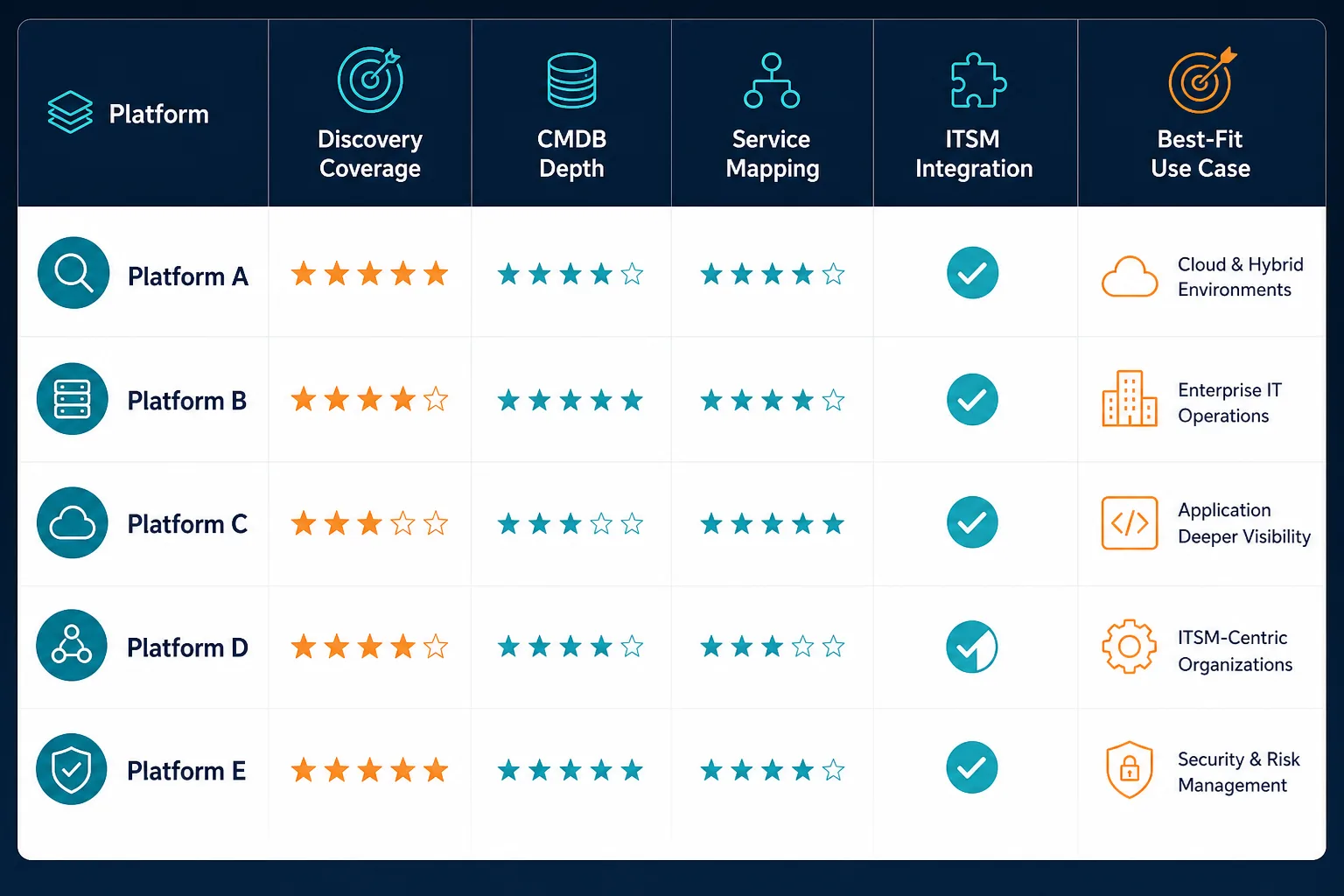
NinjaOne is a capable platform for what it was built to do: manage endpoints, push patches, and give MSPs visibility into the devices they support. Teams researching NinjaOne alternatives are usually looking for something beyond that scope: a full asset inventory across hybrid infrastructure, a CMDB that maps CI relationships and service dependencies, or ITSM integration that passes more than ticket IDs. If that describes your search, you have likely already found NinjaOne’s edge. This guide compares five NinjaOne alternatives, including Virima, Device42, Lansweeper, ManageEngine Endpoint Central, and Atera, by the specific gap each one closes.
Why IT teams look beyond NinjaOne
NinjaOne’s strengths are real: fast deployment, a clean interface, strong endpoint patch management, and a pricing model that suits MSPs. Its limits surface when IT operations needs expand past endpoint management into infrastructure-wide visibility.
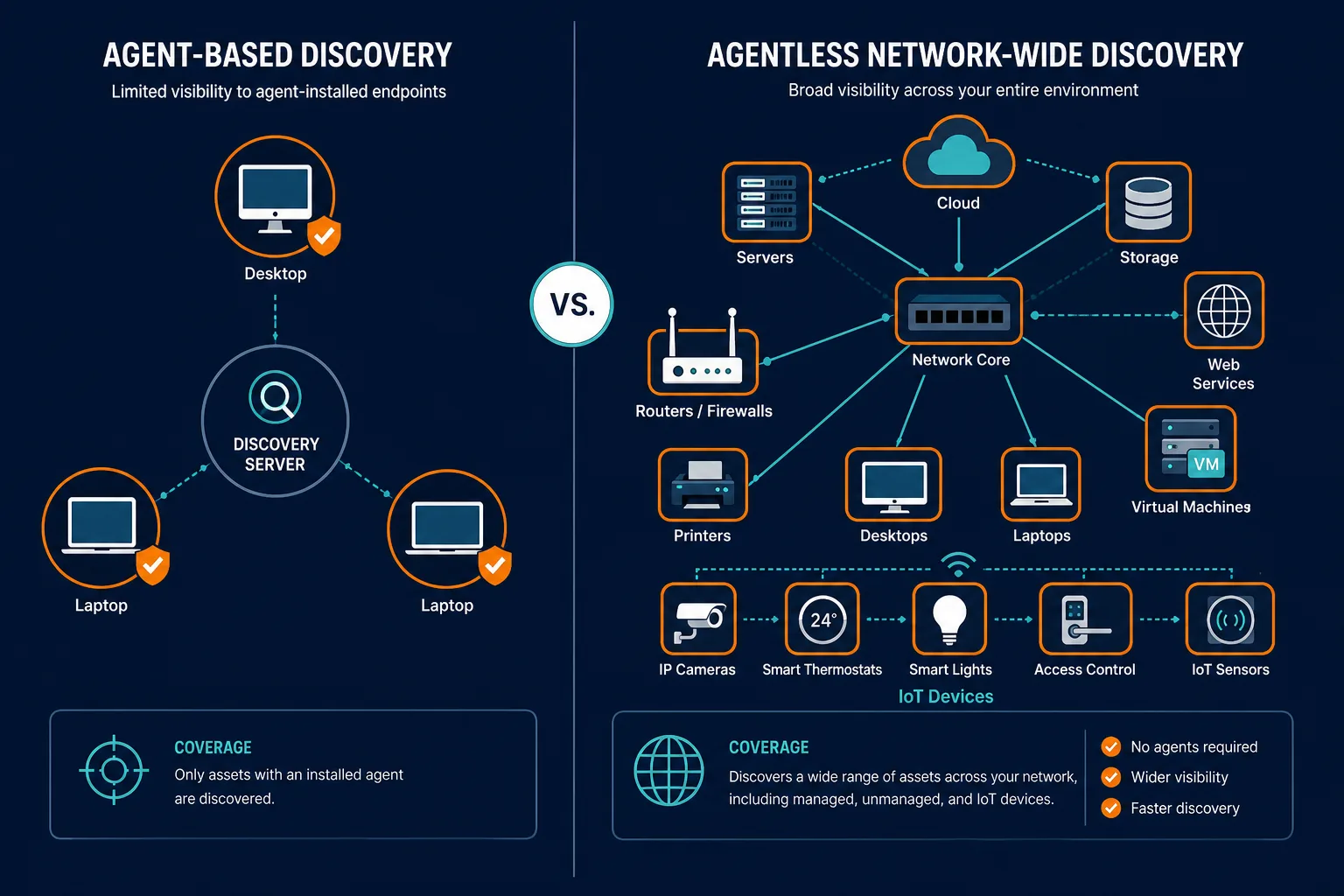
Agent-only discovery stops at the edge. NinjaOne installs agents on managed endpoints: Windows, macOS, Linux. Network devices, unmanaged servers, cloud infrastructure, and OT assets sit outside that coverage. An inventory built from agent reporting alone reflects managed endpoints, not the full IT estate.
Endpoint inventory is not a CMDB. NinjaOne tracks hardware and software on managed devices. It does not maintain a configuration management database with CI relationships, dependency mapping, or service context. Impact analysis before a change, blast radius assessment during an incident, and service ownership mapping all require data that NinjaOne’s inventory model does not produce. For a deeper look at why this gap matters during major incidents, see Change Impact Analysis with CMDB: How to Assess Risk Before Every IT Change.
ITSM integration is surface-level. NinjaOne connects to helpdesk platforms for ticket creation. It does not pass CI relationships, dependency chains, or change history to ITSM platforms in a way that supports ITIL-aligned incident management or change advisory workflows.
NinjaOne doesn’t publish a public rate card, but third-party pricing trackers that monitor RMM vendors put its per-device cost in a range of roughly $1.50 to $6 per endpoint per month, billed annually, with volume discounts kicking in above a few thousand devices (NinjaOne pricing analysis). That pricing model reflects its per-endpoint RMM design. It scales with device count, not with CMDB depth or service-map complexity, which is exactly the ceiling teams hit when their evaluation criteria expand beyond endpoint management.
| Vendor | Pricing model | Starting price | Notes |
|---|---|---|---|
| NinjaOne | Per-device RMM | ~$1.50–$6/device/month, billed annually | Volume discounts above a few thousand devices (Costbench) |
| Virima | Custom quote by CI count and discovery scope | No public list price | Business Pro packages the full platform for growing IT estates; Enterprise for larger scale. See Virima Business Pro |
| Device42 | Custom quote by device count | No public list price | Annual subscription after a scoping call (Device42) |
| Lansweeper | Published tiered plans | From $199/month (Starter, 2,000 assets) | Pro from ~$379/month (9,000 assets); custom quote above 10,000 (Lansweeper) |
| ManageEngine Endpoint Central | Per-technician (via ServiceDesk Plus) | ~$13–$67/technician/month | Internal competitive tracking estimate, not an externally published figure |
| Atera | Per-technician (RMM + PSA) | Published on vendor site, scales by technician count | Convert to a per-technician basis before comparing to per-device RMM pricing |
How does NinjaOne compare to Virima for enterprise IT management?
NinjaOne focuses on endpoint RMM and patch management. Virima provides full hybrid IT discovery across network gear and cloud workloads, a CSDM-aligned CMDB with ViVID™ service dependency mapping, NIST NVD vulnerability overlays for Windows Server CIs, and bidirectional ITSM integrations. Virima Business Pro packages that full platform for growing IT estates.
Best NinjaOne alternatives in 2026
1. Virima: Best for ITAM + CMDB + hybrid cloud discovery
Virima addresses the three gaps that most commonly drive the search for a NinjaOne alternative. Its agentless and agent-based discovery covers on-premises infrastructure, AWS, and Azure, all without requiring agent installation on every device. Network devices, servers, cloud workloads, and endpoints all appear in the same inventory.
That inventory feeds a CMDB kept current through scheduled discovery and reconciliation, not merely an asset register. That full capability set is available across Virima, including Virima Business Pro for growing IT estates. CI relationships, service dependencies mapped through ViVID™ service maps, and change history are all maintained from discovery data. That gives change impact analysis and blast radius assessment an accurate, current foundation to work from.
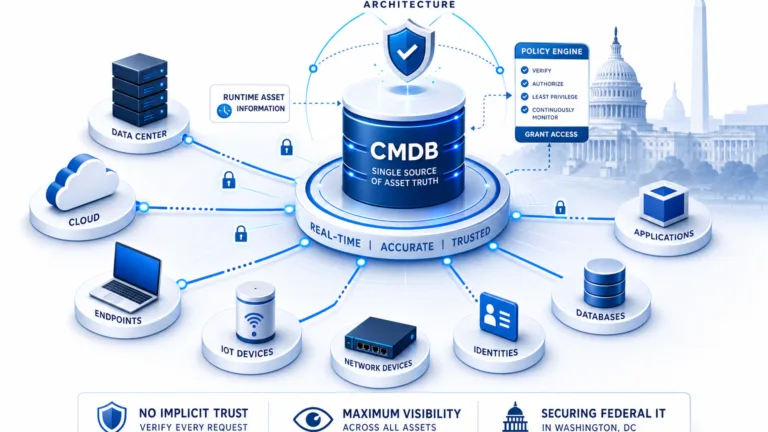
Learn how Virima delivers trusted runtime truth across hybrid cloud and data center assets.
Virima integrates across enterprise ITSM platforms, including ServiceNow, Jira Service Management, Ivanti, HaloITSM, Xurrent, and Hornbill, at the CMDB data layer, passing CI relationships and dependency context rather than only ticket events.
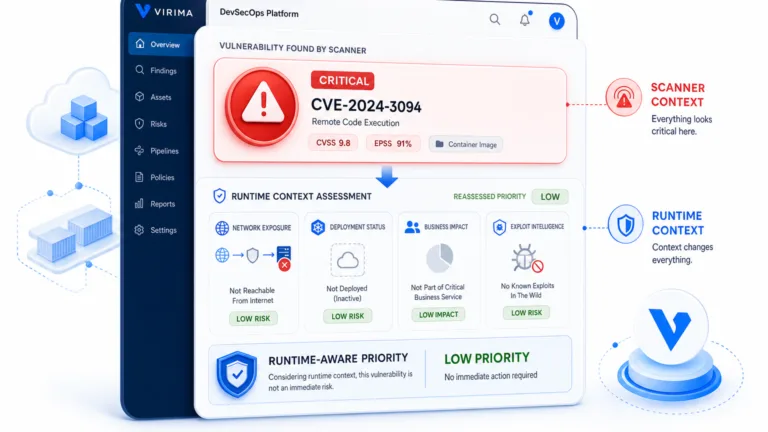
Virima provides out-of-the-box NIST NVD vulnerability overlays specifically for Windows Server CIs, automatically correlating known CVE security risks against business service criticality to prioritize remediation.
For teams building toward agentic IT operations, Virima’s Trusted Runtime Truth approach provides the data layer that AI-driven automation needs to act on accurately. For related reading on keeping software license data audit-ready alongside that CMDB layer, see blog post on ITAM license compliance and audit readiness.
Best for: IT Ops Managers and Directors running a hybrid on-prem/cloud environment on ServiceNow, Jira Service Management, or a similar ITSM platform, who need full-estate ITAM, CMDB depth, and hybrid cloud discovery beyond what endpoint RMM provides. Not a direct replacement for NinjaOne’s MSP remote control, patch management, or backup features.
Key differentiator: Discovery-sourced CMDB with service dependency mapping. NinjaOne tracks what runs on managed devices. Virima tracks what exists across the entire IT estate and how it connects.
See Virima’s CMDB and ViVID™ service maps applied to your own environment. Schedule a demo.
2. Device42: Best for data-center-centric CMDB
Device42 is a CMDB and IT infrastructure management platform with strong data center asset management, rack mapping, and IP address management capabilities. It covers agentless discovery across on-premises infrastructure and cloud environments.
Device42’s CMDB is deeper than NinjaOne’s and maps CI relationships across physical, virtual, and cloud layers. Its data center focus suits organizations managing large co-location or on-premises environments. It does not offer the same agentless hybrid cloud discovery breadth or native ITSM integration depth as Virima. Like most enterprise discovery platforms, Device42 does not publish list pricing; it quotes an annual subscription priced by the number of devices under management after a scoping call (Device42 pricing page).
Best for: Data-center-heavy organizations that need physical infrastructure tracking (rack, power, network) alongside CMDB capability.
3. Lansweeper: Best for broad network asset scanning
Lansweeper is an IT asset discovery and inventory platform that scans networks agentlessly, covering Windows, Linux, macOS, network devices, and IP-connected hardware. It produces broad asset inventory without requiring agent installation on every device.
Lansweeper’s strength is coverage breadth at a relatively low, published cost. Its Starter plan is listed from about $199 a month for up to 2,000 assets, Pro runs from roughly $379 a month for up to 9,000 assets and adds vulnerability and lifecycle insights, and Enterprise moves to custom quote-based pricing above 10,000 assets (Lansweeper pricing). That published pricing is rare among CMDB-adjacent platforms, most of which route buyers straight to a quote form. Even so, Lansweeper does not maintain a CMDB with CI relationships, service dependency mapping, or change history. For teams that need an accurate asset register as a starting point, without the full CMDB and service mapping layer, Lansweeper is a practical option.
Best for: IT teams that need broad network-wide asset inventory and have separate tools for CMDB, ITSM, and change management.
4. ManageEngine Endpoint Central: Best for endpoint management with ITSM adjacency
ManageEngine Endpoint Central (formerly Desktop Central) provides endpoint management, patch deployment, remote access, and software deployment, closer to NinjaOne’s core feature set than the CMDB-first platforms above. It integrates with ManageEngine’s ITSM platform, ServiceDesk Plus, which is priced at approximately $13 per technician per month for the Standard edition up to roughly $67 per technician per month for Enterprise, per Virima’s internal competitive tracking, ManageEngine does not publish these figures on a dated public page, so teams that want a unified vendor stack should confirm current rates directly with ManageEngine.
Endpoint Central gives NinjaOne users a path to broader IT management within a single ManageEngine stack. Its CMDB and discovery capabilities are limited compared to dedicated platforms. For teams that specifically need RMM-style endpoint management with a helpdesk layer, it is the closest structural alternative to NinjaOne.
Best for: Teams looking to stay in an RMM + helpdesk model but prefer the ManageEngine stack over NinjaOne’s licensing structure.
5. Atera: Best for MSPs staying in the RMM lane
Atera is an all-in-one RMM + PSA (professional services automation) platform built for MSPs. It covers remote monitoring, patch management, helpdesk, billing, and time tracking in a single per-technician pricing model, published on Atera’s own site rather than quoted after a sales call. Cost scales with technician headcount, not device or CI count, so MSPs comparing it to NinjaOne’s per-device model should convert to a per-technician basis before comparing totals. For MSPs that find NinjaOne’s pricing model difficult to scale, Atera’s flat-rate structure is the primary draw.
Atera does not address the CMDB, agentless infrastructure discovery, or ITSM integration depth gaps. It is a like-for-like RMM alternative, appropriate for MSPs where the constraint is NinjaOne’s cost model or interface, not its operational scope.
Best for: MSPs evaluating NinjaOne on pricing or usability, not organizations that have outgrown the RMM category.
How does NinjaOne compare to Virima for enterprise IT management?
NinjaOne focuses on endpoint RMM and patch management. Virima provides full hybrid IT discovery across network gear and cloud workloads, a CSDM-aligned CMDB with ViVID™ service dependency mapping, NIST NVD vulnerability overlays for Windows Server CIs, and deep ITSM integrations across six enterprise platforms.
Choosing the right NinjaOne alternative
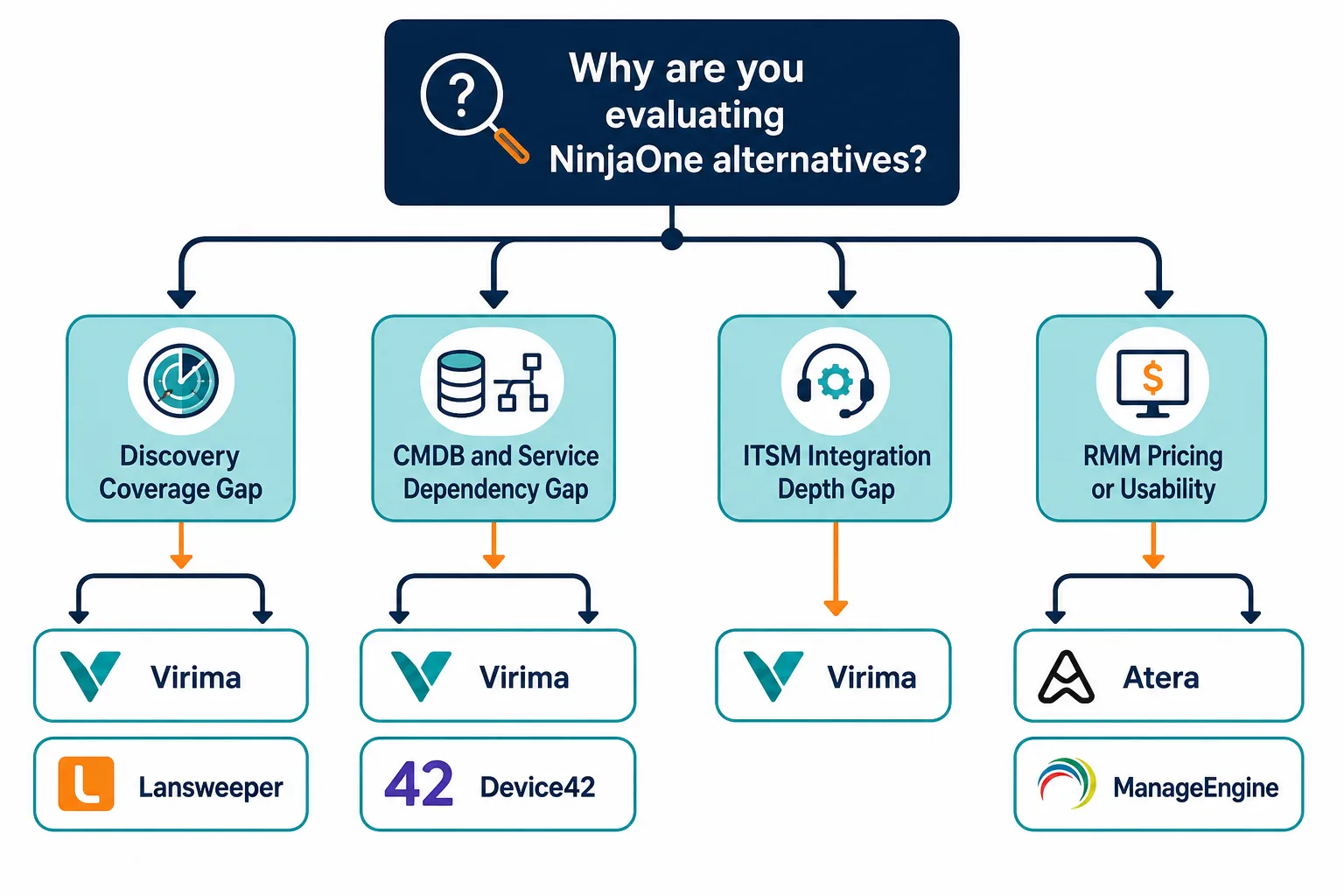
The right replacement depends on which NinjaOne limitation you are solving for.
If the gap is discovery coverage, meaning assets and infrastructure that NinjaOne’s agents cannot reach, prioritize agentless discovery platforms that cover network devices, servers, and cloud workloads. Virima and Lansweeper both address this; Virima adds CMDB depth on top. For a closer look at how the two discovery methods differ in practice, see Agent-based vs. agentless discovery: which is best for your business?.
If the gap is CMDB and service dependency data, the operational context that endpoint inventory cannot provide, the comparison narrows to platforms that maintain CI relationships and build dependency maps from discovery data. Virima and Device42 are the primary options in this category.
If the gap is ITSM integration, meaning sending discovery data and CI context into ServiceNow, Jira Service Management, or other ITSM platforms in a way that supports change and incident workflows, the distinction is between surface-level connectors and CMDB-level data exchange. Virima’s native integrations pass CI relationships and change history rather than only ticket events.
If the gap is RMM pricing or usability, and the feature scope is otherwise adequate, Atera or ManageEngine Endpoint Central are the closest structural alternatives.
How does NinjaOne compare to Virima for enterprise IT management?
NinjaOne focuses on endpoint RMM and patch management. Virima provides full hybrid IT discovery across network gear and cloud workloads, a CSDM-aligned CMDB with ViVID™ service dependency mapping, NIST NVD vulnerability overlays for Windows Server CIs, and deep ITSM integrations across six enterprise platforms.
What to verify before switching
Before committing to a NinjaOne alternative, verify three things in a proof of concept.
First, run discovery against your actual environment, not a demo dataset. Agentless platforms vary significantly in what they surface across different network segments, cloud accounts, and device types. A platform that claims hybrid coverage should demonstrate it against your AWS or Azure accounts before purchase.
Second, confirm CMDB data quality after initial discovery, not merely coverage counts. An inventory that finds 4,000 assets but maps only 60% of their relationships and service contexts is less useful than one that finds 3,500 assets accurately and builds complete dependency maps from that data.
Third, test the ITSM integration with a real use case. Ask the vendor to demonstrate a change impact query from the CMDB to the ITSM platform, showing which CIs are affected, what services depend on them, and what the blast radius looks like. If the integration cannot answer that question, it is a connector, not an integration.