AWS Asset Discovery for Seattle Enterprise CMDB Teams

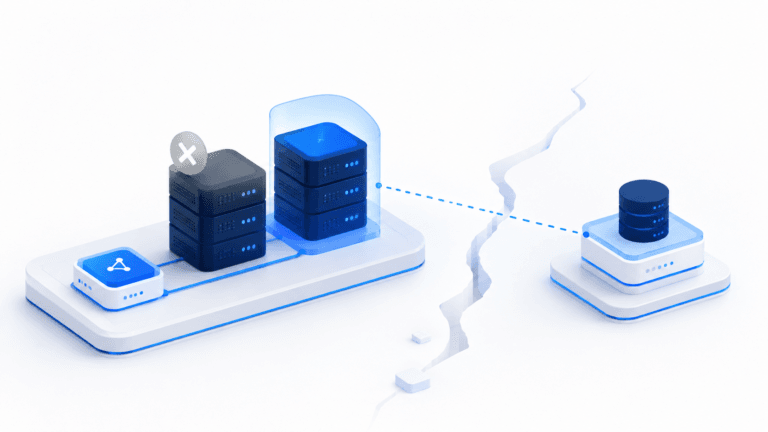
The scheduled change window opens at 10 PM on Thursday, but the incident history for the target service tells an incomplete story. A Seattle enterprise platform engineering team deployed a secondary cluster in Amazon Web Services three weeks ago. Yet those Amazon Elastic Compute Cloud instances never surfaced through AWS asset discovery into the enterprise configuration management database. The IT service management system shows the primary database server, but it misses the cloud-hosted read replica that handles traffic from local applications.
When the change implementation starts, an unexpected dependency breaks traffic routing across two distinct cloud platforms. The change advisory board relies on static configuration items while dynamic cloud workloads evolve across independent cloud accounts every single day.
What is AWS Config, and why isn’t it a substitute for a CMDB?
AWS Config is Amazon’s native service for recording configuration state and evaluating compliance rules inside AWS accounts. It tracks changes to individual resources but does not reconcile those resources with on-premise infrastructure, ITSM tickets, or business service ownership — the reconciliation work a CMDB exists to do. A CMDB extends AWS Config’s raw resource data with operating system detail, software inventory, and cross-platform service dependency mapping, so change and incident teams get one accurate record instead of a per-cloud console.
Why Seattle enterprises need AWS asset discovery for a hybrid CMDB
A tech and aerospace economy running two clouds at once
Enterprise technology teams across the Puget Sound operate within an unusual economic environment. Economic data from Greater Seattle Partners — a regional economic development organization, not an independent industry analyst — shows King County supports 1,598,838 total jobs across 245,673 businesses, concentrated in technology and aerospace. According to the Greater Seattle Tech and AI Industry Report, the local technology sector accounts for more than 187,900 direct jobs and generates $174.7 billion in Gross Regional Product. The region hosts major global engineering centers alongside the global headquarters of Amazon and Microsoft.
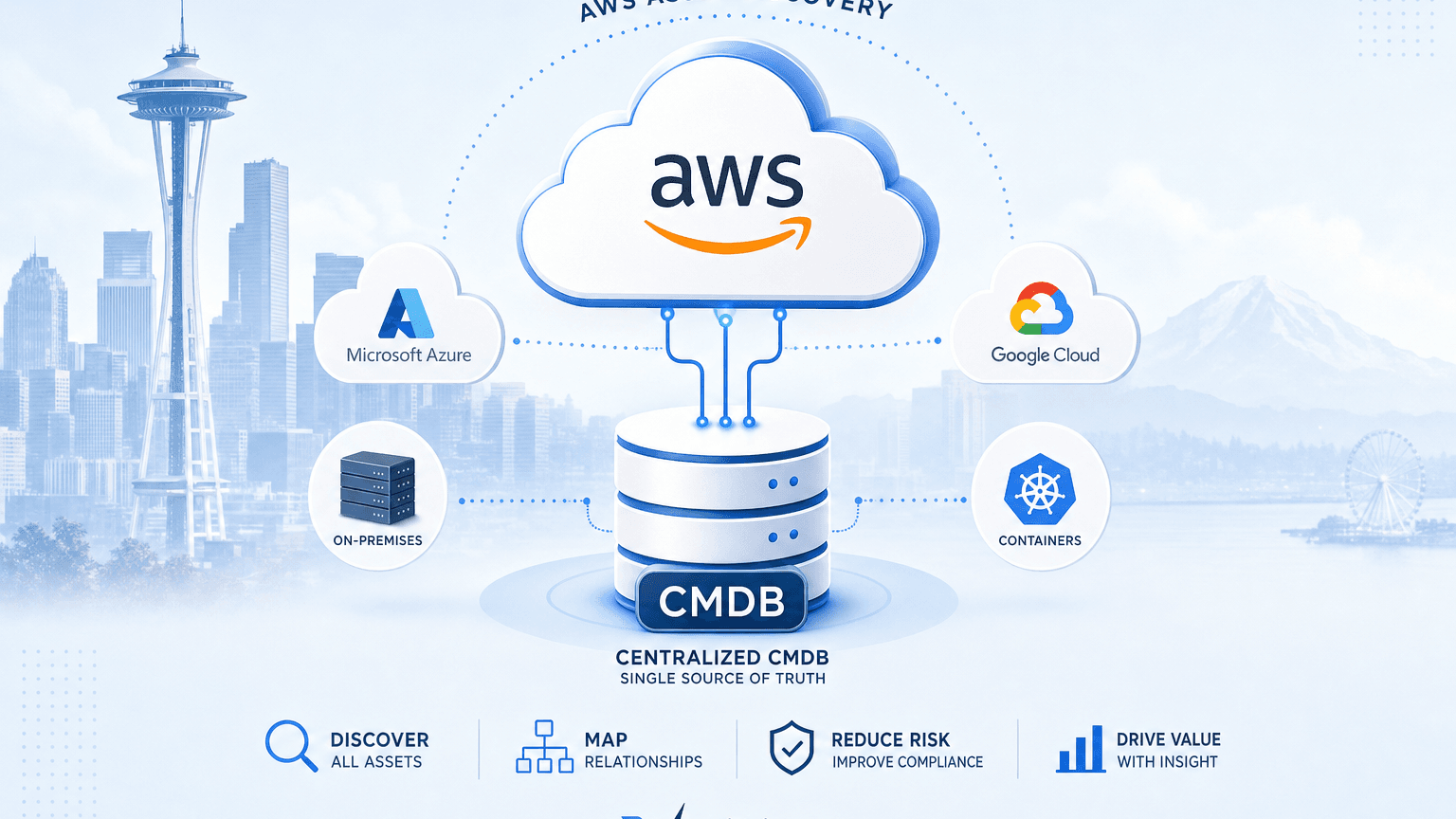
This concentration of cloud infrastructure builders creates an environment where IT teams maintain fluency in both Amazon Web Services and Microsoft Azure. Rather than operating in a single public cloud, enterprise architecture in the Seattle metro is inherently hybrid. Development groups deploy containerized workloads and data pipelines into multi-account Amazon Web Services environments. Enterprise operations, meanwhile, maintain core productivity systems, Azure Active Directory tenants, and on-premise infrastructure — each resource spun up in a separate administrative console, with no single view reconciling them.
Industrial-scale operations raise the discovery stakes
At the same time, the regional economy relies heavily on industrial and manufacturing sectors. Regional data from the Greater Seattle Aerospace Report documents over 113,500 aerospace workers across 900 companies, producing $38.2 billion in annual output. Cloud services supporting these supply chains must connect directly to factory floor systems, warehouse management hardware, and strictly governed compliance networks — and when application teams deploy resources straight into AWS accounts using native tools or infrastructure templates, bypassing central IT tickets, the CMDB loses visibility into those active computing resources.
Running AWS and Azure through two disconnected consoles isn’t a strategy — it’s a visibility gap waiting to break a change window.
The CMDB failure mode: accounts, regions, and operating system truth that never meet
Managing IT assets across multiple Amazon Web Services accounts introduces architectural friction for configuration management database owners, and the trend is moving the wrong way. Flexera’s 2025 State of ITAM Report found complete visibility across the technology stack fell to 43%, down from 47% the year before, as Flexera reported in its press center.
Why account and region silos hide assets
Cloud engineering teams routinely separate workloads into distinct accounts for development, testing, staging, and production, and corporate acquisitions add still more account structures under Amazon Web Services Organizations. When asset discovery relies on credentialed network scans or static API exports from a single production account, large portions of the cloud estate remain invisible — a storage bucket or database instance deployed in a secondary region like US West Oregon can host critical application data without appearing in local infrastructure inventories, and the configuration repository drifts from runtime reality.
From inventory line item to operational configuration item
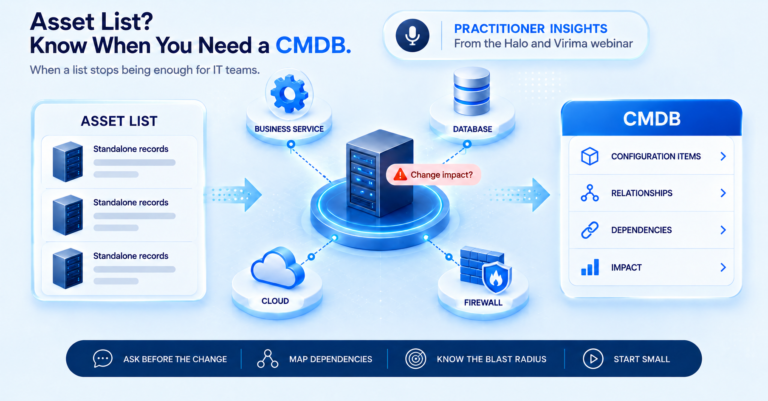
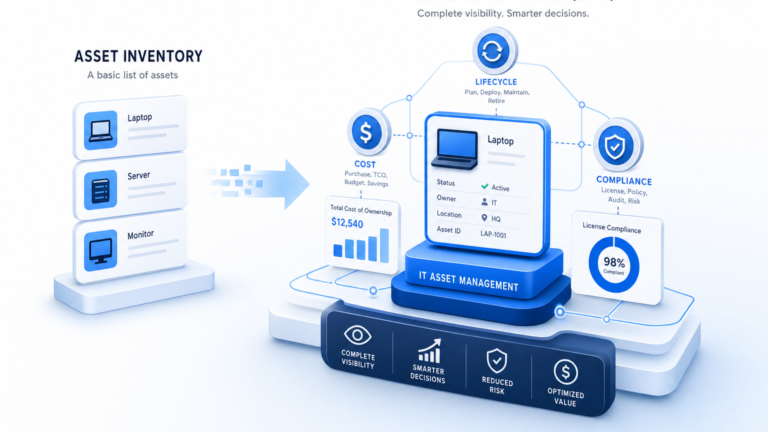
The problem grows worse when IT organizations treat cloud instances as simple inventory entries rather than operational configuration items. A basic account export reveals that a virtual machine exists, its IP address, and its instance size — but misses the operating system detail, installed software versions, security patches, and active network connections that matter most.
A list of cloud instance identifiers provides little help to an incident responder investigating performance degradation. They need to know which application version runs on the host, which database it queries, and which internal services depend on that compute resource — without that dependency mapping, change managers approve updates without understanding the true blast radius.
What native cloud discovery must deliver for enterprise CMDB owners
Discovery, ingestion, and operating-system-level inspection
Effective cloud asset management requires a structured discovery architecture that spans public cloud platforms, virtualization layers, and physical data centers.
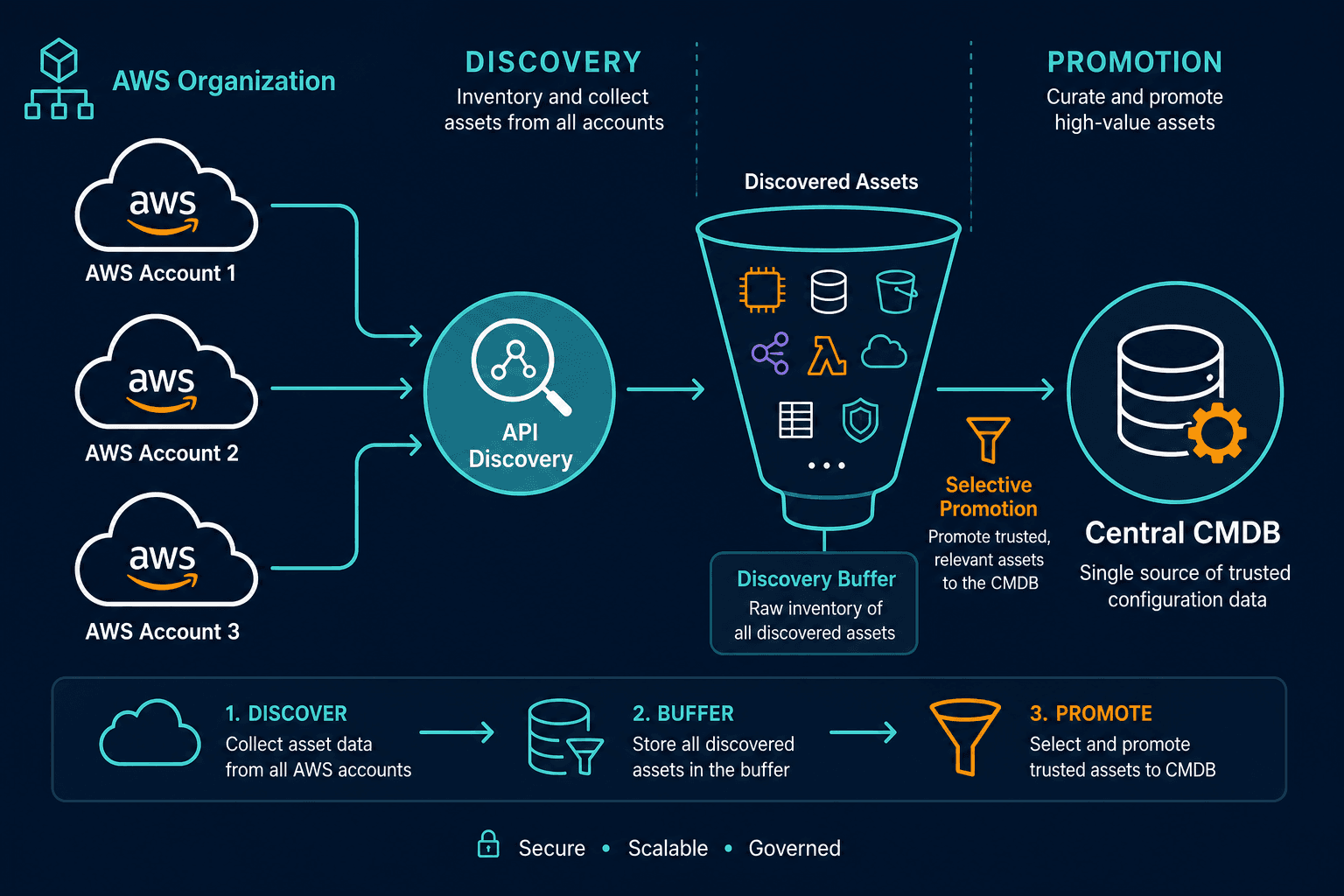
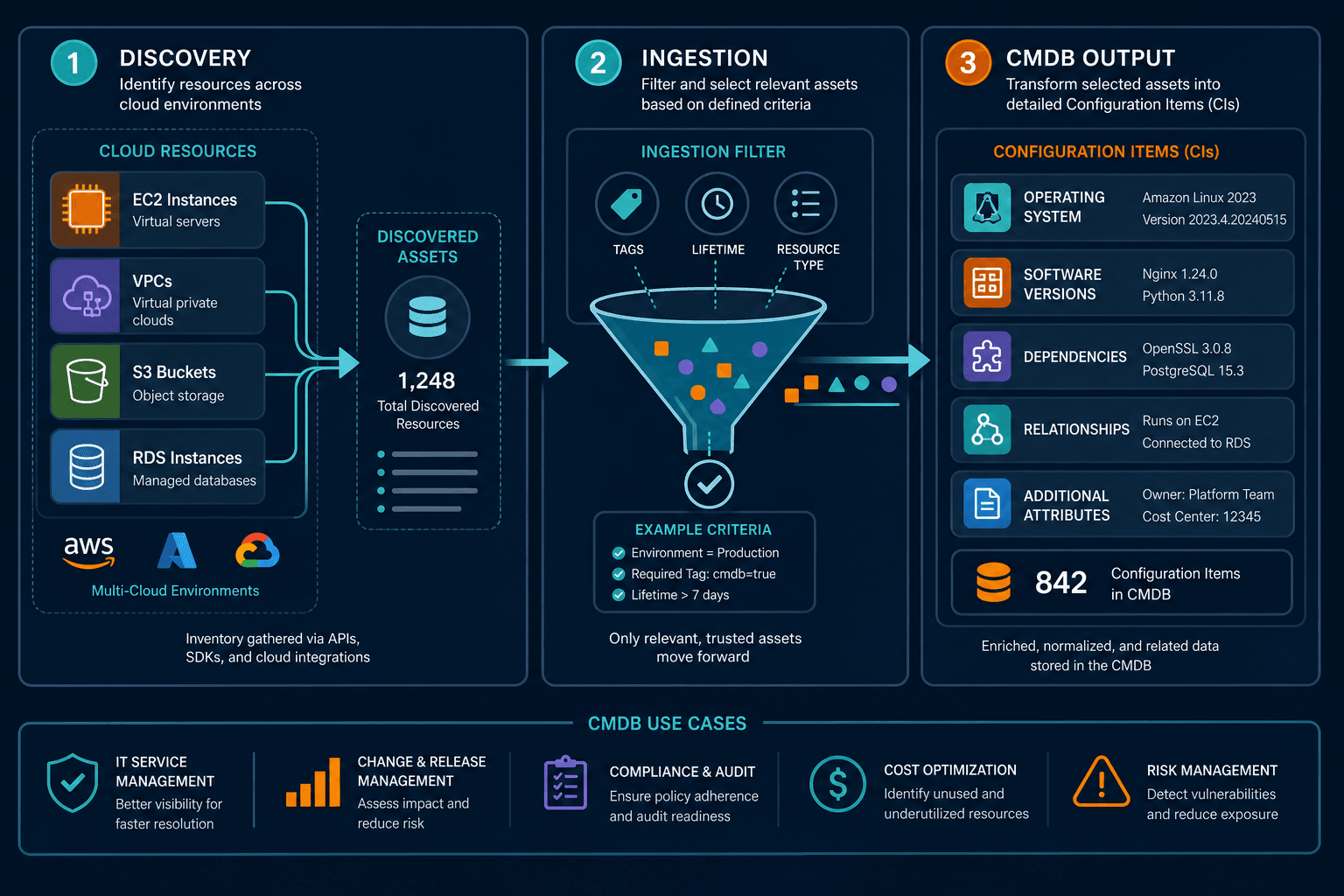
First, discovery mechanisms must connect directly to cloud platform APIs to detect Virtual Private Cloud boundaries, EC2 instances, RDS instances, and storage resources as soon as they deploy, pulling hardware specifications, cloud tags, and security group assignments straight from the cloud provider’s management plane.
Second, IT teams need policy-controlled ingestion before raw cloud objects enter the CMDB — routing discovered objects into a staging queue where administrators set business rules for which assets graduate to full configuration item status, rather than importing every short-lived test instance automatically.
Third, API discovery must pair with agentless or agent-based scanning to inspect the operating system layer, capturing installed software, patch levels, and network listener ports — the layer that turns a cloud resource into a fully governed configuration item.
What is the difference between cloud asset inventory and CMDB configuration item management?
Cloud asset inventory collects technical resource metadata directly from cloud provider APIs for cost or governance tracking. CMDB configuration item management reconciles those discovered resources with business service definitions, operating system software details, and application dependency links. This process transforms raw infrastructure data into actionable context for change and incident management workflows.
Service mapping and ITSM integration requirements
Fourth, cloud resources must link directly to the broader enterprise service map — discovered virtual machines and database endpoints connected to the business services they support, whether those services run on cloud infrastructure or local servers.
Finally, cloud configuration data must feed existing IT service management platforms — ServiceNow, Jira Service Management, or Ivanti — to support active incident management and change request governance. Review available options on the Virima integrations page.
A practical discovery model for Seattle hybrid estates
Each of the six steps below depends on the one before it. Skipping the sequence — not just skipping a step — is what typically stalls these rollouts.
Configure centralized account permissions by establishing cross-account IAM roles across every organizational unit in your AWS Organization. Assume-role access replaces the static access keys scattered across individual project accounts — the credential sprawl that turns up as a finding in every access audit — and it’s what lets a platform like Virima Discovery answer “which EC2 instances in this Organization have no matching CI in ServiceNow” without separate credentials per account. Expect to spend time negotiating that access with account owners before the technical rollout starts.
Next, run scheduled API discovery cycles that pull virtual cloud resources into a staging repository, capturing VPC topologies, compute nodes, relational databases, and object storage containers to establish an accurate baseline of cloud infrastructure.
Then apply selective promotion rules, filtering raw discovered assets with business rules before they move into the active configuration management database. Criteria based on account environment tags, instance lifetimes, or resource types keep short-lived development containers out of configuration reports.
Run deep compute inspection next: scan running instances with agentless or agent-based discovery to collect internal operating system details — installed software, patch versions, running processes, and local user configurations — that support asset compliance and vulnerability tracking.
Import service definitions and map dependencies by providing named business service definitions through manual entry, spreadsheet imports, or enterprise architecture platforms like LeanIX. Once application boundaries are defined, automated relationship mapping traces dependencies between application tiers, server operating systems, and underlying cloud infrastructure.
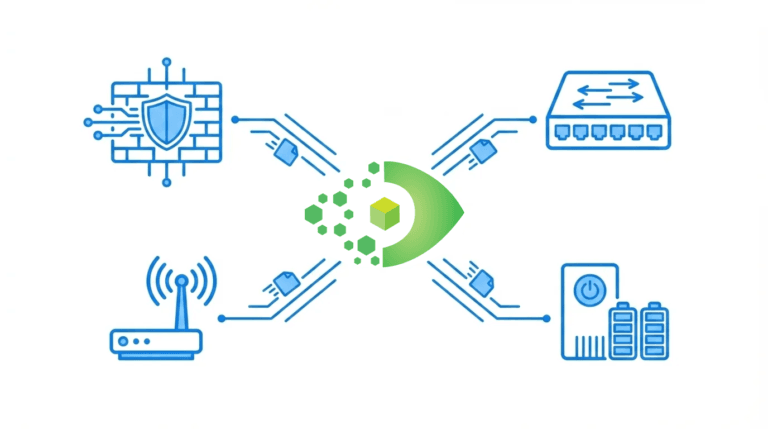
Finally, unify cloud and on-premise discovery data by connecting API discovery for Amazon Web Services and Microsoft Azure alongside network device discovery for physical data centers. Consolidating every infrastructure source into a single platform delivers unified visibility across the entire technology estate.
Where Virima fits without replacing your cloud operating model
Virima AWS Discovery and Service Mapping connects directly to Amazon Web Services accounts through administrative controls, without custom discovery scripting or database integration code, to automatically discover core AWS components — VPC configurations, EC2 instances, RDS instances, and S3 buckets. Discovered resources land in a dedicated Discovered Assets queue, giving asset managers full authority to review, filter, and promote CIs into the active CMDB.
| Enterprise Challenge | Virima Discovery Feature | Operational Outcome |
|---|---|---|
| Multi-account AWS resource sprawl | API-based cloud asset discovery across accounts | Centralized inventory across all cloud accounts |
| Missing operating system and software details | Agentless and agent-based EC2 asset discovery | Complete software and patch inventory on EC2 |
| Uncontrolled CMDB data growth | Selective promote-to-CMDB workflow rules | Clean configuration items focused on managed assets |
| Fragmented dual-cloud, AWS VPC CMDB visibility | Unified AWS and Azure cloud discovery | Single operational view across hybrid cloud estates |
Once cloud compute resources are imported, Virima Discovery scans running operating systems to capture system resource allocations, installed applications, missing security updates, and storage configurations. Machine learning algorithms identify server communications and application dependencies, building clear application topology views.
These auto-generated dependency relationships combine with operational record data inside ViVID™ Service Maps, which reveal exact downstream service impacts before change management boards approve system updates — integrated with primary service management systems like ServiceNow or Jira Service Management.
For organizations managing physical infrastructure alongside public cloud accounts, Virima also provides agentless network scanning and lightweight endpoint agents, detailed on the Virima IT discovery feature page.
Operating outcomes Seattle CMDB and ITAM owners should measure
Transitioning from manual inventory tracking to automated cloud asset discovery yields measurable operational improvements across IT service delivery teams. Configuration management owners should track key performance metrics to evaluate the effectiveness of their discovery implementation.
| Operational Performance Metric | Traditional Manual Baseline | Discovery-Sourced Target |
|---|---|---|
| In-Scope Cloud Account Coverage | Partial (30% to 50% accounted for) | All defined accounts scanned |
| EC2 Operating System Detail Rate | Surface metadata only | Complete software and patch inventory |
| CMDB CI Data Accuracy Score | Drifts from runtime reality between discovery cycles | Maintained through regular discovery cycles |
| Change Impact Blast Radius Visibility | Estimated from manual notes | Mapped through verified service dependencies |
Tracking these operational metrics allows configuration managers to demonstrate clear governance improvements to executive leadership while reducing service disruption risks during change windows.
Implementation pitfalls unique to dual-cloud, high-velocity metros
Here’s what actually goes wrong when teams move to automated cloud discovery — these four missteps show up again and again, and they’re avoidable once you know to look for them.
- Importing short-lived auto-scaling instances or temporary storage buckets straight into the active configuration management database creates unnecessary data noise. Use selective promotion rules to capture durable infrastructure while filtering out transient development nodes.
- Configuring discovery for primary production regions while omitting secondary recovery regions leaves active cloud resources out of compliance audits. Make sure IAM roles grant discovery access across every active cloud region.
- Managing cloud assets in a dedicated cloud portal while tracking physical servers in a separate configuration database prevents true end-to-end service mapping. Unify every discovery feed into one operational system.
- Expecting discovery tools to infer business service boundaries automatically leads to incomplete mapping. Provide explicit application definitions through manual inputs or enterprise architecture integrations so dependency maps reflect business reality.
Closing, trusted runtime truth for Puget Sound hybrid estates
Enterprise IT infrastructure across Greater Seattle demands an asset discovery strategy that reflects the reality of dual-cloud adoption and hybrid operations. By combining API-based cloud discovery across Amazon Web Services and Microsoft Azure with deep operating system scanning and structured service mapping, IT teams build a reliable operational system of record — one that protects change governance, speeds incident response, and keeps compliance intact across a dynamic enterprise estate.
Frequently Asked Questions
Why is cloud provider inventory alone insufficient for an enterprise CMDB?
Cloud provider consoles show native resource metadata like instance size and IP address but lack context on installed applications, operating system security patches, and business service ownership. A CMDB reconciles cloud resources with on-premise infrastructure, software licenses, and IT service management workflows.
How do multi-account Amazon Web Services environments impact asset management?
When development teams launch resources across multiple cloud accounts, central IT loses visibility into active compute nodes and databases. Without centralized cross-account discovery, unmanaged accounts introduce security risks, unassigned infrastructure costs, and incomplete change impact analyses during maintenance windows.
What cloud resource types should be imported into a CMDB first?
Organizations should prioritize virtual compute instances, relational database services, virtual private networks, and storage buckets that support production applications. Filtering out short-lived test nodes prevents configuration database clutter while ensuring key service dependencies remain fully mapped.
How does Virima perform AWS asset discovery?
Virima uses API integration with Amazon Web Services accounts to discover cloud resources like EC2, RDS, VPCs, and S3. Discovered assets enter a staging queue for selective CMDB promotion, while Virima Discovery scans compute nodes for deep operating system and software inventory details.
Can Virima discover Amazon Web Services alongside Microsoft Azure and on-premise assets?
Yes, Virima combines public cloud API connectors for Amazon Web Services and Microsoft Azure with agentless network discovery and endpoint agents for on-premise data centers. This multi-source approach consolidates all IT assets into a single operational view within your CMDB.