CMDB Automation for Chicago’s Mid-Market IT Teams

On July 16, 2026, Coca-Cola disclosed that fairlife, its Chicago-based dairy subsidiary, had identified unauthorized access to its systems, including production systems, in a ransomware event. Coca-Cola suspended fairlife’s U.S. production within days, while Canada’s plants kept running. The company drew that country-level boundary before it had confirmed almost anything else about the attack.
That boundary held because someone already knew where it sat. A configuration management database, or CMDB, is the record meant to answer exactly that question for any enterprise: which systems belong to which environment, facility, or country. For Chicago’s mid-market manufacturers and distributors — running IT teams a fraction of the size fairlife’s parent company can field — CMDB automation is what keeps that record accurate enough to trust when an incident forces the question, not just when an auditor asks.
The Chicago enterprise this is actually about
Chicago anchors one of the largest and most diversified metro economies in the country, with a mid-market sector spanning food and beverage processing, distribution, healthcare operations, financial services, and insurance. Each of those sectors expects an accurate account of in-scope IT systems — often under more than one regulatory framework at once, maintained by an IT team a fraction of the size fairlife’s parent company can field.
What CMDB automation actually means
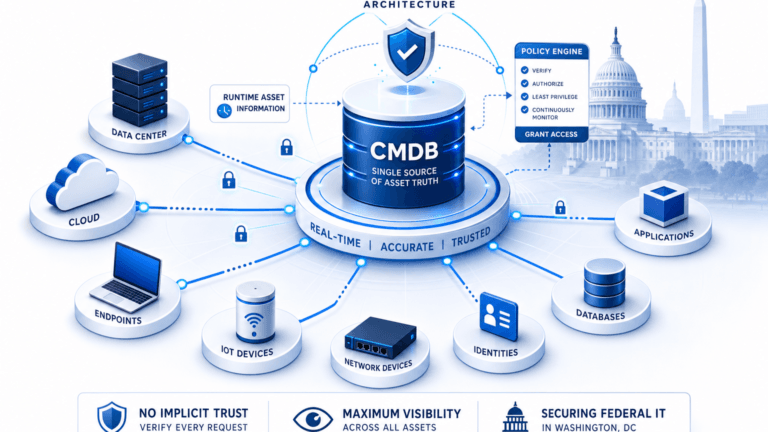
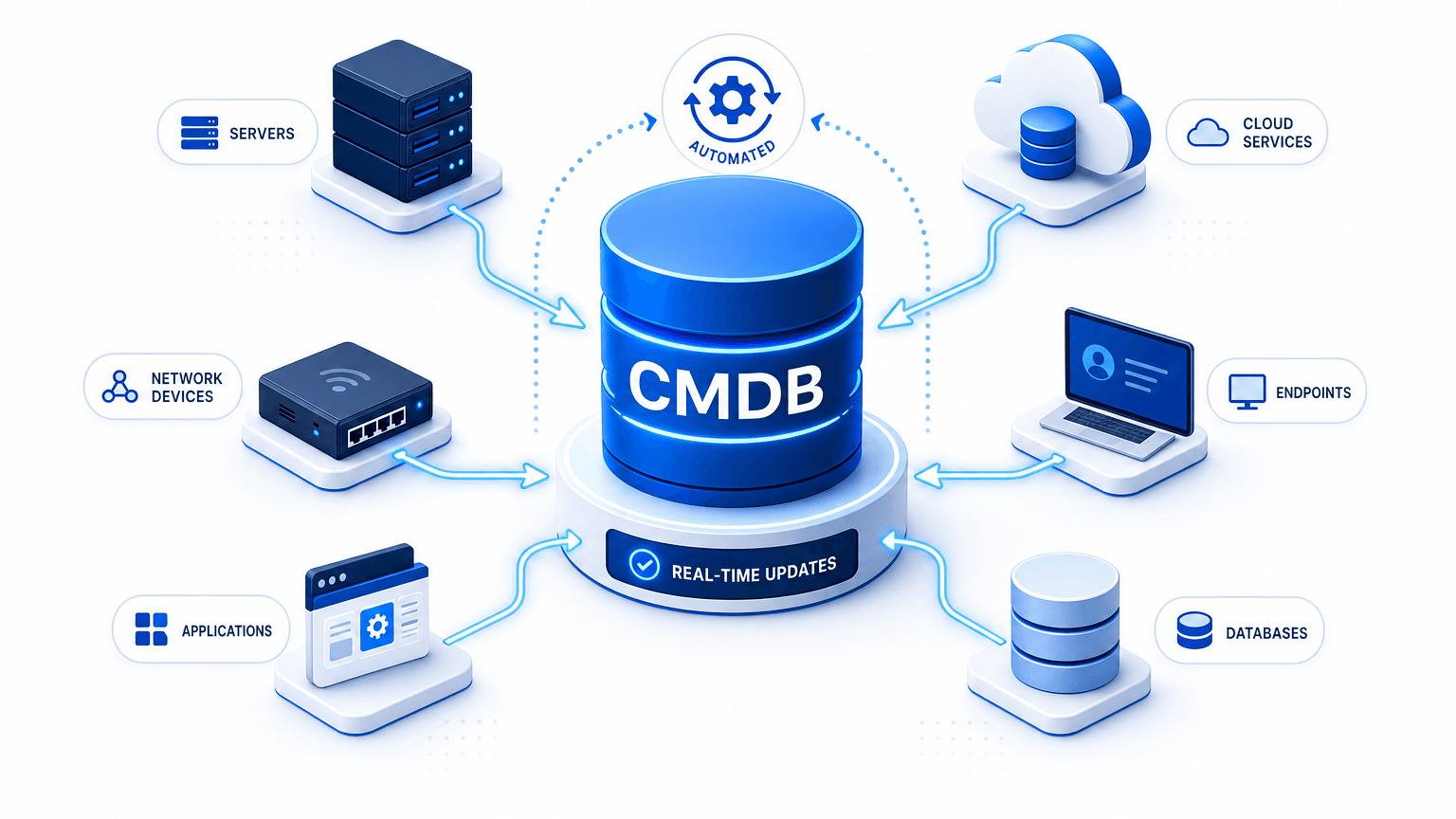
A configuration management database is a record of configuration items (CIs) and the relationships between them — servers, applications, network devices, cloud workloads, and the dependencies that connect them.
ITIL v2 defined the CMDB as a single central database. ITIL v4 replaced that with the configuration management system (CMS), a federated model that acknowledges no organization keeps every CI record in one place. Both versions share the same core requirement: a reliable record that governs change decisions.
Manual maintenance is the structural problem. A CI changes when a patch lands, a VM migrates, or a cloud resource scales — and the engineer making that change is rarely the person who updates the CMDB. Discovery automation closes that gap by scanning the environment on a schedule and writing findings back into the database without waiting on a human entry. For a deeper walkthrough of what that accuracy requires day to day, see Virima’s CMDB best practices guide.
Why does discovery automation need to run on a high-frequency schedule rather than a single comprehensive scan?
A single scan produces a point-in-time snapshot. Infrastructure changes continuously through patching, VM migration, cloud auto-scaling, and endpoint turnover. A snapshot captured quarterly reflects the environment as it was, not as it is. High-frequency scheduled discovery shortens the gap between when a change occurs and when the CMDB reflects it, so the record is usable when a change or incident decision arrives.
Where CMDBs break, with evidence
Most organizations that build a CMDB don’t sustain one. Industry research points to fewer than one in four organizations getting meaningful business value from their CMDB, with CI accuracy at most sites landing between 40 and 70 percent of the in-scope population. The underlying gap isn’t random or accidental.
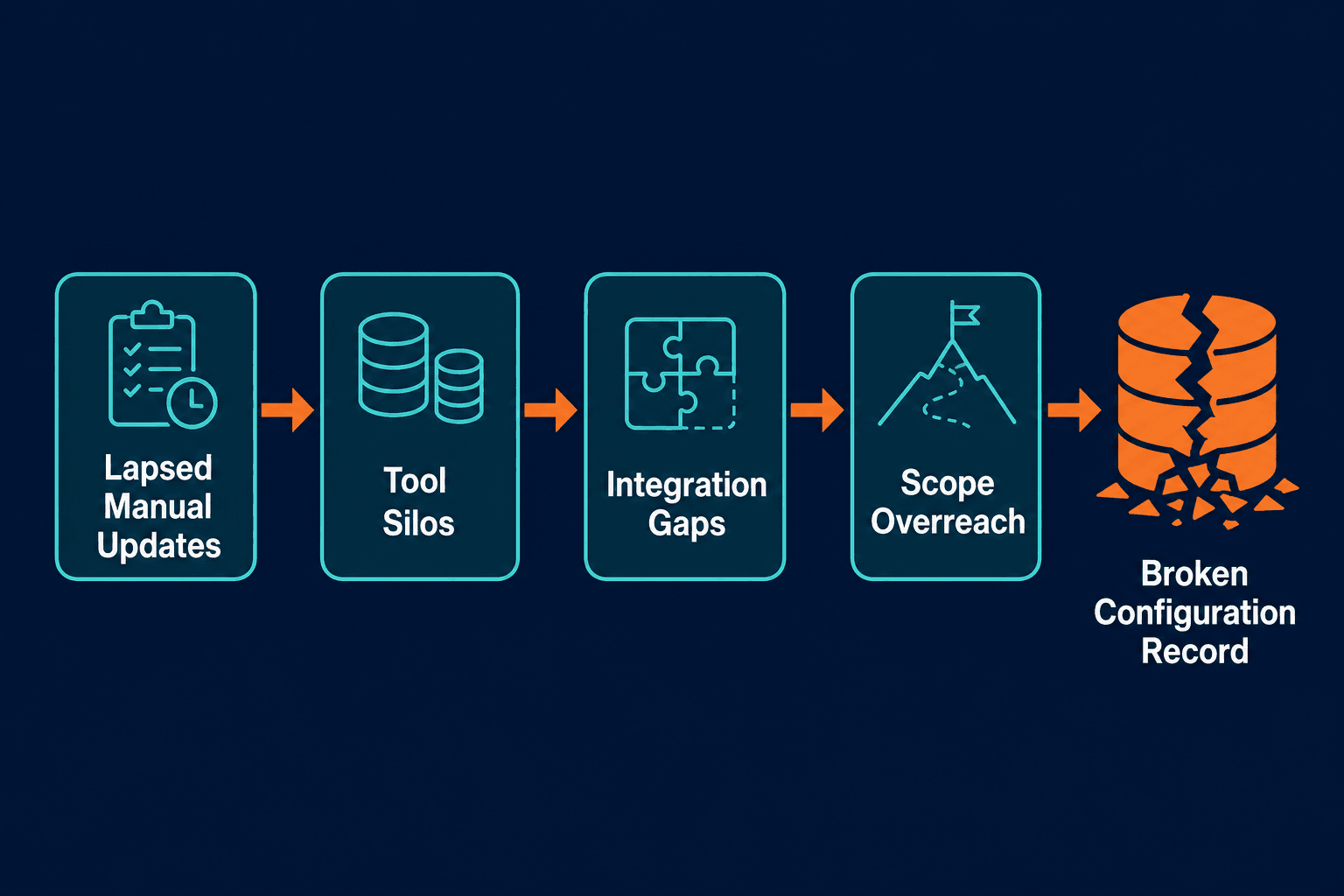
Four mechanics produce it.
Lapsed manual updates come first. Engineers who make infrastructure changes carry no workflow obligation to record those changes in the CMDB, so the record falls behind at the rate changes accumulate.
Tool silos compound that gap. A network monitoring platform holds switch and router data; an endpoint management tool holds workstation data; a cloud console holds dynamic resource data. Each tool is authoritative for its own segment, and none pushes to the CMDB automatically without integration work.
Integration gaps follow from those silos. Each source-to-CMDB connection requires configuration, maintenance, and reconciliation rules — and when two sources report conflicting data for the same CI, an unresolved conflict stalls the record or produces last-scan-wins overwrites that degrade the data teams were relying on.
Scope overreach closes the cycle. Organizations that try to inventory every CI class at once produce a population too large to govern. The CMDB grows fast, ages faster, and becomes a record the team stops using.
What is the right initial scope for a CMDB accuracy program?
Scope to the CI classes that directly feed incident, change, asset, and compliance decisions. Servers, applications, network devices, and the relationships between those classes cover most of the decisions an IT team makes under pressure. Building authority in this smaller scope first produces a trusted record faster than mapping every CI class at once.
Why Chicago’s mid-market compliance rhythm makes this worse
Chicago’s mid-market enterprises carry compliance stacks that are wider than the resources managing them.
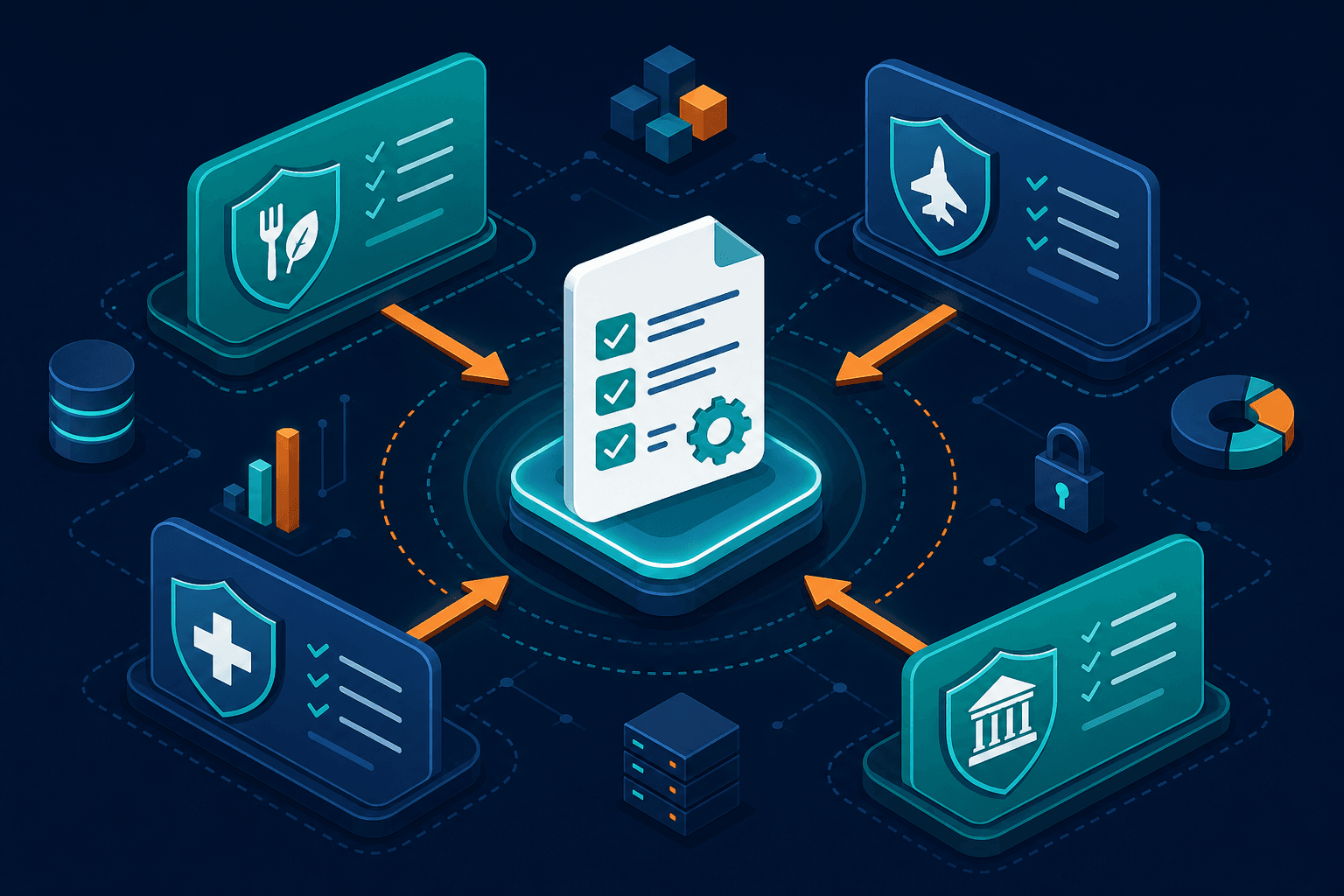
A food and beverage manufacturer may run FDA Food Safety Modernization Act (FSMA) obligations. The same company, holding Department of Defense contracts, may carry Cybersecurity Maturity Model Certification (CMMC) requirements. A healthcare billing operation adjacent to a major health system may carry HIPAA. A treasury or insurance function may carry GLBA. A company with public or private equity ownership may carry SOX IT General Controls.
Each framework uses different language but converges on the same requirement: an accurate, current record of in-scope systems, their locations, and their owners.
Mid-market IT teams in Chicago commonly run lean — often under ten people — for organizations supporting thousands of employees, servicing every compliance obligation above from the same configuration record. When the CMDB drifts, it drifts across every framework at once: a single stale record can trigger a HIPAA finding and a SOX IT General Controls exception, both surfacing in the same audit cycle as a CMMC documentation gap. Large enterprise IT organizations field compliance teams as a separate function; mid-market teams do not. The person managing the CMDB is usually the person answering the auditor.
What does CMMC Level 2 require from manufacturers regarding IT asset inventory?
CMMC Level 2 requires manufacturers to maintain an accurate inventory of systems that store, process, or transmit Controlled Unclassified Information (CUI), including system components and their connections. A CMDB that is stale or incomplete fails this control on its face, regardless of what monitoring tools the manufacturer runs alongside it.
What breaks first when the record is wrong
The fairlife scoping decision makes the incident response failure mode concrete. When Coca-Cola’s team needed to know which systems the ransomware had reached, they had a clear answer ready — U.S. production on one side, Canada on the other. The record that existed before the incident let the team draw that line in hours.
Incident response
When the CMDB is wrong, the same question becomes a cross-site conference call between teams holding different partial inventories. Everything no one can rule out expands the containment boundary, and that expansion drives the communication plan, the notification decisions, and every call to a regulator or insurer.
Change management
A blast radius calculation for a proposed change depends on CI relationships. When those relationships are missing or stale, an approved change reaches a dependency the team didn’t know existed, and the change window burns on rollback.
Audit response
A CMMC assessor or SOX auditor asking for a current asset list receives whatever the CMDB contains at that moment. If the last discovery run was 90 days ago, the list is 90 days old.
This isn’t hypothetical. In June 2026, ServiceNow disclosed that a misconfigured Scripted REST Resource had left an API endpoint unauthenticated (Deepwatch, CA-26-021). The exposed endpoint let requests query customer instance tables — asset inventories, configuration details, and support ticket records — without credentials. ServiceNow shipped an emergency fix days after exploit activity began. Even a mature ITSM platform depends on tight access controls and accurate records around its own configuration data to contain exposure quickly. Virima integrates directly with ServiceNow to enrich its CMDB with discovery-sourced ground truth, rather than replace the platform — so the reconciliation problem described here applies whether the system of record is ServiceNow, Jira Service Management, or another ITSM tool. Teams already running ServiceNow can pair that integration with Virima’s ServiceNow CMDB governance guidance to tighten access controls around the CMDB itself.
Build a CMDB your response team can reach for under pressure Virima’s Trusted Runtime Truth gives IT and security teams a discovery-sourced inventory with CI relationships, change history, and ownership documented before an incident forces the question. |
The AI and agentic wrinkle
Every agentic workflow that touches IT operations reads from a data source. An agent routing an incident ticket reads the CMDB to identify CI owners. An agent running a pre-change impact assessment reads the CMDB for dependency relationships. An agent generating a decommission recommendation reads the CMDB to identify what depends on the asset in question.
When those processes were automated workflows, a stale CMDB produced a wrong ticket assignment or a missed dependency. The cost was bounded because a human checked the result.
When those processes operate as autonomous agents, the stale record doesn’t produce a wrong suggestion. It produces a wrong action executed by the workflow itself.
For Chicago’s mid-market operators layering AI onto IT operations, the implication is direct. The CMDB is the data plane that agentic workflows act on. A stale record in that environment doesn’t get flagged for review. It gets automated. Elevate your IT operations: Transforming the future with Virima CMDB
What automated discovery actually looks like
High-frequency scheduled discovery, paired with integrations across cloud, endpoint, network, and service management systems, produces a CMDB that reflects the current environment without waiting for manual updates.
Scope starts with the CI classes that feed real decisions — servers, applications, and network devices for incident and change workflows; cloud resources for asset hygiene and license management. Scan cadence should match each segment’s rate of change: a manufacturing ERP environment changes less often than a cloud-native application tier, so schedules align to that pace under the same reconciliation rules.
Multi-source reconciliation resolves conflicting observations across discovery tools without last-scan-wins overwrites: each source declares authority over specific CI attributes, and when sources disagree, the reconciliation rule — not the most recent scan — determines which value the CMDB holds. Mid-market teams that have lost trust in the CMDB often build parallel spreadsheet trackers; discovery-sourced reconciliation is what earns the CMDB back into active use, replacing those trackers with accurate answers returned from one record.
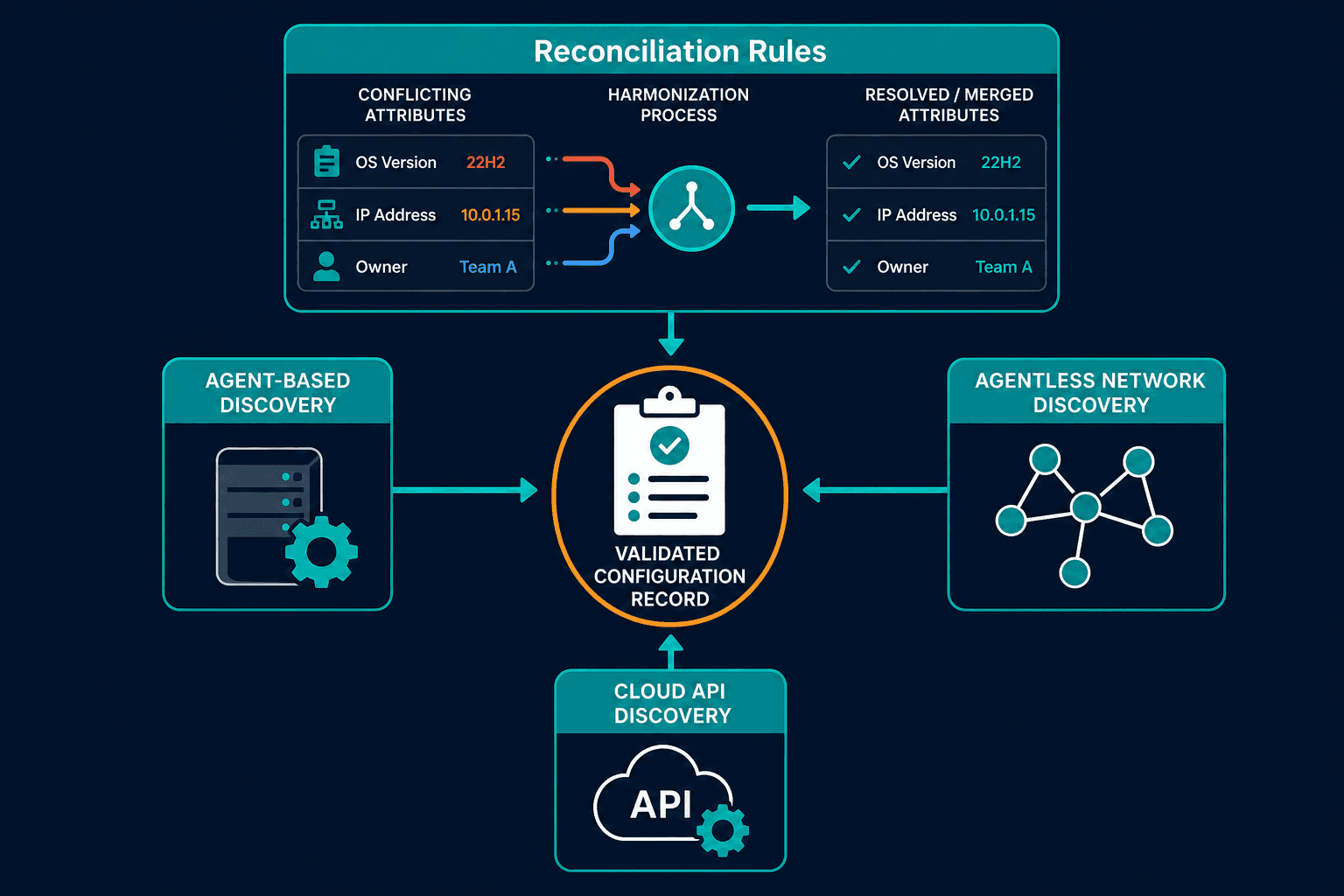
How does a discovery-sourced CMDB handle environments mixing on-premises servers, cloud workloads, and remote endpoints?
Discovery methods address each segment through the mechanism native to it. Agent-based discovery covers endpoints and on-premises servers. Agentless credentialed scanning covers network infrastructure. Cloud provider API integrations cover AWS and Azure resources. Multi-source reconciliation merges findings into one CI record per asset, with reconciliation rules determining which source holds authority over each attribute.
Where a platform fits
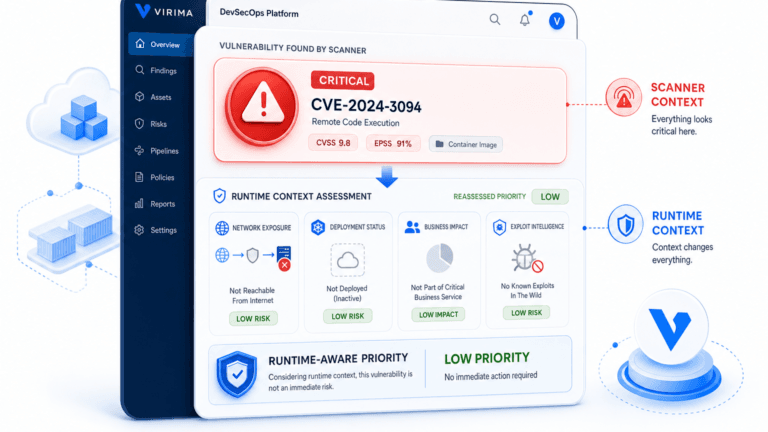
Virima operationalizes the discovery and reconciliation model above for environments spanning on-premises infrastructure, cloud workloads, and endpoints. Agent-based and agentless discovery methods write findings into a single validated CI record. Multi-source reconciliation rules govern attribute authority across sources. ViVID™ service maps build CI relationship context from that record and keep those maps current as infrastructure changes. For mid-market teams in Chicago, that combination closes the CMDB accuracy gap. Teams carrying FSMA, CMMC, HIPAA, or SOX obligations from the same configuration record benefit directly.
The boundary that held, and what building one requires
The Coca-Cola 8-K filing describes a company that knew something specific under pressure: which systems were U.S. production and which were not. That knowledge arrived before the incident. The map existed before the incident arrived, and the line was readable when it mattered.
Chicago’s mid-market manufacturers, food processors, distributors, and healthcare IT teams carry the same exposure. The difference comes down to time and record freshness. A CMDB that is 90 days stale draws the wrong line. One that reflects the most recent discovery run draws the right one.
Building that boundary requires one ingredient. An accurate, discovery-sourced configuration record must exist before the incident forces the question.
Frequently Asked Questions
What is the most common reason a mid-market CMDB becomes inaccurate?
The most common cause is a structural gap between the people who make infrastructure changes and the people responsible for updating the CMDB. Engineers who patch servers, migrate VMs, or provision cloud resources carry no workflow obligation to record those changes in the configuration database. The CMDB falls behind at the rate those changes accumulate. In mid-market environments where IT teams are small, that rate often exceeds the team’s capacity to maintain the record manually. Discovery automation closes this gap by scanning the environment on a schedule and writing findings back into the CMDB without requiring a manual step after each change.
How does CMDB drift affect compliance audits under CMMC and SOX simultaneously?
CMMC Level 2 requires an accurate inventory of systems that store, process, or transmit Controlled Unclassified Information, including system components and connections. SOX IT General Controls require documented, current records of in-scope infrastructure supporting financial reporting. Both frameworks are assessed against the same underlying CMDB. When that record is stale, a single audit cycle can surface a CMMC documentation gap and a SOX IT General Controls exception from the same inaccurate source. Mid-market teams that service both frameworks from one IT team and one CMDB face this simultaneously rather than in separate audit tracks.
What happens to incident response scope when the CMDB doesn’t reflect the current environment?
When the CMDB is inaccurate at the time of an incident, the response team cannot confirm which systems are affected and which are not. Everything that can’t be definitively ruled out expands the containment boundary. The team works from a conference call between site representatives holding different partial inventories rather than a single authoritative record. Decisions about notifications, regulatory disclosures, and communication timing become estimates rather than fact lookups. The fairlife response illustrated the alternative: a boundary drawn quickly and cleanly because the record already reflected the environment before the attack began.
How does Virima’s discovery approach handle environments that mix on-premises and cloud infrastructure?
Virima uses a combination of agent-based discovery for endpoints and on-premises servers, agentless credentialed scanning for network infrastructure, and cloud provider API integrations for AWS and Azure resources. Each method writes findings into the same CI record. Multi-source reconciliation rules govern which source holds authority for each CI attribute, so conflicting observations from different discovery methods resolve into one record without last-scan-wins overwrites. The result is a single inventory that covers all three infrastructure segments without requiring a separate management process for each one.
What is Virima’s Trusted Runtime Truth and how does it apply to CMDB accuracy?
Virima’s Trusted Runtime Truth is a discovery-sourced, validated inventory covering what exists in an environment, how assets connect, what changed, and who owns each one. For CMDB accuracy, it means the record is populated and refreshed from actual discovery runs rather than manual entry or last-scan-wins tools. The result is a CMDB that reflects the current environment when change or incident decisions require it, rather than reflecting the environment as it was the last time someone updated a spreadsheet.