The Automated User Provisioning Gap No Identity Vendor Will Admit To

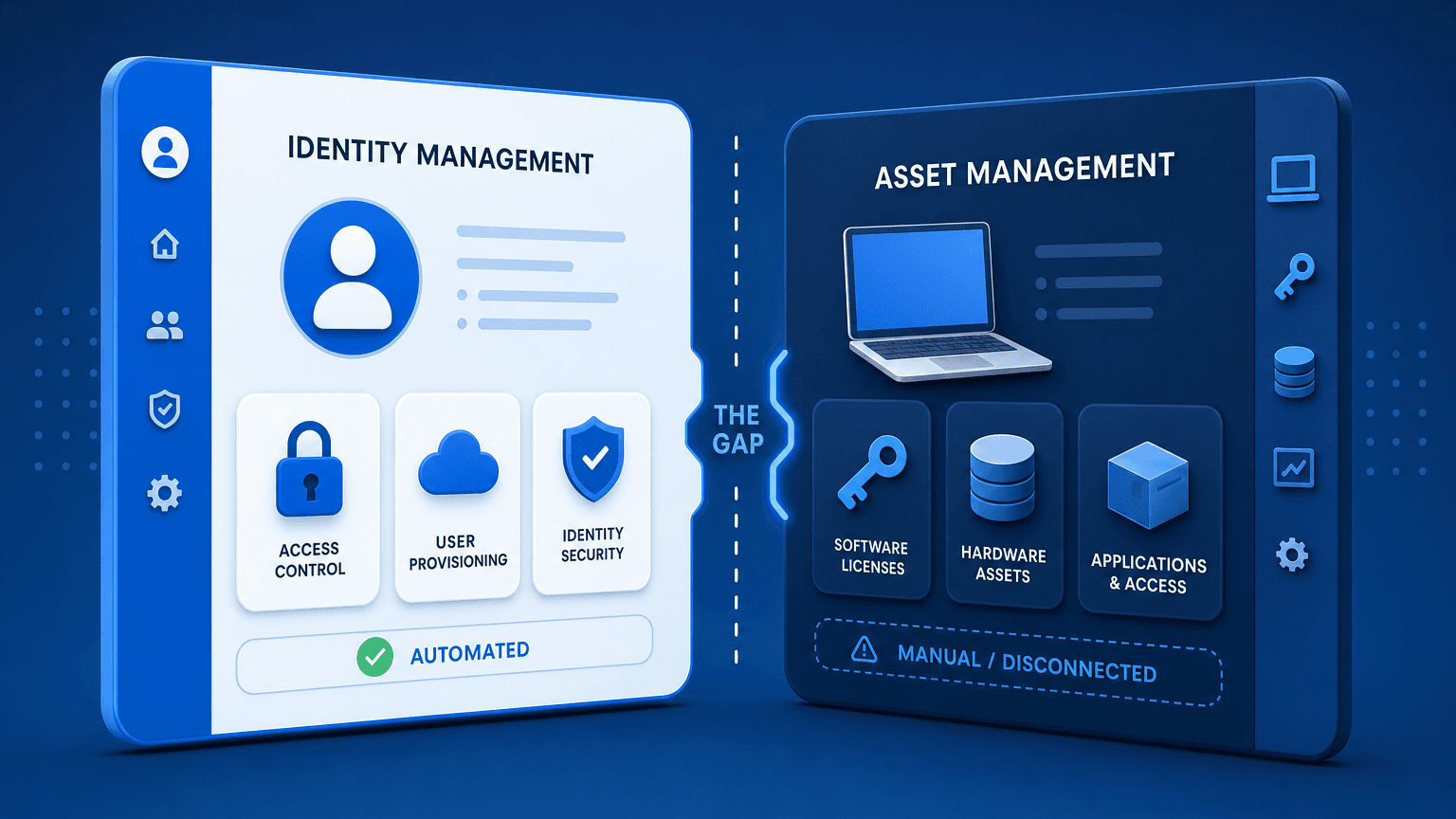
An employee resigns on a Tuesday. Human Resources (HR) closes the record the same afternoon. The identity platform does what it was bought to do. Single sign-on drops. Mailbox access ends. SaaS groups lose the account within minutes. Security gets the green status it expects from automated user provisioning, the practice of creating, changing, and removing accounts and access rights when someone joins, moves roles, or leaves.
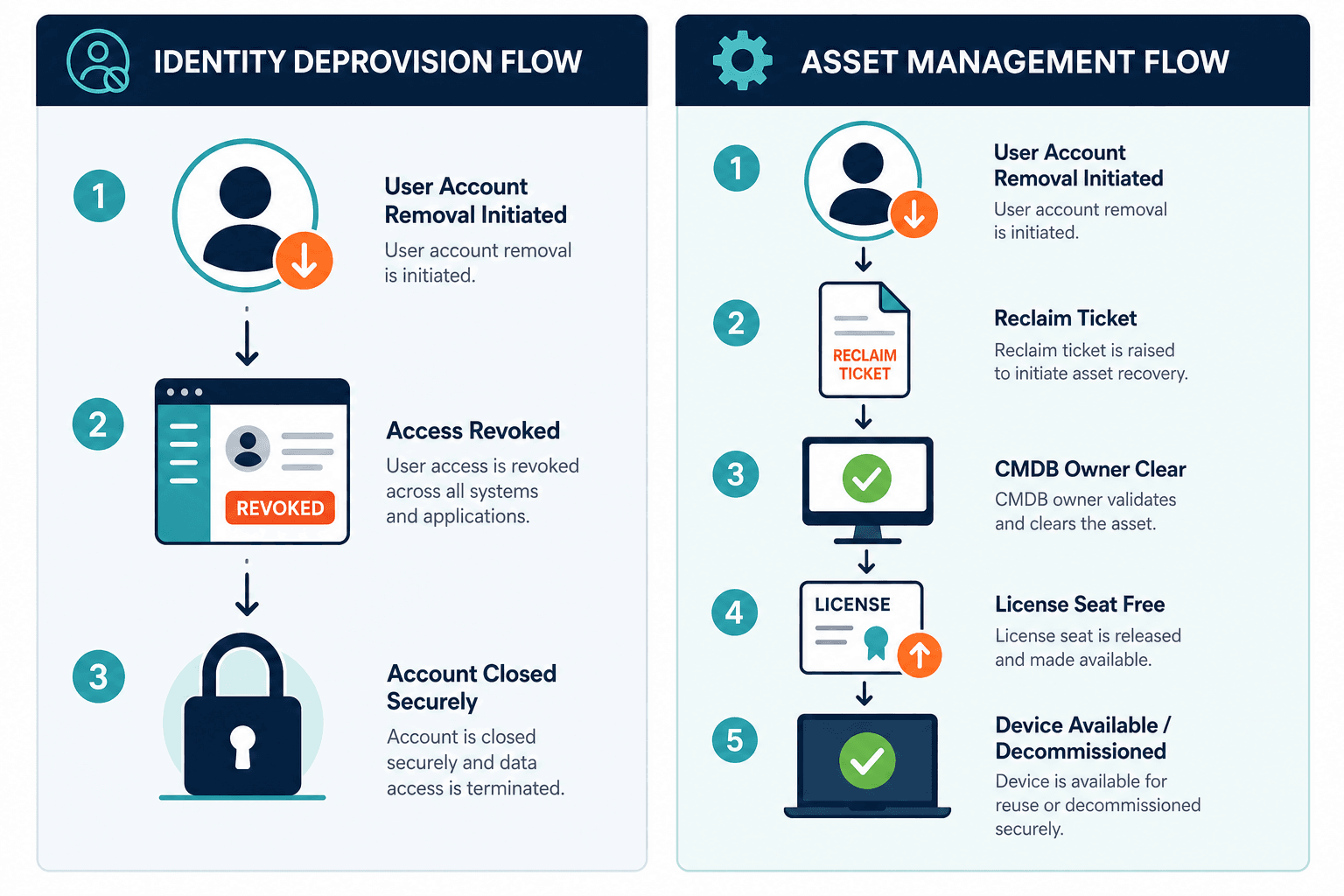
Three weeks later, someone in IT opens the configuration management database (CMDB) for a routine cleanup. That same person still shows as the assigned owner of a laptop, a monitor, and two software seats. Nobody opened a reclaim ticket. Nobody moved the configuration item (CI) toward decommission. The login side finished on day one. The asset side never received a signal because the provisioning stack generated no signal covering hardware, licenses, or ownership.
That split creates real cost. Capterra’s offboarding survey (2022 Employee Offboarding Survey, fielded November 2022, published January 2023) found that 71% of HR workers reported at least one departing employee who did not return company equipment, at an average loss near $1,963 per person. The figure is not brand-new research in 2026, and it remains the clearest public number on equipment that never comes back after exit. Identity vendors market the login close. They rarely put the unreturned laptop, the still-billed seat, or the stale CMDB owner on the same slide.
TL;DR
- Automated user provisioning closes accounts and app access. It does not reclaim hardware, clear CMDB ownership, or free license seats.
- According to Capterra’s 2022 offboarding survey, 71% of HR workers reported at least one departing employee who did not return company equipment, averaging $1,963 per incident.
- Flexera’s 2026 State of ITAM Report found complete IT asset visibility at 36%, down from 43% in 2025, making post-exit reclaim harder than ever.
- The joiner-mover-leaver (JML) event needs two parallel tracks: identity deprovisioning and an asset-side reclaim path through ITAM and ITSM.
- Virima supplies discovery-sourced CMDB ownership and license reclaim workflows alongside the identity platform already in place, no rip-and-replace required.
What Is Automated User Provisioning?
Automated user provisioning is the identity-side practice of creating, changing, and removing accounts and access rights when someone joins, moves roles, or leaves. Buyers usually expect account creation from an HR or directory trigger, role-based access control, System for Cross-domain Identity Management (SCIM) or directory sync into apps, and automated deprovisioning on exit. Gartner’s framing of identity governance and administration (IGA) sits in that same lane: identity lifecycle management and access governance across on-premises and cloud systems. This lifecycle is often called joiner-mover-leaver (JML), the hire, role-change, and exit events that should trigger both an identity update and an asset update.
The 2026 Gartner Market Guide for Identity Governance and Administration, as quoted in Pathlock’s Gartner recognition release, states that organizations lack full visibility into their identity landscape. It leaves shadow identities, orphaned accounts, and dormant credentials unmonitored. That finding is about credentials and entitlements. It is not a claim about laptop serial numbers, monitor assignment, or software entitlement seats tied to a person.
So the category boundary is sharp. Automated user provisioning owns logins and permissions. It does not own equipment assignment, license reclamation, or CMDB ownership. IT asset management capabilities track those objects through request, assign, reclaim, and retire. Confusing the two is how teams celebrate a clean deprovision while the estate still lists a ghost owner.
The Hidden Gap
| What automated provisioning checks | What it doesn’t touch |
|---|---|
| Login created or revoked on schedule | Laptop, monitor, and peripherals assigned to that person |
| SaaS and app access synced via SCIM | Software license seat tied to that access |
| Directory record updated | CMDB ownership record for the physical or virtual asset |
| Access audit trail | Asset audit trail for who holds what right now |
Does automated user provisioning manage company hardware and software licenses?
No. Automated user provisioning creates and revokes accounts and access rights. Hardware assignment, software seat reclaim, and CMDB ownership sit in ITAM and request fulfillment. Closing a login does not return a laptop or free a billed license by itself.
Why Does This Matter for ITAM and ITSM Teams?
Headcount churn never stops, and the seam between HR, identity, and asset systems is where ownership answers go missing. Hybrid and remote work scatter devices across homes and offices. Security and audit teams still ask who held which system and which physical or licensed asset at a given date.
Identity research keeps showing leftover access after employment ends. Help Net Security on Veza research (December 2025) described 824,000 active identities with no associated HR owner, about 8% of identity-provider users in the dataset. The same research found 78,000 former employees still holding active credentials. That is the orphaned-account problem identity teams already fight. ITAM and IT service management (ITSM) teams face the twin problem on the asset side: ownership rows and license seats that never moved when the person left.
A CMDB ownership record goes stale the moment an employee leaves, and nobody updates the CI’s assigned-owner field. Identity deprovisioning has no visibility into CMDB data, so the record only corrects when an ITAM process ties CI ownership changes to the same HR exit signal that revokes the login.
When the two sides stay disconnected, ops spends hours reconciling spreadsheets after the identity tool says the job is done. Leadership carries unreturned hardware costs and seats that keep renewing. Regulated teams cannot answer an auditor who wants both the access trail and the asset trail from one coherent timeline. Decommissioned asset tracking only works if someone actually moves status when the person leaves.
Where the Automation Quietly Stops
- Access is revoked on schedule, yet the laptop still lists the leaver as owner in the CMDB. Result: a clean identity ticket and a dirty ownership record.
- A role change updates groups in the directory, while the old department’s software license stays assigned. Result: double-billed seats and an entitlement position that no longer matches reality.
- The identity stack does not trigger an asset reclaim or decommission path, so status never moves on its own. The gap persists until an ITAM process picks it up.
Cybersecurity asset management basics depend on knowing which devices still exist and who last held them. Automated user provisioning alone does not feed that picture.
What Gets Left Behind When Provisioning Stops at the Login
For Ops Teams (IT Asset Management and CMDB Owners)
After exit day, someone still has to match HR termination lists to device serials, loaner logs, and license assignments. That work is manual when the only automated signal was account disabled. Ownership fields go stale. Install counts drift from entitlements. The next audit starts with a chase instead of a query. CMDB owners become the people who absorb the backlog identity automation never created a ticket for.
For Leadership
Unreturned hardware and unreclaimed seats compound quietly. They rarely appear as a single line item labeled provisioning gap. They show up as missing inventory, higher renewal quotes, and longer time-to-redeploy for the next hire.
Flexera’s 2026 State of ITAM Report put complete IT asset visibility at 36%, down from 43% in 2025. Incomplete visibility makes license waste and audit spend harder to cut, even when identity automation looks mature on paper.
For Regulated Environments
Auditors ask who could access a system and what they physically or contractually held. Automated user provisioning produces the access side. It doesn’t prove a laptop was returned, wiped, and reassigned. It doesn’t prove a named-user license was removed from the leaver either. Teams that only automate logins hand auditors half a story. Software license management guidance needs install and assignment truth, not only directory membership.
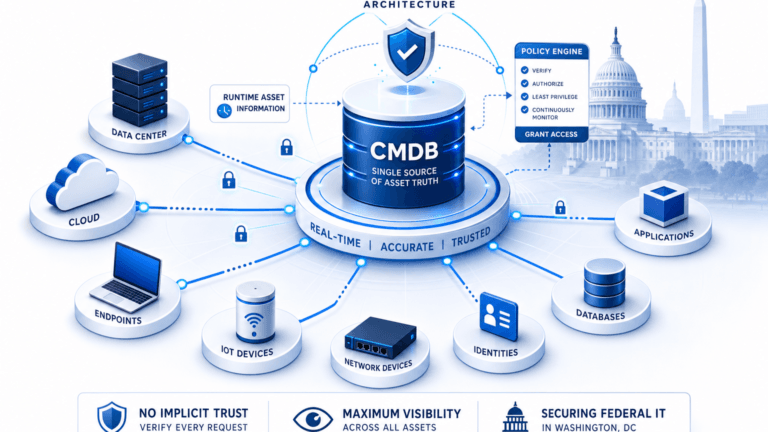
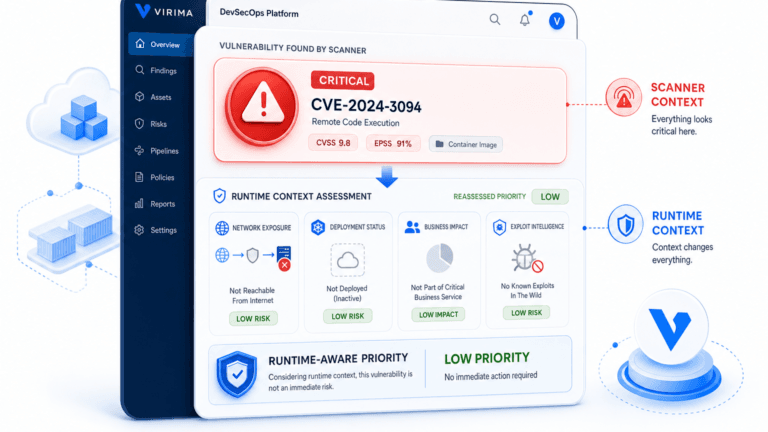
Trusted Runtime Truth is the layer that keeps ownership, installs, and configuration current enough that joiner-mover-leaver (JML) events can update asset records without a spreadsheet hunt.
Why does automated user provisioning matter for ITAM teams?
ITAM teams inherit every device and license tied to a person. When provisioning only closes accounts, ownership and seats stay open. ITAM then carries reclaim debt, renewal waste, and audit gaps the identity platform never surfaces.
How the Asset Layer Closes the Gap
Virima is not an identity vendor. It does not create Okta, Entra ID, or SailPoint accounts. It does not replace SCIM. The honest job is the asset side of the same joiner-mover-leaver event: keep ownership, hardware status, and license assignment current, and push those records into the ITSM tools teams already use.
- A discovery-sourced CMDB holds the ownership and configuration record for devices and related software footprint, so who has this is a query rather than a Slack thread. High-frequency scheduled discovery (agent, agentless, and API sources) refreshes what is present. It does not invent service composition. Teams still define business services; map building follows those definitions. See Virima CMDB and IT discovery.
- ITSM request fulfillment tied to the joiner-mover-leaver event turns an HR or identity exit signal into an asset-side ticket: assign on join, reassign on role change, reclaim on exit. Fulfillment lives next to ServiceNow, Jira Service Management, Ivanti, HaloITSM, and similar platforms through the integrations hub, not as a second identity plane. ITSM automation with Virima describes how request paths stay tied to governed asset data.
- Software license reclamation workflows close what a revoked login never sees. Disabling an account does not free a seat in the publisher’s count. A governed ITAM record can open reclaim the day access ends, then compare installs to entitlements. That is license operations, not access governance. Top software license tools context still depends on assignment truth after every leaver.
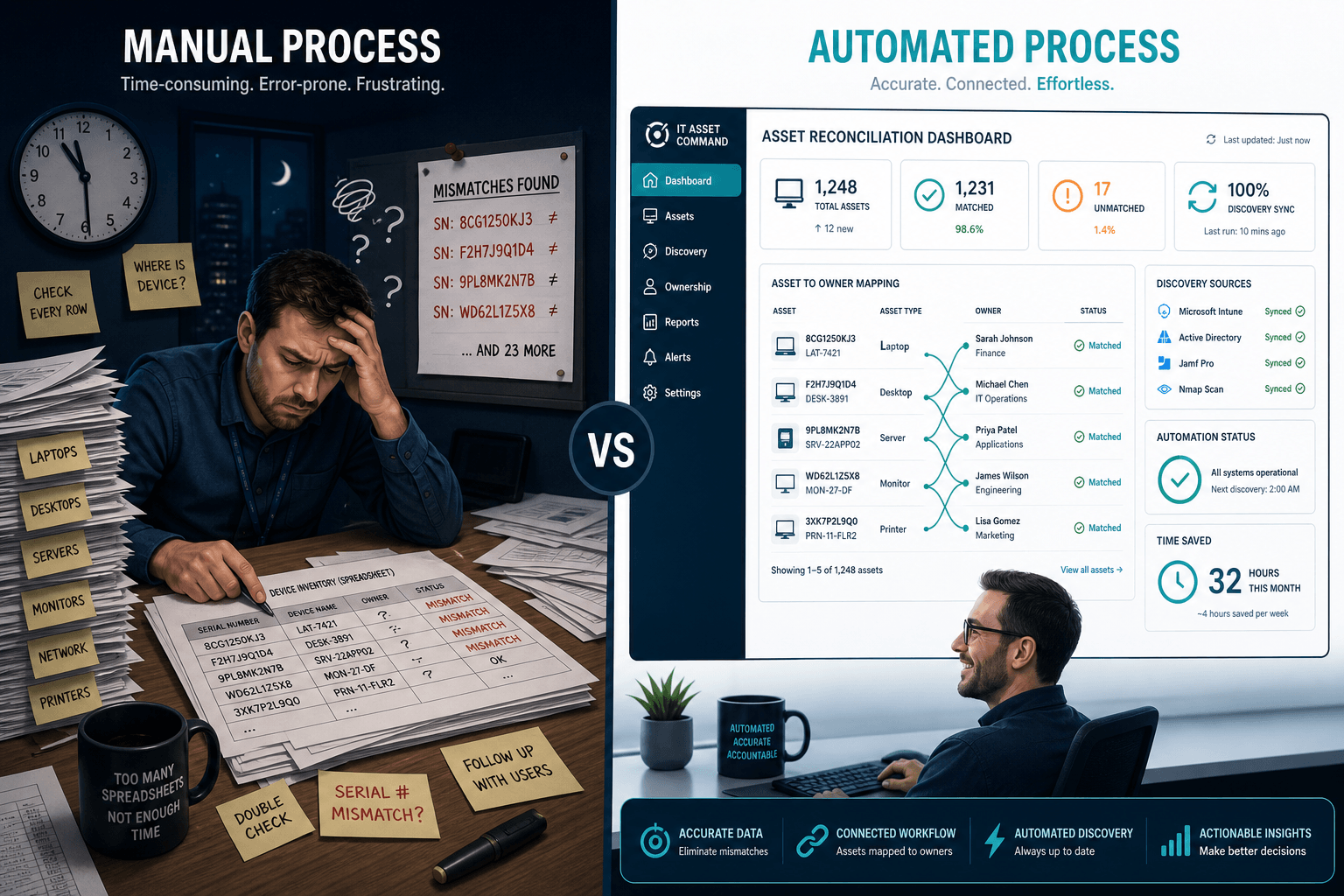
| Manual asset reconciliation | Discovery-sourced asset reconciliation |
|---|---|
| IT cross-checks a spreadsheet against the identity exit report | CMDB ownership updates from the same joiner-mover-leaver trigger path |
| License reclamation waits for the next audit, if it happens | Reclamation work opens when access is revoked |
| Devices tracked by memory or email threads | Asset status (requested, assigned, decommissioned) stays queryable |
Automated User Provisioning Examples in Practice
- New hire, day one: HR triggers identity provisioning for accounts and groups. In parallel, an ITSM request assigns a laptop and opens a CMDB ownership record for that serial. Access and asset start together.
- Role change: Directory groups update for the new team. The old department’s software license is flagged for reassignment instead of remaining double-assigned through the next renewal.
- Departure: The identity platform revokes login immediately. An asset ticket tracks device return. When return is confirmed, an operator moves the CI toward decommission or available stock and clears the leaver as owner. The record closes instead of becoming a ghost asset.
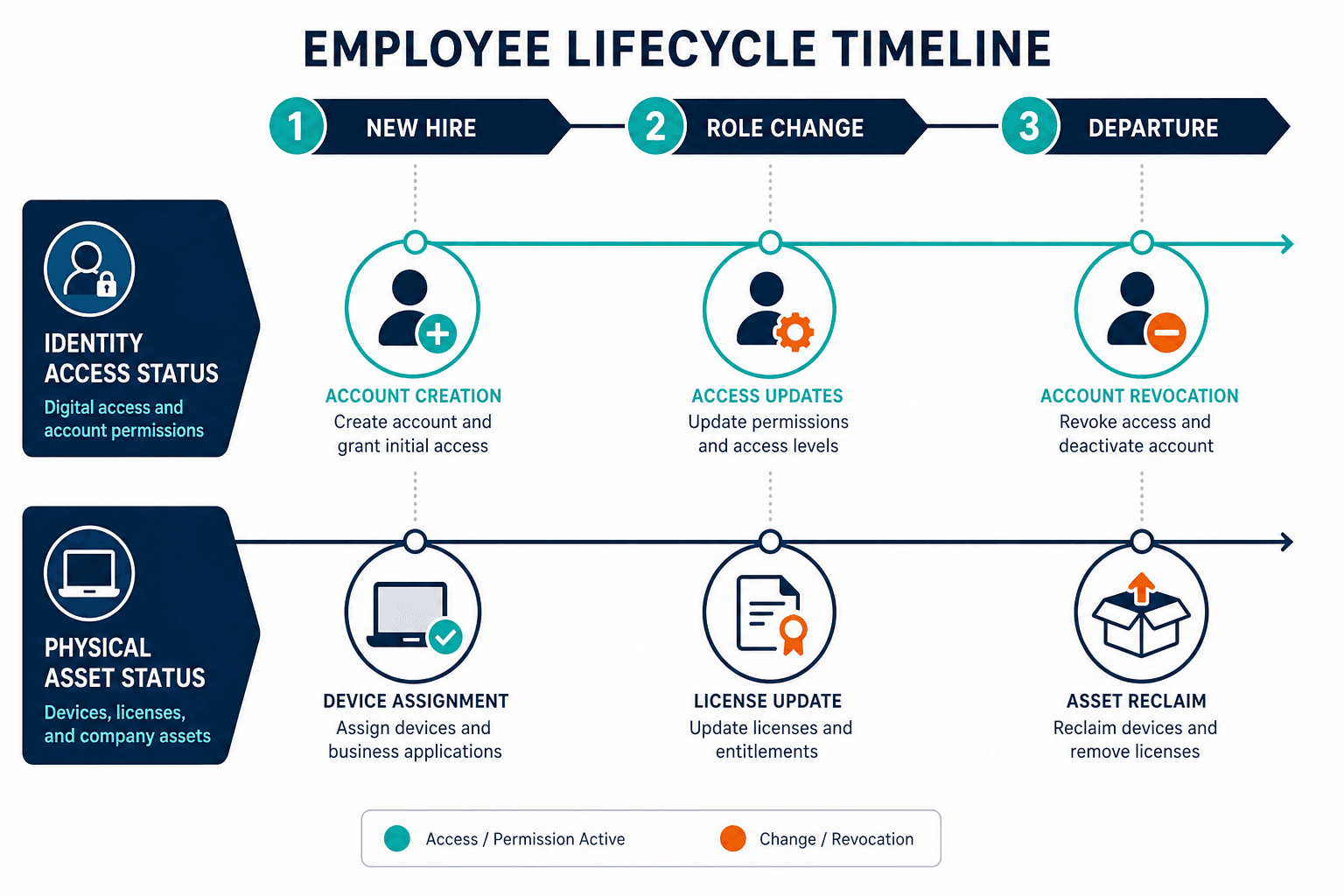
These scenes are not identity features. They are ITAM and ITSM fulfillment sitting beside automated user provisioning. Asset lifecycle management software is the discipline that keeps those states honest between hire and exit.
What happens to a laptop or software license when an employee is deprovisioned?
Account deprovisioning removes logins and app access. The laptop still needs a return ticket, wipe, and owner clear in the CMDB. The license seat still needs to be reclaimed against entitlement. Without those steps, hardware and seats stay assigned after the person is gone.
How Virima Supports the Asset Side of Provisioning
Immediate Operational Impact
One governed asset record replaces the chase across HR exports, identity exit reports, and local spreadsheets. Operators see assigned owner, last discovery evidence, and open reclaim work in the same system of record they use for ITAM. That cuts the days lost when nobody owns the handoff after the identity ticket closes.
Long-Term Accuracy
High-frequency scheduled discovery keeps hardware and software inventory from decaying between annual audits, so software license reclamation stays current without waiting for the next audit cycle. Virima does not claim passive continuous or event-driven discovery today. Scheduled cycles, multi-source reconciliation, and CI health are the accurate product story. Stale ownership is what breaks joiner-mover-leaver on the asset side. Refreshed discovery is what reduces that drift without pretending every change is streamed the second it happens.
Integration with Existing Workflows
Virima sits alongside the identity platform and ITSM stack already in place. Partner names stay plain text: ServiceNow, Jira, Ivanti, HaloITSM, Xurrent, Hornbill, TeamDynamix. The point is augmentation of asset and CMDB truth, not rip-and-replace of Okta, Entra ID, or SailPoint. ITAM features cover hardware lifecycle and software license position. That is the product surface for the gap this article describes, including patterns teams compare when they evaluate Spiceworks ITAM limits.
Moving from Manual Reconciliation to a Governed Asset Record
Closing the gap doesn’t require replacing the identity platform. It requires connecting the same exit signal to an asset-side process instead of letting it stop at account revoke.
Benefits that follow
- Fewer ghost owners. When reclaim closes, the CI no longer points at a former employee.
- Faster redeploy. Returned devices move to available stock with a clear status instead of sitting in unknown limbo.
- Cleaner entitlement position. Seats drop when people leave, so renewals reflect use rather than abandoned assignments.
Getting started
- Audit current CI-to-user mapping accuracy on a sample of leavers from the last two quarters.
- Connect the HR or identity exit signal to an ITSM asset reclaim request, even if the first version is semi-manual.
- Define asset lifecycle states your teams will actually use (requested, assigned, in repair, available, decommissioned).
- Automate the reclamation ticket so license and hardware owners get work the day access ends.
- Review discovery coverage quarterly so ownership and install data stay trustworthy between events.
IT service management systems only fulfill what the asset record can support. Fix the record, then scale the tickets.
Close the Asset Side of Automated User Provisioning
Identity vendors will keep shipping better SCIM, better joiner workflows, and faster revocation. That work matters. It still stops at the login. If your CMDB still lists leavers as owners, and seats still renew for people who left, you are living in the gap this category rarely names.
See how Virima keeps ownership, discovery, and license position current beside the identity stack you already run. Request a demo when you want the asset half of joiner-mover-leaver on the same timeline as account revocation.
Frequently Asked Questions
What is automated user provisioning?
Automated user provisioning creates, changes, and removes user accounts and access rights when people join, move roles, or leave. It covers directories, roles, SCIM sync, and deprovisioning. It does not assign or reclaim hardware or software license seats.
Does automated user provisioning cover company hardware and software licenses?
No. Provisioning tools manage logins and entitlements in apps. Hardware return, CMDB ownership, and license reclaim belong to ITAM and ITSM fulfillment. Teams need both layers for a complete joiner-mover-leaver close.
How does Virima keep CMDB ownership current after an employee leaves?
Virima ties the same HR or identity exit signal that revokes a login to a CMDB ownership update, so a discovery-sourced asset record clears the leaver as owner and opens a reclaim request instead of waiting for the next manual audit.
What happens to a laptop or software license when an employee is deprovisioned?
Deprovisioning removes access. The laptop still needs to be returned, wiped, and owner-cleared. The license still needs seat reclaim. Without those steps, assets stay assigned after the person is gone.
Can Virima work alongside an existing identity provider like Okta or Entra ID?
Yes. Virima does not replace identity providers. It supplies discovery-sourced asset and CMDB ownership, license position, and ITSM-oriented reclaim paths alongside Okta, Entra ID, or similar tools your team already runs.