Asset Tracking Software for Small Business | Virima

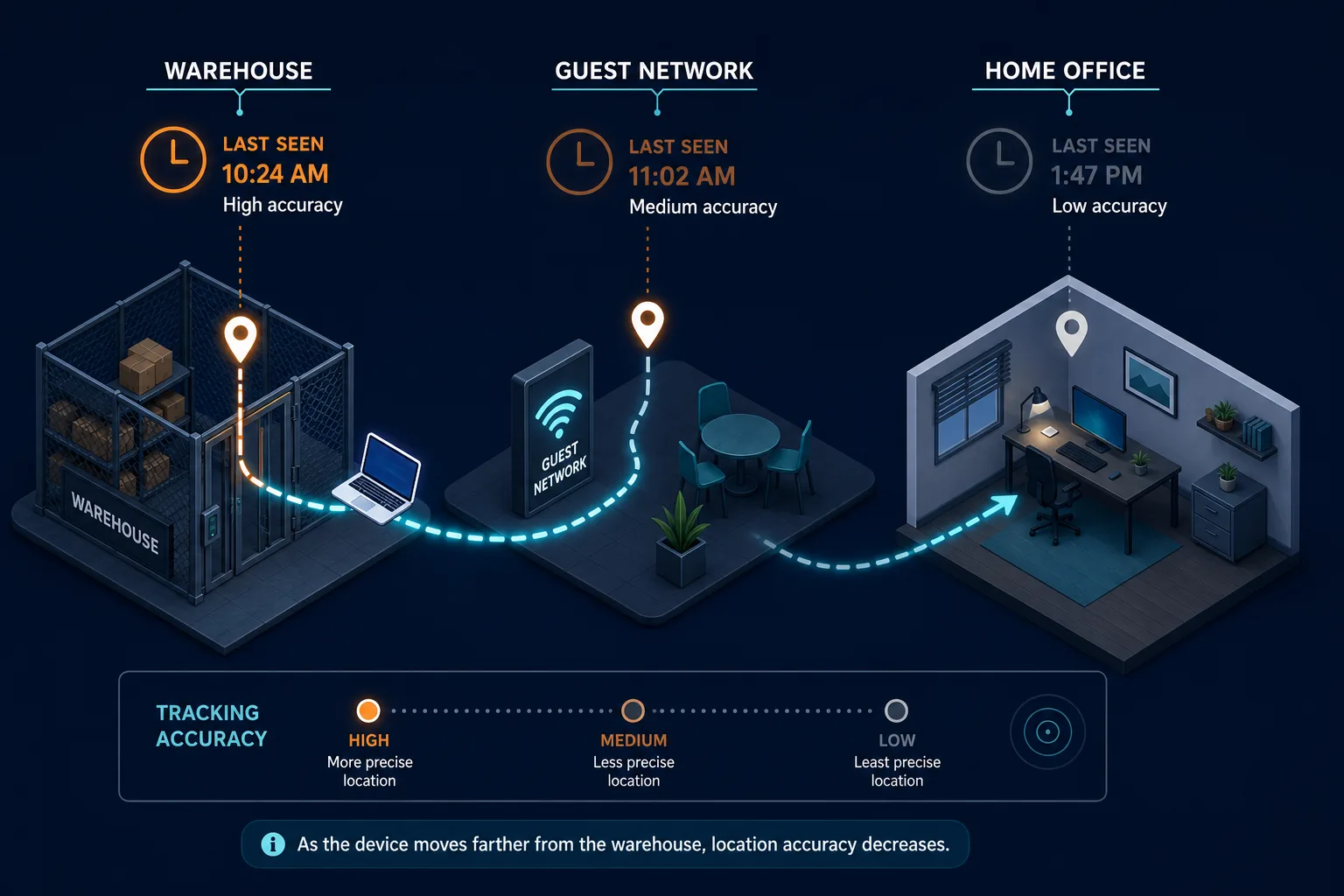
The laptop left the cage with a clean barcode scan and a signed assignment form. Two weeks later insurance asked where it lived, security asked whether it still joined the domain, and finance asked if the serial still matched depreciation. The tracking app still showed “checked out to Alex.” The network had already moved the device through a guest VLAN, a home office, and a spare that never came back.
That is the gap behind most searches for asset tracking software for small business. Small IT teams buy tracking to answer where something is and who holds it. Those jobs matter. They are not the same job as knowing what still exists on the estate after the handoff, with a last-seen date and an owner you can defend.
For lifecycle and inventory beyond tracking, see asset management software for small business. For methods, tags, and discovery handoff in general IT, use IT asset tracking. For multi-vendor bake-offs, use Top asset management tools. Small-business IT buyers searching for tracking software still need discovery after check-out.
For the category frame before you rebuild another custody workflow, start with Trusted Runtime Truth.
What small-business buyers mean by asset tracking software
In SMB searches, asset tracking software for small business usually means one or more of these jobs. That’s different from laptop tracking software built for anti-theft or GPS recovery – this article covers inventory and custody tracking, not device recovery after loss or theft:
| Tracking job | What the tool is built to answer | What it often skips |
|---|---|---|
| Check-in / check-out | Who holds the device right now | Whether the device still appears on the network |
| Barcode or QR custody | Physical identity at the door or desk | Cloud instances and untagged gear |
| RFID or location zones | Zone or cage presence | Software installs and SaaS seats |
| Assign / recover on offboarding | HR handoff of hardware | Last-seen freshness after the person leaves |
| Spreadsheet export for finance | Serial and assignee list | Discovery source and owner of record for samples |
Those jobs are real. A two-person IT team needs a clean assignment trail. A check-in check-out asset software workflow built well for SMB is a legitimate foundation. The failure starts when the same tool is treated as the full estate register once the device leaves the cage. That happens the moment it joins a home network, sits on a guest VLAN, or never gets a tag in the first place.
What is asset tracking software for small business?
It is software small organizations use to record where IT items are, who holds them, and when they were checked out or returned. Strong tracking covers custody and location. It still needs discovery-backed last-seen and owners when devices move on the network after check-out.
Why check-out truth is not network truth
Check-out is a custody event. Network presence is a discovery event. Small teams collapse them because both live under “know what we have.”
When they stay collapsed, three failure modes show up fast:
- Ghost checked-out rows, the register says Alex holds a laptop; Alex left six months ago and the machine never reappeared in a scan.
- Dark untagged gear, switches, spare servers, and cloud accounts never got a barcode, so tracking never started.
- Stale location fields, the last scan was at the cage; the device has sat on a branch VLAN for months with no last-seen refresh.
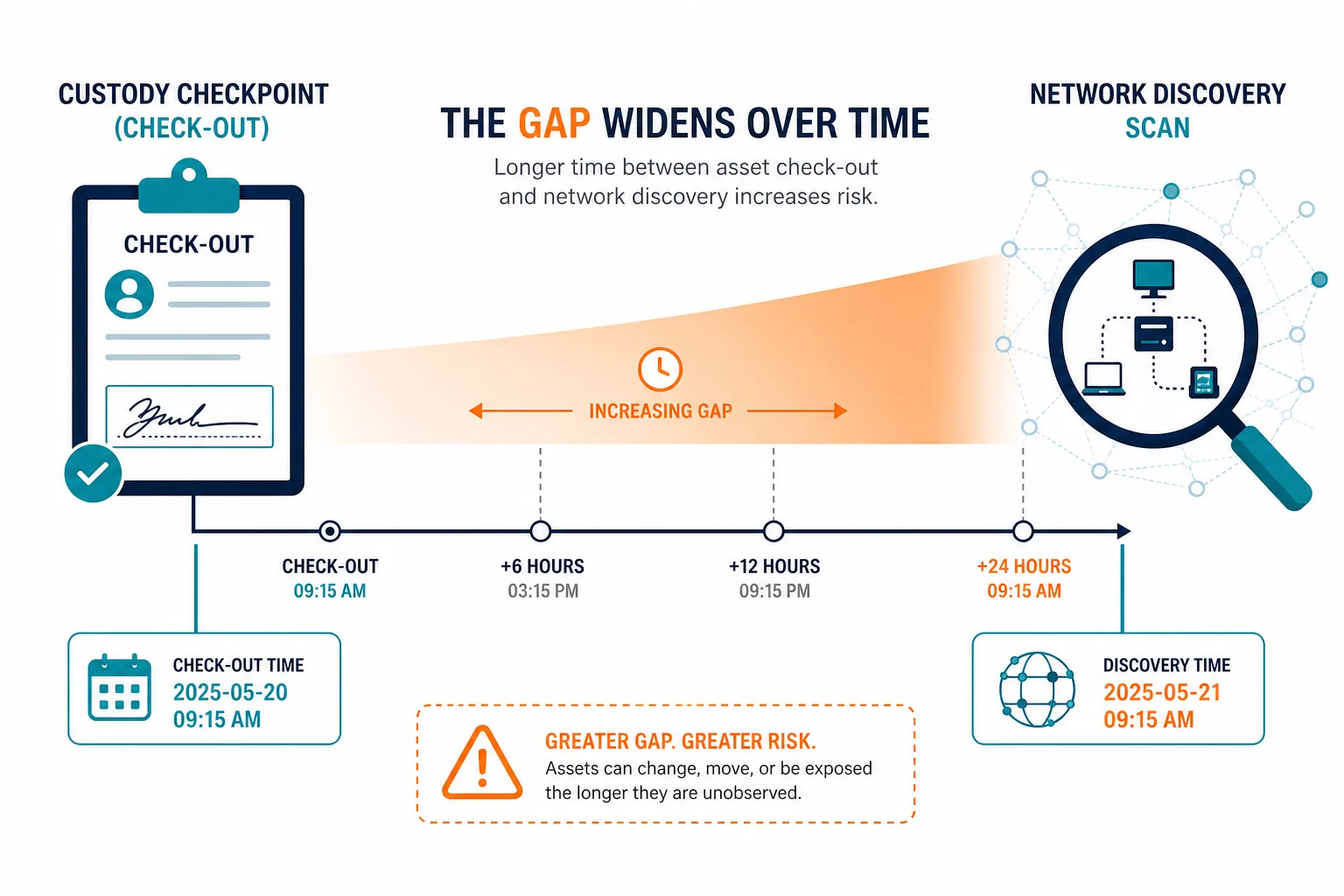
CISA Binding Operational Directive 23-01 is a U.S. federal inventory rule, not a small-business statute. The operational lesson still applies: incomplete asset visibility breaks every control that claims coverage. Small firms feel it when insurers, customers, or partners ask for a current picture and the check-out log cannot defend dates.
Physical tags and anti-theft labels still help deterrence and offline identity. They do not replace discovery after the device leaves the cage. Pair custody tools with high-frequency scheduled discovery cycles so last-seen does not depend on the next manual audit day.
Five buying traps when SMB IT shops for tracking software
1. Buying a facility or fleet tracker for IT endpoints
Many “small business asset tracking” pages mix GPS fleets, tools, and desks with IT inventory. If your pain is laptops, servers, and cloud accounts, a field-equipment tracker will not close the gap.
2. Treating barcode go-live as discovery go-live
Label day feels productive. Without agent, agentless, or API discovery after labels, the register ages the moment devices leave the cage. Barcode asset tracking is a fine start for small IT teams, but it’s a start, not a finish line.
3. Using the RMM agent list as the tracker
Remote monitoring tools excel at agent health. They still miss unagented network devices and cloud control planes outside the agent estate. Monitoring coverage is not tracking authority for the full hybrid path.
4. One CSV import with no refresh owner
A clean import of serials and assignees looks like progress. Without a person accountable for exceptions past last-seen, the next renewal reopens the same workbook fight.
5. Choosing on monthly sticker without estate and package fit
Per-user trackers and per-asset discovery platforms price differently. The right question is how many assets you must keep current and how discovery installs scale, not only the cheapest seat of check-out software.
When package and estate fit matter more than another custody seat, the checklist below turns that comparison into a scorecard you can run before you lock a quote from anyone, including Virima.
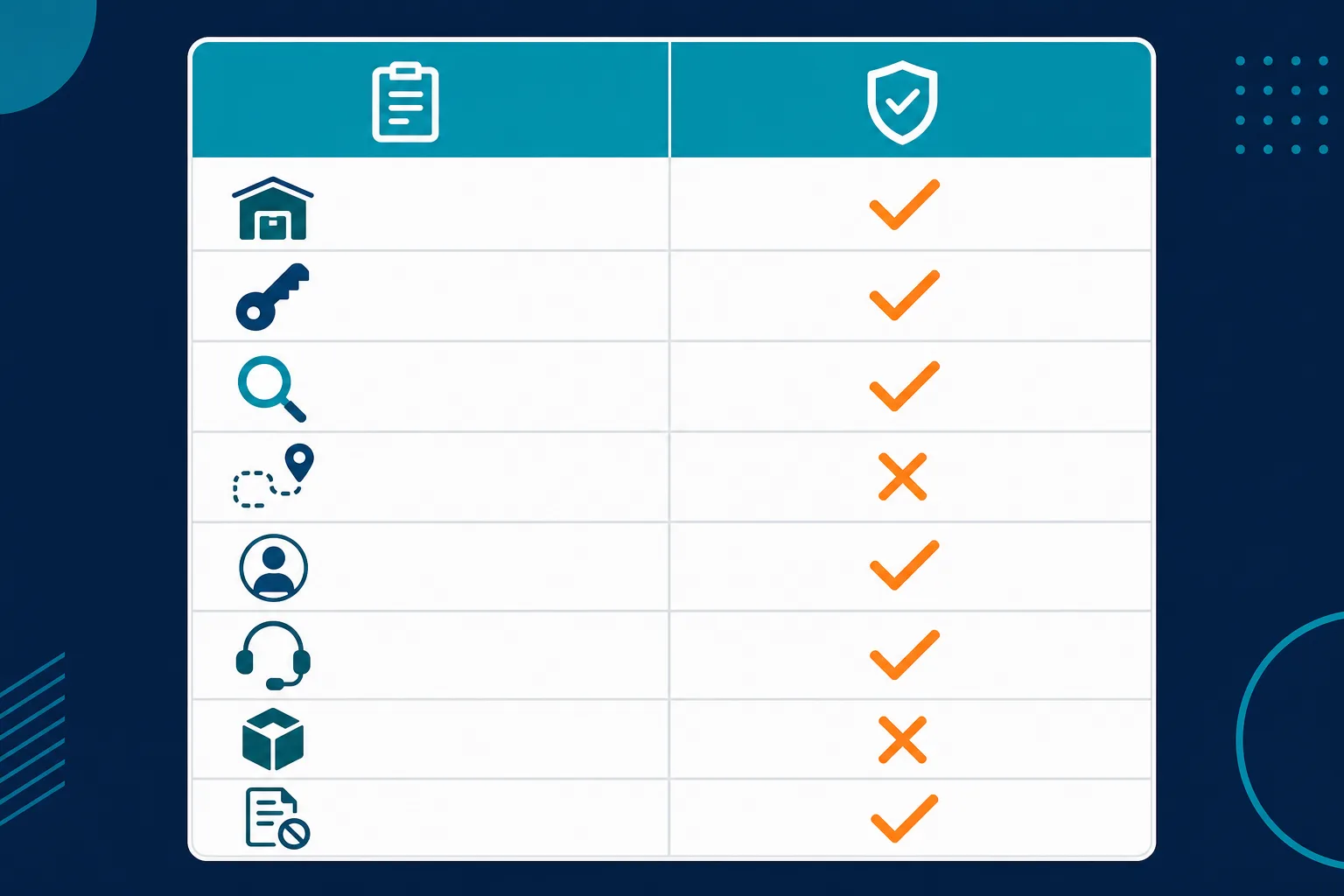
A practical shortlist checklist for small-business tracking buyers
Use this packet in demos. Keep it short enough for a lean IT team.
- Custody scope, check-in/out, assignees, recovery on offboarding.
- Identity keys, serial number, cloud instance ID, not only a friendly tag.
- Discovery after handoff, how last-seen refreshes when the device is off-site.
- Dark-asset path, what happens to untagged network gear and cloud accounts.
- Owner model, who owns exceptions when last-seen goes stale.
- Help desk join, publish into the desk you already run so tickets do not invent a second inventory. Virima connects to ServiceNow, Jira, and Ivanti through its ITSM integrations.
- Cost at scale, what the platform costs as asset count and discovery coverage grow.
- Does-not-claim list, confirm the vendor is not selling facility GPS, full SAM rights engines, or GRC filings as the same SKU.
Is barcode asset tracking enough for small business IT?
Barcode tracking is enough for cage and desk custody when every item is tagged and handoffs are disciplined. It is not enough when devices leave the site, cloud resources never get a tag, or audits need last-seen dates from discovery rather than the last check-out stamp.
How Virima fits after custody tools, without replacing them overnight
Virima is a discovery-sourced CMDB, ITAM, and visibility layer. Small and growing IT teams use it when check-out apps still answer “who held it last” but cannot answer “what still exists with a dated source.”
What Virima contributes
- Automated discovery across hybrid paths Virima covers so identity keys and last-seen stay current after handoff
- CMDB and ITAM records that carry source and freshness for samples and renewals
- ViVID™ service maps after service definitions are provided
- Windows Server NIST NVD overlays on maps where that signal applies, without claiming full multi-OS vulnerability management
- Publish into ServiceNow, Jira, Ivanti, and other ITSM platforms, keeping ticket context unified
What Virima does not claim
- Autonomic Social Discovery (ASD), a peer-to-peer discovery technique some vendors market, as a capability Virima currently offers
- Passive event-based discovery as current product behavior
- Replacement of barcode printers, RFID gates, or facility GPS fleet trackers
- Full SAM rights engines for every publisher metric
- Instant invention of business services without a definition input
- GCP discovery parity with AWS and Azure where product scope is cloud-limited
For capability depth, see IT discovery and ITAM. Adjacent free-tool ceilings appear in Spiceworks IT asset management and Snipe-IT asset management. For director-level ITAM selection, see the ITAM solution buyers guide.
When should a small business add discovery to asset tracking software?
Add discovery when check-out rows no longer match network reality, or when untagged gear never enters the register. It also applies when renewals and audits need last-seen and owners the custody app cannot produce. That is when tracking stops being the full system of record for hybrid IT.
Keep custody sharp, then prove the estate after handoff
Asset tracking software for small business is won on clean assignment and location when the device is in hand. It is lost when the same app is asked to prove hybrid estate truth months after check-out without discovery. Barcode and check-out tools still earn their place. Discovery-backed inventory has to sit underneath them once the network becomes the real source of movement.
When you want to score your current setup against the checklist above, or see how Virima’s discovery model closes the gaps it turns up, schedule a demo.
If check-out records still outrun what the network can prove, explore how Business Pro adds full discovery and CMDB-grade inventory beneath your custody tools.
Frequently Asked Questions
How is asset tracking software different from asset management software for small business?
Tracking focuses on custody and location: who holds the item and where it was last assigned. Asset management adds lifecycle, cost, contract, and control fields on top of a trustworthy inventory. Small teams often start with tracking and still need discovery-backed management when audits and renewals arrive.
Can free check-out spreadsheets replace asset tracking software?
Spreadsheets work for a short static list of assignees. They fail when devices move weekly, cloud resources never get a row, and samples need last-seen dates. Use a sheet as a temporary bridge, not as the long-term tracker for hybrid IT.
Does Virima replace our barcode or RFID check-out tool?
No. Custody tools still own physical handoff. Virima supplies discovery-sourced inventory and CMDB context after devices leave the cage so last-seen and owners stay current for tickets and samples.
How do I know if a checked-out laptop is still active on our network?
Cross-check the check-out log against your discovery scan’s last-seen timestamp for that hostname or serial. If the device hasn’t appeared in a scan since before the check-out entry was last updated, treat the record as unconfirmed rather than assuming custody data is current.
Does Virima’s asset tracking integrate with ServiceNow, Jira, or our existing help desk?
Yes. Virima publishes discovery-sourced CI and asset data into ServiceNow, Jira Service Management, Ivanti, and other ITSM platforms through its ITSM integrations, so tickets reference the same record your team already tracks in.