Why Austin’s Semiconductor and Tech Boom Is Outrunning Its Cybersecurity Teams

In February 2023, a ransomware attack on a major supplier forced Applied Materials to cut its quarterly outlook by about $250 million. The incident hit the supply chain first. Production schedules for one of the semiconductor industry’s largest equipment makers still absorbed the impact, including operations with a major footprint in and around Austin.
That pattern has accelerated across chip supply chains. CloudSEK’s 2025 Silicon Under Siege research, summarized by Cybersecurity Asia, reported a sixfold rise in attacks on chipmakers since 2022 and roughly $1.05 billion in industry ransomware losses since 2018. Austin sits in the middle of that exposure window. Samsung’s Taylor and Austin cluster is one of the largest semiconductor buildouts in the United States, backed by billions in CHIPS Act support. Tesla’s multi-billion-dollar chip partnership is tied to that plant. NXP, AMD, and a dense ring of design, SaaS, and infrastructure employers keep adding systems every quarter.
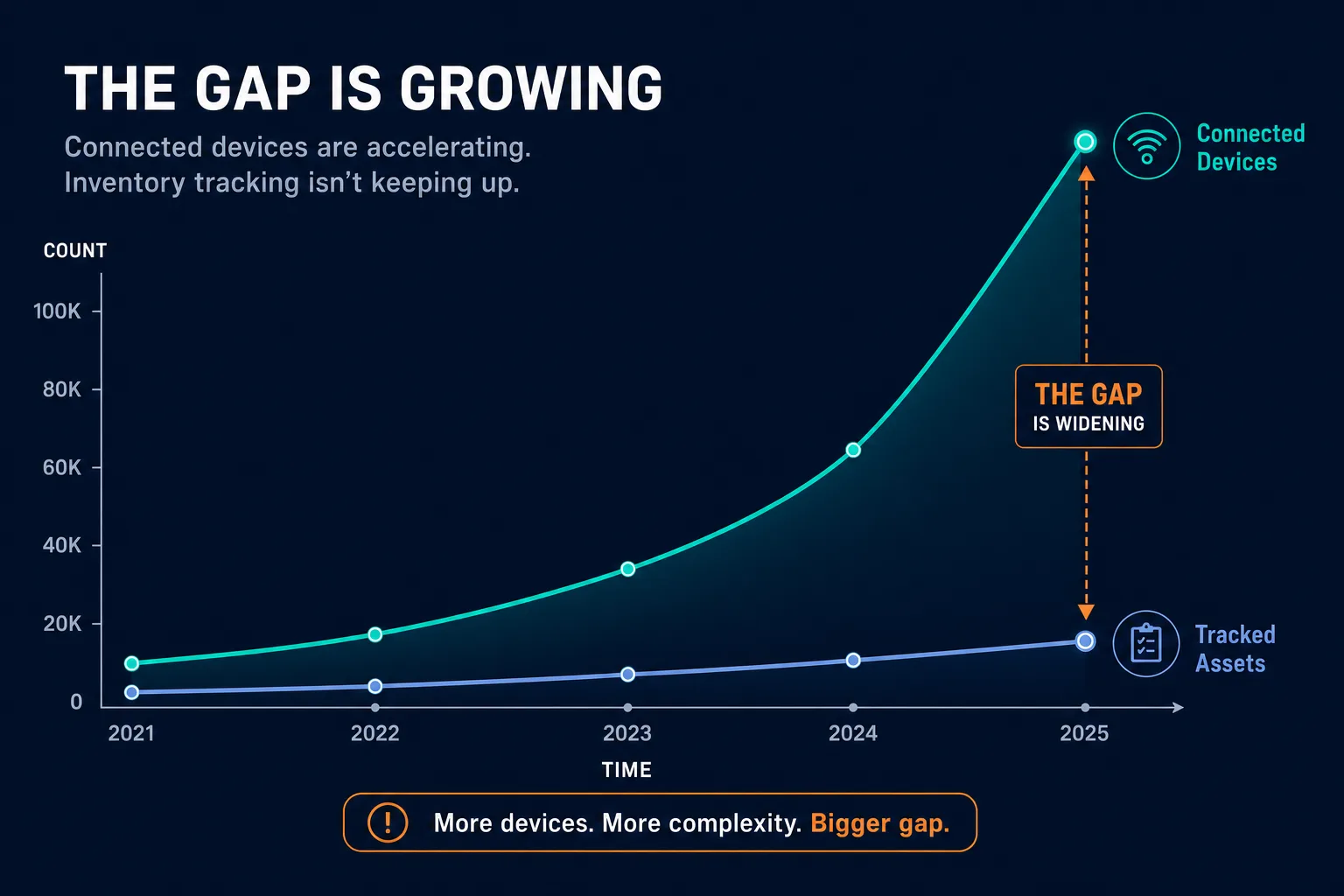
More assets enter Central Texas environments than most security and IT asset teams can register, own, and keep current. Inventory currency is where the gap opens for fabs and tech employers.
What is IT asset visibility for semiconductor manufacturing?
NIST IR 8546, the draft Cybersecurity Framework 2.0 Semiconductor Manufacturing Profile from NCCoE and the SEMI manufacturing community, frames asset inventory as a foundation control. It covers the hardware, software, cloud workloads, and production-floor systems that manufacturing and supporting IT run.
For a semiconductor or advanced tech estate in Austin, that inventory has to hold more than laptops and servers. It needs:
- Enterprise IT endpoints, servers, network gear, and virtual infrastructure
- Cloud workloads and accounts on platforms such as AWS and Azure
- Fab-floor and plant OT: PLCs, SCADA, industrial controllers, and sensors on the same extended network fabric
- Supplier- and vendor-managed equipment and software inside the plant, outside the normal procurement ledger
- Construction- and contractor-phase devices that appear during buildouts and expansions
Visibility means a current, owned record of what is connected, who is responsible, what software and firmware it runs, and which services depend on it. That record sits under vulnerability management, change control, and incident response. The CMDB maps the systems and paths those workflows sample.
Four Gaps a Standard Inventory Never Catches
| Situation | What happens |
|---|---|
| New fab or lab equipment is commissioned mid-buildout | It often sits outside the CMDB until someone enters it by hand |
| Supplier-managed equipment or software lands on the floor | There is no clear owner of record and no reliable vulnerability tracking |
| OT controllers (PLC, SCADA, industrial sensors) join the plant network | Conventional IT scanners leave them off the managed CI list |
| Contractor and construction-phase devices join during a Taylor-scale build | Many stay on the network after the phase ends until someone deliberately removes them |
A spreadsheet accurate at the last audit ages out as soon as the next tool install or contractor kit lands. The environment moves faster than the update cycle.
Austin’s buildout is outrunning its own asset inventory
CloudSEK’s sixfold attack increase and the $1.05 billion ransomware figure show how often chip supply chains are now a target. Locally, new tools, vendor boxes, cloud projects, and contractor kits arrive on construction and product roadmaps. CMDB hygiene calendars rarely set that pace.
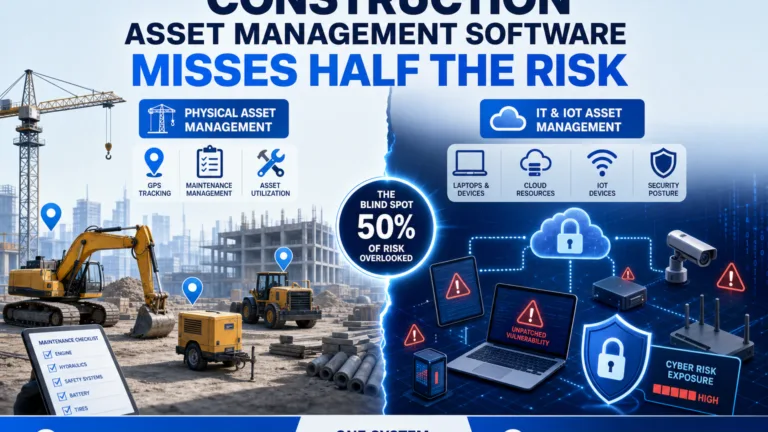
Trend Micro research presented around RSA Conference 2025 found that 74% of more than 2,000 surveyed cybersecurity leaders reported incidents tied to unknown or unmanaged assets. Ninety-one percent linked attack-surface management to business risk. Only 43% said they used dedicated tooling for that work. For SecOps and ITAM leads in Austin, those figures describe a local operating gap: the region builds faster than many inventories refresh.
Four Ways an Incomplete Inventory Fails
- Supply-chain equipment and software go unmonitored.
Vendor-managed tools and software packages enter the plant under a commercial relationship and often bypass internal onboarding. When a major supplier is hit, as Applied Materials disclosed in 2023, production impact can land on companies whose CMDB never listed the compromised system — a single supplier compromise cascading into fab-wide production and revenue impact. - OT and IT convergence on the fab floor outpaces inventory.
CISA’s joint OT asset inventory guidance (issued with FBI, NSA, and international partners) treats accurate OT inventory as foundational. PLCs, SCADA hosts, and industrial controllers often sit on segments that IT vulnerability scanners leave incomplete, so plant controllers carry exposure that never appears as a managed configuration item (CI) in the IT inventory. For a deeper look at bringing OT visibility into a security-oriented CMDB, see Manufacturing IT Asset Management: Managing OT and IT Infrastructure Convergence. - Construction-phase buildout outpaces asset registration.
During a multi-year cluster expansion, temporary networks, contractor laptops, test racks, and commissioning kits appear faster than change tickets can close, leaving newly commissioned equipment and leftover contractor devices outside the CMDB during the highest-risk window. - For general Austin tech and SaaS employers, cloud and SaaS sprawl outpaces manual tracking.
Design houses, SaaS scale-ups, and corporate IT teams face the same blind spot without fab equipment. Shadow SaaS, unmanaged cloud accounts, and short-lived dev environments stay off the spreadsheet, carrying the same ownership and exposure gap as untracked plant gear.
Teams that want the broader industry framing can read Virima’s hub on cybersecurity and IT asset visibility through a CMDB. This Austin piece is the local spoke on that hub.
An incomplete inventory already costs the industry hundreds of millions
For SecOps leads
The Applied Materials disclosure showed how fast a supplier incident becomes an operations problem. SecOps teams that lack a ready answer on systems, vendor connections, and production dependencies lose hours before containment starts. Exposure status, owner, and dependency context need to exist before the ticket opens.
For ITAM and CMDB owners
Incomplete records show up as failed audits, stale owners, and reconciliation work that never ends. Every new tool install and contractor phase adds unowned rows. The system of record lags the floor and the cloud account list.
For CHIPS Act-funded and export-control-regulated facilities
Samsung’s Texas projects alone carry multi-billion-dollar public program scale under the CHIPS program, documented in public NIST materials and local reporting on the Austin-Taylor cluster. Facilities under federal funding and export-control scrutiny need inventory evidence for audit and reporting. A CMDB supplies the infrastructure population those processes sample.
Market-scale challenge in Central Texas
Austin concentrates federally supported manufacturing, high-value IP design, and a large tech employer base in one metro. UT Austin’s Regional Security Operations Center already supports thousands of entities across Texas. Inventory that lags buildout is a regional operating risk across fabs and tech employers. See what a discovery-driven CMDB turns up in your own environment before a supplier incident or audit deadline forces the question.
How a discovery-driven CMDB closes the gap
Closing the gap takes a discovery cadence that keeps the CMDB honest as equipment, contractors, and cloud workloads change.
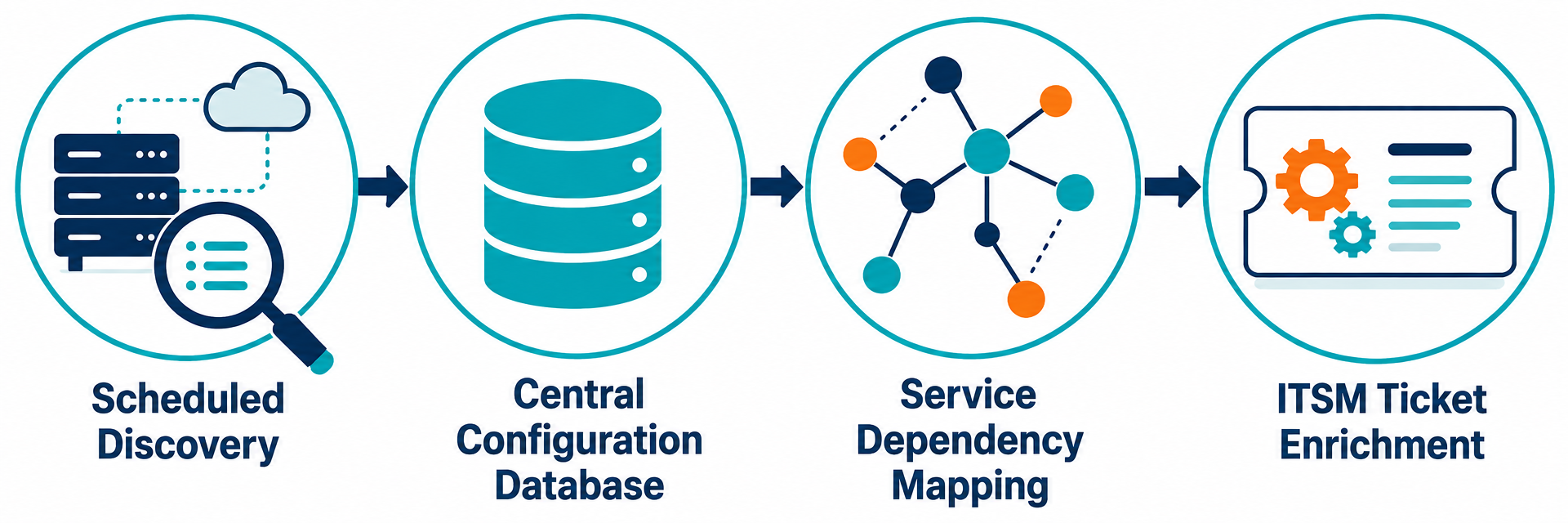
1. High-frequency scheduled discovery across IT, cloud, and reachable OT devices.
Agent-based and agentless methods, including SNMP and passive fingerprinting where appropriate, inventory servers, endpoints, network devices, VMs, containers, and plant-connected controllers on a schedule the team sets. IT discovery of this kind is scheduled and repeated. OT traffic inspection stays with dedicated OT security tools.
2. A CMDB that stays current as the estate changes.
New equipment and cloud workloads should land as configuration items with owners and relationships. Discovery feeds that populate so the system of record matches what is actually connected.
3. Service mapping that supplies dependency context for change work.
Once service definitions are provided, service maps build application-to-infrastructure dependency views. That context supports change impact and incident scoping. OT protocol inspection and plant-floor IDS remain separate controls that still benefit from a current CI list.
| Dimension | Manual spreadsheet tracking | Discovery-driven CMDB |
|---|---|---|
| Update frequency | Quarterly or audit-driven | High-frequency scheduled discovery cycles |
| OT / IoT coverage | Rarely complete | Network-reachable OT via SNMP / fingerprinting where credentials and architecture allow |
| New-equipment onboarding | Days to weeks of manual entry | Discovery populates CIs on the next scheduled cycle |
| Vulnerability context | Separate tools, weak join keys | CI identity and ownership join to NVD and scanner feeds for Windows Server and related workflows |
| Audit readiness | Snapshot that ages immediately | Current population with history for samples and evidence packs |
A discovery-fed CMDB holds the resulting population. When teams need dependency views for change and incident work, ViVID™ service maps build those paths from the service definitions they provide.
For Cybersecurity Asset Management (CSAM), inventory and context come first, then prioritization against that population. That sequence is infrastructure under security workflows.
Where the gap shows up first: on the floor and in the cloud
These are illustrative operating patterns drawn from how buildouts and cloud sprawl typically run, not named customer cases.
- New tool install during a fab expansion. A process tool goes live on a compressed schedule. Network ports and vendor laptops stay active for days before any CMDB record exists for the install.
- Supplier gear with fab-floor access. A vendor-managed controller and support laptop sit on a production VLAN labeled only as the vendor. The plant still needs an internal owner, a patch owner, and a clear decommission path.
- Contractor devices left active after construction ends. Temporary jump boxes and commissioning PCs remain reachable after demobilization. IT leadership removes them after confirming no active dependencies remain on those devices.
- Unmanaged cloud at an Austin SaaS company. A product team spins up AWS accounts outside the central landing zone. Finance often sees the cloud bill first, while SecOps only sees the assets when a misconfiguration alert finally fires.
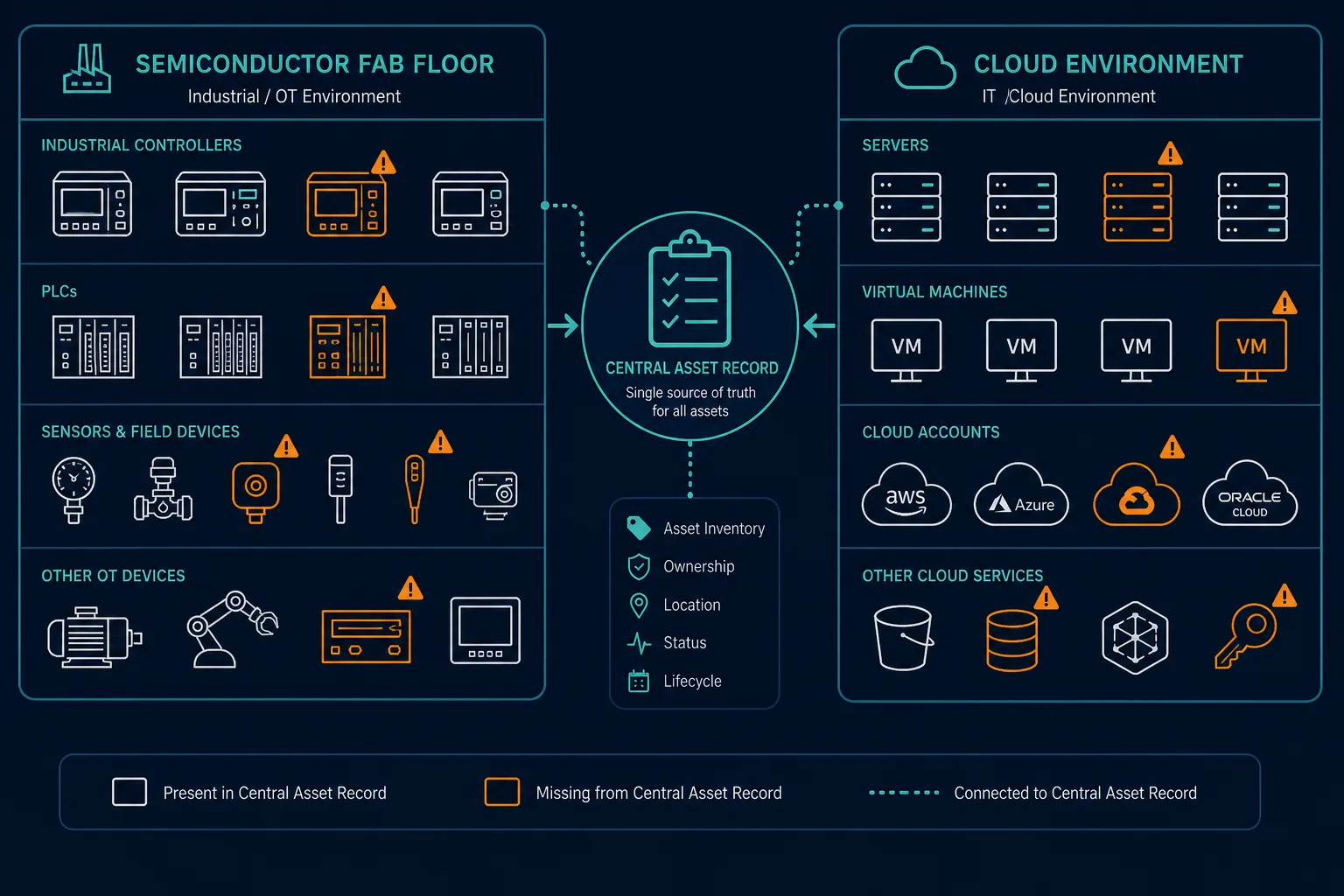
In each pattern, the security stack assumes a current inventory while the inventory lags the floor and the cloud account list.
What changes for Austin teams once the CMDB is current
A current CMDB keeps SecOps and ITAM on a shared population while the buildout continues. Inventory currency catches up on a standing discovery schedule.
What changes in the first 60 minutes
An agentless or credentialed discovery pass against agreed ranges returns devices the spreadsheet never listed. Owners can be assigned, and contractor leftovers and unnamed cloud resources show up as work items.
What stays current after the buildout slows down
Scheduled discovery keeps refreshing CI attributes and relationships. When the next tool install or cloud project lands, the next cycle absorbs it.
Where this plugs into ServiceNow, Jira Service Management, and Ivanti
Bi-directional sync can push discovered CIs, owners, and dependency context into the ITSM tools Austin teams already run. Tickets open with estate context already filled. ServiceNow, Jira Service Management, and Ivanti are common desks in this market; the full connector set lives on the integrations hub. Virima delivers the map and data layer. OT protocol inspection and segmentation policy stay with the security architecture team.
Moving from spreadsheets to a map-driven asset strategy
| Old way | New way |
|---|---|
| Annual or quarterly spreadsheet refresh | High-frequency scheduled discovery into a living CMDB |
| Separate OT list owned by plant engineering | Network-reachable OT represented as CIs with owners |
| Vendor gear tracked only in contracts | Supplier-managed systems on the floor appear in the same inventory |
| Cloud accounts reconciled from bills | Cloud workloads discovered and joined to owners and services |
| Change and incident tickets without CI context | ITSM tickets enriched with dependency and exposure context |
- For SecOps teams, scoping speeds up when a supplier advisory or internal alert lands, because the population and service paths are already known.
- For ITAM and CMDB owners, fewer reconciliation marathons and a clearer decommission path follow when leadership confirms no active dependencies remain on a device.
- For audit and program teams, a current infrastructure population supports reporting and sampling without treating the CMDB as the compliance program itself.
Five steps to a fab-ready CMDB
- Baseline the current environment before the first scan. Export what you already trust from ITSM, cloud consoles, and plant engineering lists. Mark every row that still lacks a named owner.
- Run a non-invasive discovery pass. Start with agentless and passive-friendly approaches on agreed ranges so SecOps can prove gaps without a heavyweight rollout.
- Populate the CMDB from discovery output. Reconcile discovery output into authoritative CIs with owners and classes.
- Map dependencies from agreed service definitions. Provide service definitions, then let service mapping build the infrastructure paths production and business services rely on.
- Connect existing ITSM tools to CI context. Push CI and relationship context into the tools change and incident teams already use.
Keep Austin’s inventory ahead of Austin’s buildout
Austin’s semiconductor and tech growth will keep adding systems faster than manual tracking can follow. IT asset visibility for Austin semiconductor companies has to keep pace with that growth, not follow it a quarter behind. The teams that stay ahead treat inventory as a scheduled discovery problem on a standing cadence. Start at Trusted Runtime Truth for the fuller framing under agentic and automated operations.
Frequently asked questions
What is IT asset visibility for semiconductor manufacturing?
It is a current, owned inventory of hardware, software, cloud workloads, and fab-floor OT that manufacturing depends on. Draft NIST IR 8546 treats that inventory as foundational. Vulnerability, change, and incident controls need that population before they can prioritize work.
Why is IT asset visibility important for Austin’s tech and semiconductor companies?
CHIPS Act-scale buildouts and a dense tech employer base are adding high-value systems across Central Texas at once. Attack volume against chipmakers has risen sharply since 2022. Incomplete inventories leave both fabs and SaaS estates exposed during that growth.
What are examples of IT asset visibility gaps in semiconductor fabs?
Common patterns include supplier-managed tools with no internal owner, construction-phase devices left on the network, OT controllers missing from IT scanners, and new process tools live for days before any CMDB record exists. These are operating patterns drawn from how buildouts actually run.
How does OT and IT convergence affect asset visibility in semiconductor manufacturing?
Plant controllers and IT systems increasingly share extended network paths across the same fabric. CISA’s OT inventory guidance treats accurate OT asset lists as foundational. PLCs and SCADA hosts need to become managed CIs before IT vulnerability programs can prioritize them.
How does a CMDB support cybersecurity asset management for semiconductor and tech companies?
A discovery-driven CMDB holds current CIs, owners, and dependency context from service maps. That data feeds ITSM and vulnerability workflows as the infrastructure layer under cybersecurity asset management. Compliance and detection tools still run their own control planes on top of that layer.
Does Virima’s CMDB integrate with ServiceNow, Jira Service Management, and Ivanti for Austin IT teams?
Yes. Virima syncs discovered CIs, owners, and dependency context bi-directionally into ServiceNow, Jira Service Management, and Ivanti, so tickets open with estate context already attached rather than replacing the ITSM tool teams already run.