PCI DSS Compliance Software for Austin Fintech: Missing Visibility, Failed Audits

American Express notified cardholders in February 2024 that their account information might be exposed. The cause was not a break-in at Amex. A third-party merchant processor, one of many vendors that touch card transactions on Amex’s behalf, had suffered unauthorized access to its own systems. Payments Dive reported that Amex’s own systems stayed untouched throughout. The exposure happened one step removed, in a part of the payment chain Amex did not directly operate. It was one of several such incidents Amex reported to Massachusetts regulators that same winter.
That gap between what a company controls and what actually touches cardholder data is the exact mechanism behind most PCI DSS scoping failures. It rarely shows up as a hole in a firewall. It shows up as a vendor, an API, or a service nobody remembered to add to the inventory. That gap is often why a company starts looking for PCI DSS compliance software before it has even settled what “in scope” means for its own environment.
Austin’s fintech and payments companies are scaling into this exact gap. Built In Austin lists dozens of fintech and payments companies with operations in the city, from digital banking platforms like Q2 to payments infrastructure providers like Apex Fintech Solutions. Every new integration, processor relationship, or cloud service is a candidate for the same blind spot. It is the kind that reached Amex through a vendor it never fully saw.
What PCI DSS 4.0.1 Actually Asks a Fintech Scale-Up to Prove
The Payment Card Industry Data Security Standard is maintained by the PCI Security Standards Council. The Council is the body the major card networks formed to set security rules for anyone who stores, processes, or transmits cardholder data. The current version, PCI DSS v4.0.1, replaced v3.2.1 in March 2024. For a deeper breakdown on how v4.0.1 impacts cardholder data environments and CMDB tracking, see Virima’s comprehensive guide to PCI DSS v4.0.1 and CMDB requirements. The Council’s own guidance confirms that 51 of the 64 new or updated requirements introduced with v4.0 were given a grace period as “future-dated” best practices. All of them became mandatory on March 31, 2025, and there is no transition period left to plan around.
For an Austin fintech or payments scale-up, four requirements do most of the work:
- Requirement 2 calls for a complete, current inventory of system components inside the cardholder data environment.
- Requirement 12.3 calls for a targeted risk analysis tied to that same inventory, refreshed as the environment changes.
- Requirement 8.4.2 extends multi-factor authentication to every account that reaches the cardholder data environment, not only administrators.
- Requirements 6.4.3 and 11.6.1 call for an authorized inventory of scripts running on payment pages, plus a mechanism that detects unauthorized changes to them.
Each of these requirements sounds like a documentation exercise until scope actually changes underneath it, which is precisely what happens as a company adds vendors and services.
Where the Boundary Slips Between Assessments
Every one of those requirements assumes a company knows what sits inside its cardholder data environment on any given day instead of on assessment day. That assumption breaks down in a specific, repeatable way for scale-ups.
| What Changes | What Usually Happens to the Inventory |
|---|---|
| A new payment processor is added through an API integration. | The endpoint goes live before anyone updates the asset record. |
| Engineering ships a service that touches tokenized card data. | The next discovery cycle hasn’t run yet, so the service isn’t reflected. |
| A contractor’s environment gains access to a system inside the CDE. | MFA under Requirement 8.4.2 isn’t applied because IT never logged the access path. |
None of these require a mistake. They require normal growth and a discovery cycle that runs less often than the environment changes.
What Happens When the Inventory Falls Behind the Environment
Once the documented inventory falls behind the actual environment, the consequences aren’t abstract. They show up as a specific, repeatable set of failures as a payments company scales past what a once-a-year assessment can track.
Four Ways the Gap Actually Shows Up
- API and webhook integrations outrun the inventory. Across VISTA InfoSec’s own fintech audit engagements from 2024 to 2025, the firm attributed 70 percent of Level 1 findings to API and webhook scope leakage. Those were systems the compliance team had assumed were out of scope. Result: audit findings on infrastructure nobody flagged as in scope to begin with.
- Payment page scripts change without anyone noticing. Magecart-style attacks inject unauthorized JavaScript into checkout pages to skim card data as customers type it. That is exactly why Requirements 6.4.3 and 11.6.1 now require an authorized script inventory and change detection. Result: card data leaves through a page the security team never audited, because nobody owned the script list.
- MFA gaps open as access paths multiply. Requirement 8.4.2 covers every account reaching the CDE, but a scale-up adding contractors, vendors, and engineers each quarter can lose track of which accounts actually have that reach. Result: an access path into cardholder data that MFA was never applied to, because nobody knew it existed.
- Third-party processors create blind spots outside a company’s own walls. The Amex case from the opening is the clearest illustration: the exposure happened at a vendor, not at Amex itself. Result: a breach notice bearing your company’s name, even though the failure sat one layer removed, inside a system you never directly controlled.
Who Feels a Missed Asset First
For Founders and Leadership
A missed asset in the CDE doesn’t stay a technical detail for long. It becomes the finding a QSA writes into a Report on Compliance, and the clause an acquiring bank asks about before renewing a processing agreement. It’s also the line a board member raises after reading breach-cost figures like the ones above. None of that requires an actual breach. A single failed finding can hold up a renewal or a funding conversation on its own.
For Security and IT Teams
Every hour spent manually reconstructing what changed since the last assessment is an hour not spent on the vulnerabilities that assessment is supposed to catch. Manual reconciliation and audit readiness pull in opposite directions as an estate grows.
For Companies Juggling More Than One Framework
A payments scale-up rarely answers to PCI DSS alone. Many carry SOC 2 obligations from enterprise customers, and some now face state-level frameworks like NYDFS 500 on top. The same asset record has to satisfy overlapping, non-identical compliance scopes all at once.
Austin’s Specific Version of the Problem
Built In Austin’s directory of the city’s fintech and payments companies includes digital banking platforms, payments processors, and insurance payment tools. Several of them are adding headcount and integrations at the same time. Opportunity Austin calculated that Austin companies raised at least $4.2 billion in venture capital in the first quarter of 2026 alone. A discovery process built for a 40-person startup rarely stays adequate once headcount triples and vendor integrations grow with it.
What PCI DSS Compliance Software Needs to Fix First
- High-frequency scheduled discovery keeps the inventory current. A scope document is accurate on assessment day and stale the following week. Virima’s IT Discovery runs high-frequency scheduled scans across on-premises, cloud, and SaaS environments instead. New integrations enter the asset record on a predictable cycle, rather than whenever someone remembers to log them, which directly supports Requirement 2 and the current-inventory expectation behind Requirement 12.3.
- Service mapping shows what a change actually touches. ViVID service mapping traces the relationships between assets and the services or business functions they support. When a vulnerability or an audit question touches one system, a compliance team can see everything connected to it instead of guessing at the blast radius.
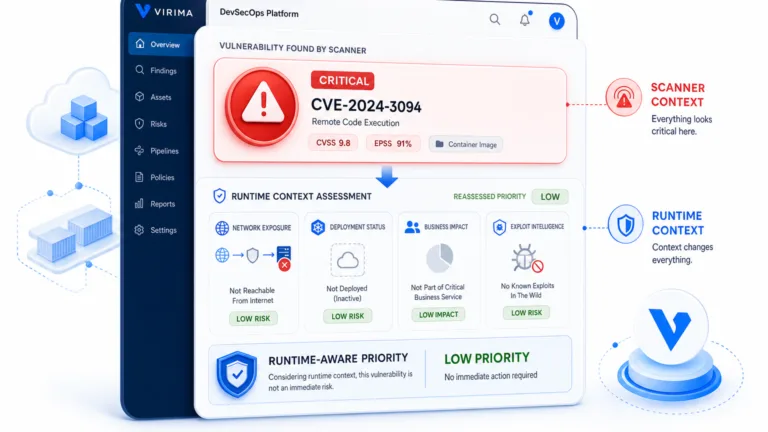
- Vulnerability data ties to specific assets, instead of CVE lists. Virima’s integration with the NIST National Vulnerability Database links CVEs directly to configuration items. Remediation then gets prioritized by what a vulnerable asset actually supports, rather than by CVSS score alone.
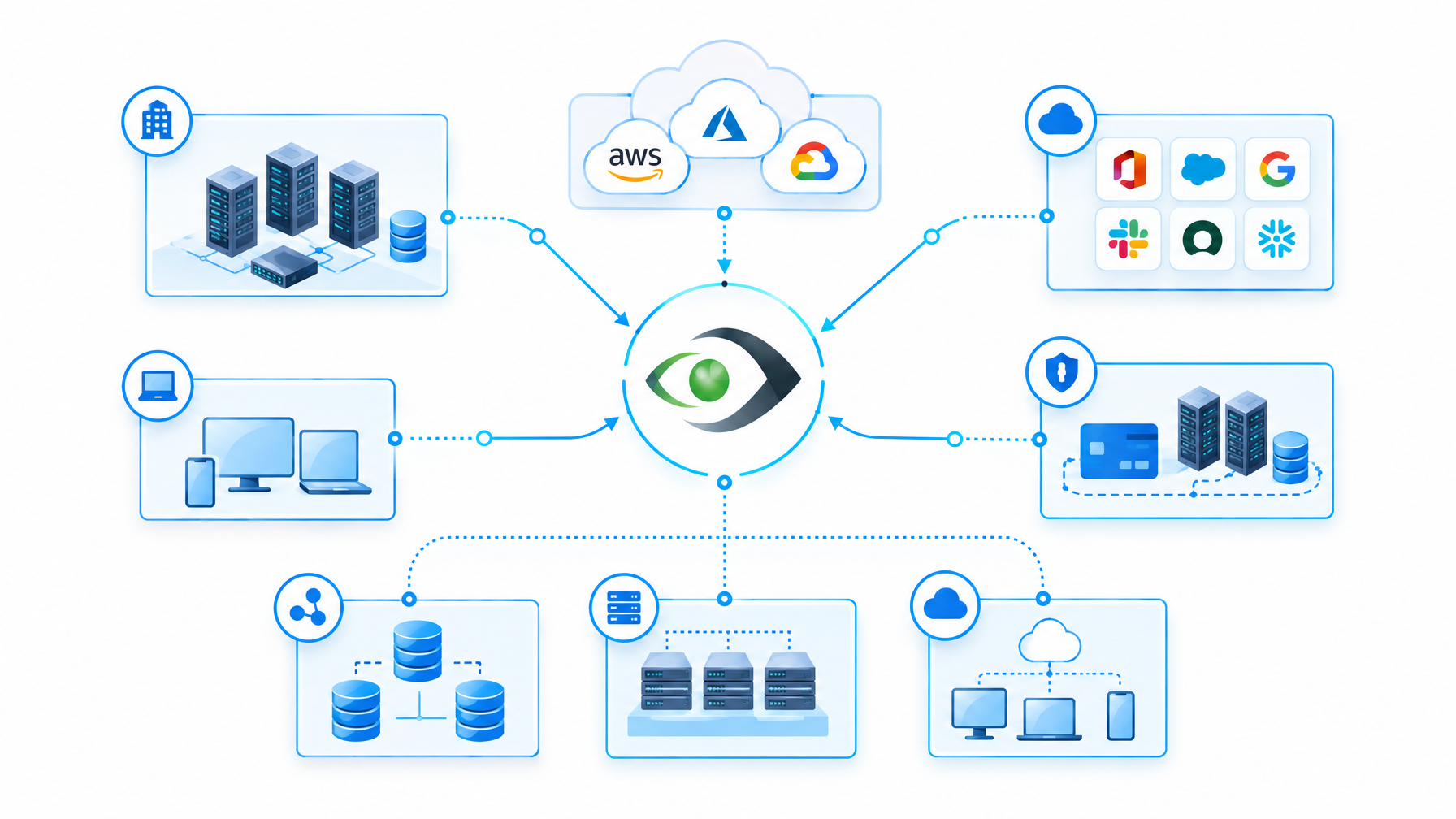
Manual Scoping vs. a Discovery-Driven Record
| Annual, Manual Scoping | Discovery-Driven CMDB | |
|---|---|---|
| Inventory refresh | Once per assessment cycle | On a scheduled, high-frequency basis |
| New integrations | Added when someone remembers | Captured on the next scan |
| Audit prep | Weeks of manual reconciliation | A record that’s already current |
| Vulnerability context | CVE lists without business context | CVEs linked to specific assets and services |
What This Looks Like Inside a Growing Payments Stack
- A tokenization gateway’s certificate expires unnoticed. A lapsed certificate on a payment-adjacent system becomes a compliance event, not only an outage, the moment it touches anything inside the CDE.
- A checkout page picks up a script nobody authorized. This is the Magecart pattern that Requirements 6.4.3 and 11.6.1 exist to catch. An authoritative infrastructure baseline underneath the payment page matters here, even though script-content monitoring itself sits with a different tool.
- A newly integrated processor never makes it into the asset record. The scope grows the moment the integration goes live in production, whether or not anyone updates the inventory to match it.
- A contractor’s access outlives the project. An account added for a three-month integration stays active a year later, still reaching systems inside the CDE. It also stays outside the MFA review that Requirement 8.4.2 assumes covers every active path.
- A vendor questionnaire gets answered from memory instead of the record. When a new banking partner or acquirer asks what touches cardholder data, the honest answer should come from a current record, not from whoever has been there longest.
What Virima Adds to This Picture
Immediate Operational Impact
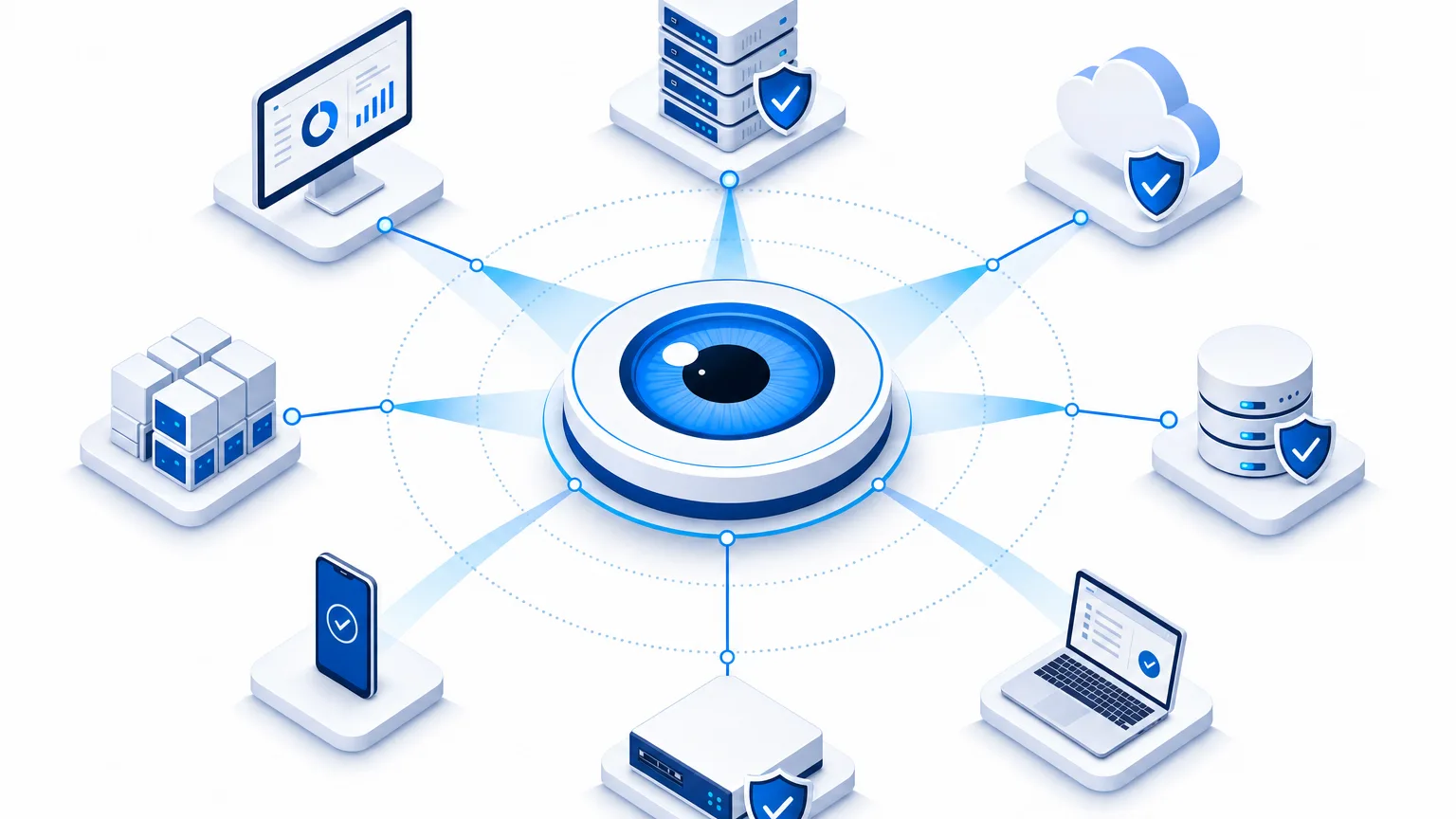
A high-frequency discovery scan surfaces what’s actually running in an environment within hours, not weeks. That gives a security or compliance lead a current baseline to work from before the next assessment cycle starts.
Long-Term Accuracy
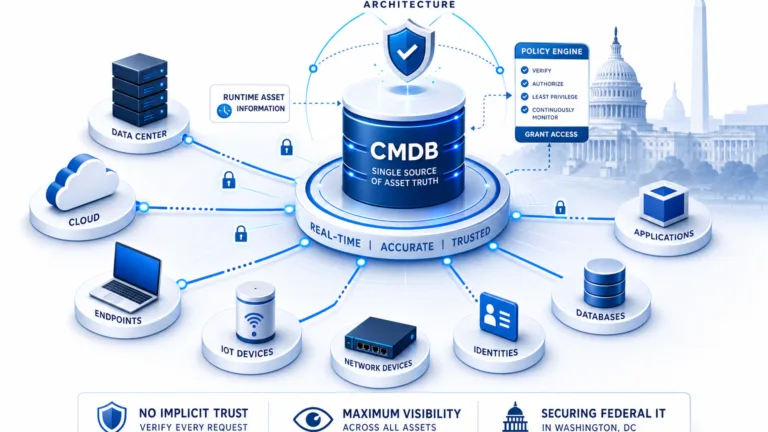
Virima’s CMDB is populated from discovery rather than manual entry, so the record stays close to what’s actually deployed as a company adds processors, services, and cloud accounts. Virima calls this Trusted Runtime Truth. Every configuration item carries a verified source and a freshness timestamp, so an auditor can trust the record reflects today’s environment, not last quarter’s scan. Virima also holds SOC 2 Type II certification, which matters to any fintech evaluating whether a vendor touching its asset data meets its own security bar.
Fitting Into Existing Workflows
Virima integrates bidirectionally with ServiceNow, Jira Service Management, Ivanti, and several other ITSM platforms. A scale-up already running change management through one of those tools doesn’t have to rebuild its process around a new system of record.
None of this replaces the QSA assessment itself or the SAQ process a company still has to complete. It gives the team preparing for both a record they can actually trust going in.
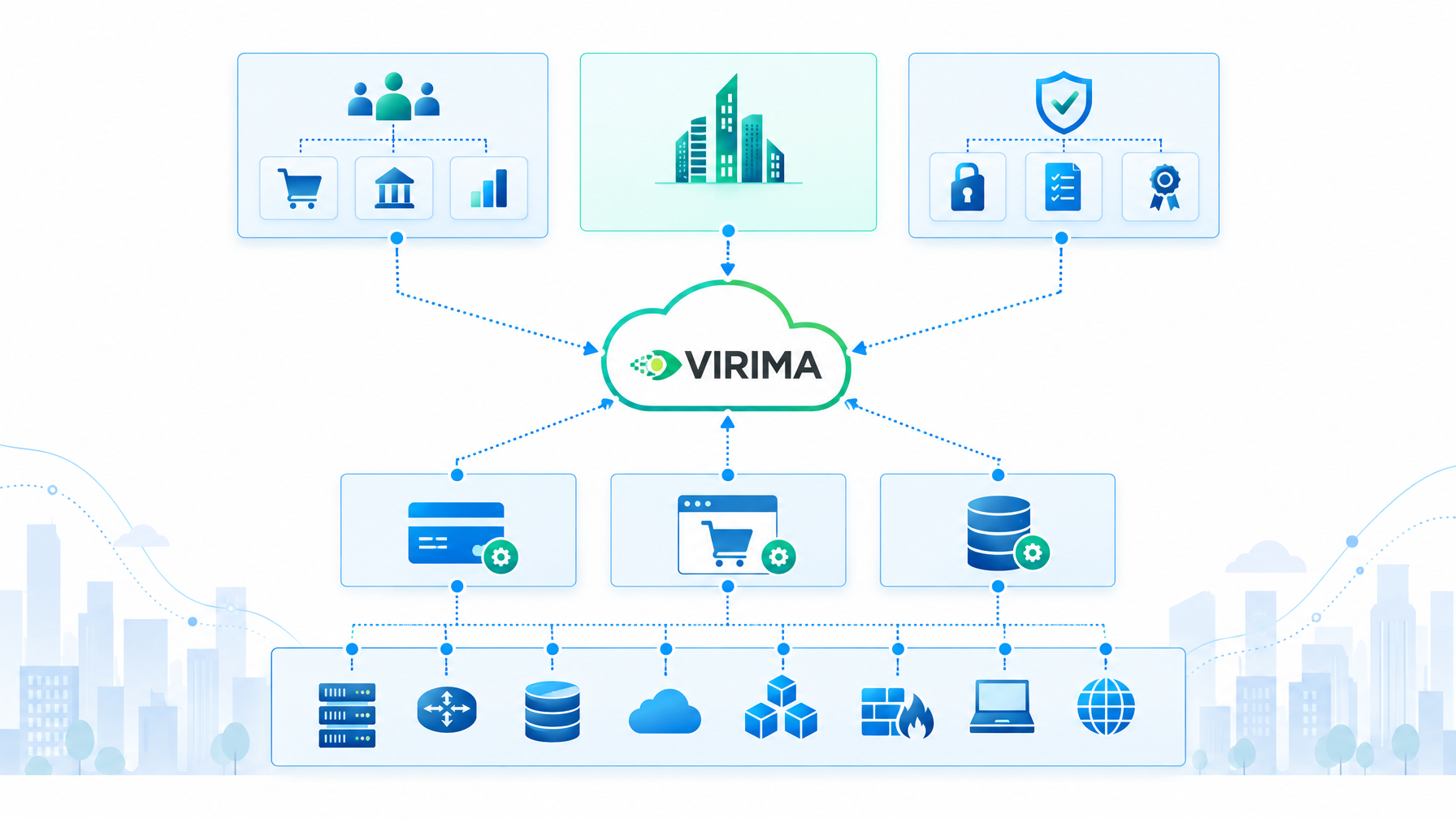
From Once-a-Year Scoping to a Record That Keeps Up
Here are the two changes that matter most:
| From | To |
|---|---|
| Scope reconstructed at assessment time | Scope maintained on a recurring discovery schedule |
| Vulnerability data reviewed in isolation | Vulnerability data linked to the assets and services it actually affects |
- What this changes for the audit: evidence generation stops being a scramble in the weeks before an assessment, because the record was current the whole time.
- What this changes for engineering: new integrations and services get discovered on schedule, instead of depending on someone remembering to log them by hand.
- What this changes for leadership: board-level compliance questions get answered from a current record, instead of a document that was accurate months ago.
Getting Started
- Run a discovery scan against the current environment to see what’s actually there versus what the existing inventory says. Include cloud accounts and SaaS integrations, since manual inventories tend to miss those first.
- Map the systems that touch cardholder data directly against Requirement 2 and Requirement 12.3.
- Check MFA coverage against every access path the scan surfaces, not only the ones already documented.
- Set a discovery cadence that matches how often the environment actually changes, not how often the last assessment ran.
- Feed the resulting asset record into whatever ITSM or change management process the team already uses, rather than building a parallel one. That way, compliance data and operational data stay in the same place.
Where to Start
None of this requires ripping out what a security or compliance team already has in place. It starts with seeing what’s actually running today. A high-frequency discovery scan against your current environment is a reasonable first look, well before the next assessment forces the question. That’s Trusted Runtime Truth in practice: a CDE boundary you can actually trust, not just document. To see how Virima helps keep your asset inventory accurate and audit-ready, schedule a demo.
Frequently Asked Questions
What is PCI DSS compliance software for a fintech company?
It’s software that helps a company that stores, processes, or transmits cardholder data meet PCI DSS requirements. Most often, that means keeping an accurate asset inventory, tracking vulnerabilities, and generating the evidence a QSA or SAQ process asks for.
Why does PCI DSS compliance matter specifically for Austin’s fintech scale-ups?
Austin’s fintech and payments companies are adding processors, cloud services, and integrations quickly as they scale. That pace is exactly what causes a cardholder data environment’s boundary to drift faster than an annual assessment can track it.
What is a cardholder data environment, and why does its scope drift?
A cardholder data environment is every system, process, and person that stores, processes, or transmits cardholder data. Its scope drifts when new integrations, services, or vendor relationships go live faster than the asset inventory gets updated to match.
How does IT asset management support PCI DSS compliance?
IT asset management keeps a current record of every system in the environment, which is what Requirement 2 and Requirement 12.3 both assume exists. Discovery-driven tools update that record on a schedule instead of only at assessment time.
What are common examples of PCI DSS scope failures at fast-growing fintechs?
The most common examples are new payment processor integrations that go live before the inventory updates, and contractor access that outlives its project. Expired certificates on systems that touch tokenized card data are another, especially when nobody tracks the renewal.