Alternative to Device42 Windows Discovery: Explore Virima’s Discovery Agent Feature

Managing IT assets is essential for businesses, especially when dealing with large networks. Tracking hundreds of Windows servers and PCs without the right tool is time-consuming. Many companies rely on Device42 Windows discovery to handle this, but it may not always fit your needs.
That’s where Virima’s Windows discovery agent comes in. It offers a simpler and more flexible solution. Virima’s tool helps discover devices and provides near real-time network visibility. This makes it easier to manage your assets and reduces the risk of missing important updates.
Feature coverage is only part of the evaluation. Organizations comparing Virima against Device42 should also review Device42 pricing. Understanding the full licensing model, including per-device costs, module add-ons, and support tiers, is essential before determining which platform delivers better ROI for Windows discovery and broader ITAM requirements.
In this blog, we’ll explain how Virima’s discovery agent is a strong alternative to Device42 Windows discovery. You’ll see how it improves IT asset tracking, saves time, and enhances efficiency. If you’re looking for a better way to manage your IT environment, Virima is worth a close look.
What is Device42 Windows Discovery?
Device42 Windows discovery automates finding and cataloging Windows devices in IT environments. It uses protocols like Windows Management Instrumentation (WMI) and Windows Remote Management (WinRM) to gather device data from networks.
Discovery coverage must extend beyond traditional Windows endpoints to include specialized equipment. In healthcare environments, IT teams need to track networked medical device assets like infusion pumps, imaging systems, and patient monitors. The same discovery rigor applied to servers and workstations must apply to clinical equipment. This makes multi-protocol discovery tools essential for regulated settings.
How Device42 Windows Discovery Works
Here are the key features of Device42 Windows discovery:
- Protocol use: The system uses WMI or WinRM to communicate with Windows devices, with WMI as the default.
- Discovery jobs: Users can create jobs targeting devices by IP address or Fully Qualified Domain Name (FQDN). It can also pull data from Active Directory using LDAP criteria.
- Data collection: It captures detailed asset information like device names, operating systems, hardware details, and network settings. This helps maintain accurate asset inventories and understand the full IT estate.
- Discovery hub integration: Users can initiate network scans, organize discovered devices, and create new discovery jobs based on scan results.
Benefits of Device42 Windows Discovery
Device42 Windows discovery offers several advantages for IT asset management:
- Detailed data collection: Device42 auto discovery collects detailed asset information on each device, like DNS names, manufacturers, and domain roles. These details aid in management and troubleshooting.
- Flexible configuration: Users can customize discovery jobs by selecting remote collectors or setting debug levels for troubleshooting. This makes it adaptable to different needs.
- Active Directory integration: By querying Active Directory, Device42 cloud discovery automatically discovers devices. This reduces manual work and increases accuracy.
- Multi-environment support: It supports Linux and network devices, offering a unified view of an organization’s asset inventories.
- Continuous discovery: Users can set continuous discovery jobs to update inventories regularly. This keeps data current without manual updates.
Windows discovery is only one slice of a broader Device42 feature set. It also covers asset management, application dependency mapping, AWS discovery, and auto discovery. Before deciding whether Device42 fits your environment, benchmark its features side by side with alternative discovery and ITAM platforms. The Windows-specific limitations discussed below can look very different when weighed against the full feature set.
Areas Where Device42 Windows Discovery May Have Limitations
Device42 Windows discovery is a capable solution for IT asset management and discovery. It does have some limitations, especially for Windows-specific use cases. Understanding these limitations is important for organizations considering it as part of their IT strategy.
The same pattern appears when you move off Windows and into the cloud. Device42 cloud discovery for AWS, Azure, and GCP depends on correctly scoped API credentials, IAM roles, and reachable endpoints. Teams evaluating Device42 cloud discovery often run into credential-sprawl and configuration-complexity issues. These mirror the same challenges that Windows discovery exhibits on-premises. If that sounds familiar, it is worth looking at how Virima handles both estates with a single discovery engine, rather than splitting Windows and cloud into separate credentialing workflows.
1. No Dedicated Windows Discovery Agent
Device42 Windows discovery lacks a dedicated Windows discovery agent for persistent discovery. This means companies may not achieve full updates on Windows-based assets. Accurate asset tracking and management can suffer as a result.
2. Scalability Concerns
Device42 Windows discovery can handle certain workloads effectively. However, scalability may pose challenges in complex IT environments. Users may experience performance issues when managing high volumes of requests or intricate setups. This can make Device42 a poor fit for companies with extensive IT needs.
3. Limited Reporting Capabilities
Device42 Windows discovery offers limited options for exporting detailed reports on subcomponent changes. This makes it hard for teams to track hardware changes over time. Without good reporting, IT teams can lose visibility into their asset inventories, and that creates compliance risks.
4. Lack of External Database Support
Device42 cloud discovery architecture does not support offloading data to external databases. This is a drawback for companies managing large data volumes. It also limits flexibility in how asset information is stored and accessed.
5. System Performance Issues
Device42 Windows discovery can sometimes experience slow performance. This is especially noticeable during complex tasks or with large data sets. Such performance issues can hinder workflow efficiency and make it hard for IT teams to work effectively.
Organizations must weigh these factors against their specific needs. Exploring alternatives is worth considering for companies that require a more adaptable solution for asset management and discovery.
Introducing Virima’s Windows Discovery Agent
Virima’s Windows discovery agent offers a powerful way to improve IT asset management. Virima is flexible, cost-effective, quick to deploy, and resource-efficient. It gives your business better visibility and strong support, making it a practical choice for today’s IT needs.
Overview of Virima
Virima focuses on transforming IT asset management with innovative solutions. The company aims to give businesses greater control and visibility over their IT assets. By using advanced technology, Virima simplifies complex IT setups and helps businesses make informed decisions.
Integration and a user-friendly design are central to Virima’s approach. This makes IT management more effective and drives business success.
Key Features of Virima’s Discovery Agent
Virima’s discovery agent strengthens IT asset management with thorough discovery and mapping features. Here’s what it offers in contrast to Device42 Windows discovery:
1. Thorough Asset Discovery
Virima’s discovery agent supports Windows, Mac, and Linux systems. It delivers a complete inventory of hardware and software assets. It tracks essential asset information like manufacturer, model, and serial number, with automatic updates whenever changes occur. The agent also enhances security by identifying unauthorized software. This ensures full visibility and control over your IT environment.
2. Flexible and Scalable Deployment
Deployment is straightforward. You can deploy through the Virima UI for network-connected devices or use tools like Microsoft SCCM. The agent is customizable to suit specific organizational needs, making it scalable for businesses of any size. Detailed documentation and support simplify the setup process.
3. Near Real-Time Configuration Monitoring
The Virima discovery agent continuously monitors hardware and software changes. It stores data even when devices are offline. This near real-time detection enables thorough change history tracking, improving both security and troubleshooting capabilities. Access to historical data simplifies audits and helps maintain a secure IT environment.
4. Work from Anywhere (WFA) Solution
Virima’s Work from Anywhere (WFA) feature provides daily monitoring for remote PCs, Macs, and mobile devices. It offers secure communication through a cloud-based Discovery App. This solution enhances visibility into remote device usage, streamlining inventory management for companies with distributed or remote workforces.
5. Effective Software License Management
The discovery agent helps optimize software licensing by accurately tracking usage and identifying underutilized licenses. This enables companies to reclaim and reallocate licenses, reducing costs and ensuring compliance with licensing requirements.
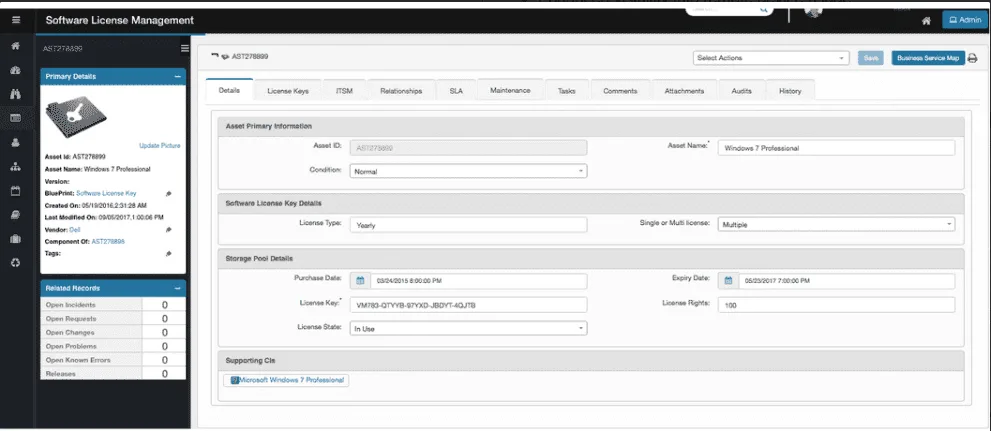
Manage and reclaim licenses with Virima
6. Native ITSM Integration
It integrates natively with IT asset and service management platforms such as ServiceNow, Jira Service Management, and HaloITSM. This centralizes asset management and streamlines workflows across IT teams. Teams that have struggled with Device42 ServiceNow connectivity often find that Virima’s bi-directional sync eliminates the manual effort required to keep both platforms aligned. If a desired integration isn’t available, Virima also offers the flexibility to develop custom solutions.
These features make Virima’s discovery agent a valuable tool for improving operational efficiency.
The discovery tool market includes several well-known platforms. Organizations evaluating Device42 alternatives often compare the same vendors against Lansweeper. A Lansweeper alternative comparison shows how platforms like Virima deliver deeper CMDB integration, service mapping, and multi-platform discovery. This goes beyond the network scanning focus that both Device42 and Lansweeper share.
When to Choose Virima’s Discovery Agent Over Device42 Windows Discovery?
Choosing between the two tools depends on your company’s specific needs. Here are the key factors to consider:
1. Discovery Approach
Device42 Windows discovery uses both agent-based and agentless methods for discovery. Virima relies on intelligent automation and machine learning to automate discovery and update the CMDB. If you need less manual work, Virima offers a more automated solution.
2. Network Accessibility
If your network is difficult to access due to restrictions, Virima’s agent-based discovery may be a better option. Device42 suggests agents for limited network access, but Virima handles these environments more effectively.
3. Features and Functions
Virima offers advanced tools like the Virima Visual Impact Display (ViVID) and enhanced dependency mapping. These features provide deeper insights than Device42’s basic dependency mapping. If these tools are important, Virima is likely the better fit.
4. Cost Factors
Pricing depends on your specific needs and deployment plan. Compare total costs, including licensing and support, to find the right fit for your budget.
5. Integration with Existing Tools
Check how each solution fits with your current IT management tools. Virima’s focus on IT automation may offer smoother integration than Device42 Windows discovery.
What Sets Them Apart? Key Differences
| Feature | Virima Discovery Agent | Device42 Windows Discovery |
| Deployment Method | Agent-based and agentless | Agent-based and agentless |
| Supported Platforms | Windows, Linux, Mac, various Unix | Windows, Linux, FreeBSD, OpenBSD, Solaris |
| Configuration Ease | User-friendly interface for setup | Requires WDS install and Remote Collector config |
| User Permissions | Local admin for full functionality | Specific WMI permissions + IPC & ADMIN shares |
| Firewall Configuration | Minimal configuration needed | Specific rules required for WMI/WinRM |
| Performance Monitoring | Advanced monitoring features | Limited performance monitoring |
| Customization | Highly customizable dashboards/reports | Customizable but less flexible |
| User Interface | Intuitive UI, customizable views | Functional but more navigation required |
| Agent Management | Easy version + check-in tracking | Version tracking available, less emphasis |
| Support Services | Thorough support options | Available but response times may vary |
| Scalability | Highly scalable for enterprise | Scalable, may face limits in large environments |
| Security Features | Strong protocols including encryption | Relies on Windows security settings |
| Near Real-Time Updates | Near real-time on asset changes | Updates depend on scheduled scans |
Choosing the Best Windows Discovery Tool: Why Virima Stands Out
Selecting the right discovery tool is vital for managing Windows environments effectively. A solid discovery solution helps IT teams track assets and ensures accurate configuration data across the organization. This reduces IT security risks and enhances overall network visibility.
Consider whether Device42 Windows discovery fully meets your company’s needs. For many businesses, especially those in hybrid or dynamic settings, Virima’s discovery agents offer flexibility and cost savings.
Virima excels with features like near real-time asset mapping and smooth integration across cloud and on-premise systems. Its user-friendly approach makes IT asset discovery easier, improving efficiency and streamlining asset inventories for growing companies.
If you need a cost-effective and scalable discovery solution, Virima’s Discovery Agent is a strong choice. It provides near real-time insights and gives you better control over your IT environment.
Schedule a demo at virima.com to see how Virima can simplify your IT asset discovery process.