Jira Service Management Integrations: Unlocking the power of ViVID™ visualization

The Visibility Problem Most ITSM Teams Face
Most IT teams working in Jira Service Management make decisions from incomplete information. They know what the ticket says, but they don’t always know which services depend on the affected asset, what a proposed change will disrupt, or where the root cause of an incident sits. That missing context adds time to every resolution and risk to every change window.
According to Gartner’s September 2025 research on IT dependency mapping tools, infrastructure and operations leaders consistently struggle to realize value from dependency mapping because of unclear goals, narrow vendor reviews, and mismatched solutions. A direct integration between your ITSM platform and a discovery-backed service mapping tool is the practical answer.
See how Virima’s ViVID™ integrates with Jira Service Management to give your team the dependency context they need. Schedule a demo today.
What ViVID™ Brings to Jira Service Management Integrations
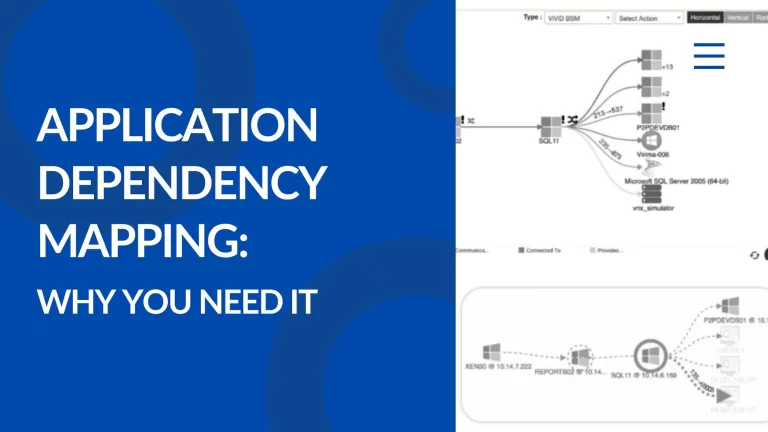
ViVID™ (Visual Impact Display) is Virima’s service dependency mapping tool. It builds dynamic visual maps of your IT infrastructure directly from high-frequency discovery cycles. Each map shows which assets connect to which services, where the dependencies run, and which components are at risk during an incident or change.
When you set up Jira Service Management integrations with ViVID™, those maps appear inside the workflows your team already uses in Jira. Instead of switching between tools or relying on static documentation, your team sees the full dependency picture right inside the ticket they are working on. The discovery data behind those maps updates on a defined schedule, so the view reflects how your environment is configured today, not six months ago.
For a detailed look at what the ViVID™ integration brings to JSM environments, see the full overview on our Jira Service Management.
Four Ways ViVID™ Strengthens Your Jira Service Management Integrations
Faster Incident Response
When an incident ticket opens in Jira Service Management, every minute matters. ViVID™ shows the full dependency chain for the affected asset, including connected services, downstream systems, and open changes that may be contributing to the issue. Your team sees the blast radius immediately rather than reconstructing it from memory or aging documentation.
Because the maps pull from Virima’s discovery-driven data, this view reflects your actual infrastructure. Your team does not have to wonder if the dependency map is current. It is.
Safer Change Management
Approving a change without knowing what it affects is one of the most common causes of unplanned outages. With ViVID™ as part of your Jira Service Management integrations, your team can see the downstream impact of any proposed change before it is approved. The map shows affected assets, flags potential risk areas, and surfaces rollback paths so your team can plan the change with confidence.
This matters most during high-pressure change windows, when the push to move fast and the risk of breaking something are both at their highest.
Faster Root Cause Analysis
Tracking down the source of an incident in a complex environment consumes time your business cannot spare. ViVID™ overlays active incidents and recent changes onto the service map, so your team can trace the impact path and identify the root cause without digging through logs or escalating unnecessarily. Combined with Jira Service Management’s ticketing workflows, this approach cuts the time between incident open and root cause identified.
To see how ViVID™ service mapping and Jira work together during high-stakes uptime situations, see our guide on service uptime with ViVID™ and Jira Service Management.
Discovery-Grounded Asset Management
Assets change constantly in enterprise environments. Hardware gets replaced, software versions shift, and cloud resources come and go. Without a live asset data source connected to your ITSM platform, the configuration items in your Jira CMDB go stale fast.
Virima’s discovery cycles feed current asset data directly into ViVID™ service maps. The asset relationships your team sees inside Jira Service Management reflect your actual infrastructure, not last year’s audit. For a closer look at how Virima grounds Jira CMDB data in discovery, see how Jira CMDB and Virima integration ensure data trust. This gives your team a dependable foundation for asset lifecycle planning, procurement decisions, and infrastructure investment reviews.
Get discovery-backed service maps inside your Jira workflows. Schedule a demo.
Why Discovery-Grounded Maps Change the Value of Jira Service Management Integrations
Most ITSM deployments store configuration data in a CMDB, but that data drifts quickly without a live discovery feed. IT teams relying on manually updated configuration items often find that the data they need is out of date at the worst possible time: during a major incident, before a high-stakes change, or in the middle of an audit.
Virima takes a different approach. Discovery cycles run on a defined schedule, pulling asset data directly from your environment and feeding it into the ViVID™ service maps your team sees in Jira Service Management. The dependency data is grounded in how your environment actually looks, not how it was documented at last year’s audit.
That accuracy matters most during high-stakes moments. Stale configuration data causes the most damage when your team needs it to be accurate. Discovery-backed service maps inside Jira deliver the most value when the stakes are highest.
The same principle extends beyond Jira. Virima’s integration with Xurrent brings the same discovery-grounded service mapping to Xurrent’s service management workflows, so teams on either ITSM platform work from consistent, accurate dependency data.
For a broader look at how service mapping fits into IT operations management, see our guide to ITOM service mapping and what it takes to keep service maps accurate across hybrid infrastructure.
See Virima’s Trusted Runtime Truth capabilities for Jira environments. Schedule a demo today.
Give Your Team the Context They Need, Right Inside Jira
Jira Service Management integrations with ViVID™ give your IT team something most ITSM deployments lack: a current, discovery-backed picture of how your infrastructure fits together. Every incident, every change approval, and every asset decision becomes faster and more accurate when your team has the full dependency context available inside the same tool where they do their work.
If your organization uses Jira Service Management and your team is working from incomplete or outdated dependency data, this integration is worth a serious look. Your team does not need another tool to switch to. They need better context inside the tool they already use.
Ready to bring ViVID™ service maps into your Jira Service Management environment? Schedule a demo at Virima.
Frequently Asked Questions About Jira Service Management Integrations
What does ViVID™ add to Jira Service Management integrations?
ViVID™ adds discovery-backed service dependency maps to your Jira workflows. Your team can see which assets are involved in an incident, what a proposed change will affect downstream, and where the dependency relationships run, all without leaving Jira Service Management.
How does Virima keep service maps accurate inside Jira?
Virima runs high-frequency discovery cycles that pull current asset data from your environment. That data feeds directly into ViVID™ service maps, so the dependency picture your team sees in Jira reflects how your infrastructure is configured today.
Does Virima work with ITSM platforms other than Jira?
Yes. Virima integrates with ServiceNow, Ivanti, Halo, Xurrent, and Jira Service Management. Each integration brings the same discovery-backed service mapping capabilities to the platform your team already uses.