Beyond CVSS Scores: Prioritizing Vulnerability Remediation by Service Criticality and Blast Radius

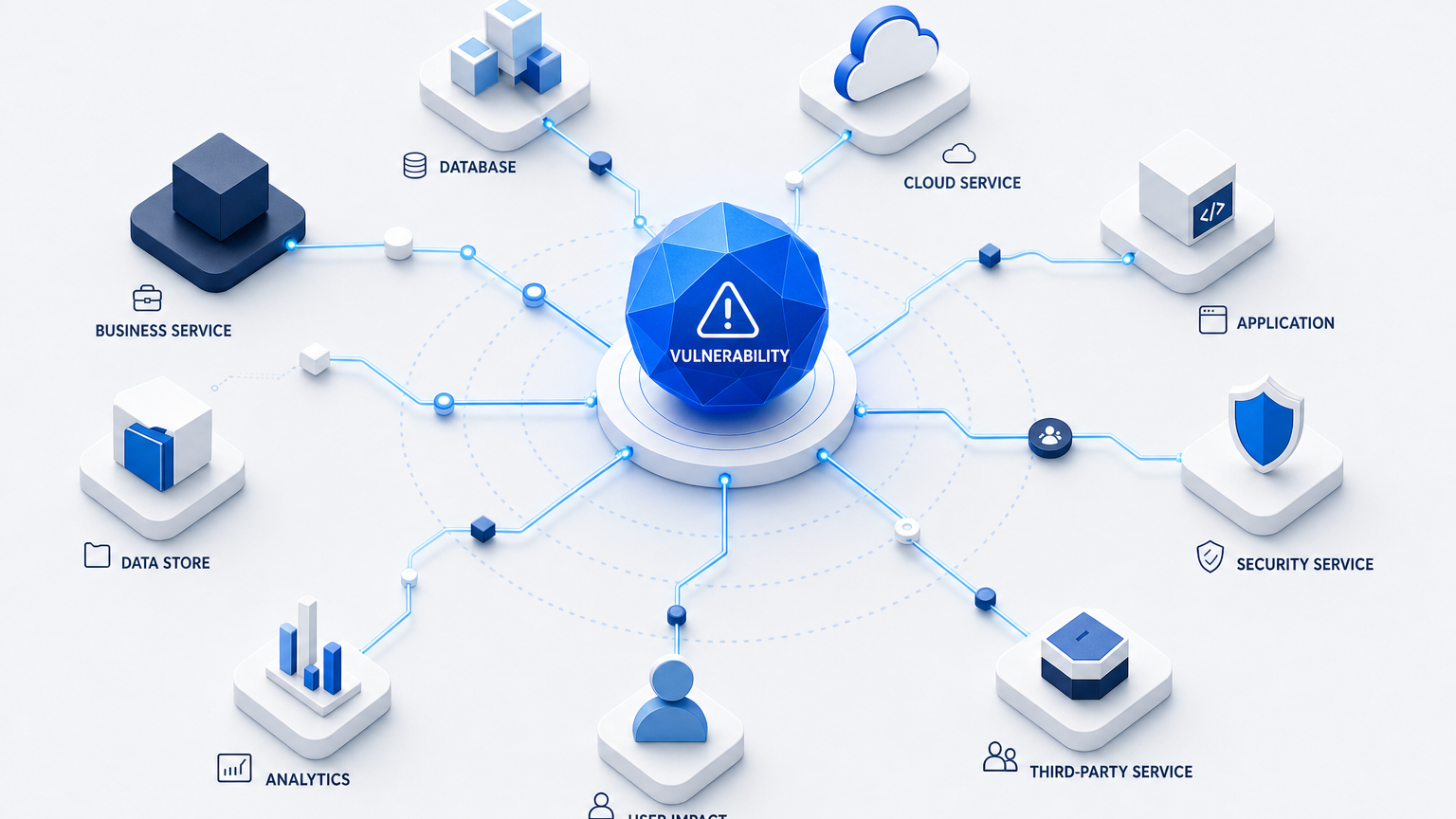
A long list of critical findings can leave security teams unsure which service faces the greatest risk. The Common Vulnerability Scoring System (CVSS) provides severity information, but a score alone cannot identify an organization’s affected services. Without that connection, a vulnerability remediation blast radius can remain unclear when security operations hands work to IT operations.
The 2026 Verizon Data Breach Investigations Report found vulnerability exploitation was the initial access vector in 31% of its breach dataset. In the report’s analysis of known exploited vulnerabilities, median full remediation time increased from 32 to 43 days. The measure reflects the report’s dataset, rather than a deadline for an individual organization.
At the Gartner IT Infrastructure, Operations & Cloud Strategies Conference in December, two sessions will examine patching speed and remediation. Adaptiva and Avista will discuss risk-based prioritization and autonomous remediation. A Tanium session will address the transition toward autonomous IT operations. Both sessions are scheduled for the same December 8 time slot. Virima’s perspective adds a service dependency and handoff question to those discussions: which findings affect the services the organization needs most?
Vulnerability prioritization paralysis: why a long CVSS 9+ list stalls the team
A security team may receive many findings with CVSS scores of nine or higher. Each score signals severity, but the list alone cannot establish a practical order for a particular business. Teams still need to know which assets support revenue-critical services, who owns them, and what remediation will involve.
Vulnerability prioritization paralysis describes the point where a team has more serious findings than available capacity and no agreed selection method. The term describes a decision problem, rather than a formal diagnostic category. A security engineer needs a defensible reason to select one finding before another. An operations lead needs enough detail to plan the work.
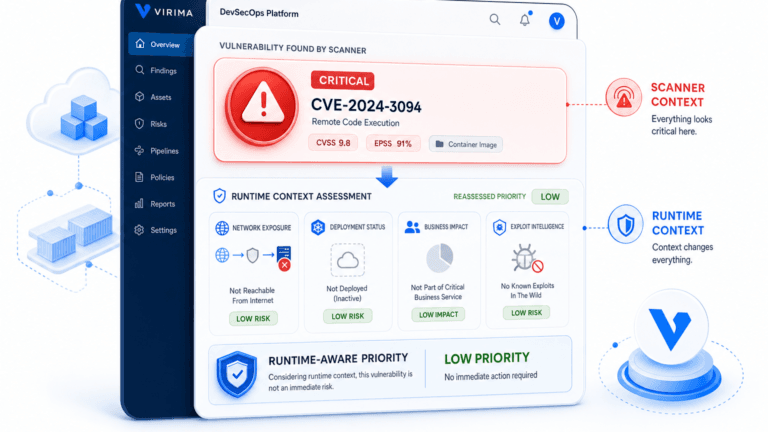
The FIRST CVSS specification separates vulnerability severity from organizational risk. CVSS base metrics describe intrinsic characteristics of a vulnerability. Threat and environmental metrics add context when available, while a business still needs its own operating information.
| Information in a finding | Information needed for a decision |
|---|---|
| Vulnerability identifier and severity | Exposure and evidence of exploitation |
| Affected asset or software | Services supported by that asset |
| Technical description of the flaw | Service owner and dependency relationships |
| Suggested remediation | Change window and operational constraints |
A score can help distinguish severe flaws, and evidence of active exploitation can change the order immediately; service impact supplies another input, but it doesn’t replace threat intelligence. Teams should document the basis for exceptions when urgency outweighs the normal change process.
Which findings touch revenue-critical services
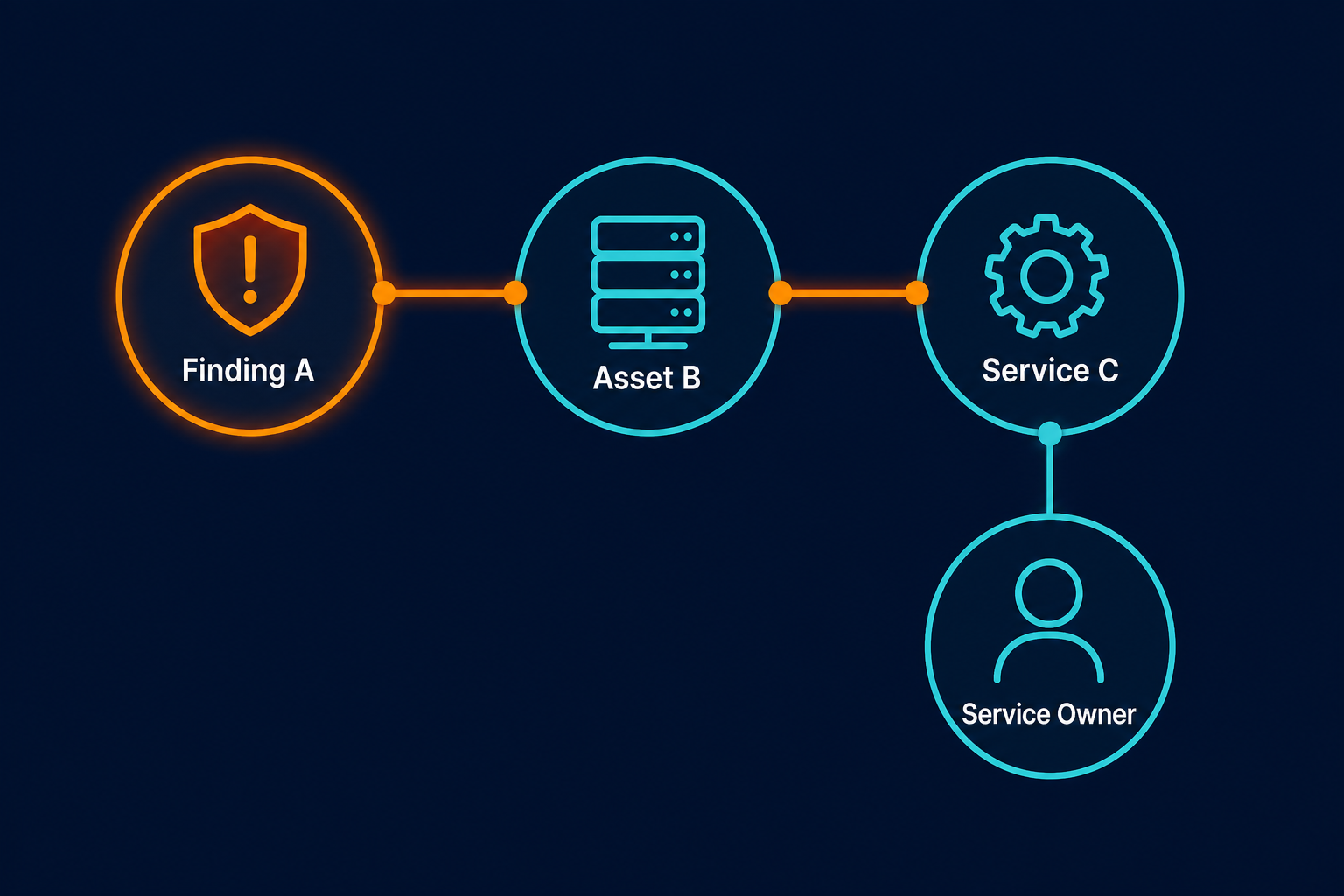
Mapping a vulnerability remediation blast radius starts with a list of business services and the people responsible for them. A service owner can identify which services directly support revenue and which support other essential obligations. The security team can then connect a finding to an asset and follow its recorded relationships.
| Decision step | Evidence to check | Person involved |
|---|---|---|
| Define important services | Service name and agreed business value | Business or service owner |
| Match the finding | Vulnerability identifier and affected asset | Security engineer |
| Review dependencies | Recorded links between the asset and services | Service or configuration owner |
| Confirm ownership | Responsible operations team and contact | IT operations lead |
Name the revenue-critical services first
Service definitions need input from the people responsible for business operations. A team can record a service’s business importance and review that rating when its role changes. Revenue is one useful criterion, alongside obligations such as operational availability or regulatory commitments.
Virima describes a Service Value Rating as a way to reflect an asset’s role in supporting services. The rating depends on the service information supplied by the organization. It should be reviewed with the owner before it determines a patch sequence.
Walk from the asset to its services
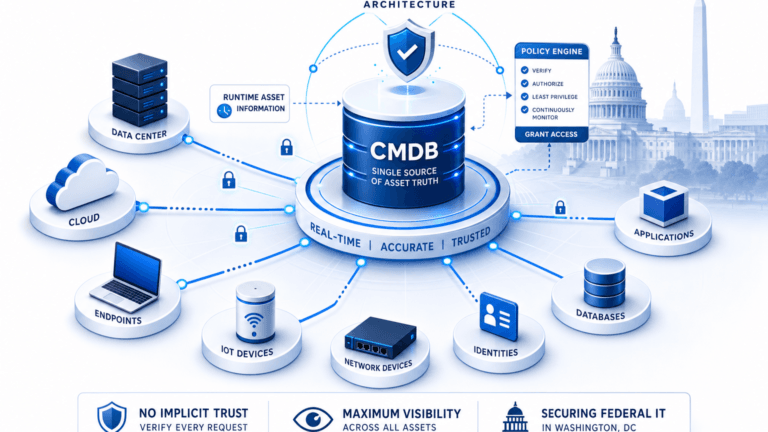
A configuration item (CI) is a recorded component that a team needs to manage. A configuration management database (CMDB) can hold its relationships and ownership information. Start with the affected CI, then inspect the services connected to it. Confirm whether the recorded dependency still matches the architecture before making a time-sensitive decision.
Virima builds ViVID™ service maps after the organization supplies its service definitions. The maps can show the relationship between infrastructure components and defined services. A missing relationship is a reason to investigate. It isn’t evidence that no service depends on the asset.
Sort the findings using several signals
A shared component can support several important services, making its finding worth closer review. Another finding may carry known exploitation evidence that warrants immediate attention despite a lower service rating. This is risk-based vulnerability prioritization in practice: the team weighs those signals together and records the reason for its decision.
Virima’s remediation priority queue guide covers the broader process for combining asset criticality with service maps. For the handoff, the immediate task is to attach the relevant service names and decision rationale to the finding.
Where the handoff between security operations and IT operations breaks
Security operations, often called SecOps, identifies a finding and explains the risk. IT operations is usually responsible for coordinating a change to the affected asset. A clean security operations handoff works when both teams can see the finding, the service context, and the person responsible for action.
The ticket arrives without the service
A ticket containing only a vulnerability identifier and score asks operations to reconstruct the business context. The receiving engineer must locate the affected asset and determine which services depend on it. If the ticket includes those references, the engineer can verify them instead of beginning the investigation from scratch.
That context matters: the security engineer should also note whether exploit evidence is available and where it came from. A catalog match identifies a potential vulnerability against software recorded in the asset inventory, using National Vulnerability Database data. The team must confirm applicability using its security tools and the relevant vendor guidance.
Nobody names the owner
An asset record may name a technical team while the affected service has a different owner. The remediation ticket should identify both when they have distinct responsibilities. The technical owner plans implementation, while the service owner can evaluate the business impact of an interruption.
A missing or outdated owner should be treated as an explicit task. Assign someone to confirm the contact and record the outcome before the handoff closes. If an urgent finding cannot wait, escalate through the organization’s established incident or risk process.
The change calendar lives somewhere else
A patch may share an asset or dependency with work already planned by another team. Operations should check pending changes and active incidents before proposing a window. The ticket can then reference the change record, checked against its current approval status in the system of record.
The vulnerability management with CSAM guide describes scheduled vulnerability lookups and routing into service-management workflows. A shared record helps the teams discuss the same asset, although the people involved remain responsible for the decision.
A handoff packet every remediation ticket should carry
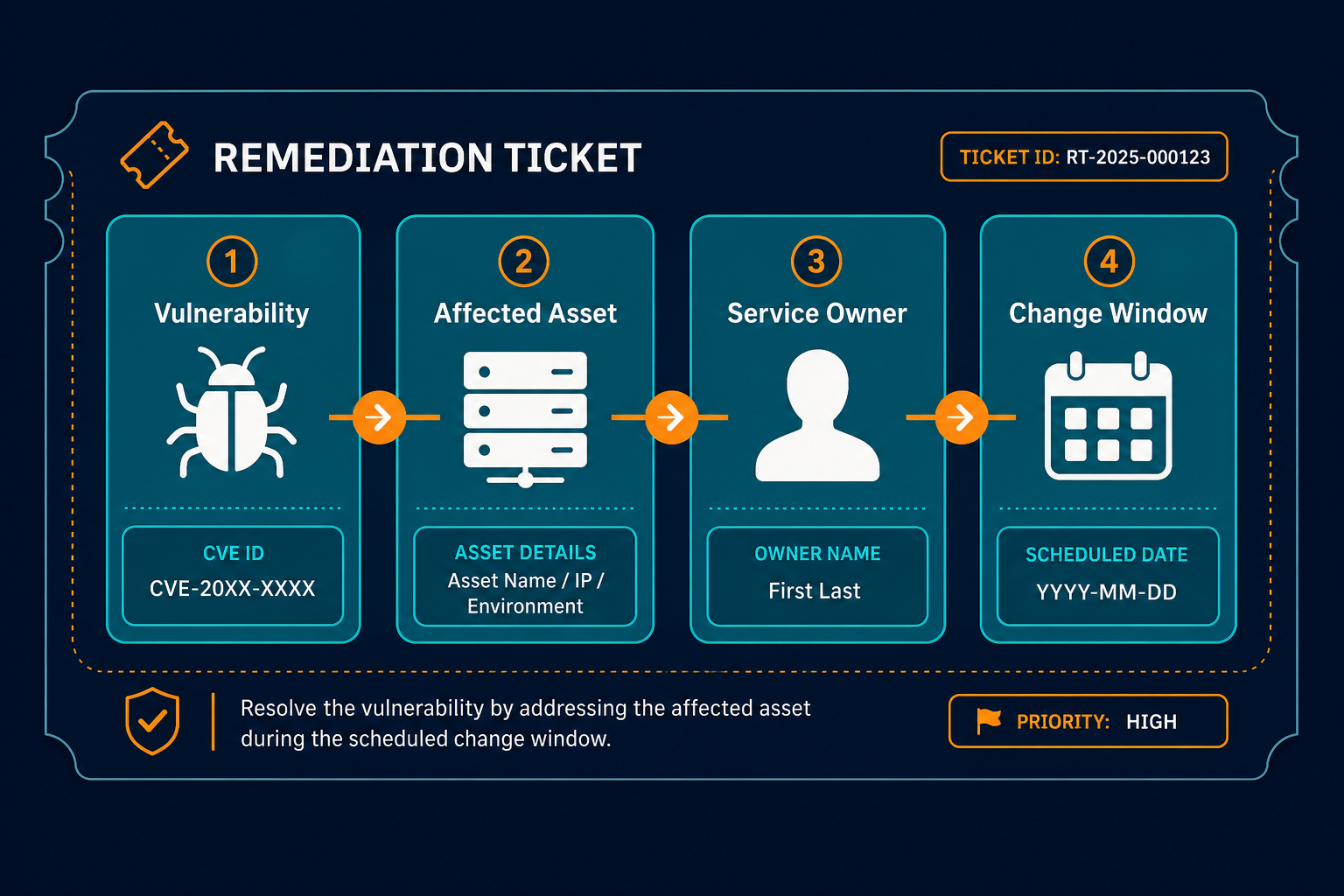
A useful packet lets the receiving team verify the risk and prepare the change. Its fields can be added to an existing ticket template rather than requiring a new platform.
- Finding: Record the Common Vulnerabilities and Exposures (CVE) identifier, the applicable score, and the security source.
- Affected asset: Link the CI record and identify the affected software or version when available.
- Business service: Name the supported service and its agreed value rating, with the service owner.
- Dependencies: Record relevant downstream services and components, including any relationships that still need confirmation.
- Operations owner: Name the team or individual responsible for reviewing and implementing the change.
- Incident and change context: Reference open incidents, pending work, and the place where their current status can be checked.
- Proposed window: Identify the proposed time, the approval path, and any dependency on another change.
- Deferral decision: Name the risk owner, the reason for waiting, the interim control, and the review date.
If a field is unknown, mark it as unknown and assign its verification. An empty service field should never be interpreted as proof that the asset has no dependents. Security and operations can agree which missing fields require escalation for urgent work.
One internal measure is the share of remediation tickets with a confirmed service, owner, and value rating. Track missing information separately from patch completion. A complete ticket can still wait for a valid operational or security reason.
A patch has its own vulnerability remediation blast radius
A vulnerability’s potential impact and the effect of its remediation require separate checks. The first asks which services could be affected if the flaw is exploited. The second asks what the proposed patch could interrupt or restart.
The operations lead should review vendor instructions for restart requirements and supported rollback options, consistent with NIST’s enterprise patch management guidance. A dependency map can identify connected components to discuss with their owners. It cannot independently confirm the behavior of a particular patch or prove that a rollback will work.
Review pending and recent changes on the affected CI and its recorded neighbors. Also check the change calendar for work that may share infrastructure or staff. The change impact review guide explains how dependency information can support that assessment.
When a patch must wait, the designated risk owner should record the reason and an expiration or review date. Security can propose a compensating control, such as an access restriction, where appropriate. The owner must confirm that the control is in place and decide when to reassess the deferral.
Virima gives security and IT operations one map to read
Virima combines discovered asset records with service relationships and vulnerability information to support service-aware patch prioritization. Scheduled discovery cycles refresh the underlying inventory according to the configuration chosen by the team. The organization supplies service definitions, and people remain responsible for confirming ownership and service value.
| Information Virima can provide | Decisions and evidence to check elsewhere |
|---|---|
| Discovered asset records and relationships | Confirm scope, record freshness, and missing assets |
| National Vulnerability Database matching against recorded inventory | Validate applicability and broader scanner findings |
| ViVID™ maps showing defined service dependencies | Confirm service ownership and business value |
| Available vulnerability, incident, and change context | Check the authoritative incident and change records |
| Asset context for service-management workflows | Approve, schedule, deploy, and verify the patch |
National Vulnerability Database (NVD) matching uses the software information recorded against an asset. Scheduled lookups depend on inventory freshness and the configured cadence. On-demand checks can also be initiated from a supported CI record when the relevant capability is available. A catalog match should be validated before the team treats it as an applicable finding.
Vulnerability overlays on ViVID™ maps are scoped to supported Windows Server findings. Broader discovery and dependency mapping cover more than those servers. Dedicated vulnerability tools provide additional scanning and evidence where the organization needs wider coverage. Virima does not deploy patches, and the responsible team retains approval and scheduling decisions.
The service dependency mapping feature provides a shared view for reviewing affected services. Security engineers can use the asset context to prepare a ticket. IT operations can validate dependencies, and the risk owner can record a deferral decision.
Explore Trusted Runtime Truth for security to review how discovery-sourced records connect assets, services, changes, and ownership. The record’s usefulness depends on the coverage and freshness of its underlying sources.
Questions to ask before you automate patching
Automation can reduce repeated handling when the inputs and approval boundaries are understood. Before expanding its scope, security and operations should agree how the process handles exceptions.
| Question | What a useful answer includes |
|---|---|
| Who sets the remediation order? | A named owner and criteria for urgent exceptions. |
| Which services does the action affect? | Confirmed dependencies and a service owner for review. |
| What happens when information is missing? | An escalation path and a responsible reviewer. |
| Who approves a deferral? | A risk owner, compensating control, and review date. |
| How is rollback handled? | A documented method and a person responsible for testing it. |
| How is completion verified? | Evidence from the patching or security tool and a ticket update. |
A safe rollout starts with an agreed scope and a way to stop when checks fail, tested against existing change and incident procedures. Owners can then expand the scope after reviewing exceptions and completion evidence.
Discuss vulnerability context at Gartner IOCS
Virima will be at Booth 645 during Gartner IOCS in Las Vegas, December 8 through 10. Book time with the Virima team to discuss service dependencies and remediation handoffs. Bring the questions your security and operations teams need to answer together.
Frequently Asked Questions
What is vulnerability prioritization paralysis?
Vulnerability prioritization paralysis describes a team having more serious findings than available remediation capacity without an agreed selection process. A shared escalation rule helps resolve disagreements when security urgency and service availability compete.
Why is CVSS insufficient for deciding what to patch first?
The Common Vulnerability Scoring System (CVSS) expresses vulnerability severity through defined metrics. A patch decision also needs local evidence, including whether the affected software is present and which services rely on it.
How do teams identify vulnerabilities affecting revenue-critical services?
Teams match each finding to an asset, then review its recorded relationships to business services. Service owners should confirm the connection and business importance before the team relies on the result.
What is the blast radius of a patch?
A patch’s blast radius is the set of services and components that its implementation could affect. The assessment should consider restarts, shared dependencies, maintenance timing, and the consequences of a failed rollback.
How does Virima support vulnerability checks and patching?
Virima matches vulnerability catalog information against recorded inventory and supports on-demand checks for eligible configuration items. Dedicated patching tools deploy updates, while the responsible teams approve changes and verify the results.