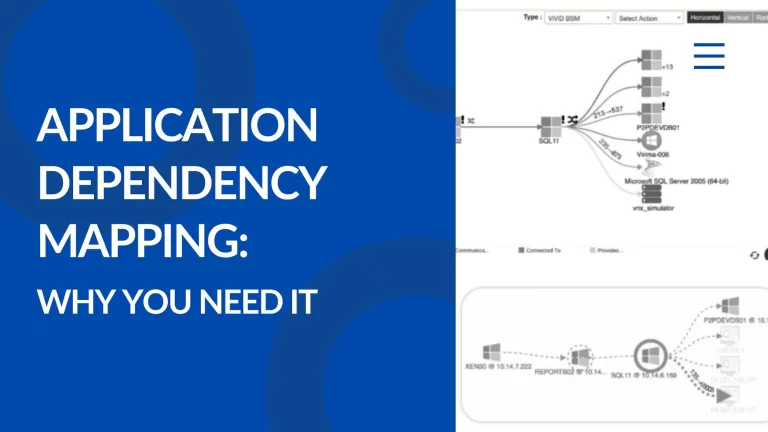
Top Service Mapping Approaches for Hybrid Multi-Tier Apps Still Fail Without Live Dependency Truth

A change window on a hybrid multi-tier app looks clean on the CAB form. Web tier in the cloud, app tier on VMware, database still on-prem, and a short list of no-impact peers. Three hours later the payment path fails because a shared message bus and a forgotten batch host never appeared on the service map the team trusted. That is the usual failure mode behind top service mapping approaches for hybrid multi-tier apps: the method chart is right, and the dependency picture is weeks behind production.
Service mapping ties business or application services to the configuration items (CIs) and relationships that keep them running. Hybrid multi-tier estates stretch that work across data centers, hypervisors, and public cloud at once. Teams pick top-down, bottom-up, traffic, or import-led mapping and treat the pick as the finish line. The finish line is currency. Without discovery-fed CI and relationship truth, every approach draws a confident diagram of last month’s estate.
If you need the category frame before another mapping project, start with Trusted Runtime Truth. The rest of this guide compares the main approaches, where each breaks on hybrid multi-tier paths, and what has to sit under the map.
What hybrid multi-tier service mapping has to answer
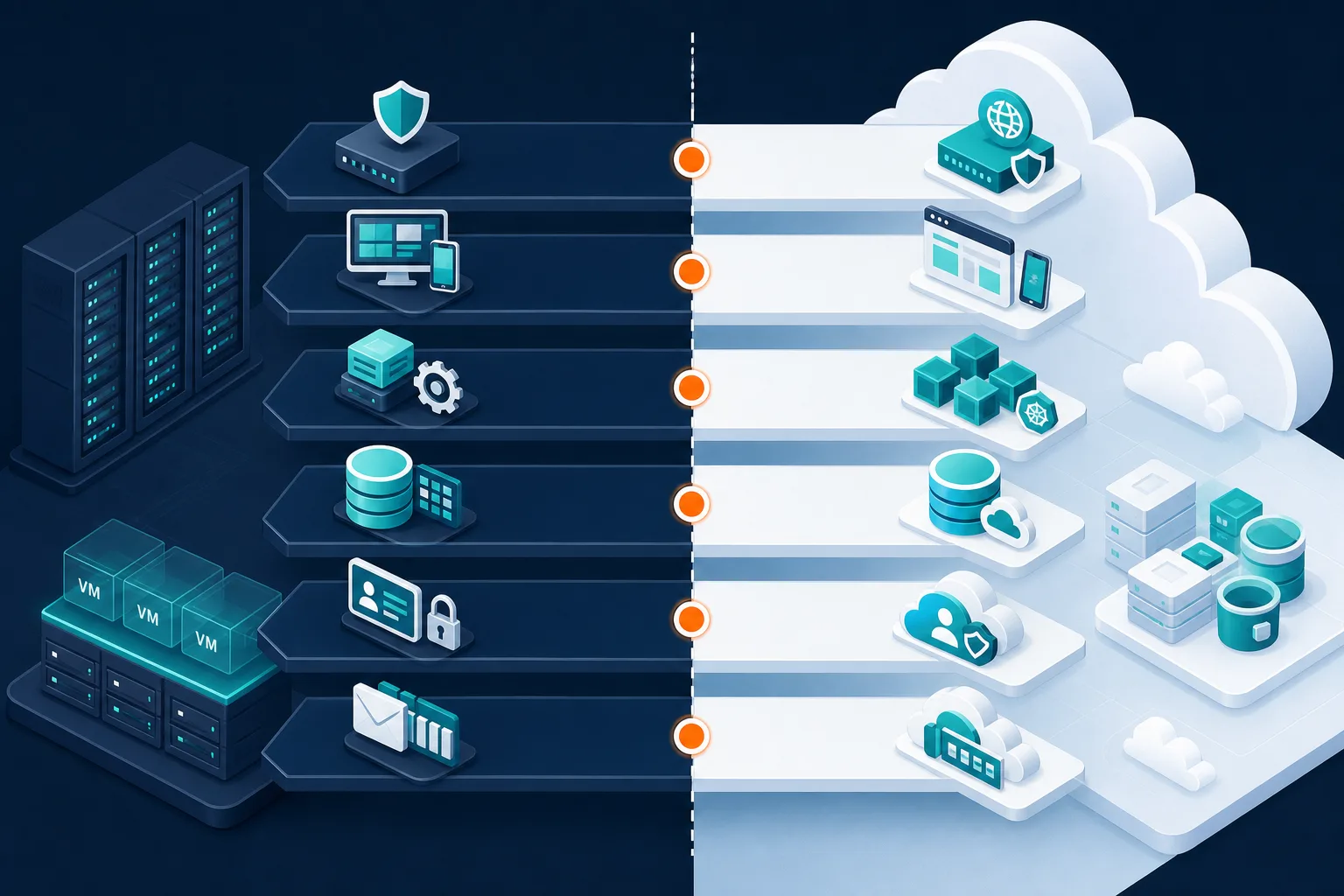
A multi-tier application is a path: edge or load balancer, presentation, application services, data stores, identity, queues, and the segments between them. Hybrid means those tiers do not share one control plane. Cloud APIs describe some layers. VMware and bare metal describe others. Managed databases and SaaS sit outside both.
A useful service map answers five questions in one view:
- Which CIs sit on the path today
- How they relate to each other
- Who owns each tier
- What changed since the last trusted map
- Which other services share a CI on that path
What are the top service mapping approaches for hybrid multi-tier apps?
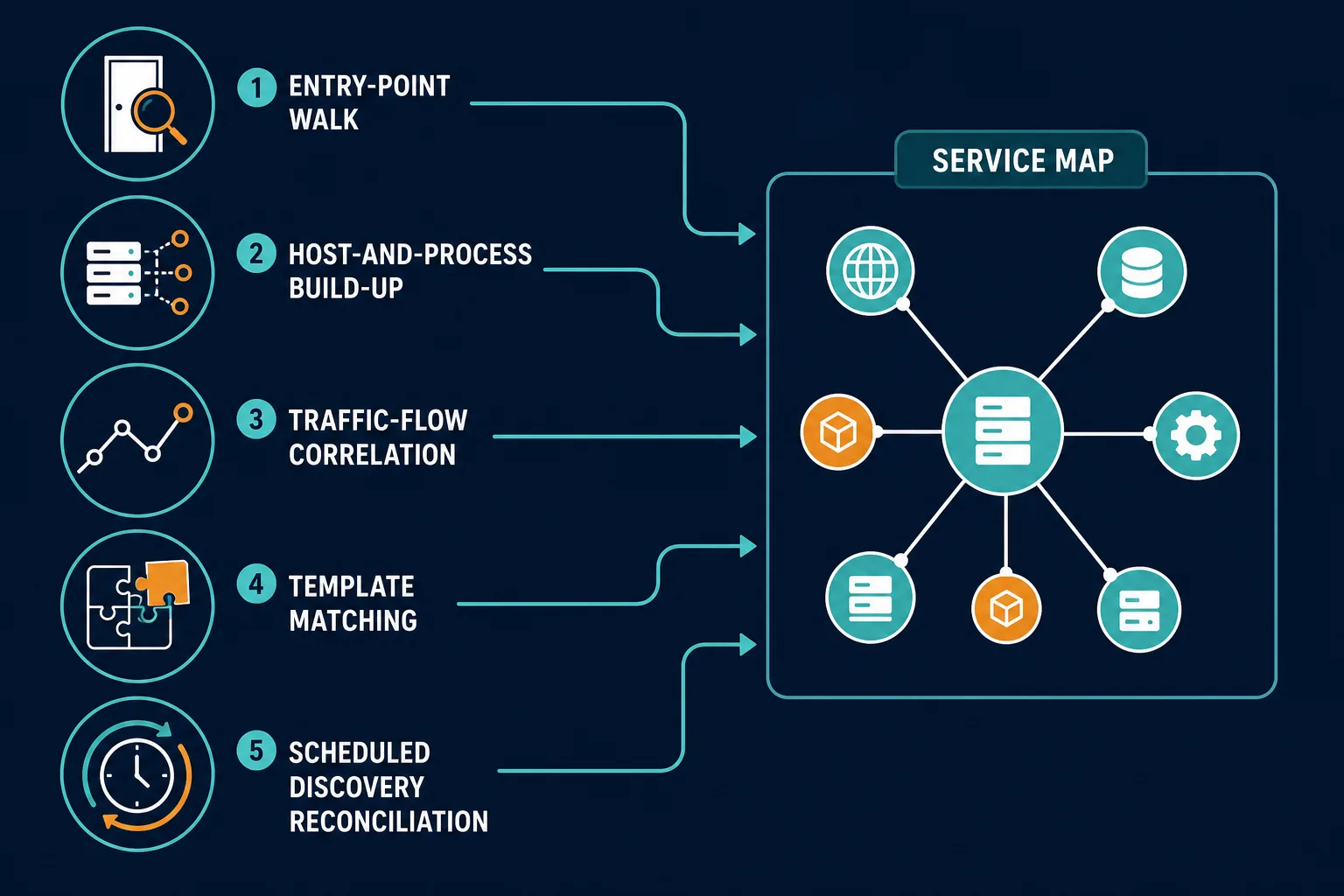
The main approaches are top-down entry from a known service or URL, bottom-up build from hosts and processes, traffic or flow correlation across tiers, pattern matching for known stacks, and discovery-fed CMDB maps that refresh CI and relationship data on a schedule. Hybrid multi-tier apps usually need more than one method, all grounded in current inventory.
None of those questions is answered by a static whiteboard. They need inventory coverage across the hybrid boundary and relationship data that survives the next deploy.
Why the approach list still leaves CAB and incident work blind
Industry practice already treats architecture as the deciding factor for the first move. ServiceNow community guidance on speeding up application service discovery notes multi-tier on-prem work often starts with top-down discovery and service mapping patterns, while other architectures lean on different mixes. That is useful method advice. It still assumes the CMDB and discovery foundation can keep pace after go-live.
Hybrid multi-tier apps raise the stakes. A top-down seed that stops at the cloud load balancer misses the on-prem database path. A bottom-up host crawl that never joins to a service definition produces CIs with no blast radius. Traffic maps that only see one VPC miss the cross-prem hop. Import projects that load a golden map once drift the first week developers ship a new service name.
CISA Binding Operational Directive 23-01 pushes federal civilian agencies toward complete asset inventories and timely vulnerability visibility. Private-sector hybrid teams feel the same pressure without the directive on the ticket. You cannot map a service you have not inventoried, and you cannot defend a change you cannot place on a current path.
DORA research keeps change failure rate and restore time in the delivery scorecard (DORA research). Those metrics go soft when the first half of an incident is still spent rebuilding what talks to what by hand. Mapping approach choice does not fix that. Map freshness does.
Approach 1: Top-down from a known service entry
Top-down starts at a business service, application service, URL, or VIP, then walks dependencies outward. It fits when ownership of the service is clear and someone can name the front door.
Strengths. Fast path to a CAB-readable picture. Aligns with how product owners talk. Works when patterns for known stacks already exist.
Breaks when. The entry point is only the cloud edge and the walk never crosses into VMware or on-prem data. Service names in ITSM do not match runtime names. Shared platforms such as message bus, identity, or logging are omitted because they sit outside the app team chart.
Hybrid multi-tier rule. Seed every tier boundary: cloud front door, private link or VPN, hypervisor cluster, database cluster. If any hop is assumed rather than discovered, the map is a story, not evidence.
Approach 2: Bottom-up from hosts, processes, and installs
Bottom-up starts with infrastructure and process evidence, then groups CIs into candidate services. It fits estates where host inventory is stronger than service catalogs.
Strengths. Surfaces shadow tiers and forgotten batch hosts. Helps when multi-tier apps share hosts across brands.
Breaks when. Process names are generic. Containers and functions short-circuit host-centric grouping. Nobody curates the join from host group to business service, so ops gets a graph without a customer-facing label.
Hybrid multi-tier rule. Bottom-up is necessary coverage, not the finished map. Pair it with an explicit service definition step. Virima builds dependency maps once service definitions exist through manual entry, import, or integration input. It does not invent business service composition from thin air.
Approach 3: Traffic, flow, and connection correlation
Traffic-based mapping watches network flows, APM traces, or connection tables to infer who talks to whom. Tiers are defined by conversation, not folder names.
Strengths. Finds runtime edges workshops miss. Helps prove shared dependency risk across apps.
Breaks when. Encryption, mesh sidecars, or sampling hide edges. Cloud and on-prem collectors disagree on identity of the same logical tier. Short-lived containers create noise. The map shows conversations without durable CI identity or ownership.
Hybrid multi-tier rule. Treat traffic as a relationship hint that must reconcile to authoritative CIs. Flow without inventory is a heatmap, not a CMDB-grade service map.
Approach 4: Pattern, template, and stack matching
Pattern libraries encode known multi-tier shapes. Operators match an entry CI to a pattern and expand the expected tree.
Strengths. Speed and consistency for repeated architectures. Useful training wheels for new mapping teams.
Breaks when. The estate is full of snowflakes and partial cloud refactors. Patterns freeze last year’s reference design. Hybrid paths that mix IaaS, PaaS, and leftover on-prem rarely match one template cleanly.
Hybrid multi-tier rule. Use patterns to propose, discovery to confirm. Never promote a pattern match to production truth without a freshness check on each tier.
Approach 5: Import-led and CMDB-native maps
Many programs load service maps from spreadsheets, CMDBs, architecture tools, or a prior platform migration. The map becomes a configuration record set inside ITSM.
Strengths. Fits governance language. Reuses existing CI classes and relationship types.
Breaks when. Import is a project, not a cycle. After cutover, developers rename services and move databases while the map stays frozen. Teams blame the ITSM platform for bad mapping when the input stopped matching runtime.
Hybrid multi-tier rule. Imports are a bootstrap. Hybrid estates need scheduled discovery and reconciliation so relationship records track installs across AWS, Azure, VMware, and remaining bare metal. ServiceNow and Jira remain systems of engagement. They still need a current CI and dependency feed underneath.
What is the difference between top-down and bottom-up service mapping?
Top-down service mapping starts at a known business service or URL and walks dependencies outward; bottom-up starts at hosts and processes and groups them into candidate services. Hybrid multi-tier apps typically need both — top-down alone stops at the cloud edge, and bottom-up alone produces CIs with no service label.
How the top service mapping approaches compare for hybrid multi-tier apps
| Approach | Best first use | Hybrid multi-tier failure mode | What must sit underneath |
|---|---|---|---|
| Top-down | Clear service owner and entry URL/VIP | Stops at cloud edge; misses on-prem data path | Discovery across every tier hop |
| Bottom-up | Strong host inventory, weak catalog | CI piles without service labels | Explicit service definitions |
| Traffic / flow | Unknown runtime edges | Identity and ownership gaps | CI reconciliation to flows |
| Pattern / template | Repeated stacks | Snowflakes and partial refactors | Confirm each node live |
| Import-led CMDB | Governance bootstrap | One-time load, fast drift | High-frequency discovery cycles |
Which service mapping approach works best for hybrid multi-tier applications?
No single approach wins alone. Hybrid multi-tier apps usually combine a top-down or catalog seed, bottom-up and traffic evidence for missing edges, and patterns only where stacks repeat. The deciding factor is whether CI and relationship data refresh from discovery across on-prem, virtualization, and cloud so the map matches production.
For change and release impact that depends on these maps, see how IT visibility and business service mapping affect change and release management. For why a clean-looking impact answer can still be wrong, read change impact analysis false negatives.
What actually decides success after you pick an approach
Coverage across the hybrid boundary comes first. If discovery only sees one cloud account or only the VMware cluster, every approach above produces a partial multi-tier path. Hybrid apps need agent, agentless, and API collection where each fits, on a scheduled high-frequency cycle, not a quarterly spreadsheet refresh.
What is the best way to discover application dependencies across cloud and on-prem?
The best way to discover dependencies across cloud and on-prem is combining agent, agentless, and API-based discovery on a scheduled cycle, then reconciling results into one CMDB relationship record. A single collection method misses at least one tier boundary in a hybrid multi-tier estate.
Service definition comes next. Presentation tiers and databases are CIs. The business or application service is the join key CAB and major-incident process use. Skipping definition produces infrastructure art.
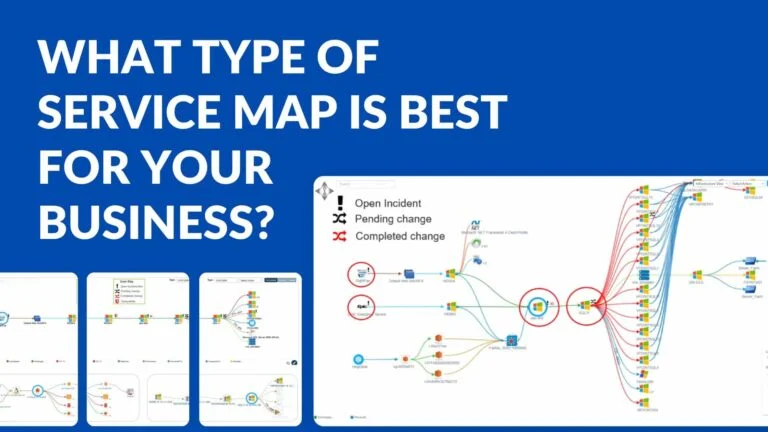
Service dependency mapping only holds up when relationship types are actionable. Operators need runs-on, depends-on, virtualizes, and data-exchange style edges they can trust on a bridge call. Visual CMDB views help when those edges are current; see benefits of a visual CMDB.
Ownership and last-verified signals matter. A hybrid path that cannot show owner and freshness forces tribal knowledge back into the war room. Mapping approaches do not invent owners. CMDB process and discovery reconciliation do.
Maps earn their keep when incident and change records open on the right CI and service. Virima integrates with ServiceNow, Jira, Ivanti, and many more through one hub: all integrations. Keep partner names plain in runbooks.
When hybrid multi-tier paths still stop at tribal knowledge, see how discovery-fed dependency maps surface the tiers CAB and incident bridges actually need.
Where Virima fits (and where it does not)
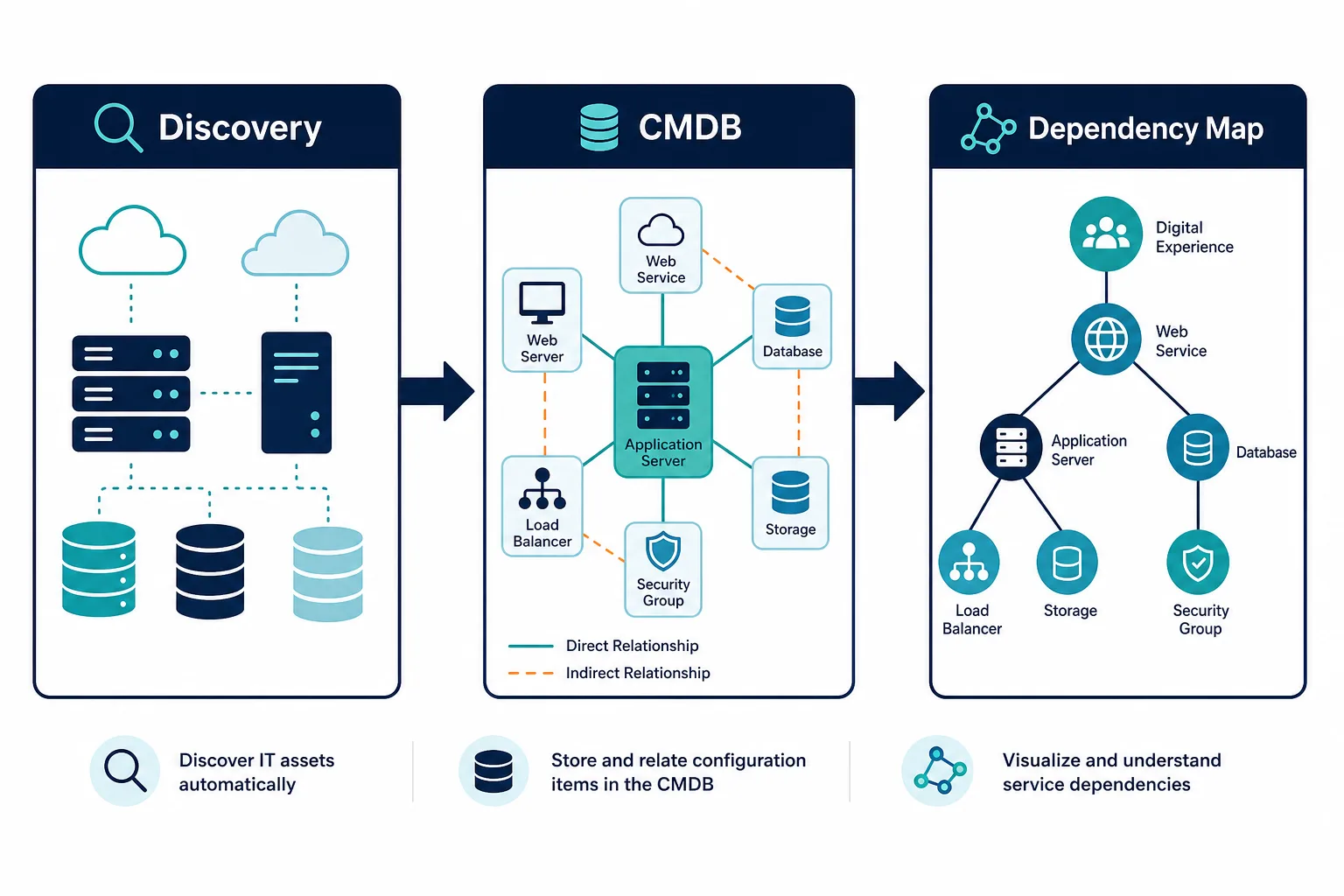
Virima is not a replacement for your ITSM, APM, or cloud console. It is the discovery-sourced CMDB and service-mapping layer that keeps hybrid multi-tier dependency truth current enough for operations.
Virima contributes automated discovery across hybrid estates and CMDB relationship context under the service object. ViVID™ service maps build after service definitions are provided, so dependency visualization tracks runtime structure instead of a one-off drawing. Windows Server NIST NVD overlays apply on maps where that signal fits; Virima does not claim vulnerability data from NVD lookups across every operating system, only Windows Server today.
It does not provide passive continuous real-time event discovery or Autonomic Social Discovery (ASD) as a go-forward capability. It also does not invent a business service without a definition input, or replace ServiceNow, Jira, or other ITSM workflow systems.
Service mapping benefits expand the operational case. Capability depth lives on the service mapping feature page.
How do you keep service maps accurate for hybrid multi-tier apps?
Keep maps accurate by combining a clear service definition, discovery coverage across on-prem, virtualization, and cloud tiers, scheduled reconciliation of CI and relationship records, and handoff into ITSM on the right service object. Approach choice matters less than whether the map is refreshed against live installs before the next change window.
A practical selection path for the next mapping cycle
- Name the multi-tier service and its entry points across cloud and on-prem.
- Inventory first so every tier has CI coverage before you argue top-down versus bottom-up.
- Pick a primary approach for the first draft, usually top-down when the service owner is clear.
- Add bottom-up and traffic evidence to catch shared buses, batch hosts, and cross-prem hops.
- Apply patterns only where the stack truly repeats.
- Promote to CMDB relationships with owners and last-verified signals.
- Schedule discovery cycles so the map is not a launch artifact.
- Test with one real change and one major-incident drill before you call the program done.
Teams that stop at step 3 deliver a one-off diagram. Teams that finish step 8 hand operations a living map they’ll rely on during incidents.
Close the gap between mapping method and hybrid runtime truth
Top service mapping approaches for hybrid multi-tier apps are well known: top-down, bottom-up, traffic, patterns, and import-led CMDB maps. Hybrid multi-tier estates punish any of them when CI and dependency data lag installs. Pick the mix that matches your architecture, then put discovery-sourced relationship truth underneath so CAB, incident, and release work stop guessing at the path.
Frequently Asked Questions
What is the difference between top-down and bottom-up service mapping?
Top-down starts from a known service or entry point and walks dependencies outward. Bottom-up starts from hosts, processes, and installs, then groups CIs toward a service. Hybrid multi-tier apps often need both so the front door and the shared backend tiers stay in one path.
Why do hybrid multi-tier service maps go stale so quickly?
Because tiers change on different clocks. Cloud services, VMs, and on-prem databases ship on separate release trains. A one-time workshop or import cannot track those moves unless discovery and relationship reconciliation run on a steady schedule.
Does Virima combine traffic-based evidence with discovery data for multi-tier mapping?
Virima treats traffic and flow signals as a relationship hint, not a source of record. It reconciles that evidence against discovery-sourced CI identity, ownership, and service labels, so a multi-tier map stays tied to inventory instead of drifting into an unlabeled conversation graph.
Do service mapping patterns replace discovery?
No. Patterns speed first drafts for known stacks. Discovery confirms which CIs and relationships still exist after the last deploy. Hybrid multi-tier paths that mix cloud and on-prem rarely stay inside one static template.
How does Virima support service mapping for hybrid multi-tier apps?
Virima supplies discovery-sourced CMDB data and ViVID™ service maps after service definitions are provided. It feeds relationship context into ITSM workflows rather than replacing the service desk platform, and it does not claim passive continuous discovery or ASD.
Use the 8-step selection path above as your working checklist for the next mapping cycle, and see how ViVID™ service maps put a top service mapping approach for hybrid multi-tier apps into practice on the Service Mapping page.