The Real Reason Your CMDB Keeps Failing (And How to Fix It)

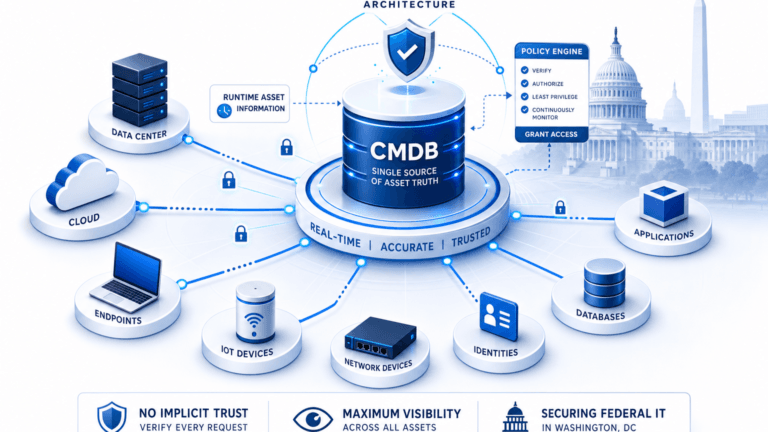
If you’ve invested in CMDB software and still feel like you’re operating blind, you’re not alone — even with what many vendors claim is the best CMDB software, outcomes often fall short. Across IT organizations of every size, the same story plays out: a CMDB gets stood up with the best intentions, populated with clean configuration data at launch, and then slowly — sometimes quickly — drifts into a state of unreliable chaos instead of serving as a single source of truth.
Tickets get routed to the wrong teams, creating inefficiencies across service desks.
Change approvals go through without anyone performing proper impact analysis or knowing the blast radius. Auditors ask for an asset inventory, and no one trusts the numbers. Sound familiar?
The frustrating truth is that most CMDB failures aren’t caused by bad software or the CMDB tools themselves. They’re caused by a few deeply rooted process problems that no amount of manual data entry — or ignoring CMDB best practices — will ever fix.
The Real Culprits Behind CMDB Failure
1. Manual Updates That Never Happen
The most common reason a CMDB goes stale is simple: it relies on people to keep it current. IT environments change constantly across cloud platforms and on-prem data centers — servers are spun up, applications are deployed, configurations drift, and assets are retired. Expecting your team to manually track every change on top of their regular workload is a recipe for incomplete, outdated records.
Within weeks of a major deployment or infrastructure change, your CMDB has already diverged from reality.
2. Discovery That Only Runs Periodically
Many organizations rely on a discovery tool that runs scans on a schedule — weekly, monthly, or even less frequently. But in a dynamic hybrid IT environment, that’s not nearly enough. A configuration item (CI) that existed on Monday may be decommissioned by Wednesday. Unmanaged network devices could appear on your network overnight.
Periodic discovery creates confidence gaps. Your team thinks they know what’s out there, but they’re actually working with a snapshot that’s already out of date.
3. No Visibility Into Relationships and Dependencies
A CMDB isn’t just a list of assets — it’s a result of effective data modeling that maps how those assets relate to each other. When a server goes down, the real question isn’t just “what is this server?” It’s “What business services depend on it?? What applications will break? Who needs to know?”
Without service dependency mapping baked into your CMDB, your incident response teams are guessing. And guessing during an outage is expensive.
4. Ownership and Accountability Gaps
Stale CMDBs often suffer from a lack of clear ownership. When no one is explicitly responsible for maintaining CI accuracy, everyone assumes someone else is handling it. Data quality erodes not because of malice but because of ambiguity.
What a Modern CMDB Approach Looks Like
Fixing these problems requires rethinking how modern CMDB solutions work — not just how your team uses it.
Automated, Continuous Discovery
The foundation of a healthy CMDB is automated discovery that runs continuously, not on a schedule. That means agent-based, agentless, and API-based discovery methods working together to surface every asset across your hybrid environment — on-prem, cloud, and everything in between.
When discovery is automated and always-on, your CMDB reflects reality without requiring your team to manually chase changes.
Dynamic Relationship Mapping
Modern CMDB software should automatically build and maintain the relationships between CIs — not just list them in isolation. Service maps that update in real time give your team the context they need to understand blast radius before approving a change, and to pinpoint root cause faster when an incident occurs.
This is the difference between a CMDB that’s just a centralized repository and one that’s a living, operational intelligence layer.
Enriched ITSM Integration
A CMDB that lives in isolation from your ITSM platform adds friction instead of removing it. When your CMDB is deeply integrated with your ticketing workflows — automatically enriching incidents and change requests with CI data, dependency context, and stakeholder ownership — your teams move faster and make smarter decisions.
Clear Data Governance
Automated tools can only go so far. Pair them with defined data governance: clear ownership of CI types, regular data quality reviews, and automated alerts when records fall out of sync. When accountability is built into the process, accuracy becomes sustainable.
The Outcome: A CMDB That Actually Works
When these elements come together — continuous discovery, dynamic service mapping, ITSM enrichment, and clear governance — the CMDB transforms from a liability into a genuine competitive advantage for your IT organization. Change failure rates drop. Mean time to resolution (MTTR) shrinks. Audit cycles stop being a fire drill.
Your team stops guessing and starts acting with confidence.
See What a Real-World CMDB Looks Like with Virima
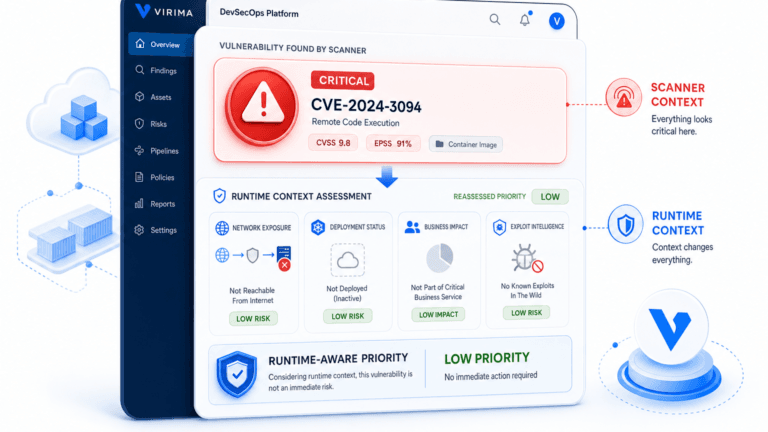
Virima’s automated CMDB platform combines continuous hybrid IT discovery, ViVID™ Service Mapping, and deep ITSM integrations to give your team always-accurate, always-actionable IT visibility.
Whether you’re dealing with a CMDB that’s never delivered on its promise or an environment that’s grown too complex to manage manually, Virima is built to solve the exact problems outlined above.
Ready to see it in action? Schedule a demo with the Virima team and discover what your CMDB should have been doing all along.