SolarWinds IT Asset Management: Features & Limits

Managing hardware, software, and cloud resources across a growing network can feel overwhelming. As your environment grows, it becomes harder to track what you own and where it sits. You also need to know if everything is properly licensed.
That’s why many IT teams turn to tools like SolarWinds Service Desk to stay in control. These tools help you keep things organized and visible.
However, not every ITAM tool works well for every setup. You might find gaps when your needs grow beyond basic tracking.
In this post, you’ll learn what SolarWinds IT Asset Management does well and where it struggles. You’ll also see why Virima IT Asset Management can be a better fit. It offers deeper features like discovery, service mapping, CMDB, and vulnerability management, all in one place.
Understanding the IT asset management process
Before evaluating any ITAM tool, it helps to know what the asset management process actually covers. ITAM spans the full lifecycle of every IT asset, from purchase to retirement.
- Asset discovery: Identifying and cataloging all IT assets across the organization, including hardware, software, and cloud resources.
- Asset classification: Grouping assets by criticality, value, and security risk so your team knows what matters most.
- Asset procurement: Budgeting, purchasing, and selecting vendors for new IT assets.
- Asset deployment: Integrating new assets into your infrastructure and making them available to users.
- Asset utilization and management: Ongoing tracking of software licenses, maintenance schedules, and support contracts.
- Asset retirement and removal: Decommissioning end-of-life assets in compliance with environmental regulations and data security requirements.
When each stage is managed well, your team spends less time firefighting and more time on work that actually moves the needle. The right ITAM tool automates the repetitive parts and hands you reliable data for better decisions.
SolarWinds IT Asset Management: A feature overview
SolarWinds IT Asset Management is built to help IT teams track and manage assets across their network. Here’s what it covers:
Automated discovery and inventory
SolarWinds automates hardware discovery on your network. It picks up desktops, laptops, servers, and network devices using both agent and agentless scanning methods.
Software license management
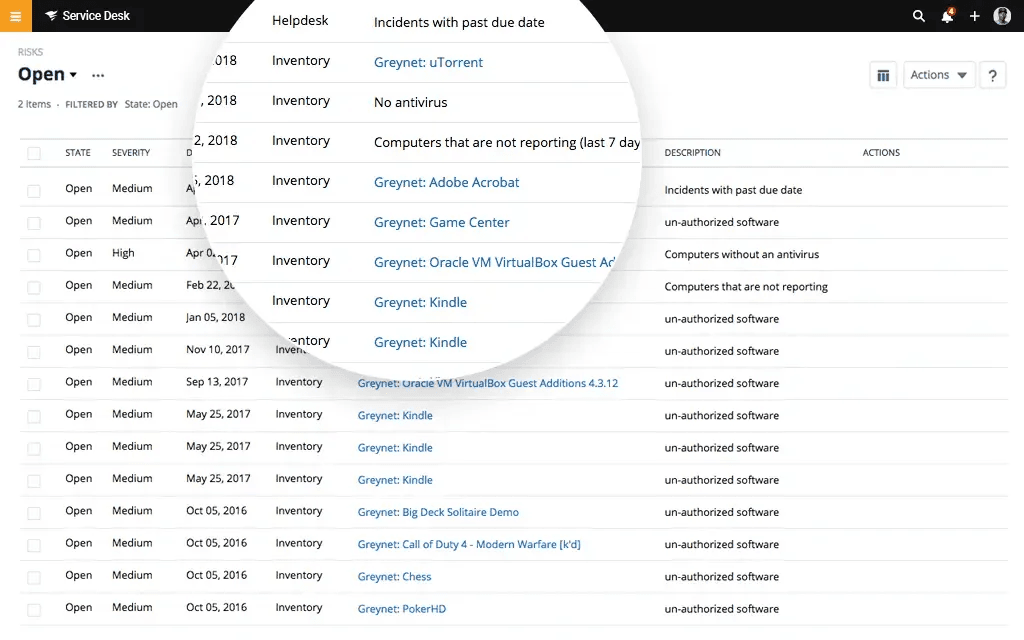
SolarWinds provides basic license tracking. It helps you monitor software installations and flag potential compliance gaps, which can lower audit risk.
Asset tracking and reporting
SolarWinds lets you track assets throughout their lifecycle and pull reports on inventory, usage, and license status. These reports give you a snapshot of your IT environment and support decision-making around asset planning.
SolarWinds also connects with other SolarWinds products, like SolarWinds Service Desk, which can tighten IT service workflows.
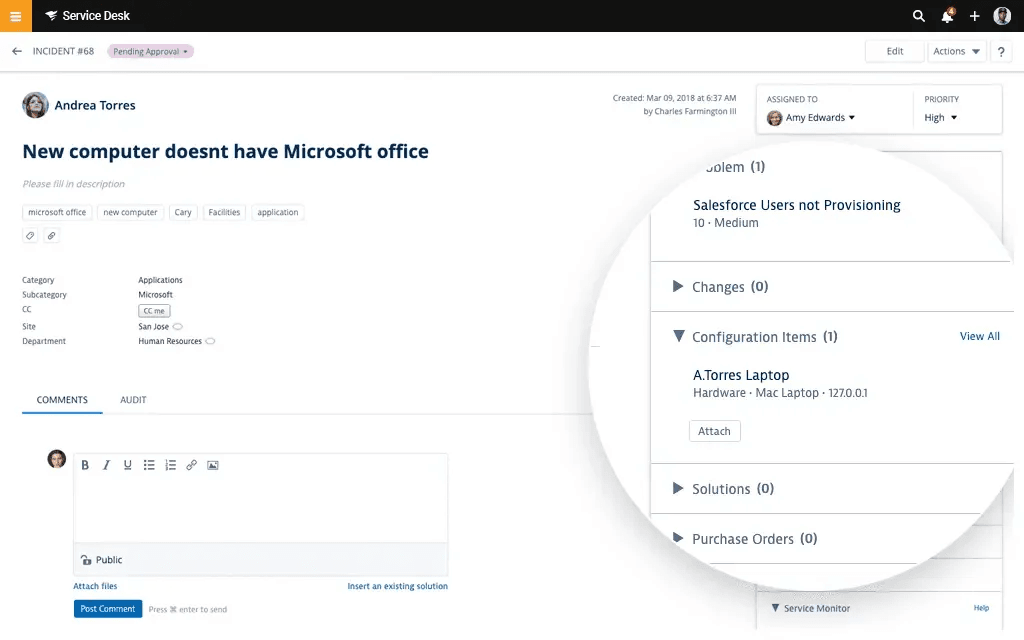
That said, user reviews suggest SolarWinds IT Asset Management struggles with more advanced needs. Capabilities like detailed license optimization, service mapping, and vulnerability management are either thin or missing entirely.
Potential limitations of SolarWinds IT Asset Management
SolarWinds covers the basics, but several gaps create friction for IT operations teams managing complex environments:
Limited scalability
SolarWinds may not scale well as your asset count grows. Larger environments often run into performance problems and data processing bottlenecks.
Integration challenges
Connecting SolarWinds ITAM to third-party ITSM tools can be complex and slow. This creates data silos and bogs down cross-team workflows.
Limited advanced features
SolarWinds lacks deeper capabilities like service mapping, advanced license optimization, and proactive vulnerability management. If your team needs visibility beyond basic inventory, this becomes a blocker.
Data accuracy concerns
Some users report inconsistencies in the asset data SolarWinds collects. Bad data undermines every downstream process, from change planning to audit preparation.
Limited customization
SolarWinds offers limited flexibility to tailor workflows, status fields, and reporting to your team’s specific needs.
Cost considerations
The total cost of ownership, including licensing, maintenance, and support, may not hold up against alternatives that deliver broader functionality at a similar price.
Virima: A stronger SolarWinds IT asset management alternative for operations teams
Virima isn’t just another asset tracker. It brings IT discovery, CMDB, service mapping, ITAM, and ITOM together in one platform, giving operations teams the visibility they need to manage complex environments with confidence.
Automated discovery and inventory
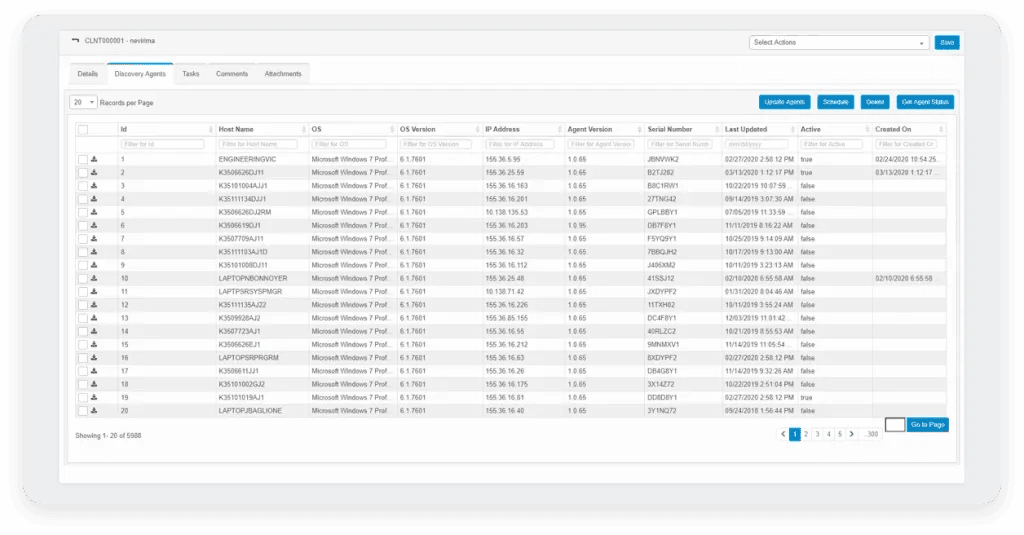
Virima’s IT asset discovery scans your entire environment automatically, covering hardware, software, cloud resources (AWS and Azure), and even non-IT assets. Agentless IP-based scanning handles the bulk of discovery with 100+ extendable probes. For persistent monitoring of desktops and remote devices, Virima also offers an optional Discovery Agent for Windows, macOS, and Linux that tracks configuration changes and software usage even when devices are off-network.
Advanced service mapping with ViVID™
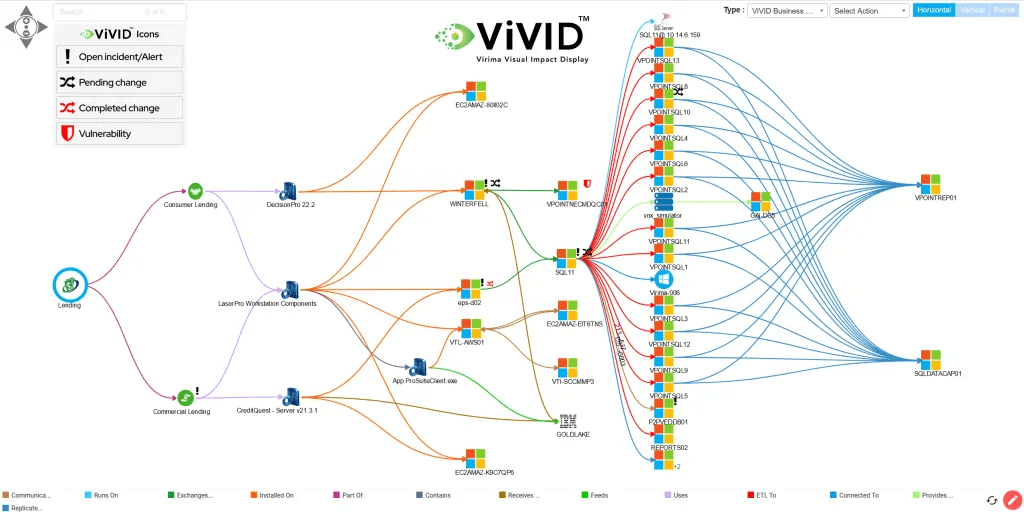
Virima Visual Impact Display (ViVID™) is the visualization layer that overlays ITSM records and vulnerability data directly onto the service maps built by Virima’s Discovery and Service Mapping engine. Your team sees which CIs have open incidents, pending changes, or active vulnerabilities, all in one view.
For change management reviews, that changes the game. Instead of guessing at blast radius, your change advisory board gets a clear visual of downstream dependencies, open incidents, and recent changes before approving anything.
Full software license management
Virima tracks license entitlements against actual installations, flags underutilized licenses, and helps your team stay compliant with vendor agreements. That cuts the risk of surprise audit findings and recovers spend tied up in shelfware.
IT asset lifecycle management
Virima tracks every asset from procurement through retirement. Status designations are configurable, and the lifecycle workflow plugs directly into ITSM request fulfillment, so nothing slips through the cracks.
Vulnerability management with NIST NVD integration
Virima integrates with the NIST National Vulnerability Database at no extra cost, automatically mapping known vulnerabilities to specific assets in your environment. Paired with ViVID™’s visual overlays, your team can prioritize remediation based on actual service impact instead of relying on generic severity scores.
Reporting and analytics
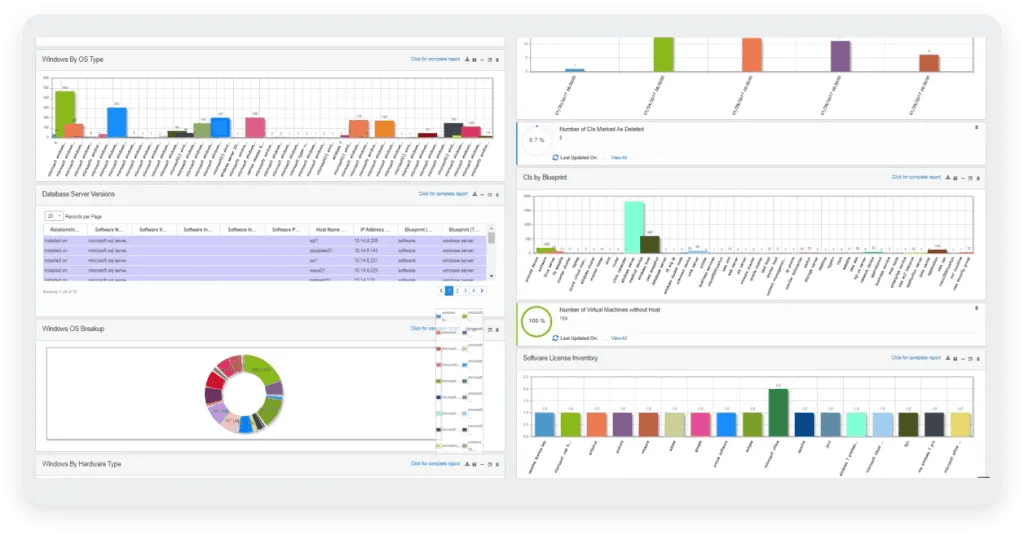
Virima’s reporting tools give you actionable views into asset usage, license compliance, CI change history, and service dependencies. These aren’t just inventory reports. They support operational decisions around capacity planning, audit prep, and change readiness.
Faster time to value
Virima is built for rapid deployment. The platform handles discovery, mapping, and CMDB population out of the box, so your team spends less time on setup and more time using the data.
SolarWinds IT Asset Management vs. Virima: A side-by-side comparison
| Feature | SolarWinds IT Asset Management | Virima |
| Discovery and inventory | Hardware and software; agent/agentless | Hardware, software, cloud (AWS, Azure), non-IT assets; agentless + optional agent |
| Service mapping | Not included | ViVID™ with dependency mapping and operational overlays |
| CMDB | Not included | Full CMDB with automated CI population and relationship mapping |
| Software license management | Basic tracking | Entitlement-to-installation matching, underutilization detection |
| IT asset lifecycle management | Limited | Full lifecycle with configurable status and ITSM integration |
| ITOM | Not included | Built-in: discovery, service mapping, operational dashboards |
| Vulnerability management | Not included | NIST NVD integration at no extra cost |
| ITSM integrations | SolarWinds Service Desk | ServiceNow, Ivanti, Jira SM, HaloITSM, Cherwell, Xurrent, Hornbill |
| Reporting | Basic inventory reports | Operational analytics: usage, compliance, CI change history, service dependencies |
| Time to value | Longer implementation cycles | Rapid deployment; discovery, CMDB, and mapping included out of the box |
How does IT asset management reduce software audit risk?
Software audits often catch organizations off guard when license records don’t match actual installations. The gap usually traces back to manual tracking, where license spreadsheets go stale the moment someone installs or removes software.
An IT asset management tool like Virima IT Asset Management automates this reconciliation. It compares license entitlements against what’s actually deployed using the latest discovery data, flags overages and underutilization, and generates audit-ready reports on demand. For IT asset managers, this shifts audit preparation from a weeks-long scramble into a routine export.
According to Gartner, organizations can overspend on software licenses by as much as 25% due to a lack of visibility and poor asset tracking, highlighting the real financial impact of outdated manual processes.
Why Virima beats SolarWinds IT asset management for operations teams
If your evaluation also covers SolarWinds Service Desk as a potential full-stack ITSM replacement, the Virima vs SolarWinds Service Desk comparison breaks down where each platform earns its keep and where the real trade-offs land.
Choosing an ITAM tool isn’t just about checking feature boxes. It’s about whether the platform gives your team the visibility and control to run a complex environment without stitching together multiple tools.
SolarWinds handles basic asset tracking and license monitoring. But if your team needs service mapping, CMDB accuracy, vulnerability context, or multi-platform ITSM integration, you’ll outgrow it fast.
Virima covers ITAM, ITOM, CMDB, service mapping, and vulnerability management in one platform, with integrations that keep your ITSM data current. For operations teams that own uptime, change success rates, and compliance posture, that breadth is what separates a tool from a platform.
Take control of your IT assets. Schedule a demo with Virima today.
FAQ
What ITSM tools does Virima integrate with?
Virima offers confirmed integrations with ServiceNow, Ivanti, Jira Service Management, HaloITSM, Cherwell, Xurrent, and Hornbill. These integrations keep your CMDB and ITSM platform in sync, so ticket data, CI records, and service maps stay current without manual updates.
What’s the difference between ITAM and ITOM?
ITAM focuses on tracking what you own: hardware, software licenses, contracts, and lifecycle status. ITOM focuses on how those assets perform: monitoring, event management, discovery, and service health.
Most organizations need both. SolarWinds covers ITAM but not full ITOM capabilities. Virima IT Asset Management brings both together in one platform, with IT discovery, CMDB, service mapping, and operational dashboards that connect asset data to near-real-time service status. Your team doesn’t need separate tools for “what do we have” and “is it working.”