ITAM in Retail and E-commerce: The POS Blind Spot Nobody Reconciles

In early 2025, security researchers discovered that a widely deployed e-commerce and retail point-of-sale integration gateway had been compromised via unmonitored third-party JavaScript dependencies and unmapped staging endpoints. The attack exfiltrated payment card data across hundreds of retail storefronts and connected physical store registers before store IT teams detected the breach. This incident highlighted why the PCI Security Standards Council established mandatory client-side and asset-inventory requirements under PCI DSS v4.0.1 starting in March 2025.
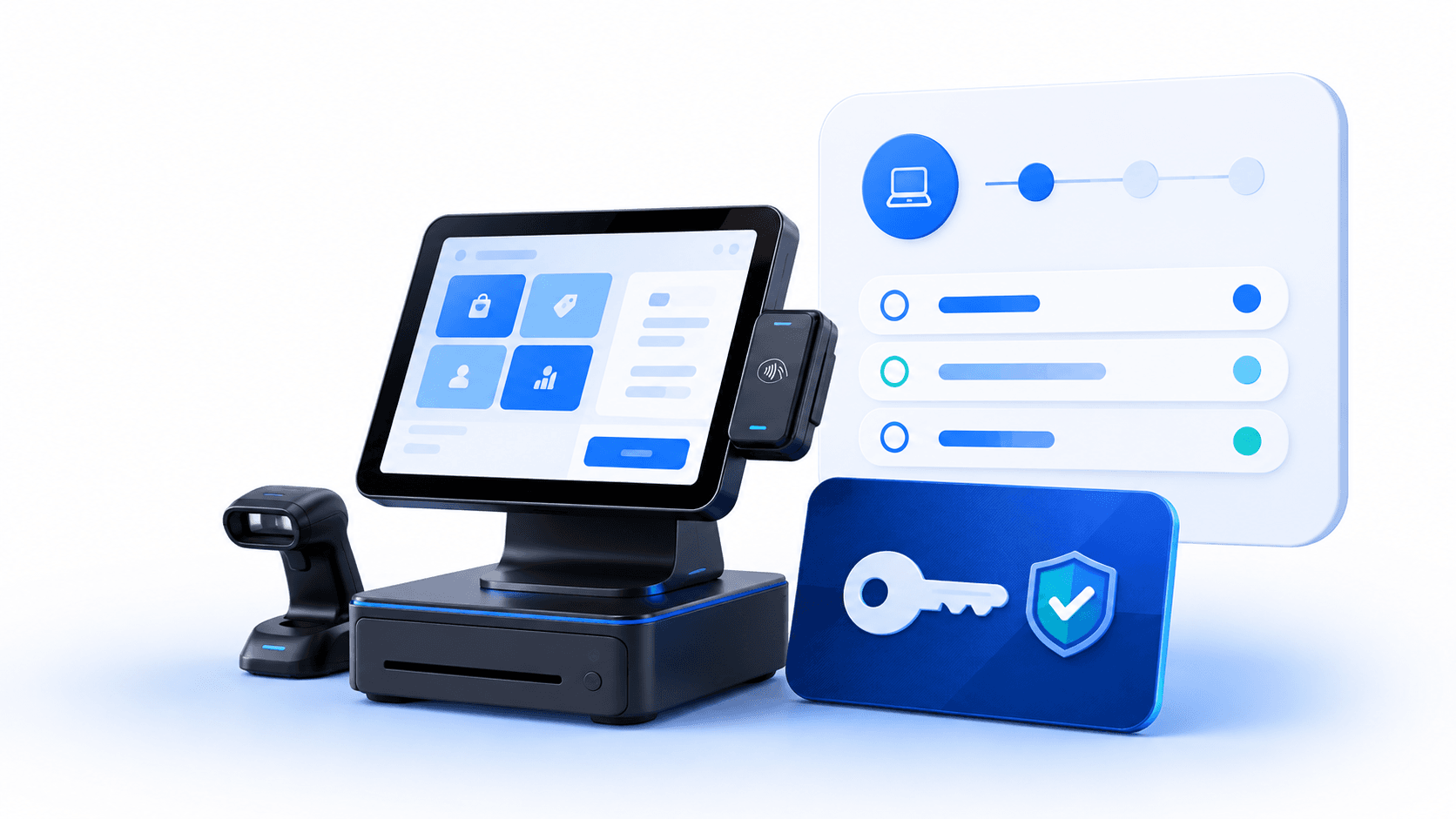
This incident illustrates why multi-location retailers must maintain complete operational control over their distributed technology estates. For IT leaders, managing store technology is no longer just about keeping registers powered on. Point-of-sale terminals, payment PIN pads, barcode scanners, and self-checkout kiosks run on a complex web of operating systems, middleware, and proprietary checkout software. When store operations teams deploy, move, or swap hardware without updating central records, major visibility gaps emerge. Implementing structured ITAM in Retail and E-commerce bridges the gap between physical store inventory and central software entitlement records.
What Is ITAM in Retail and E-commerce?
In standard enterprise technology management, IT Asset Management combines financial, inventory, and contractual data to manage the complete lifecycle of technology assets. In retail and e-commerce environments, ITAM extends this practice across geographically dispersed physical stores, regional distribution centers, fulfillment hubs, and corporate headquarters.
Point-of-sale registers are specialized endpoints governed by international standards like ISO/IEC 19770 for software asset management and the ITIL 4 IT asset management practice framework. Additionally, because POS hardware processes sensitive cardholder data, these devices fall under the strict physical and logical inventory mandates of PCI DSS.
Modern POS stations operate as bundled technology stacks. A single register combines underlying computing hardware, peripheral devices, operating system licenses, client access licenses, and specialized retail checkout applications. Without automated tracking, reconciling software entitlements against live hardware installations across hundreds of stores becomes nearly impossible.
What is ITAM in retail and e-commerce?
ITAM in retail and e-commerce is the practice of tracking and managing point-of-sale hardware, peripheral devices, and associated software licenses across multi-store estates, distribution centers, and cloud environments. It reconciles physical hardware inventory with active software entitlements to ensure audit readiness and operational continuity.
Effective retail asset management requires specific operational capabilities across all store locations:
- Location-Aware Hardware Inventories: Maintaining accurate hardware serial numbers, device models, and physical store locations for every register and peripheral.
- Software Entitlement Reconciliation: Tracking purchased software licenses against discovered installations to prevent over-licensing costs or under-licensing audit penalties.
- Lifecycle State Tracking: Documenting asset states from initial staging and store deployment to repair, transfer, and final hardware retirement.
- Compliance Scope Mapping: Identifying which hardware assets process payment data to maintain an accurate inventory for annual compliance reviews.
The Hidden Problem: Common POS Inventory Scenarios
Without automated discovery and centralized tracking, store technology managers rely on spreadsheets and manual store audits. This creates significant discrepancies between corporate records and live store setups.
| Operational Scenario | What Actually Happens in the Store |
|---|---|
| Terminal Hardware Swap A store lead moves a spare register terminal from Store A to Store B to replace a failing unit. | License Mismatch & Tracking Failure The software license record remains assigned to Store A in central files. Store B now runs an unmapped, unlicensed installation that fails external audit checks. |
| Store Remodel or Closure A physical store location closes or converts to a new retail banner. | Ghost Assets & Wasteful Renewals POS hardware moves to a central warehouse without status updates. Corporate continues paying annual software maintenance fees for inactive registers. |
| Seasonal Pop-Up Kiosks A regional team deploys temporary self-checkout kiosks for holiday trading. | Untracked Software Installations Checkout software is installed from local images without registering entitlement usage. When the season ends, unmonitored devices remain connected to network subnets. |
| Peripheral Component Upgrades Field technicians upgrade pin pads and barcode scanners across a region. | Inaccurate Baseline Records Legacy serial numbers remain in asset databases, making it difficult for security teams to verify firmware patch levels during vulnerability scans. |
Why Is ITAM in Retail and E-commerce Important?
The global scale of retail technology infrastructure makes manual tracking obsolete. According to market research from Grand View Research, the global point-of-sale terminal market reached $123.15 billion in 2025, with retail accounting for over 29 percent of total revenue share. As store networks expand and adopt hybrid cloud checkout architectures, the volume of hardware and software assets grows rapidly.
At the same time, worldwide technology investments continue to expand. Industry analysis by Gartner indicates global IT spending will reach $6.15 trillion in 2026, driven by a 14.7 percent increase in software expenditures. Retailers that lack accurate asset tracking risk wasting significant capital on unused software entitlements while exposing their store networks to compliance penalties.
Four Critical Failure Modes in Retail ITAM
When multi-location retailers manage store assets using static spreadsheets or disconnected store databases, four primary operational failure modes emerge:
- Software License Audit Exposure: Commercial software publishers frequently audit retail enterprises to verify POS software and operating system installations. Result: Unmapped POS registers running unlicensed software trigger retroactive license fees and penalty true-ups at full list price.
- Idle Capacity and Budget Drain: Software licenses assigned to decommissioned registers or closed stores remain active in vendor portals. Result: Corporate IT budgets pay recurring annual maintenance and subscription fees for software nobody uses.
- Ghost Hardware and PCI Audit Risks: Terminals and card-reading devices that are removed from service without formal updates remain listed in active compliance files. Result: Qualified Security Assessors flag inventory discrepancies during PCI DSS reviews, extending audit timelines and increasing compliance costs.
- Extended Store Downtime: When an unmapped register suffers a hardware failure, helpdesk teams struggle to identify its exact hardware configuration and installed software baseline. Result: Field technicians arrive with incorrect replacement parts, delaying store recovery during high-volume shopping periods.
How does ITAM prevent software audit penalties in retail?
ITAM automatically reconciles discovered POS software installations against central purchase entitlements. By identifying unlicensed software or over-allocated entitlements before vendor audits occur, retail IT teams correct compliance gaps and avoid unexpected financial true-ups.
The Real Cost of Unmapped POS Hardware and Licensing
Failing to maintain accurate asset records creates financial friction, audit exposure, and operational challenges across different leadership roles.
For ITAM Managers and Procurement Leaders
ITAM Managers face constant pressure to control software costs and defend against publisher audits. When software licensing data is fragmented across regional operations, procurement teams cannot negotiate effectively during enterprise agreement renewals. They lack clear visibility into actual software consumption, leading to over-provisioned agreements or unexpected audit settlements that drain operating capital. Establishing a structured software license compliance audit workflow eliminates these blind spots by aligning active installations with contract terms.
For Store Operations and CMDB Owners
CMDB Owners and store technology teams manage system stability across hundreds of physical locations. When field technicians swap hardware or upgrade register software locally, central configuration databases quickly become outdated.
Manually auditing store inventory requires field visits or manual spreadsheets from store managers. This consumes hundreds of hours of staff time each year. Furthermore, incomplete inventory data obscures software dependencies. If an operating system patch is deployed across store subnets, unmapped legacy registers may suffer software crashes that halt checkout lanes. Integrating store discovery into a centralized CMDB ensures configuration records accurately reflect live store environments.
For Security and Compliance Teams
Security officers and compliance leads must ensure store payment environments meet rigorous security benchmarks. According to the IBM Cost of a Data Breach Report 2026, the global average cost of a data breach reached $4.99 million in 2026, with the mean time to identify and contain a breach stretching to 247 days.
In payment processing environments, maintaining an accurate hardware inventory is a core regulatory requirement. Under PCI DSS v4.0.1, organizations must maintain an updated inventory of all system components and card-reading devices supporting payment processing. The PCI Security Standards Council mandates explicit hardware tracking to prevent unauthorized device tampering and rogue terminal attachments. Unmapped payment registers create major security blind spots that increase the risk of undetected malware installations like those seen in payment card skimming attacks. Teams can review how Magecart payment attacks exploit weak PCI controls to understand how unauthorized devices compromise payment networks.
For Retail Executive Leadership
At the executive level, unmapped store technology limits strategic agility and payment modernization initiatives. Survey research from KPMG International reveals that retail payment executives face intense pressure to modernize checkout architecture and support contactless, omni-channel transactions.
Simultaneously, executive teams must navigate broader industry cost pressures. According to Deloitte’s Global Retail Industry Outlook, retail leaders prioritize operational efficiency and cost control as key strategic goals. When executive leadership lacks visibility into store asset utilization, capital is wasted on redundant hardware purchases and unused software subscriptions rather than digital transformation initiatives.
How Discovery-Driven ITAM Fixes the POS Blind Spot
Modern IT Asset Management replaces periodic physical counts with automated, discovery-driven tracking that reconciles hardware and software across all retail locations.
1. Matching Discovery Methods to Store Technology
Multi-location retail environments require flexible discovery techniques. Desktop registers and back-office store servers run lightweight agent software that captures detailed hardware specifications, operating system patch levels, and installed software packages.
Conversely, IP-connected peripherals, network switches, receipt printers, and smart payment terminals are discovered through agentless network scans. Automated network discovery identifies devices connected to store subnets without installing software on the endpoint. Understanding when to use agent-based versus agentless discovery ensures complete coverage across all store technology layers.
2. Reconciling Software Entitlements Against Discovered Installs
Automated discovery provides the raw inventory data needed to perform continuous license reconciliation. Central ITAM engines compare discovered software installations against central contract entitlement databases.
When a store deploys a new register or installs specialized inventory management software, the ITAM system automatically registers the software installation and matches it against available license counts. If total installations exceed purchased entitlements, the system alerts procurement teams to reallocate idle licenses or purchase additional seats before a vendor audit occurs. Establishing clear processes for software asset management ensures license compliance across distributed estates.
3. Mapping Hardware Assets to Store Services
Tracking physical hardware and software licenses is only half the battle. To understand operational risk, IT teams must map individual technology assets to the specific store services they support.
Visualizing service relationships links physical registers, local store servers, and payment gateways directly to business services like point-of-sale checkout, store inventory lookup, and pharmacy fulfillment. Utilizing dynamic ViVID™ service mapping allows IT teams to see the exact store impact of any infrastructure failure or planned software update.
| Evaluation Dimension | Manual / Spreadsheet Tracking | Discovery-Driven ITAM |
|---|---|---|
| Inventory Cadence | Annual or semi-annual physical store counts | High-frequency scheduled discovery scans |
| License Reconciliation | Manual matching during vendor audit notices | Continuous reconciliation of entitlements against installs |
| Store Hardware Moves | Relies on store managers emailing central IT | Automatic location updates during network discovery cycles |
| PCI DSS Scope Tracking | Static hardware lists that degrade between audits | Auditable asset records with verified network locations |
| Business Context | Isolated asset records with no service context | Assets mapped directly to physical stores and business services |
POS Hardware and Software Licensing in Practice
Real-world retail operations highlight how discovery-driven ITAM solves common store technology challenges:
- Regional Store Remodels: A grocery chain remodels 20 locations, transferring registers between stores. High-frequency scheduled discovery identifies relocated hardware and automatically updates store assignment records, ensuring software licenses match live register locations.
- Holiday Pop-Up Kiosks: An apparel brand deploys 50 seasonal checkout kiosks. Automated agentless discovery detects new devices as they connect to store subnets, logging hardware details and assigning temporary software entitlements before trading begins.
- Store Closures and Asset Retirement: When closing an underperforming store, the local IT lead decommissioned five terminal registers after confirming all cardholder data was wiped. The ITAM system updated asset states to retired, allowing procurement teams to harvest and reassign software licenses to new store locations. Retailers can review how ITOM supports retail peak season uptime to see how asset tracking pairs with operational monitoring.
How Virima Powers POS Hardware and License Tracking
Virima delivers an enterprise IT Asset Management and discovery platform built to handle the scale and complexity of distributed retail environments. By combining flexible discovery engines, automated CMDB reconciliation, and visual service mapping, Virima provides retail IT leaders with authoritative control over store technology assets.
Automated Discovery Across Hybrid Store Infrastructure
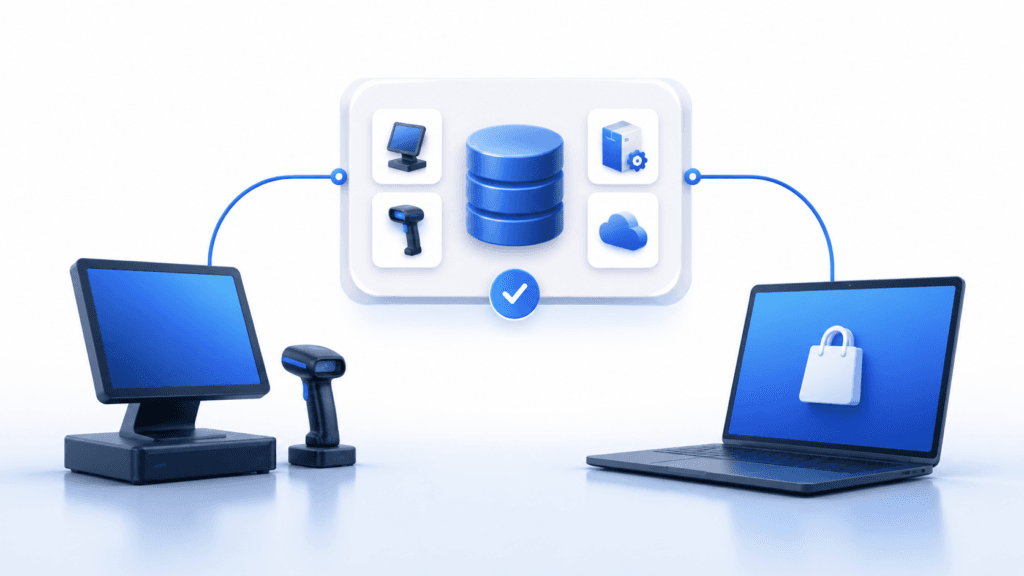
Virima’s discovery engine scans store networks, regional distribution centers, and corporate cloud accounts (AWS and Azure) to identify every hardware and software asset. Agent-based discovery captures detailed register configurations, while agentless network scans discover IP-enabled payment terminals, network switches, and peripheral hardware without disturbing store operations.
Centralized CMDB and Software License Reconciliation
Discovered store inventory feeds directly into Virima’s ITIL-aligned CMDB. The system automatically reconciles discovered software installations against central purchase contracts and entitlement records. Procurement teams receive clear visibility into license usage, allowing them to eliminate idle software subscriptions and maintain continuous audit readiness.
Connected Workflow Integration Across Enterprise ITSM
Virima synchronizes asset records bidirectionally with major ITSM platforms, including ServiceNow, Jira Service Management, Ivanti, HaloITSM, Xurrent, Hornbill, and TeamDynamix. When a store register experiences a hardware fault, helpdesk technicians access complete configuration histories and software baselines directly within their native ticket interface, speeding up incident resolution and reducing checkout downtime.
Moving from Spreadsheet Tracking to Map-Driven ITAM
Transitioning from manual tracking to automated ITAM streamlines store operations and protects retail profitability.
| Legacy Spreadsheet Operational Model | Modern Map-Driven ITAM Model |
|---|---|
| Hardware records updated manually during periodic store visits | Store inventory updated automatically via scheduled network discovery |
| Software compliance verified reactively when publishers issue audit notices | Entitlements continuously reconciled against active store installations |
Five Steps to Implement Retail ITAM
- Audit Current Store Inventory: Establish a baseline asset taxonomy covering all POS terminals, payment devices, and store servers.
- Deploy Automated Discovery: Configure agentless and agent-based discovery across store subnets, distribution centers, and cloud accounts.
- Centralize Entitlement Contracts: Load software purchase agreements, subscription terms, and license keys into the ITAM repository.
- Automate Reconciliation Cadences: Set up automated workflows to compare discovered software installs against active entitlements.
- Integrate ITAM with Store Helpdesk Workflows: Feed asset configuration data directly into ITSM platforms to support rapid incident triage.
Protecting Retail Profitability Through Asset Clarity
Managing point-of-sale hardware and software licensing across multi-store estates requires moving beyond static spreadsheets and manual counts. Unmapped registers create major compliance exposure, drain technology budgets through unused software subscriptions, and increase checkout downtime during peak trading periods. Discovery-driven ITAM gives retail technology leaders the visibility needed to maintain software license compliance, streamline store operations, and protect payment environments.
Want to eliminate POS inventory blind spots and defend your estate against software audit penalties? Book a personalized demo to see how Virima correlates POS entitlements with live store asset consumption and simplifies multi-store technology governance.
Why is ITAM critical for multi-location retail operations?
ITAM provides centralized visibility into distributed POS hardware and software licenses. It automates inventory discovery, reconciles software entitlements against live store installations, eliminates ghost assets, and ensures multi-store retailers maintain continuous audit readiness.
Frequently Asked Questions
What is ITAM in retail and e-commerce?
ITAM in retail and e-commerce tracks POS hardware, registers, peripherals, and software licenses across stores, distribution centers, and cloud environments. It reconciles physical hardware with software entitlements to ensure audit readiness and cost control.
What is POS hardware and software licensing tracking?
POS hardware and software licensing tracking pairs physical register terminals and payment devices with their active software entitlements. It ensures checkout software, operating systems, and client licenses are accurately accounted for across all store locations.
How is POS asset tracking managed across multiple store locations?
Multi-location POS asset tracking uses agentless network discovery and lightweight agents to scan store subnets automatically. Discovered devices feed into a central CMDB, maintaining accurate location records as hardware moves between stores.
How does software license tracking prevent retail audit penalties?
License tracking compares live software installations on register terminals against central purchase entitlements. Identifying unmapped software or license shortages proactively allows retailers to resolve compliance gaps before commercial software publishers initiate formal audits.
What does PCI DSS require for POS hardware inventory?
PCI DSS v4.0.1 requires an updated, accurate inventory of all system components and payment devices supporting cardholder data processing. Automated ITAM maintains timestamped hardware records, preventing unmonitored devices from introducing security risks into payment networks.